



Translation: Iraqi Institute for Dialog
Neural similarities among political extremists: The roots of polarization and division
In the last two decades, Western democracies, especially the United States, have witnessed an unprecedented rise in political polarization. Dialogue between different currents has become difficult and often turns into heated confrontations on social media or in the public sphere. Despite the deep divisions between the conservative right and the liberal left, a recent scientific study reveals that extremists on both sides may be more similar than most people think.
The study, published in the American Psychological Association's Journal of Personality and Social Psychology, showed that extremist individuals - whether they are far left or far right - process political information in much the same way at the neurological level. This discovery opens the door to a new understanding of the nature of political extremism and raises questions about how to manage societal polarization.
Background and Methodology
The study focused on the neurological processes that occur in the brain when processing controversial political information, rather than just focusing on positions and ideologies.
Researchers selected 43 participants representing both ends of the political spectrum, out of 360 applicants, through social media, field announcements, and visits to political meetings.
The tests were conducted using a combination of functional magnetic resonance imaging (FMRI), physiological tests to measure stress and bodily responses, and eye tracking while watching political content. The most notable part of the experiment was watching a clip from the 2016 vice presidential debate between Tim Kaine and Mike Pence, which addressed sensitive issues such as police reform and immigration. The clip was chosen because it contains inflammatory and provocative language that reflects the nature of the political divide in the United States.
During the experiment, participants' neural activity was recorded while watching inside the MRI machine, and a second time outside the machine with eye movement measurement. Participants then answered questionnaires to assess their understanding of the political content, their emotional engagement, and their evaluation of the candidates.
Main results
The study showed that extremists from both sides show similar neural activity in brain regions responsible for emotional processing, such as the amygdala, the periaqueductal gray, and the posterior portion of the Posterior Superior Temporal Sulcus (Posterior Superior Temporal Sulcus).
In contrast, moderate participants showed more varied brain responses, suggesting that political radicalization is linked to a specific neural mechanism rather than simply a difference in beliefs. In other words, it is not the ideas themselves that form the divide, but the intensity of the belief and the emotional response to those ideas.
The study also confirmed that extremists process political information more emotionally responsive and extreme in evaluating facts and events, while moderates show a greater capacity for rational and open-minded processing.
Analysis and discussion
The findings suggest that political division stems not only from a difference in ideas, but from the way the brain processes information and responds to emotional stimuli. This explains why extremists tend to harden positions and have difficulty accepting different points of view, and leads to deepening societal divisions.
In socio-political terms, these findings can be interpreted that extreme polarization is not just a clash of ideas, but a neuro-emotional conflict. Extremists on the right and left engage in the same pattern of reacting to sensationalist news and information, making dialogue between the two camps difficult, and increasing the level of polarization and behavioral extremism.
This study also has an important ethical dimension, namely the possibility of fostering empathy by recognizing the neurological similarities between extremes. Recognizing that both sides approach political reality in a similar way can reduce stigmatization and dehumanization and create a platform for communication and bridge-building.
Practical implications
The study provides important insights for policymakers, think tanks, and the media:
Policymakers and public policy: These findings can be used to develop dialogue programs that aim to reduce emotional reactivity and stimulate rational thinking rather than emotional confrontation.
Research and strategic studies centers: Opening the way for interdisciplinary research linking neuroscience and politics to understand the mechanisms of radicalization and how to manage it at the national and societal level.
Media and journalism: Be careful not to use inflammatory or provocative rhetoric that increases emotional outbursts, especially when covering sensitive political issues.
Civil society and educational organizations: Promote political education programs that focus on tolerance, flexibility in thinking, pluralism, and avoiding intellectual and emotional extremism.
Conclusion
The study found that political extremists on both sides of the spectrum, both far right and far left, share similar neural patterns when dealing with controversial information, and that the apparent divide between them is more a result of intensity of emotion and belief than a fundamental difference in the idea itself.
This finding offers an opportunity to rethink strategies for managing societal divisions, and suggests that building empathy and understanding the similarities between extremist parties may be an effective way to reduce polarization and promote social and political stability, despite the significant challenges posed by emotional and neurological extremism.

The Iraqi Institute for Dialogue, the logistical sponsor of the Baghdad International Book Fair, opens its own pavilion at the fair
Official agreement between Iraqi Institute for Dialogue and the Iraqi Media Network to sponsor The Seventh Annual International Conference of “Baghdad Dialogue” 2025
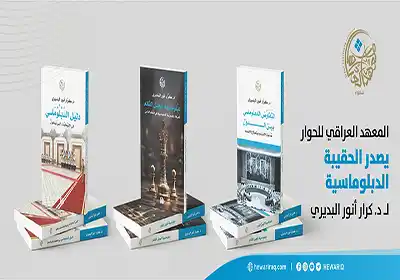
The Iraqi Institute for Dialogue publishes "The Diplomatic Portfolio" by Dr. Karrar Al-Badiri

Invitation to the 79th issue of Dialogue of Thought
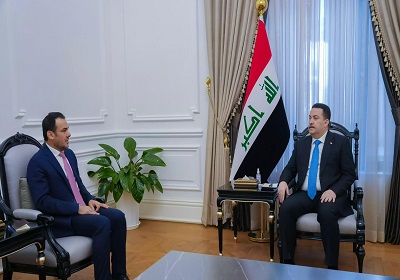
Prime Minister: The path of development will make Iraq a regional political and economic powerhouse
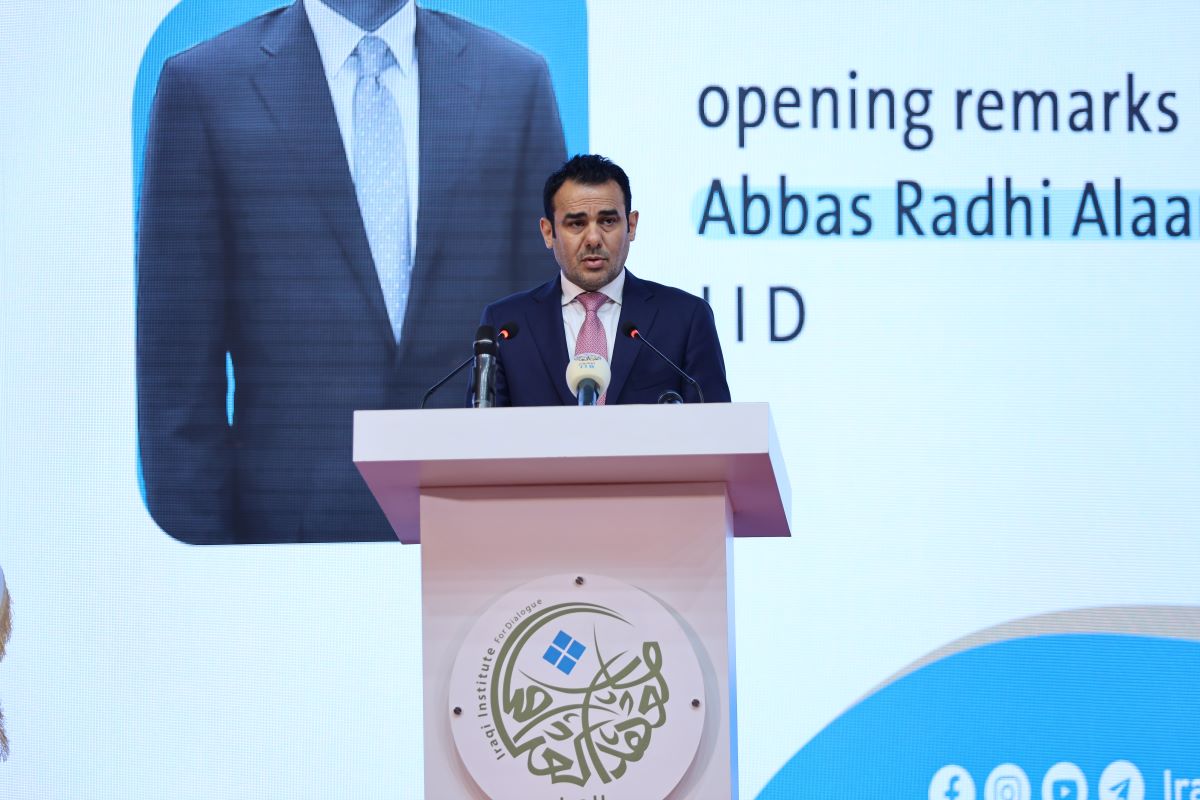
Speech of the Director of the Iraqi Institute for Dialog at the Sixth Baghdad International Dialog Conference
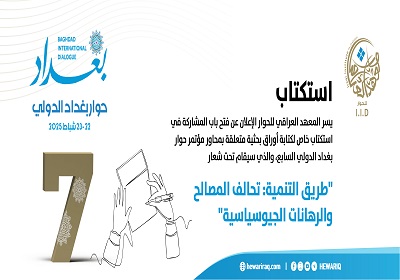
Seventh Baghdad International Dialogue Conference Call for Papers
Comments