


d. Jamal Al-Zaidawi
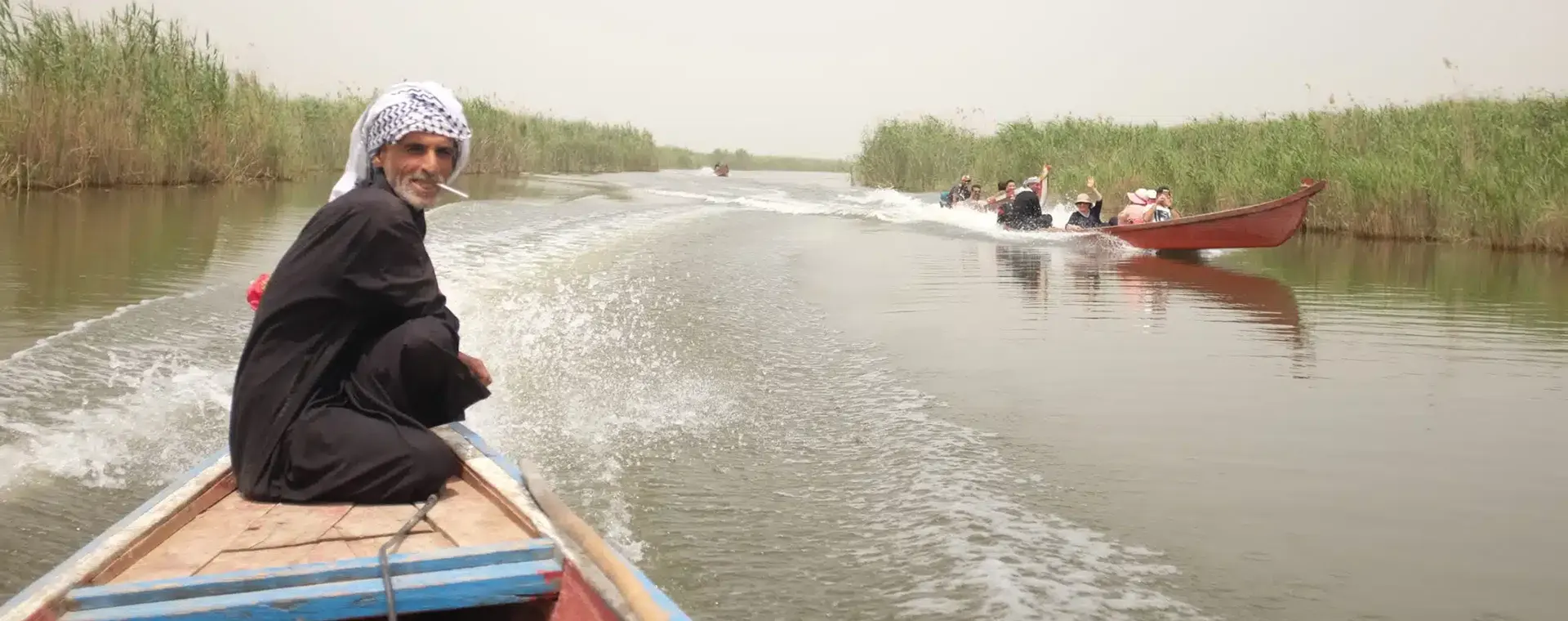
Iraqi marshes: The Challenges of Existence and the Risks of the Future
The marshes are one of the most important and unique areas, with the world's largest inland delta in a very hot and dry environment. Due to their ecological and natural importance, they have been added as an ecosystem under the Ramsar Convention on Wetlands.
The Marshlands region includes three archaeological sites and four wetlands and marshes in southern Iraq. The ancient cities of Uruk and Ur, as well as the archaeological site of Eridu (Tell Abu Shahrin), are part of the ruins of Sumerian cities and buildings built in Mesopotamia between the fourth and third millennia BCE on the banks of the Tigris and Euphrates rivers.
Due to its natural and cultural features, the area was inscribed on the UNESCO World Heritage List in 2016 as an example of the biodiversity and scenic beauty of Mesopotamian cities. The listing was based on four criteria of Exceptional Universal Value, two for cultural heritage and two for natural heritage (as a mixed World Heritage Site). It is these criteria that justify the State or States Parties in nominating the property for inscription on the World Heritage List and move it from local to global status, indicating the significant exceptional universal value it possesses. In simple terms, these criteria are as follows:
1. The third criterion: which requires that the site bear unique or at least exceptional testimony to a cultural tradition or civilization that is living or has disappeared.
2. Criterion 5: which requires the site to be an outstanding example of a traditional human settlement, land use, or sea use that represents a culture(s) or human interaction with the environment, especially as it becomes vulnerable under the impact of irreversible change.
3. Criterion IX: Requires that the site include outstanding examples that represent important ecological and biological processes that are ongoing in the evolution of terrestrial, freshwater, coastal and marine ecosystems and plant communities.
4. Criterion 10: which requires that the most important natural habitats for biodiversity conservation be contained within the site, including those containing endangered species of outstanding global scientific or conservation value.
Today, the marshes face numerous challenges that threaten their survival or the loss of their exceptional universal value on the basis of which they were inscribed on the World Heritage List. These challenges are divided into natural and human challenges, as well as internal and external challenges, to which the World Heritage Committee decision (WHC/25/47.COM/7B.Add.4), adopted at the forty-seventh session of the World Heritage Committee held in Paris from 6-16/7/2025, referred and defined them as follows:
1. Water scarcity: The Committee expressed its serious concern about the continuing water scarcity, while emphasizing the importance of maintaining minimum water flows. This challenge is a common challenge with multiple causes; the first is climate change and its significant impact on Iraq, as Iraq is one of the most climate-vulnerable countries in the world. Climate change has caused an increase in recorded temperatures since 2000, with temperatures rising at a rate of about half a degree every 10 years. If high emissions continue, temperatures could rise more than 5 degrees Celsius by the end of the century, resulting in increased evaporation rates in the marshlands, which will dry up quickly, even if part of the Tigris and Euphrates reaches them. The threat of climate change also extends to neighboring countries such as Syria and Iran, which are partners in the water issue, which means that the climate threat could expand and lead to significant damage to the marshes. Some studies suggest that the flows of the Tigris and Euphrates will decrease by about 10 percent by mid-century due to climate change. The other reason is external and relates to the large dams built by Turkey on the Tigris and Euphrates rivers, which have greatly reduced the amount of water flowing. The committee called for continued transboundary cooperation with neighboring countries to ensure sustainable water management, and renewed the call for a technical meeting between concerned countries to discuss the dam projects and their impact on the site's exceptional global value. This is in addition to the waste that accompanies the use of water in Iraq, whether for agricultural or other uses.
2. Oil explorations at the site: Some information indicates the existence of activities related to the exploitation of a number of oil fields whose boundaries overlap with the boundaries of the marsh site, which leads to damage to the site if work continues without setting clear boundaries for these works in a way that does not affect the property, whether in terms of its boundaries or its environment and biodiversity, as well as coordination with international advisory bodies concerned with the subject. The World Heritage Committee called on Iraq to clarify the information received regarding reports of oil exploration in part of Hawr al-Huweiza, and emphasized the permanent prohibition of extractive activities within the site, which requires concerted efforts to resolve the issues related to this.
3. Lack of tourism investment in the site: The government does not have projects related to tourism investment in the site, as there are no existing projects in the site that provide a sustainable plan for tourism purposes that could contribute to its development and help the local population benefit from tourism revenues. The World Heritage Committee encouraged Iraq to finalize the tourism management plan, noting that the tourist city project in Chabaish has been suspended. It also called on Iraq to emphasize the importance of the participation of local communities in the management of the site, especially with regard to fishing and water use. The Committee also called on Iraq to update the Wildlife Protection Law to ensure expanded legal protection of the site and preserve its biodiversity, to reduce the incidence of poaching at the site.
Failure to address the issues affecting the Marshlands site threatens its presence on the World Heritage List, because any compromise or threat to its exceptional universal value may lead to either the removal of the property from the World Heritage List or its inclusion on the List of World Heritage in Danger at the very least. In order to avoid these actions, an integrated plan is needed according to a future vision that works to preserve the site and its exceptional global value, invest its presence on the list to increase tourism rates, and avoid violations related to its investment in oil industries that may lead to legal issues with the World Heritage Center and its advisory bodies, and violate Iraq's international obligations under the 1972 World Heritage Convention. After its inclusion in the World Heritage List, the site has become an internationally recognized value, not just for Iraq, especially since an assessment mission will visit the site in 2027.

The Iraqi Institute for Dialogue, the logistical sponsor of the Baghdad International Book Fair, opens its own pavilion at the fair
The Iraqi Institute for Dialogue publishes "The Diplomatic Portfolio" by Dr. Karrar Al-Badiri
Official agreement between Iraqi Institute for Dialogue and the Iraqi Media Network to sponsor The Seventh Annual International Conference of “Baghdad Dialogue” 2025

Invitation to the 79th issue of Dialogue of Thought
Prime Minister: The path of development will make Iraq a regional political and economic powerhouse
Seventh Baghdad International Dialogue Conference Call for Papers
Praise for the Baghdad International Dialogue: Strengthening Iraq's pivotal role and a meeting point for visions
Comments