

Translation: Iraqi Institute for Dialog
Report: Israel's de facto annexation of the West Bank
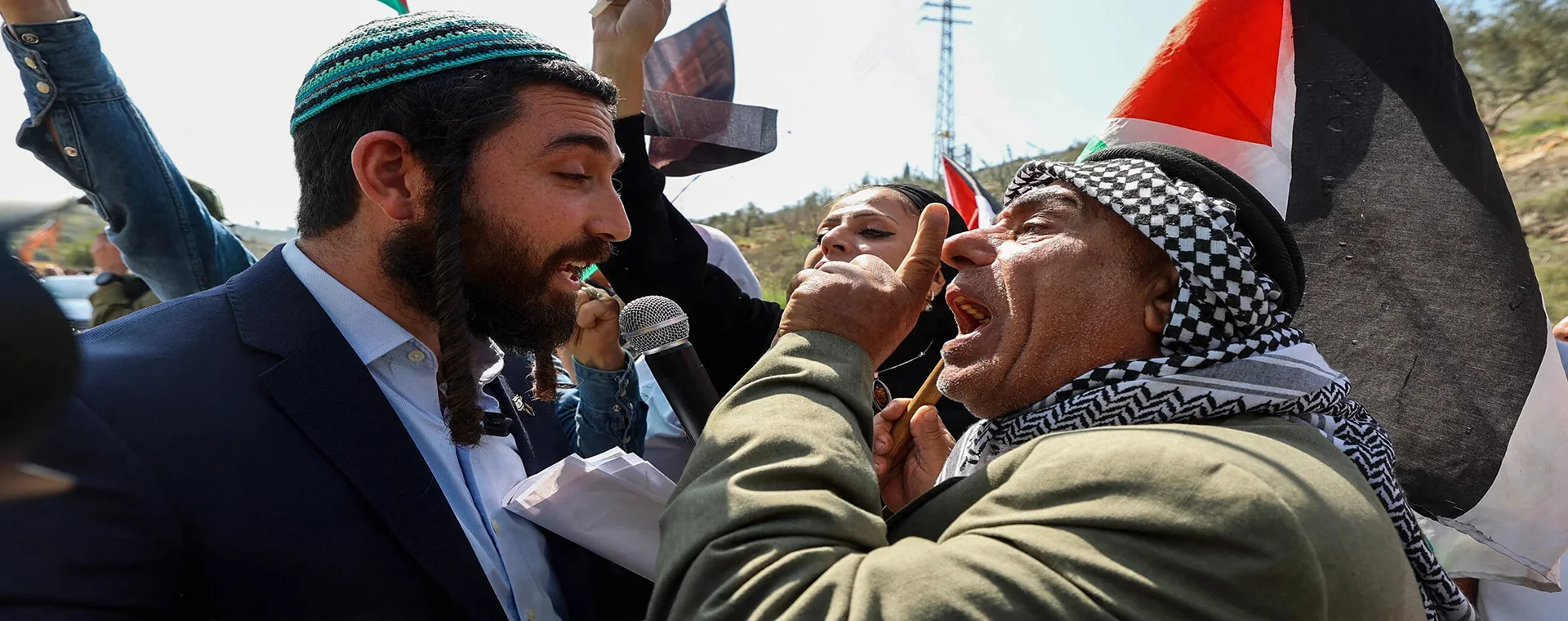
According to an analytical report published by Deciphering the War The report notes that Israel has effectively annexed the occupied West Bank without a formal declaration, through cumulative policies that have imposed a new reality on the ground. The report explains that annexation was not just a political proposition, but turned into a field reality through settlement, demographic engineering, and linking infrastructure to Israeli cities, making the Palestinian territories isolated and besieged islands.
According to the Oslo Accords, the West Bank is divided into Areas A, B, and C. Most Israeli settlements are located in Area C, which represents about 60% of the West Bank and is fully under Israeli security and administrative control.
In these areas, settlement construction is ongoing, and infrastructure projects that ensure the separation of settlements from Palestinian communities, including bypass roads and the Separation Barrier, are being implemented. This geographic separation not only affects the daily movement of Palestinians, but also limits economic and social development in Palestinian areas.
Israeli colonization relies on gradual strategies that include seizing private and public land, expanding existing settlements, and establishing new settlements, with the Israeli state supporting these operations through funding and infrastructure.
According to the data, the number of Israeli settlers in the West Bank has exceeded 700,000, forming a population bloc that is interconnected with the Israeli urban network, making it difficult to separate them in any future agreement.
One of the most prominent mechanisms is the construction of Israeli connecting roads that link settlements to each other and to Israel, while restricting or completely preventing Palestinians from using these roads. This topographical structure creates a reality of small Palestinian "cantons" surrounded by Israeli control, so that Palestinian territory becomes fragmented and fragmented, reducing the ability of Palestinians to manage their affairs independently and hindering any plan to create a geographically contiguous Palestinian state.
Legally and politically, the ongoing settlement is contrary to international law, including the Fourth Geneva Convention, which prohibits the transfer of civilian populations from the occupying state to the territory it occupies. Nevertheless, Israel continues its policy of de facto annexation, claiming that these areas are part of Israel's "historic land" and that the settlements serve Israel's national security.
These claims are widely rejected by the international community, which sees these measures as a threat to the two-state solution and a blow to Palestinian rights.
Historically, Israel's settlement policy can be traced back to the occupation in 1967, with a notable acceleration after the Oslo Accords in the 1990s. The Oslo Accords divided the West Bank into areas under Palestinian and Israeli control, but settlement did not stop, but rather expanded dramatically after 2000 and even today. This has been accompanied by tightening restrictions on Palestinian movement and construction, while strengthening the infrastructure of Israeli settlements.
Recent Israeli policies pose a major challenge to any peace process. As settlements continue to be built and vital land is seized, a contiguous and independent Palestinian state becomes impossible. This reality highlights that so-called negotiated solutions or a political agreement require recognizing the facts on the ground, which show that the West Bank has almost become part of Israel, including control over resources and strategic corridors.
In conclusion, the Spanish report notes that the international community today faces a real test in dealing with the reality of Israel's settlement annexation of the West Bank. Continued settlement deepens the divide, diminishes the chances for a just and lasting peace, and undermines the viability of future diplomatic efforts.
Hence, it is imperative that states and international organizations adopt an effective stance that protects Palestinian rights and pressures Israel to stop settlements and ensure the possibility of establishing an independent and sovereign Palestinian state on all its territories.
The report also notes that in recent years, the Israeli authorities have pushed for the administrative and legal integration of settlements with Israel, thereby promoting creeping annexation without the need for an official declaration. This reality has led to the emptying of the idea of Two-state solution It is no longer possible to talk about a viable Palestinian state in light of the disintegration of geography and the erosion of Palestinian sovereignty.
The repercussions of this situation, according to the report, are not limited to the Palestinians, but extend to the international community. On the one hand, the United States and some Western powers continue to support Israel despite formal criticism of its settlement policies, while in other parts of the world, public and official anger is growing at what is perceived as a blatant violation of international law and UN resolutions.
The report argues that in the long term, this de facto annexation will lead to an escalation of Palestinian resistance, both popular and armed, and deepen the gap between Israel and the rest of the international powers that still theoretically adhere to the two-state solution.
He also warns that the continuation of this Israeli approach may reshape the entire Palestinian issue and force the international community to consider new alternatives beyond the traditional negotiating track, which has become futile.

The Iraqi Institute for Dialogue, the logistical sponsor of the Baghdad International Book Fair, opens its own pavilion at the fair
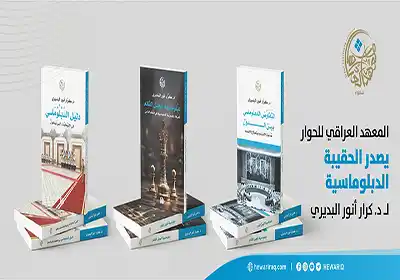
The Iraqi Institute for Dialogue publishes "The Diplomatic Portfolio" by Dr. Karrar Al-Badiri
Official agreement between Iraqi Institute for Dialogue and the Iraqi Media Network to sponsor The Seventh Annual International Conference of “Baghdad Dialogue” 2025
Invitation to the 79th issue of Dialogue of Thought
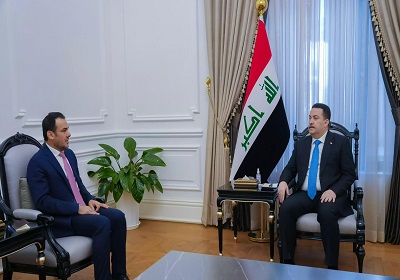
Prime Minister: The path of development will make Iraq a regional political and economic powerhouse
Seventh Baghdad International Dialogue Conference Call for Papers
Praise for the Baghdad International Dialogue: Strengthening Iraq's pivotal role and a meeting point for visions
Comments