

Translation: Iraqi Institute for Dialog
Saudi Arabia's Soft Influence in Syria
After more than a decade of civil war that turned Syria into a battleground for international and regional powers, the country is undergoing a new transition with Saudi Arabia emerging as one of the most prominent players in the reconstruction process. While Russia and Iran gradually withdrew from the scene after the fall of Bashar al-Assad's regime, Riyadh has stepped in with billions of dollars in investments, humanitarian projects, and direct aid.
Unprecedented political and economic support
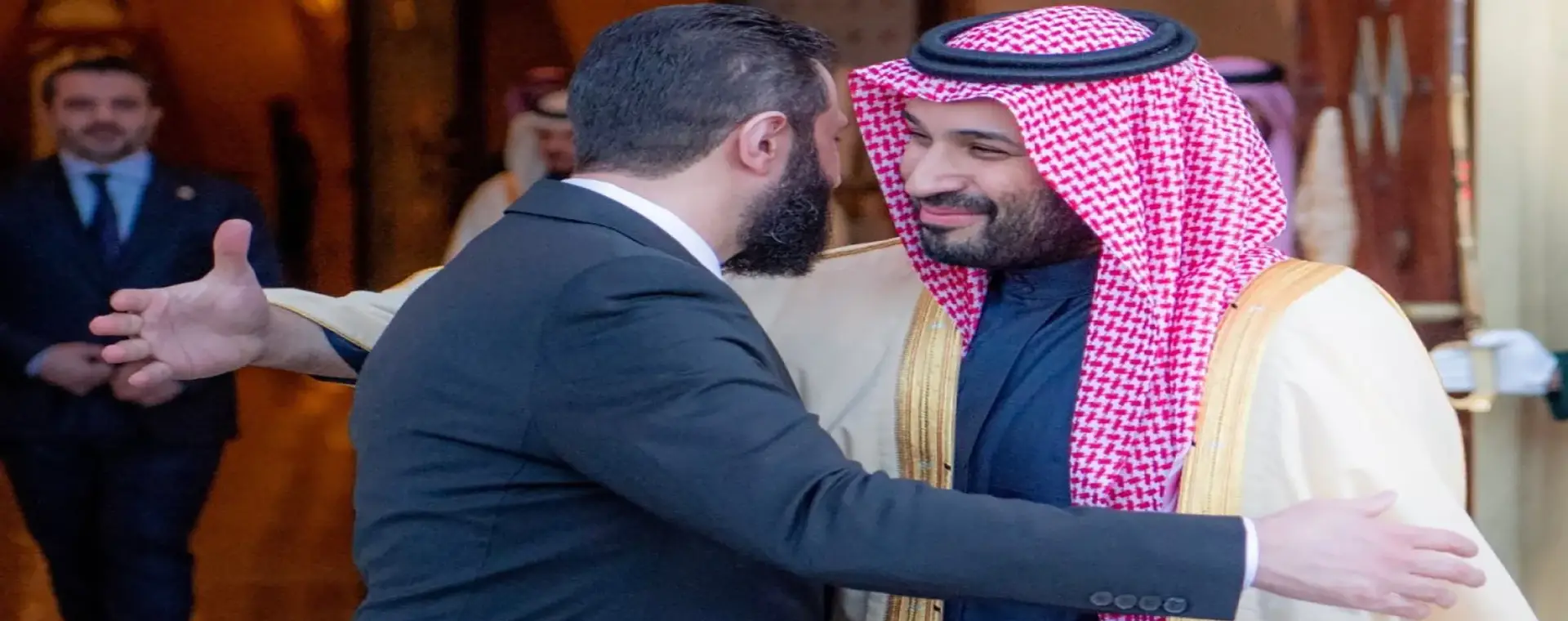
Mohammed bin Salman, the Saudi crown prince, led a massive diplomatic and economic campaign to bring Syria back into the "Arab camp." In May, he managed to convince former US President Donald Trump to lift sanctions on Damascus, and then arranged a historic meeting between Trump and Ahmad al-Sharaa, the head of the new Syrian government.
Later, Riyadh signed major deals worth more than $6.4 billion for reconstruction and, along with Qatar, paid off $15 million of Syria's debt to the World Bank.
The "soft power" strategy
Saudi Arabia's moves in Syria have not been limited to the economy, but have included extensive humanitarian and medical efforts. Saudi relief teams roamed Syrian cities, providing treatment to the wounded and sick, while Riyadh promised to rebuild schools, hospitals and bakeries and provide 1.65 million barrels of oil to run power plants.
According to observers, these projects aim to solidify the kingdom's image as a reliable humanitarian and political ally, and to undermine Turkish and Qatari influence in the new Syrian arena.
One of Riyadh's main motivations for entering Syria is to fight the Captagon trade, which during the war years became the former regime's biggest export and main source of funding. Saudi Arabia believes that stopping this trade is part of its strategy to protect the Gulf from the flow of drugs, and that creating legitimate economic alternatives will prevent Syria from returning to the axis of chaos.
Although the new Syrian authorities have repeatedly announced the seizure of millions of grains, the smuggling route has not yet been completely stopped.
A New Regional Balance
Analyst Omar Karim of the University of Birmingham emphasizes that Saudi Arabia seeks to "keep Syria in the Arab camp" and guide it on sensitive regional issues such as the relationship with Iran and Hezbollah. Riyadh is also moving to create a balance with Ankara, which is also trying to strengthen its influence inside Syria through political and economic alliances.
Conclusion
Saudi influence in Syria is not limited to financial aid or humanitarian projects, but reflects a broader strategic vision: Surrounding Iranian influence, limiting the Turkish role, and besieging the drug trade that threatens Gulf security.
Although this approach is welcomed by large segments of Syrians, its success will still depend on Riyadh's ability to continue pumping money and adjusting its balances with allies and adversaries in the complex regional landscape.
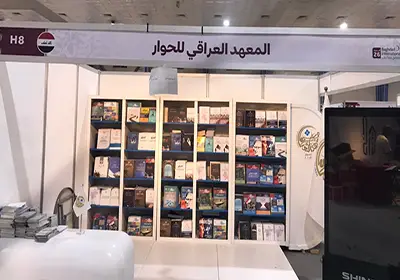
The Iraqi Institute for Dialogue, the logistical sponsor of the Baghdad International Book Fair, opens its own pavilion at the fair
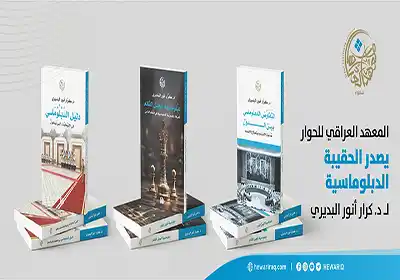
The Iraqi Institute for Dialogue publishes "The Diplomatic Portfolio" by Dr. Karrar Al-Badiri
Official agreement between Iraqi Institute for Dialogue and the Iraqi Media Network to sponsor The Seventh Annual International Conference of “Baghdad Dialogue” 2025
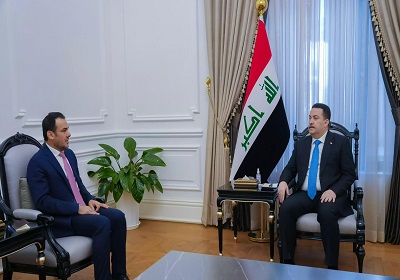
Prime Minister: The path of development will make Iraq a regional political and economic powerhouse
Invitation to the 79th issue of Dialogue of Thought
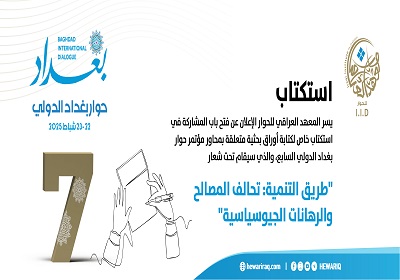
Seventh Baghdad International Dialogue Conference Call for Papers
Praise for the Baghdad International Dialogue: Strengthening Iraq's pivotal role and a meeting point for visions
Comments