


Written by: Mrs. Ganoa Said
The Quad Plus and its impact on Asia-Pacific security
The geopolitical landscape in the Asia-Pacific has changed rapidly. The existence of the Quad, Quad Plus, and OCOS arrangements appear to provide stability, but their combination may upset the norms and produce strategic confusion. The question remains: is this expansion necessary to bring greater stability to the region, or is it pushing global systems to their limits and increasing the potential for turbulence?
In recent years, the Asia-Pacific region has become the most prominent global strategic target, thanks to the accelerated establishment of trade routes, the growth of economies, and rising military power. In response to this multipolar security order, the Quad Security Dialogue has gradually expanded to include a new group of members known as the Quad Plus. But the big question is: Is this rapid growth a sign of strategic foresight or simply a gamble that could upset the delicate balance of power?
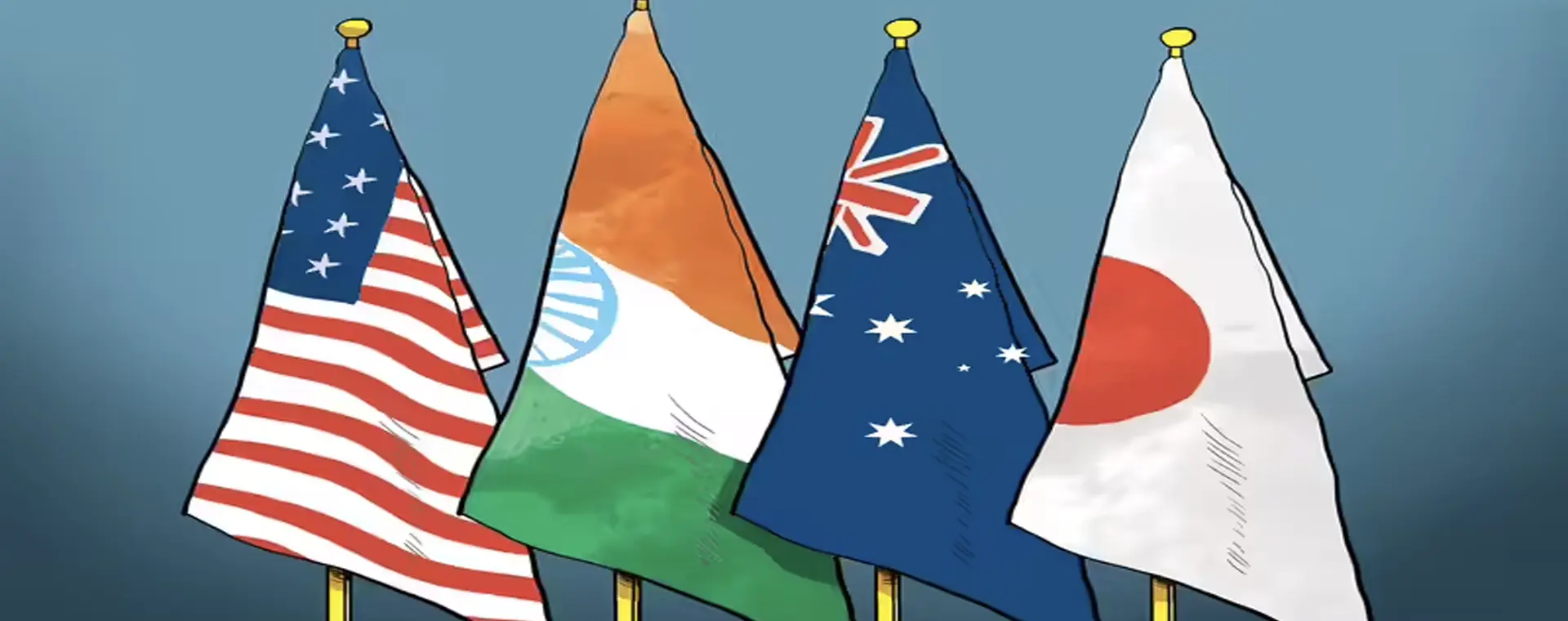
The "Quad" consists of four major democracies: The United States, Japan, India, and Australia, located at the center of the Asia-Pacific architecture. It was founded in 2007 as a consultative organization for a "free and open region." Over time, it became one of the pillars of the regional system to support the agendas of maritime security, economic resilience, technology, and health, and even created a partnership in "maritime domain awareness." However, its activities stalled for a decade and were revived in 2017 due to growing Chinese influence and renewed U.S. interest in the region.
Later, the Quartet expanded to include countries such as South Korea, New Zealand, and Vietnam in an informal setting under the umbrella of Quartet Plus. By 2021, Quad leaders participated in their first summit where they focused on COVID-19 vaccines, climate change, technological innovation, and supply chain resilience. All four of its navies conducted joint exercises for the first time in November 2020.
In contrast, the United States has weaved a new network of alliances through OCOS, strengthened bilateral ties with Vietnam and Indonesia, and formed trilateral arrangements with Japan, South Korea, and the Philippines, creating an interlocking security system in the region.
China has strengthened its naval capabilities, asserting its interests in the South China Sea and Taiwan Strait, increasing tensions with all Quartet members. Australia has been targeted with economic sanctions after demanding that the World Health Organization investigate the origin of COVID-19, while its disputes with India and Japan over borders and territory have escalated, amid continuing tensions with the United States.
The Quartet's activities have also extended to health and technology through vaccination campaigns, digital infrastructure, cybersecurity, and satellites. Expanding "soft power," South Korea and New Zealand have joined Quad Plus, seeking to emphasize the bloc's civilian rather than military character. The Quad investor network also hopes to fund green initiatives to compete with China's Belt and Road Initiative, focusing on supply chains, digital corridors, and critical infrastructure, with support from the European Union and France.
But this wave of new alliances has upset the region's balance. Beijing saw the creation of OCOS as the embodiment of a "Cold War mentality" and warned of its negative impact on stability. Some Southeast Asian diplomats have also expressed fears of being caught between major blocs or marginalizing ASEAN's role in regional forums.
The inclusion of ASEAN in any security arrangements is the key to legitimacy, Indonesian experts say, warning that bypassing its structures could push smaller countries into the arms of China instead of engaging in quadrilateral projects.
A German report also noted that the Quad may turn from a stabilizing factor to a source of instability, as it does not address the root issue of the U.S.-China conflict. Although sometimes likened to an "Asian NATO," the Quad and OCOS are not full-fledged alliances, but rather flexible arrangements that can lead to partner fatigue and imbalances.
Ultimately, the Asia-Pacific is seen as a chessboard that requires careful calculations. The Quad and Quad Plus should move gradually, prioritizing practical cooperation in areas such as maritime security, disaster relief, and technology sharing, while maintaining ASEAN's centrality in the regional architecture. The road ahead for the Quad Plus holds great opportunities for cooperation, but also risks overextension and instability.

The Iraqi Institute for Dialogue, the logistical sponsor of the Baghdad International Book Fair, opens its own pavilion at the fair
Official agreement between Iraqi Institute for Dialogue and the Iraqi Media Network to sponsor The Seventh Annual International Conference of “Baghdad Dialogue” 2025
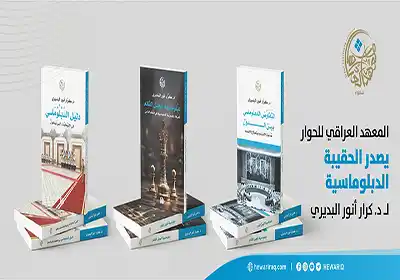
The Iraqi Institute for Dialogue publishes "The Diplomatic Portfolio" by Dr. Karrar Al-Badiri

Invitation to the 79th issue of Dialogue of Thought

Prime Minister: The path of development will make Iraq a regional political and economic powerhouse
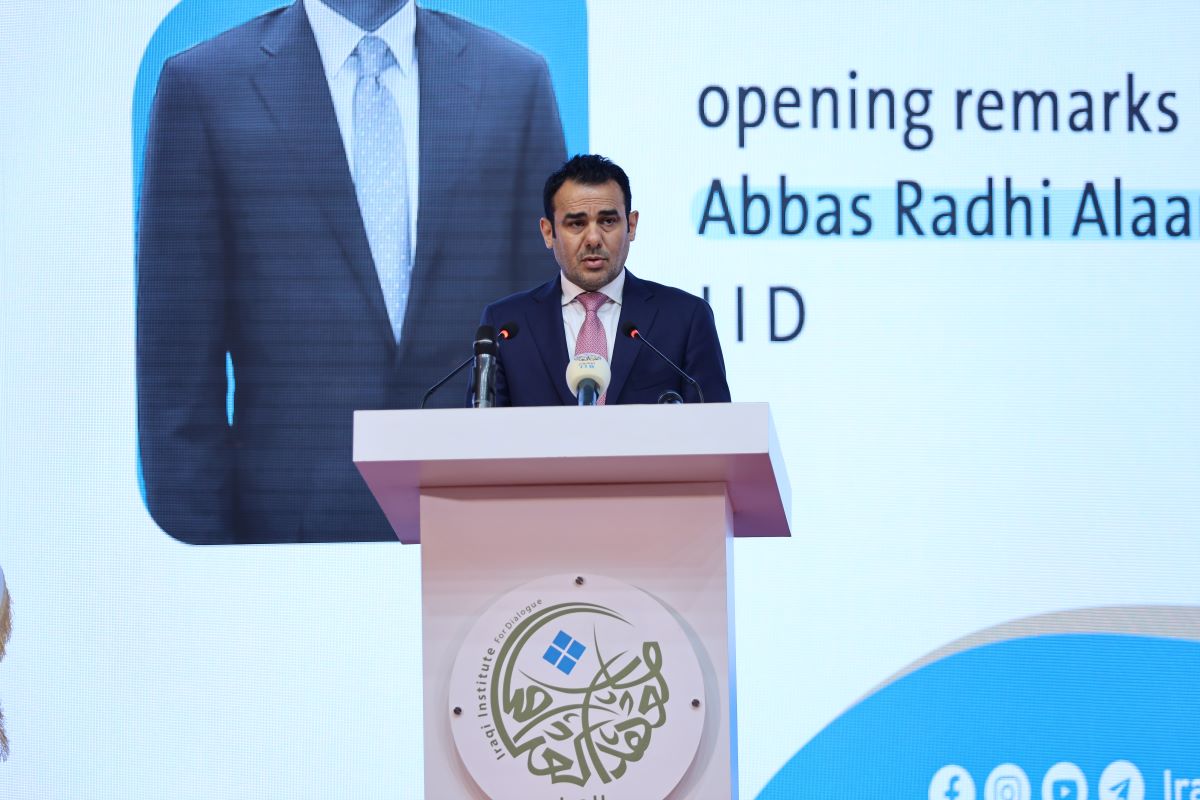
Speech of the Director of the Iraqi Institute for Dialog at the Sixth Baghdad International Dialog Conference
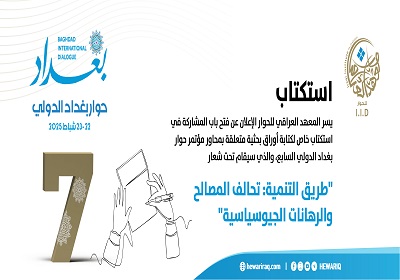
Seventh Baghdad International Dialogue Conference Call for Papers
Comments