


Translation: Iraqi Institute for Dialog
Are Egypt and Israel heading toward an open confrontation?
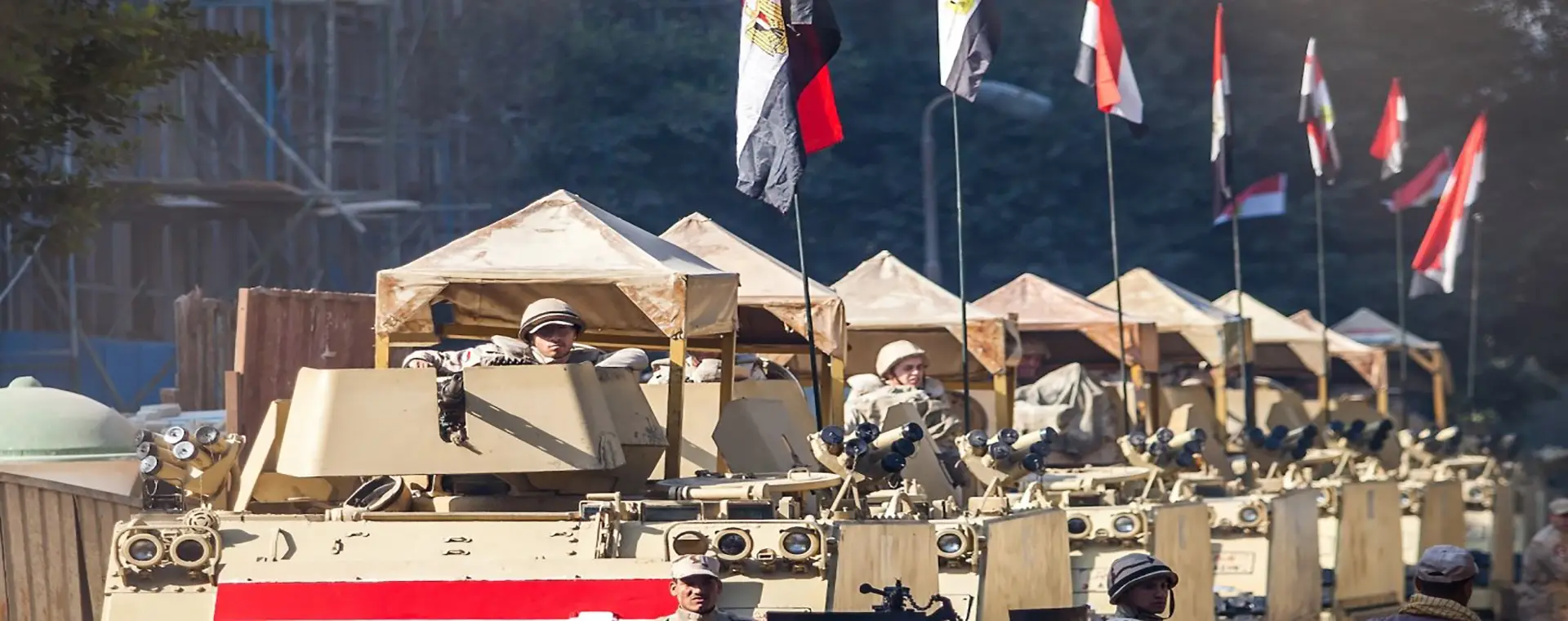
In recent months, Egyptian-Israeli relations have witnessed unprecedented shifts in Cairo's tone toward Tel Aviv, raising serious questions about the possibility of the two sides slipping into a direct military confrontation in light of escalating regional tensions and the continuing Israeli war on Gaza and its wide-ranging regional repercussions.
A change in Egyptian rhetoric
On September 15, 2025, during an emergency summit of Arab and Islamic states in Doha, Egyptian President Abdel Fattah al-Sisi described Israel as an "enemy" - an unprecedented public characterization since he took power in 2014.
This sharp shift in Egyptian official rhetoric reflects deep dissatisfaction with Israeli policies, especially with the increase in attacks in Gaza, the expansion of military operations near the Egyptian border, and the repeated targeting of the Rafah crossing.
The Israeli press, such as Israel Hayom, saw Sisi's remarks as a "strategic turning point," arguing that Cairo "legitimized confrontational rhetoric" after decades of adhering to the peace treaty.
Stress triggers
Israel's Direct Threats to Gaza and Egypt
The Israeli military announced that more than 100 drones had entered Egyptian territory, and implicitly accused Egypt of being soft on Hamas.
Egypt's Concerns about Sinai
Cairo sees the displacement of Palestinians from Gaza to Sinai as a strategic "red line." Israeli operations in Rafah have revived these fears, especially with Israeli Prime Minister Benjamin Netanyahu's calls for the "resettlement of Gazans."
Militarization in the Sinai Peninsula
Several reports (including Axios) indicated that Egypt has doubled its forces in Sinai to about 40,000 soldiers, in addition to deploying advanced Chinese air defense systems (HQ-9B). This military deployment exceeds the ceilings set in the 1979 Camp David Treaty, which Israel considered a "breach" of the agreement.
Signs of a possible confrontation
The diplomatic track has stalled: Cairo has not sent a new ambassador to Tel Aviv in months, and the accreditation of the new Israeli ambassador to Egypt has been postponed.
Unspoken warnings: Media reports revealed that Egypt has informed the United States of its categorical rejection of any Israeli attempt to target Hamas leaders inside Egyptian territory.
Tribal mobilization in Sinai: Local sources say that Sinai's tribes are ready to support the army in the event of a conflict.
However, the likelihood of direct war remains "relatively low," according to experts' estimates, but it is no longer ruled out if Israel continues its escalatory policies.
Regional dimensions
The Egyptian-Israeli tension coincides with a potential reshaping of regional alliances:
Saudi Arabia and Pakistan signed a defense agreement (September 2025), with other Arab countries likely to join.
Egypt and Turkey's first joint naval exercise in 13 years in the Eastern Mediterranean (September 22-26) sent a clear message to Israel.
Cairo, Riyadh, Doha, and Tehran are in intensive talks about creating a "NATO-style regional defense alliance."
Strategic estimation
Risks: Continued escalation could put the Camp David Accords at risk and threaten a limited or wide-scale military confrontation.
Opportunities: The tension could push Cairo to strengthen its regional alliances and increase its bargaining power with the United States and the European Union.
The decisive parameter: The extent to which Israel is willing to pursue its "Greater Israel" project and its expansionist policies, versus Egypt's ability to maintain balanced deterrence without being drawn into a full-scale war.
Conclusion
The question remains open: Is Sisi seeking an actual military confrontation, or is the new rhetoric part of a political-military deterrence strategy aimed at restraining Israel from crossing Egypt's "red lines" in Gaza and Sinai?
What can be confirmed is that Egyptian-Israeli relations are entering an unprecedented phase of tension since the 1979 peace treaty, and that developments in the coming months will determine whether this shift will remain within the framework of a war of words and political pressure, or whether it will develop into a field confrontation.

The Iraqi Institute for Dialogue, the logistical sponsor of the Baghdad International Book Fair, opens its own pavilion at the fair
The Iraqi Institute for Dialogue publishes "The Diplomatic Portfolio" by Dr. Karrar Al-Badiri
Official agreement between Iraqi Institute for Dialogue and the Iraqi Media Network to sponsor The Seventh Annual International Conference of “Baghdad Dialogue” 2025
Invitation to the 79th issue of Dialogue of Thought
Prime Minister: The path of development will make Iraq a regional political and economic powerhouse
Seventh Baghdad International Dialogue Conference Call for Papers
Praise for the Baghdad International Dialogue: Strengthening Iraq's pivotal role and a meeting point for visions
Comments