


Translation: Iraqi Institute for Dialog
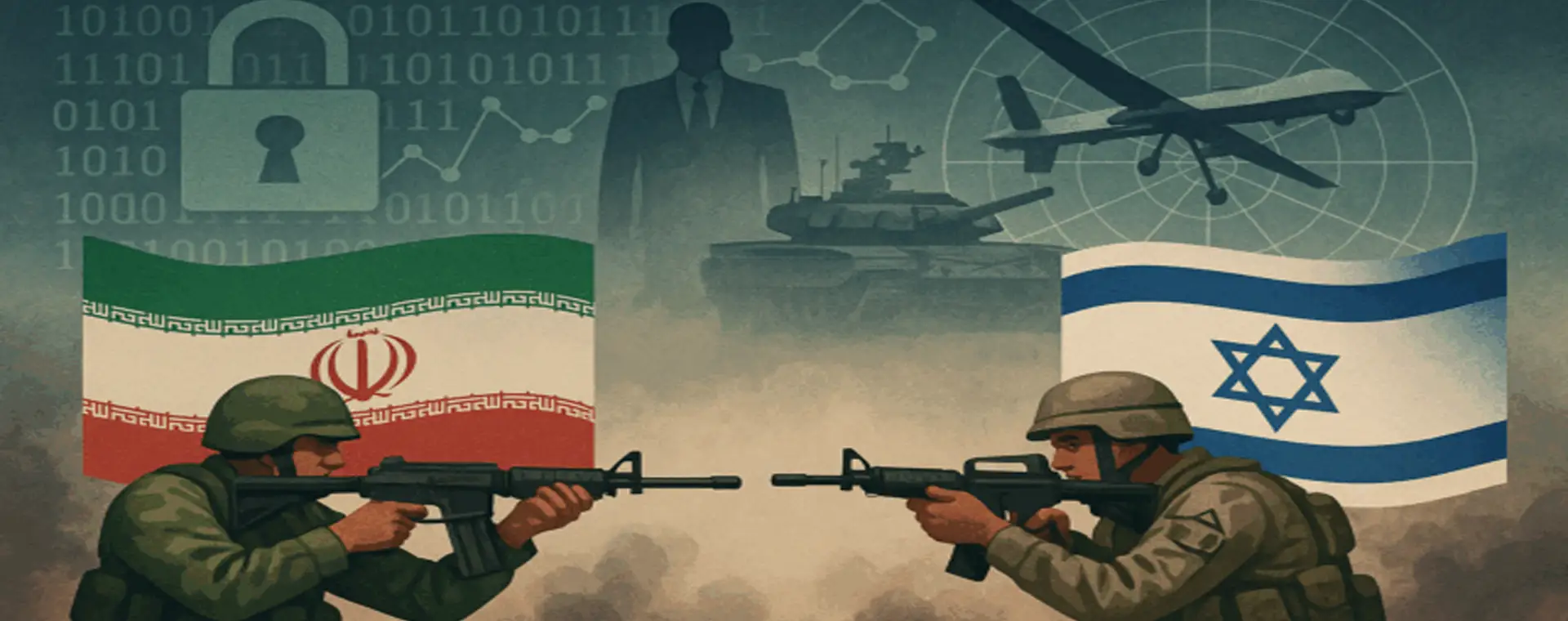
The risks of escalation between Israel and Iran: A reading of the military, political and information warfare dimensions
In the second half of 2025, the region witnessed a sharp escalation of tension between Iran and Israel, amid a volatile international and regional environment that reopened the question of open warfare and the possibility of renewed Israeli strikes against the Iranian depths. These developments reflect the accumulation of several parallel tracks:
Military factor: The arms race and the erosion of conventional deterrence.
Political factor: Activation of the European Snapback mechanism and the reimposition of sanctions.
Information factor: The escalation of document warfare and leaks as an unconventional deterrent.
This study aims to analyze the dynamics driving the likelihood of a renewed Israeli strike against Iran, focusing on the interplay between military, political, and information warfare determinants, and to provide a forward-looking reading of potential escalation paths.
I: Political Context and Strategic Environment
Activate the Snapback mechanism: The E3's announcement to reimpose sanctions and an arms embargo on Iran was a dangerous turn of events, giving Israel additional political support to sell its rhetoric about the "Iranian threat."
Political timing in Washington: The approaching US midterm elections limit the margin of maneuver for President Trump, who usually prefers to avoid a broad military engagement that could turn into an uncontrolled conflict. However, the possibility of limited strikes remains if they are deemed to have strategic or electoral value.
Regional transformations: The tension with Iran is being used as a renewed US and European pressure card, which increases Iran's political exposure, despite its attempts to expand its partnerships with Russia and China.
II: Military equation
Israeli attack in June 2025:
He revealed an Israeli attempt at three main targets:
Bringing the U.S. into an all-out war against Iran.
Targeting the political and scientific elite associated with the nuclear program.
Undermine Iran's strategic capabilities and diminish its regional role.
But the Iranian missile response that damaged Israeli cities revealed Tel Aviv's limited ability to withstand a protracted conflict.
Air defenses and attrition:
The U.S. has fired between 92 and 150 THAAD missiles, equivalent to 14-25% of its total inventory, an attrition that imposes a 4-8 year gap for reloading.
Israel's multi-layered defenses (Iron Dome, David's Sling, Arrow) proved effective but at a high cost, ranging from $50,000 to $2 million per interceptor.
Iranian modernization:
The introduction of MiG-29 fighters as a short-term tactical solution.
Gradual delivery of Sukhoi-35 fighters announced.
Expect the deployment of China's HQ-9 and Russia's S-400 as part of a long-term strategy to strengthen air defense.
However, Tehran faces severe constraints due to sanctions and the difficulty of acquiring advanced systems in large quantities.
Third: The Information Dimension and Psychological Warfare
Iranian leaks: They included photos of Israeli nuclear facilities and personal files belonging to IAEA Director Rafael Grossi, with the aim of:
Demonstrate deterrence through knowledge of sensitive locations.
Exposing double standards on Israel and the NPT.
Questioning the independence of the International Atomic Energy Agency.
Western response: It was noted that the documents were publicly available, but the timing of the release was directly related to the diplomatic escalation (snapback), reflecting a calculated Iranian strategy to reframe the narrative.
IV: Possible scenarios
A limited Israeli strike in the near term:
motivated by the exploitation of the American and European political window.
Targets sensitive nuclear program centers or command centers.
Its goal is to weaken Iran's deterrent capabilities before advanced defense systems come into service.
Postponing the strike until preparations are finalized:
as a result of internal U.S. pressure or the risk of broader escalation.
It gives Iran time to strengthen its air defenses and fortify its missile capabilities.
A slide into a long regional war:
If the Israeli strike triggers a large-scale Iranian response against Israeli cities and U.S. bases.
A high-risk scenario that threatens the stability of the region and extends to global energy markets.
V: Monitoring indicators
Additional U.S. transfers of defense systems or shipments of strategic munitions to Israel.
Satellite imagery or independent reports confirm the arrival of Su-35s or S-400s in Iran.
The frequency of Iranian leaks related to the Israeli file or the International Atomic Energy Agency (IAEA) has escalated.
U.S. public statements on military engagement in the region ahead of the election.
Conclusion
The data confirms that the likelihood of a renewed Israeli strike against Iran in the near term is high, but it is conditioned by political and military constraints. While Tel Aviv is trying to exploit the window of international political timing and military pressure, Tehran seeks to close this window through defense modernization and information warfare.
The coming confrontation - if it occurs - could determine the balance of power in the Middle East for an entire decade, not only at the military level, but also in the balance of political and psychological deterrence.

The Iraqi Institute for Dialogue, the logistical sponsor of the Baghdad International Book Fair, opens its own pavilion at the fair
Official agreement between Iraqi Institute for Dialogue and the Iraqi Media Network to sponsor The Seventh Annual International Conference of “Baghdad Dialogue” 2025

The Iraqi Institute for Dialogue publishes "The Diplomatic Portfolio" by Dr. Karrar Al-Badiri
Invitation to the 79th issue of Dialogue of Thought
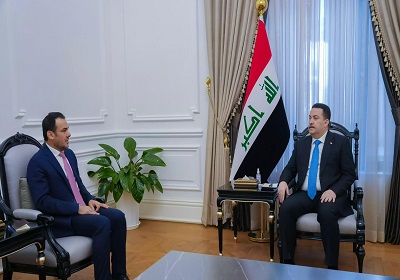
Prime Minister: The path of development will make Iraq a regional political and economic powerhouse
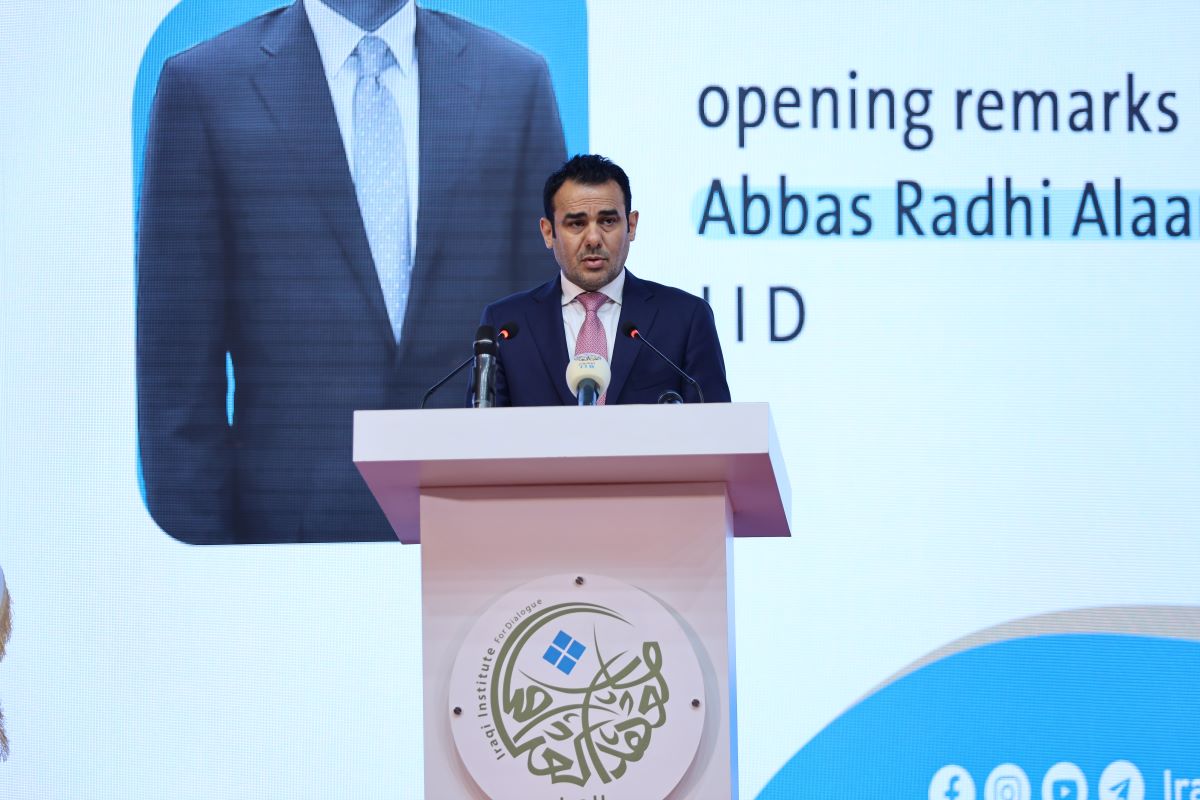
Speech of the Director of the Iraqi Institute for Dialog at the Sixth Baghdad International Dialog Conference
Seventh Baghdad International Dialogue Conference Call for Papers
Comments