

By Alec Soltz Translated by: Iraqi Dialog Institute
Kurds: The Dream of Independence and the Satisfaction of Autonomy
With an estimated 30-40 million people, the Kurds are the largest ethnic group in the Middle East without a sovereign state. However, it may surprise some that many Kurds are not seeking a separate state for themselves.
Instead, several well-known Kurdish groups, such as the People's Protection Units (YPG) and the Kurdistan Workers' Party (PKK) in Syria and Turkey, are struggling to promote autonomy within the borders of their current states. This is due to two main reasons: A lack of political will to achieve full independence (outside of Iraq) and a realistic appreciation of the enormous challenges involved in establishing an independent state.
Toward a different paradigm
In terms of the political ideology that drives both the PKK and YPG, a unique thread is a commitment to an ideology known as "democratic federalism" formulated by PKK leader Abdullah Ocalan.
This ideology advocates a form of liberal-socialist society, which stands in opposition to both traditional socialism and the capitalist state. According to Ocalan's ideal model, councils are organized at the provincial or municipal level, which then elect representatives to higher bodies at the confederal level. Unlike representatives who legislate laws, supreme commissions exist primarily to coordinate policies among their members and their mandate can be withdrawn at any time by the municipal councils.
Although the goal of democratic federalism is to replace traditional state structures, its proponents often tolerate the presence of neighboring states as long as they do not interfere in the affairs of the confederation. Ocalan's ideology is also multicultural, in part because of its rejection of the nation-state and its embrace of liberal, anti-capitalist political values.
Turkey and Syria
Kurds in Syria and Turkey have long been sympathetic to Ocalan's ideology. The U.S.-backed Syrian Democratic Forces (SDF) consists mainly of YPG-linked militias, who are ideologically aligned with Ocalan. Despite being officially separate organizations, the YPG maintained close ties with the PKK in Turkey before the latter disbanded in 2025 after reaching a peace agreement with the Turkish government.
In Turkey, the Peoples' Democratic Party (HDP) was founded on the basis of the Peace and Democracy Party (BDP) established in 2008, which was organized around Kurdish interests. Over time, the HDP, in alliance with other leftist parties, formed a unified bloc for Kurdish and other minority interests in the Turkish parliament.
In Syria, after the fall of Bashar al-Assad in late 2024, Syrian Kurds have been active in trying to create a more democratic Syria, although their status in the political future remains uncertain. Interim President Ahmad al-Sharia has stated that he would welcome an agreement with the Kurds, but mistrust is mutual.
Kurds in Iraq
Unlike the Kurds of Syria and Turkey, the Iraqi Kurds were able to secure substantial autonomy in the form of a centralized, self-administered region within Iraq, the Kurdistan Regional Government (KRG) after the 2003 US invasion. The region has its own president, army, semi-democratic elections, and limited foreign relations.
Although major democracy indicators do not track Iraqi Kurdistan, the two main parties in the KRG, Barzani's Kurdistan Democratic Party (KDP) and the Kurdistan Progressive Party (PUK), have sometimes resorted to harsh tactics against their rivals.
However, there are seven parties holding more than two seats in the KRG parliament, including the liberal New Generation Party and the Kurdistan Islamic Union, neither of which are particularly qualified for the political model advocated by Ocalan.
Kurds in Iran
The situation for Iranian Kurds is very similar to that in Syria and Turkey. Tehran's attempt to "Christianize" many minority groups has not gone unnoticed by Iranian Kurds. As in Turkey and Syria, groups such as PJAK and Komala embrace Ocalan's ideology, but operate cautiously to avoid a strong government reaction or from the Persian majority.
The road to Kurdish statehood is fraught with peril
The lack of contiguous territory in Kurdish areas is a major challenge to establishing an independent state. For example, the KRG in Iraq does not govern all Kurdish-majority areas. Kurds live in scattered areas in eastern Turkey, and not all Kurds inhabit the historical areas, making their inclusion in a future Kurdish state a challenge.
Moreover, an independent Kurdistan would have no sea ports, making its international trade dependent on neighboring countries, which have historically opposed Kurdish independence.
Maintaining a unified state across diverse geographies, from the mountains of Iran and Turkey to the plains of Syria and the KRG, will be a security challenge, as well as historical, political, tribal, and regional differences, leaving "Greater Kurdistan" facing demographic and geographic divisions.
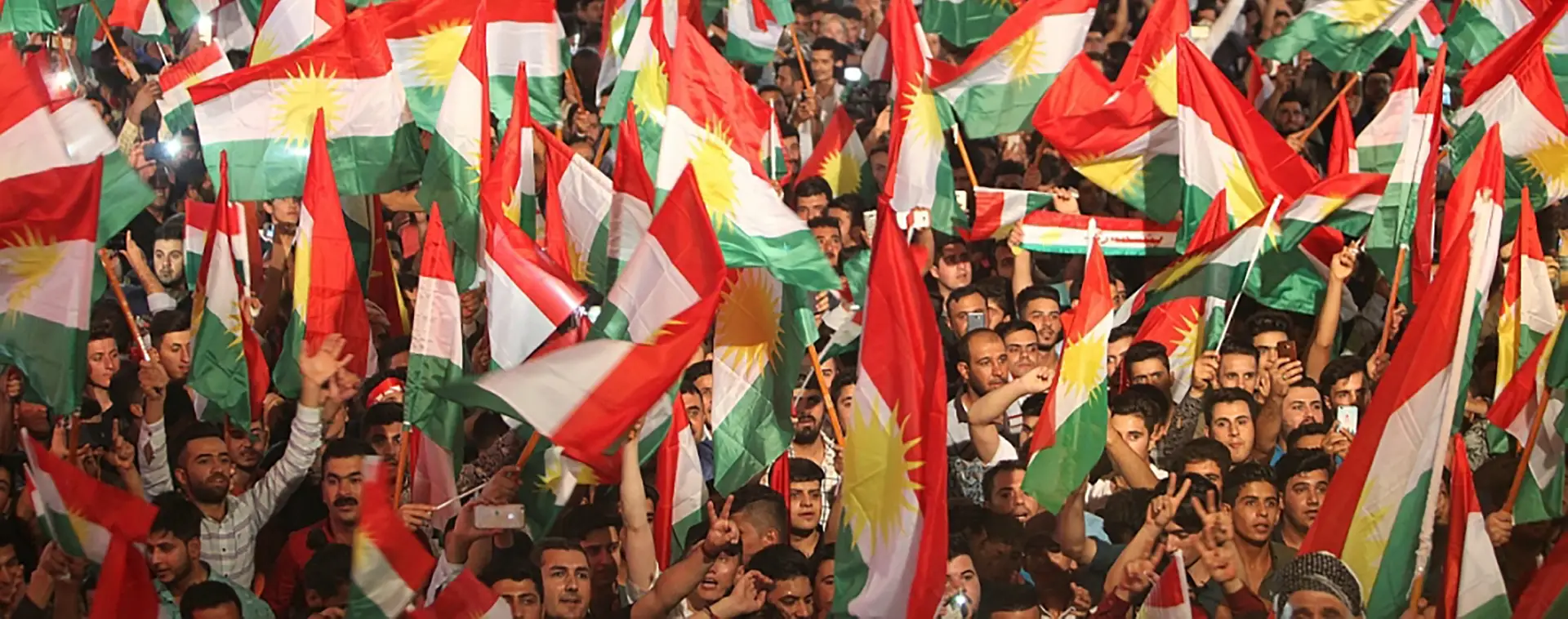
This difficult scenario is reinforced by the absence of a unified political will to create an independent state, suggesting that the emergence of a Kurdish state is unlikely in the near future, at least outside of Iraqi Kurdistan. Even within the KRG, practical considerations and waning international support will hinder a limited Kurdish state, despite overwhelming support for independence in the 2017 referendum.
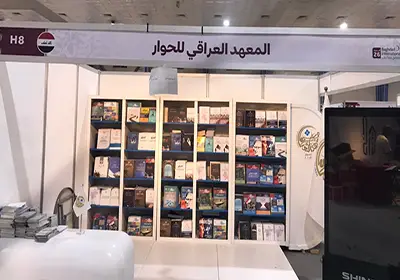
The Iraqi Institute for Dialogue, the logistical sponsor of the Baghdad International Book Fair, opens its own pavilion at the fair
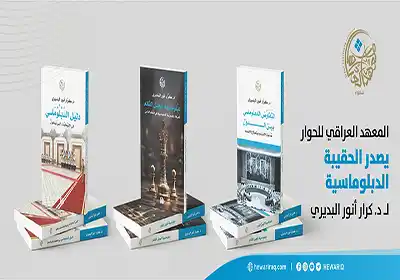
The Iraqi Institute for Dialogue publishes "The Diplomatic Portfolio" by Dr. Karrar Al-Badiri
Official agreement between Iraqi Institute for Dialogue and the Iraqi Media Network to sponsor The Seventh Annual International Conference of “Baghdad Dialogue” 2025
Invitation to the 79th issue of Dialogue of Thought
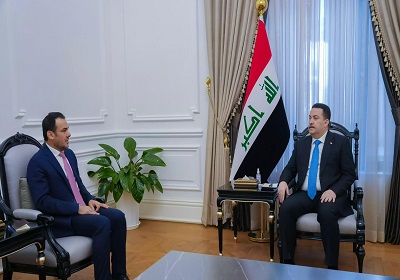
Prime Minister: The path of development will make Iraq a regional political and economic powerhouse
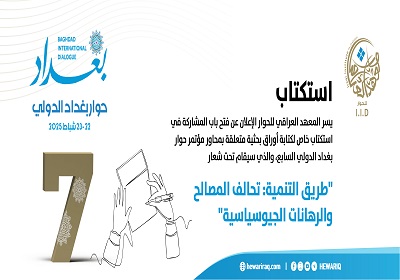
Seventh Baghdad International Dialogue Conference Call for Papers
Praise for the Baghdad International Dialogue: Strengthening Iraq's pivotal role and a meeting point for visions
Comments