


Translation: Iraqi Institute for Dialog
How the UAE built a circle of bases to control the Gulf of Aden
From the Socotra Islands in the Indian Ocean to the coasts of Somalia and Yemen, satellite imagery analyzed by Middle East Eye shows a growing network of military and intelligence bases built by the UAE.
This "security belt" around one of the world's busiest sea lanes has expanded rapidly since the October 7 Hamas-led attacks on Israel and the subsequent devastating war in Gaza.
The UAE's allies-including Israel and the United States-have been involved in the creation and expansion of these bases.
Israeli officers have been stationed on the ground on those islands, while radar systems and other Israeli military and security equipment allow the UAE to monitor activities and thwart attacks by the Houthis - the Iran-allied movement that has fired rockets at Israel in solidarity with the Palestinians and targeted ships passing through the Red Sea and Gulf of Aden.
The UAE and Israel also have a joint intelligence-sharing platform known as Crystal Ball, which "designs, implements and enables the development of regional intelligence capabilities" in partnership, according to a promotional presentation of the agreement.
Israeli diplomat Alon Pinkas, who has served as an advisor to four Israeli foreign ministers, told Middle East Eye: "The relationship between the UAE and Israel was very advanced even before formal diplomatic relations were established, but it was managed quietly - not secret, just undeclared."
These bases were not built on territory officially under UAE sovereignty, but in areas nominally under the control of its allies, such as Yemen's Southern Transitional Council, military leader Tariq Saleh, as well as local administrations in Somaliland and Puntland, two regions within the territory of Somalia, whose relations with the UAE are strained.
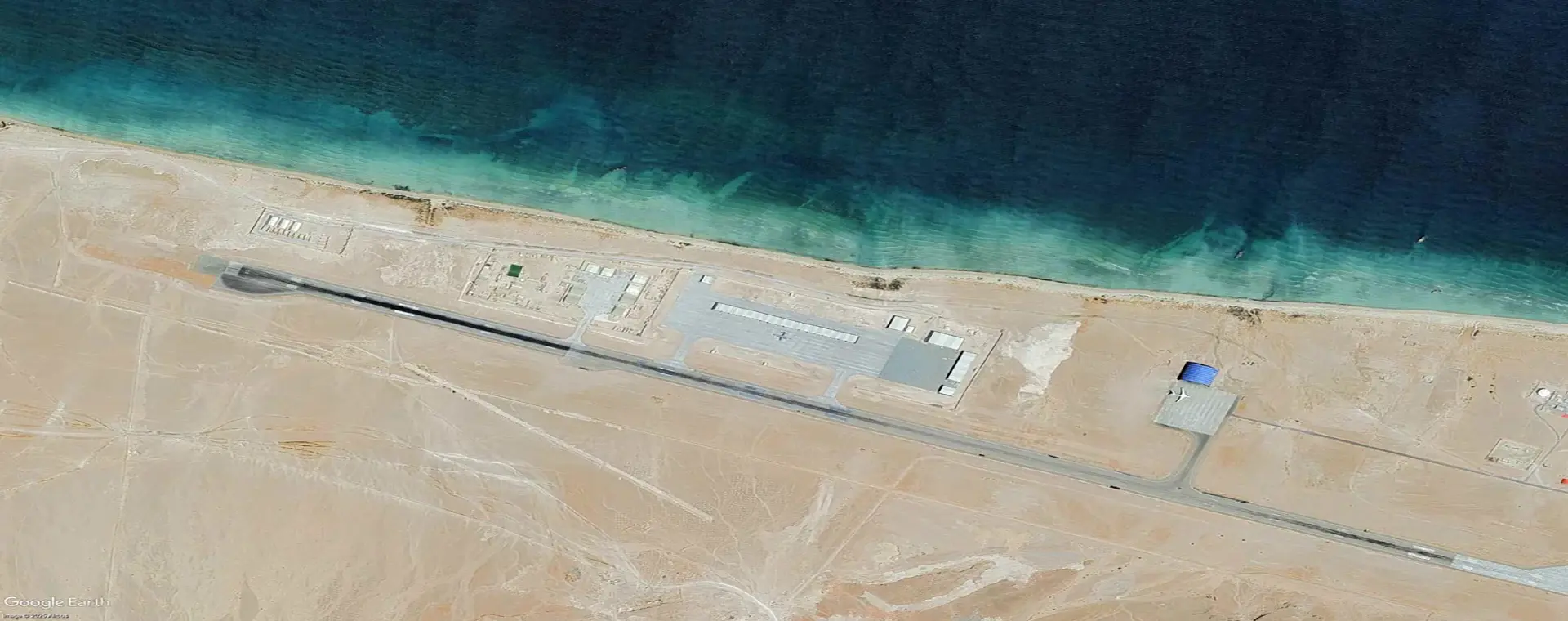
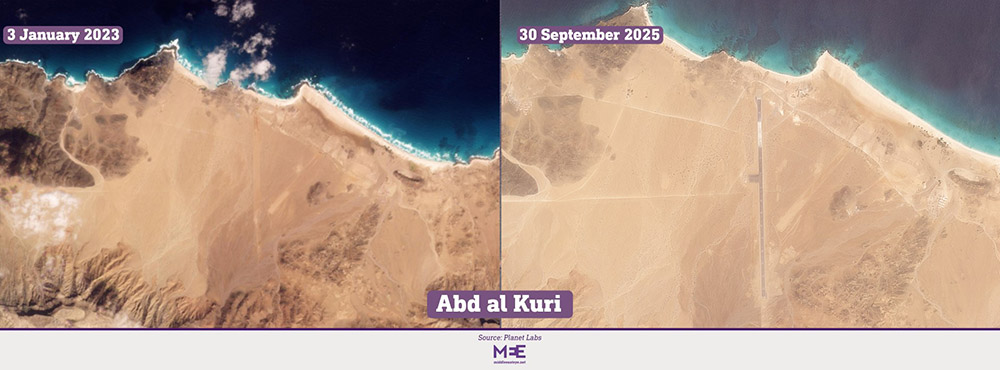
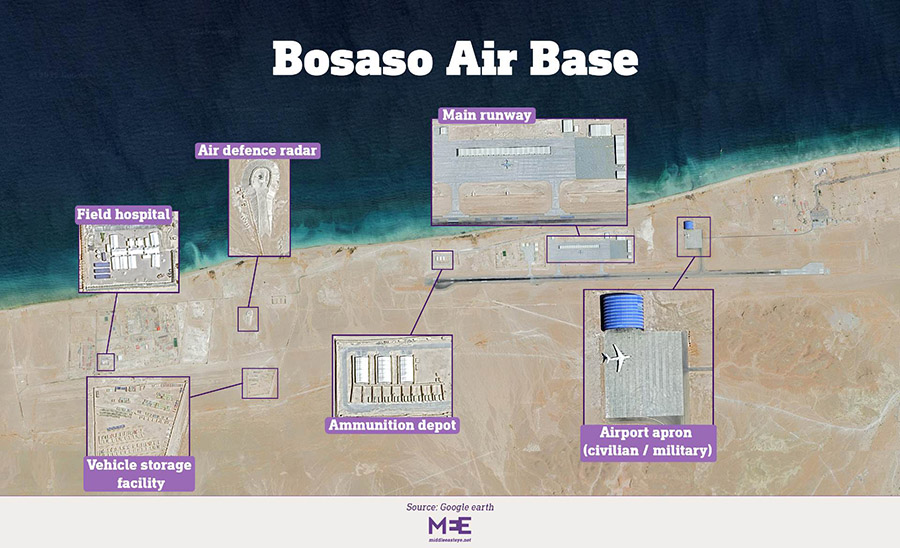
Military bases, runways, and other facilities have been established or expanded on the islands of Abdul Kori and Samha-two islands in the Socotra archipelago currently under STC administration-as well as the airports of Bosaso and Berbera in Puntland and Somaliland, Mokha in Yemen, and the volcanic island of Miyun (Prim) in the Bab al-Mandeb Strait, through which about 30 percent of the world's oil passes.
This network of bases allows the UAE and its allies to control this vital sea lane. According to Israeli sources, it was developed in close coordination with Israel, forming an interconnected network for intelligence sharing and missile defense between Israel, the UAE, and their regional partners.
The Washington Institute for Near East Policy, a pro-Israel think tank, describes this new pattern: "Multilateral air defense alliances have become a key element of the post-October 7 Middle East defense landscape, with countries sharing radar systems, intelligence, and early warning mechanisms."
While this chain of bases plays a crucial role in monitoring global shipping traffic and Houthi or Iranian activities in the region, according to several diplomatic and local sources, Bosaso and Berbera have become key stations for the UAE's support of the Sudanese Rapid Support Forces (RSF) in its war inside Sudan.
Creating a network of bases around the Red Sea and Gulf of Aden is similar to the way the UAE has used its vast financial power to extend its influence in several countries surrounding Sudan, including southeastern Libya, which is controlled by General Khalifa Haftar, as well as Chad, the Central African Republic, Uganda, Ethiopia, and Kenya.
The UAE also has two bases inside Sudan, which has been at war since April 2023: One in Nyala, South Darfur, and the other in Malha, 200 kilometers from El Fasher, the capital of North Darfur, which has been under siege for more than 500 days by the RSF.
Despite its repeated denials, the UN has deemed multiple in-depth reports - including those published by Middle East Eye - about the UAE's support for the RSF as highly credible. Washington has characterized the actions of the RSF in Sudan as genocide.
Middle East Eye has reached out to the UAE Foreign Ministry and its embassy in London for comment, but has not received a response at the time of writing.
The UAE has previously said in official statements that "any presence on Socotra Island is based on humanitarian reasons and in coordination with the Yemeni government and local authorities."
UAE Expands Military and Intelligence Influence in the Horn of Africa and Arabian Sea
For decades, the UAE, led by Abu Dhabi Crown Prince Mohammed bin Zayed, has sought to expand its military and political influence from the Gulf to the Horn of Africa, capitalizing on its considerable wealth and ability to practice interest-based diplomacy and limited military intervention.
Mohammed bin Zayed, a member of the Al Nahyan family that has ruled Abu Dhabi since the 18th century, is a fierce opponent of political Islam and a key ally of the United States, which relies heavily on the UAE to shape its regional policies. Although the UAE has a population of about 10 million, citizens make up only about 1 million, with expatriates and foreign workers making up the rest.
"The deteriorating conditions in countries such as Ethiopia, Libya, Yemen, Somalia and Sudan allow the UAE to exert influence beyond its official military capabilities, similar to what Britain did through the East India Company in India," said Jalil Harchoui, an analyst specializing in North Africa and political economy.
Harchoui added that the UAE, despite its small size, realized from 2009-2011 that active action could protect its interests and prevent its weaknesses from being exploited.
Yemen and the Socotra Islands: Strategic gateway
Yemen has been a major focus of UAE foreign policy, especially since 2015, when the UAE, along with Saudi Arabia, led a military coalition to support the Yemeni government against the Iranian-backed Houthis. Sudanese forces from the Rapid Support Forces were sent to participate in this coalition.
In November 2015, the UAE took advantage of Hurricane Chapala to deploy its forces to the Socotra archipelago, where it began building basic infrastructure before gradually establishing its military presence on the islands, before taking control of the archipelago in June 2020 through the Southern Transitional Council, an ally of the UAE.
Satellite imagery revealed the establishment of air bases on the islands of Abdul Kori, Samha and Mayon, in addition to enhanced intelligence and military capabilities, including runways capable of receiving heavy military transport aircraft and Israeli drones, in cooperation with Israel under the framework of the Abraham Accords.
Trans-Red Sea Bases Network
These bases are part of an integrated network that includes the ports of Bosaso and Berbera in Somalia, where the UAE has established military facilities, deep harbors, and a logistics fleet linking Yemen's islands to the ports of the Horn of Africa. The UAE has used these ports to support loyalist forces in Sudan and to transport weapons and equipment, bypassing some international restrictions, including the UN Security Council's arms embargo.
"The current reality reflects a combination of massive propaganda, readiness for military intervention in multiple theaters, significant financial resources, and disregard for international norms," Harchoui said.
Regional Balance with Israel
While the UAE maintains open relations with Israel, its military operations continue in the Red Sea and Gulf of Aden, focusing on monitoring strategic maritime routes and keeping tabs on Iranian and Houthi activity. Despite the strategic cooperation between the UAE and Israel in the areas of stabilization, counterterrorism, and regional deterrence, the recent conflict in Gaza and regional tensions are weakening some of these overt alliances.
It remains clear that the UAE's small size does not prevent it from adopting enormous geopolitical ambitions, making it a central player in maritime security and military policy in the Horn of Africa and the Arabian Sea.

The Iraqi Institute for Dialogue, the logistical sponsor of the Baghdad International Book Fair, opens its own pavilion at the fair
The Iraqi Institute for Dialogue publishes "The Diplomatic Portfolio" by Dr. Karrar Al-Badiri
Official agreement between Iraqi Institute for Dialogue and the Iraqi Media Network to sponsor The Seventh Annual International Conference of “Baghdad Dialogue” 2025
Invitation to the 79th issue of Dialogue of Thought
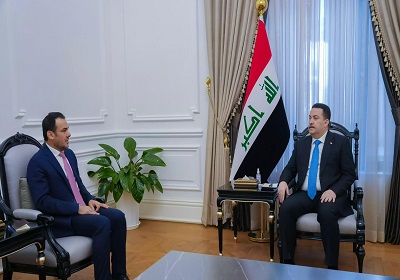
Prime Minister: The path of development will make Iraq a regional political and economic powerhouse
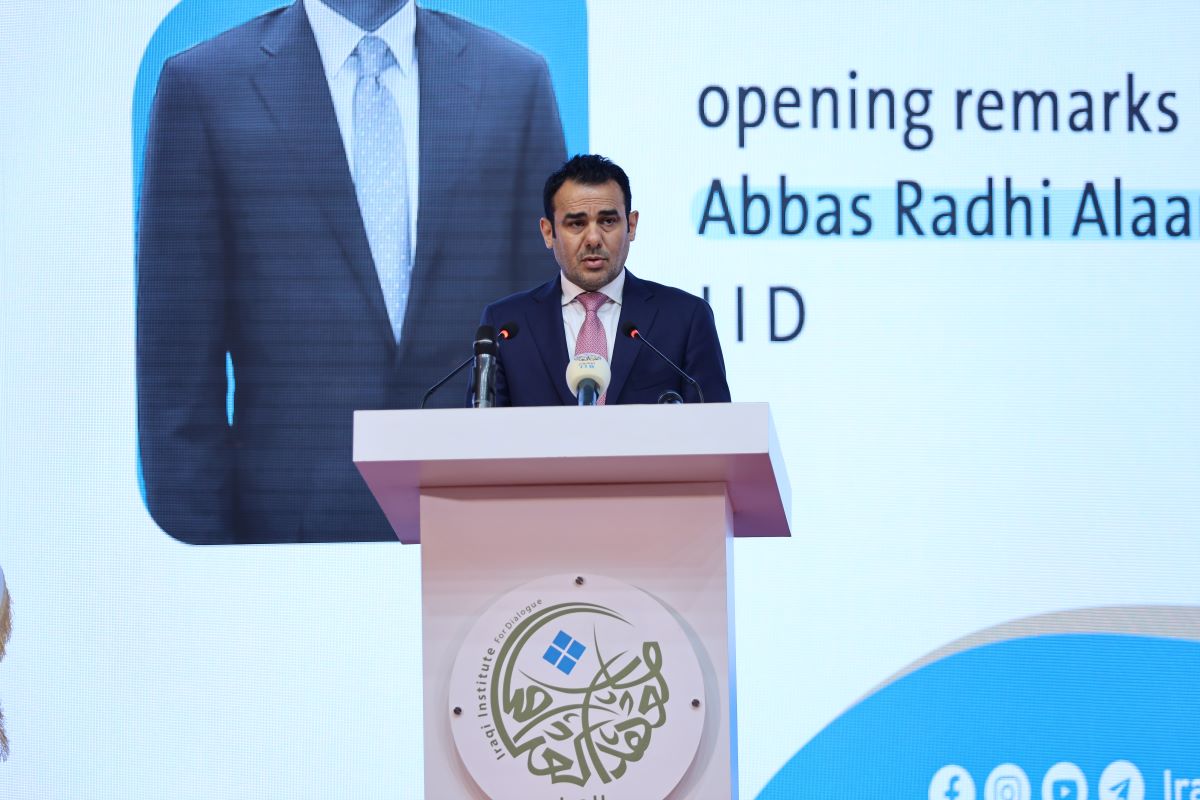
Speech of the Director of the Iraqi Institute for Dialog at the Sixth Baghdad International Dialog Conference
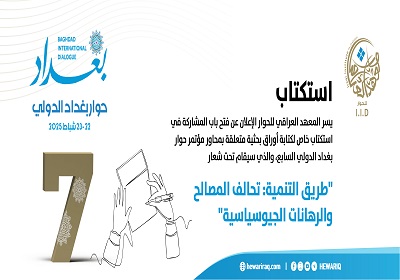
Seventh Baghdad International Dialogue Conference Call for Papers
Comments