


Translation: Iraqi Institute for Dialog
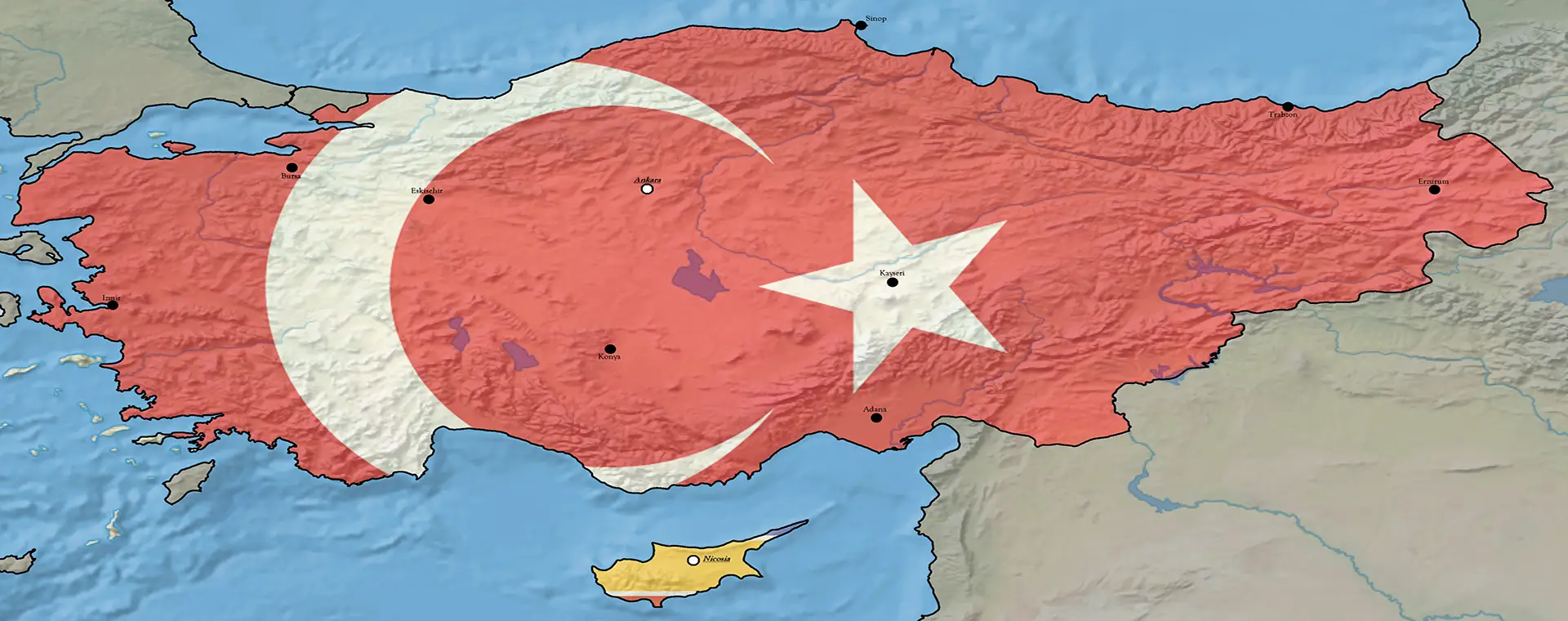
Turkey turns northern Cyprus into an advanced military base
Turkey treats the entire occupied Cypriot territory as a major military base that serves its geopolitical ambitions in the wider region, as Ankara continues to build up its military infrastructure and deploy military hardware in these areas.
These developments reflect Turkey's pursuit of a greater geopolitical role under President Recep Tayyip Erdogan, with occupied Cyprus a pivotal tool in implementing Ankara's regional strategies.
Turkey has reacted angrily to the Republic of Cyprus' acquisition of Israel's Barak MX missile defense system. The system's capabilities and its Israeli provenance provoked sharp rhetoric from Turkish officials and their representatives in occupied northern Cyprus, according to informed sources.
Cyprus strengthens deterrence capabilities through international partnerships
The Republic of Cyprus is approaching its security challenges within a broader framework that links the modernization of its defense system to regional developments, according to sources familiar with the newspaper Philopheros.
In its talks with partner countries, Nicosia has emphasized its geographic and geopolitical importance, pointing to two military bases from which cooperation is possible.
The United States has expressed interest in providing technical and financial support to modernize the Andreas Papandreou Air Base in Paphos, while European countries, including France, have expressed interest in the Mare naval base, according to the same sources.
The sources said: "Cyprus is a pillar in which countries can invest, and Nicosia is taking full advantage of this interest," the sources said, adding that the republic faces constant security threats from occupying Turkey and seeks to balance the balance of power by strengthening its national guard and expanding its international partnerships.
Electronic warfare systems and drone bases in the occupied north
Turkey has modernized the illegal Lefkoniko airfield in occupied Cyprus, where Bayraktar TB2 drones that carry out surveillance and reconnaissance operations in the region are based, according to available information.
The aircraft can carry weapons and send live images to Turkish ships operating in the region, with an operational range of about 200 kilometers from the ground control station, and can fly up to 20,000 feet.
Another worrisome development is the deployment on the Pentadakylos mountain range of Turkey's Aselsan electronic warfare system Vural, which has a range of up to 500 kilometers and can disable Cypriot National Guard systems, although countermeasures are in place.
Work has also resumed on the naval base in Bogazi, after the project was thought to be frozen, where ships will be stationed to monitor areas in the south of the island, along with a maritime surveillance station at Cape Apostle Andreas.
A surveillance system has also been installed on the Pentadakylos Mountains with a range extending as far as Lebanon and Israel.
Ankara replicates British military doctrine in the Eastern Mediterranean
Diplomats argue that Turkey is applying in the occupied territories an approach similar to British military doctrine in the Eastern Mediterranean, when London considered the entire island a military base during the colonial era.
The 1960 agreements modified this approach to identify specific military bases rather than using the entire island.
But Ankara is now trying to implement the first phase of that British doctrine by turning all of the occupied territories into a strategic military base to be used as a springboard for regional domination.
Turkey keeps up the pressure with repeated provocations
Turkey is using a series of escalatory moves and announcements to create a climate of tension, according to diplomatic sources, as it seeks to play a larger role in the region.
This behavior is partly related to Ankara's reaction to Cyprus and Greece blocking Turkey's participation in the European Union's SAFE defense funding program, despite having European supporters for its participation, according to the sources.
Among Turkey's recent moves:
The Turkish Defense Ministry overreacted to the Norwegian vessel Ramform Hyperion's 3D seismic surveys in southeast Cyprus, with Ankara issuing counter-notices (NAVTEX) and claiming Turkish Cypriot rights to gas revenues.
A new NAVTEX release for the oceanographic vessel Piri Reis in the Aegean Sea west of the islands of Lesvos and Chios between October 4 and 14, though it is unclear whether research will actually take place.
The Turkish occupation authorities in Cyprus protested the participation of two Greek F-16 Vipers in the October 1 parade marking the 65th anniversary of the founding of the Republic of Cyprus, with additional complaints that the planes flew over Kastellorizo on their return.
Turkey is demanding what it calls "fair sharing" of gas revenues, while trying to prevent the Republic of Cyprus from exploiting its natural resources, according to the sources.

The Iraqi Institute for Dialogue, the logistical sponsor of the Baghdad International Book Fair, opens its own pavilion at the fair

The Iraqi Institute for Dialogue publishes "The Diplomatic Portfolio" by Dr. Karrar Al-Badiri
Official agreement between Iraqi Institute for Dialogue and the Iraqi Media Network to sponsor The Seventh Annual International Conference of “Baghdad Dialogue” 2025

Invitation to the 79th issue of Dialogue of Thought
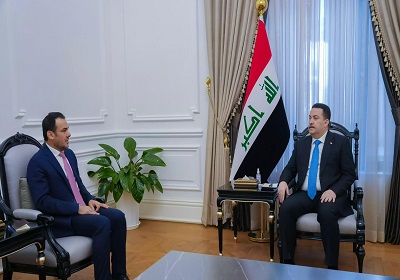
Prime Minister: The path of development will make Iraq a regional political and economic powerhouse
Seventh Baghdad International Dialogue Conference Call for Papers

Praise for the Baghdad International Dialogue: Strengthening Iraq's pivotal role and a meeting point for visions
Comments