


By Researcher and Analyst: Amir Sabah
Death Valley
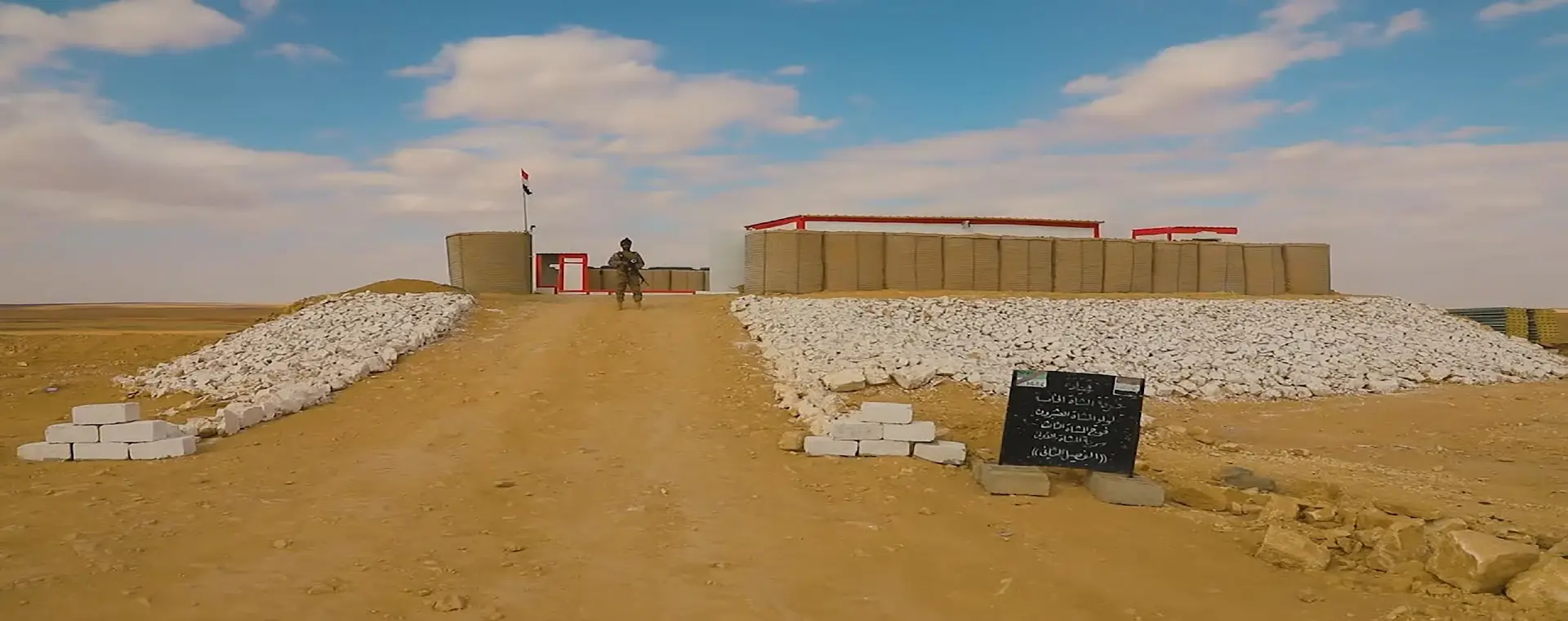
Along the western desert of Anbar and for a distance of 350 km, the Horan Valley extends from the Iraqi-Saudi border south of Majna and north of the city of Arar through the city of Rutba in western Anbar and ends with the Euphrates River near Al-Baghdadi in the city of Haditha The depth of the valley basin is estimated at 16550 km with areas that reach more than 200 meters deep and cross a central area between the Syrian border and the city of Ramadi. The environmental difficulty and complex terrain represent the most prominent challenge. The region is known for its many twists and turns, its rugged geographical nature and its compositional diversity between the desert, hills, caves, valleys and cliffs of different heights, as well as the difficult weather conditions and dust storms that constitute the nature of that region.
This region in particular is known for its high activity of extremist terrorist organizations such as Daesh because it provides safe havens and natural incubators from the caves, valleys and passages that Daesh dug during its control of the region, where the terrorist organization is present in the form of individual cells estimated at 150 to 200 cells, while their number is estimated at about 2500 terrorist elements, as the extremist organization uses a tactic aimed at destabilizing the border areas adjacent to the areas controlled by the organization, as the organization uses these areas for border communication with other terrorist organizations between the Iraqi and Syrian borders.
The area represents a real danger and a key link to IS-controlled areas in the Hamrin Mountains in Diyala near the Iranian border and the Syrian Badia and serves as a mobile base of operations for the terrorist organization from northern Saudi Arabia through Jordan and Syria to western Iraq.
Geographically, these areas form an interconnected network of hideouts that the extremist organization exploits for hiding and maneuvering. The Horan Valley's direct connection to the Syrian Badia enabled Daesh to move freely across the Iraqi-Syrian border, and the geological nature of the region, consisting of hills and caves in the Hamrin Mountains on the other side, created isolated sanctuaries near Iran. This extension helped Daesh to deploy its cells, reorganize, and maintain supply lines across the border, despite the loss of territorial control.
The fragility of the security situation in Syria and the spread of extremist terrorist groups, where chaos and international foreign intervention have helped provide logistical support to Daesh, and the extremist organization relies on complex financing networks, most notably oil smuggling and extortion of residents of the villages surrounding the area, as well as some regional parties that provide support to Daesh Despite the continuous attempt by Iraqi forces of all kinds to impose their control over this area, the security situation in this area remains out of control due to the lack of air control and the absence of clear intelligence coordination, as these areas are vast and difficult to control geographically on the site.
Here, some wonder where the fighters of the extremist organization went after their defeat in 2017 and after the collapse of Baghuz, the last stronghold of the organization in Syria, where did the vehicles, vehicles, weapons, money and fighters of the organization and its fighters disappear after their number was estimated at about 10,000, and here we must point out that some accounts assume that the organization's fighters moved to the areas of the Horan Valley and reorganized their ranks in small individual cells after they dug a series of tunnels and small cities due to the weakness of security control there. Some assume that the organization took advantage of these circumstances and built military bases equipped with modern weapons over the past years for the purpose of carrying out terrorist attacks, as happened in 2014, when the terrorist organization attacked the city of Rutba from Wadi Houran in armed groups and vehicles equipped with various weapons, about fifty vehicles, through which it managed to control the city after clashes with the security forces.
The Horan Valley is a corridor for Lad Ash
Despite the security operations carried out by Iraqi forces of all kinds, Wadi Houran remains one of the most dangerous areas and a safe haven for cells of the extremist organization due to the difficulty of geographically controlling the area and imposing permanent control over it and the proximity of the area to the Syrian border, where it forms a corridor between Iraqi territory and Syrian areas under the control of armed terrorist factions such as the SDF, where there are prisons housing thousands of Daesh fighters, as the SDF controls ten main prisons containing more than 10,000 Daesh fighters, and these prisons have seen repeated attacks from ISIS cells to try to smuggle Daesh fighters as well as the presence of a gathering of
Some international parties exploit these prisons as a pressure card to impose their influence in the region and expose Iraqi national security to a state of instability, especially in these areas.
Iraq faces a serious challenge and a permanent security breach in the western part of the country and this requires finding radical security solutions to prevent the survival of the terrorist organization within its territory and to prevent any future terrorist attacks on the country and to protect its international borders. This requires intensifying intelligence efforts and military operations, activating the permanent military presence and unlimited logistical support, imposing effective air control over these areas, diversifying the sources of force holding the land such as the CTS, the Popular Mobilization Forces, border guard forces and security forces of all kinds and relying on the security cooperation of the local population in these areas, if only to achieve

The Iraqi Institute for Dialogue, the logistical sponsor of the Baghdad International Book Fair, opens its own pavilion at the fair
The Iraqi Institute for Dialogue publishes "The Diplomatic Portfolio" by Dr. Karrar Al-Badiri
Official agreement between Iraqi Institute for Dialogue and the Iraqi Media Network to sponsor The Seventh Annual International Conference of “Baghdad Dialogue” 2025
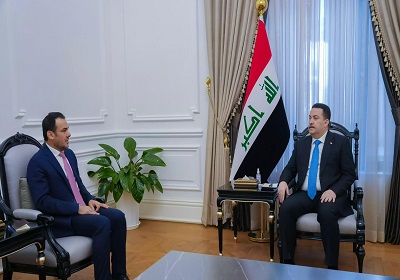
Prime Minister: The path of development will make Iraq a regional political and economic powerhouse
Invitation to the 79th issue of Dialogue of Thought
Seventh Baghdad International Dialogue Conference Call for Papers
Praise for the Baghdad International Dialogue: Strengthening Iraq's pivotal role and a meeting point for visions
Comments