

By Ahmad Al-Abidi
The world after the Gaza deal: Major shifts in politics, security and media
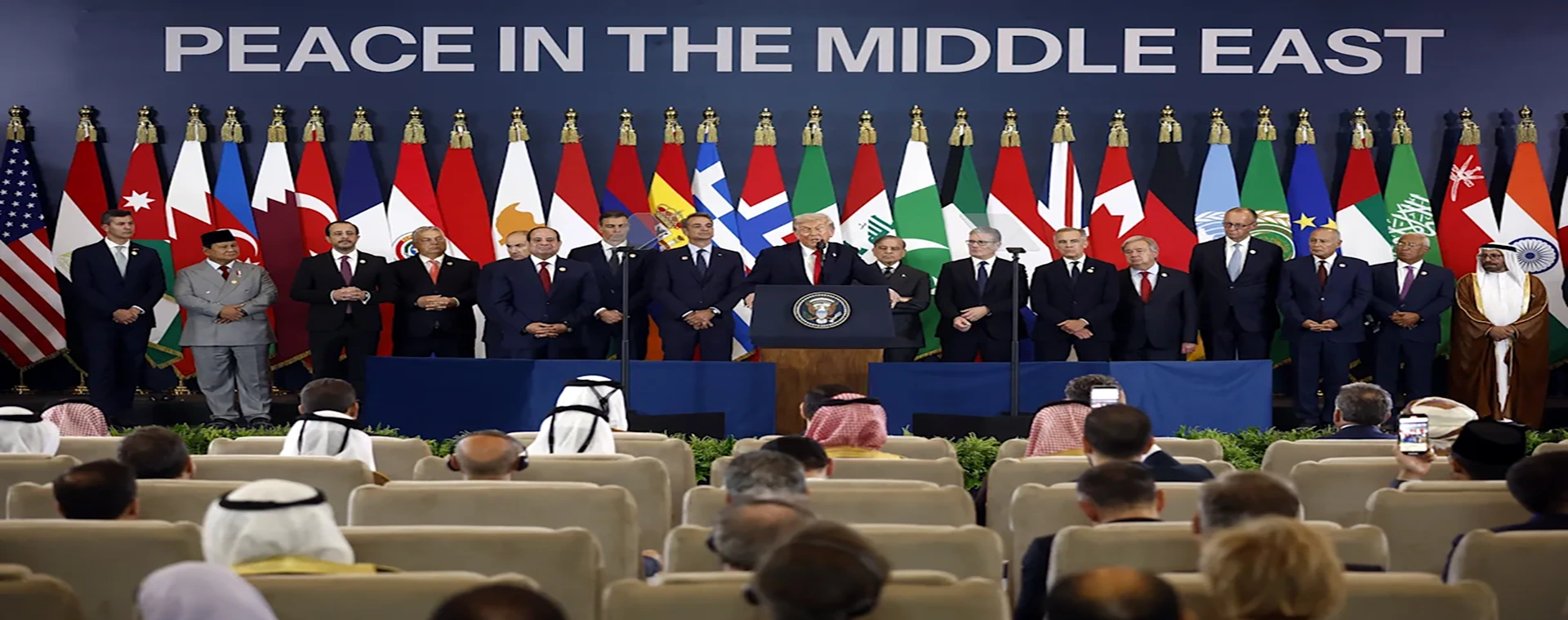
After the recent Gaza agreement, the world witnessed unprecedented shifts in the regional and international scenes. This war was not just a new military round between the Palestinian resistance and the Zionist entity, but a pivotal moment that reshaped the balance of power and prompted the world to review many of its political, security and media assumptions.
The systematic killing, crimes against humanity, genocide, and blatant violation of all international norms and laws in Gaza is a moral breaking point in the global consciousness. The images of destruction, massacres of unarmed civilians, starvation, siege, and deprivation of the most basic elements of life awakened the conscience of the world and generated a wave of popular anger that has not been witnessed in modern history towards the Palestinian-Israeli conflict.
These shifts have forced major countries and international organizations to reconsider their previous positions. The language of justification and duplicity has receded, and more balanced positions have begun to emerge in the global political discourse. Many European countries have officially recognized the State of Palestine in a move that is considered historic in terms of its timing and significance, as it reflects a shift in the European political mood towards supporting justice and rejecting complicity with Israeli violations.
In the context of these developments, Hamas emerged as a political actor that cannot be ignored, after it managed to manage the battle with political and media intelligence that made it receive unprecedented attention from international public opinion. Its characterization in the international media changed from "an isolated group" to "a political party capable of negotiating," a profound shift in the course of the Palestinian cause.
Regionally, the map of the Middle East today appears to be in a state of vast reconfiguration. After the Gaza agreement, countries in the region realized that the Palestinian issue is not a political burden, but a strategic issue that affects their national security and internal stability. Countries that adopted neutral or normalizing positions in recent years began to review their options after realizing that the continuation of Israeli aggression in such a brutal manner threatens their image and status in front of their peoples.
A new regional axis has begun to form that includes Arab and Islamic countries that believe that the balance in the region cannot be achieved without justice for the Palestinian people, and the issue is no longer just a political slogan but an essential element in the equation of regional security.
On the other hand, some Western governments found themselves facing unprecedented popular pressure. The daily demonstrations in European cities, in which hundreds of thousands of protesters participated, turned into a global anti-genocide movement that forced European leaders to change their political tone and take more cautious positions towards the actions of the Zionist entity and its American ally.
In addition, new generations of young Europeans against injustice and neo-colonialism have emerged. They are actively participating in digital campaigns, humanitarian initiatives, and even aid flotillas to break the siege on Gaza. Despite their arrest by the Israeli authorities, this has increased the symbolism of their struggle and restored the humanitarian and moral dimension of the Palestinian cause in the global conscience.
These shifts emphasized that what is happening is no longer a local matter or a limited conflict, but a global issue related to justice and human dignity, and that the continued occupation has become a moral burden on the entire international system.
At the international level, the United States has emerged as a pivotal player in these shifts. This time, however, the US position was not the same as before. Washington found itself under intense global pressure that forced it to take calls for a ceasefire with unprecedented seriousness.
Widespread labor strikes, university demonstrations, and decisions by some European countries to halt arms exports to the Zionist entity were the first joint political and security action that restricted the freedom of Washington and Tel Aviv and forced them to retreat under the weight of popular and humanitarian rejection
In this context, the media and digital dimension has emerged as a new field of warfare. Several reports revealed that Israel paid social media influencers huge sums of up to seven thousand dollars per post in an organized campaign to market its official narrative about the war through influential young faces.
Despite this large expenditure, Israel has suffered a clear loss in the battle for global public opinion, as the younger generation of Americans and Europeans have become more sympathetic to Gaza and more opposed to hate speech and violence.
Israel has realized that weapons are no longer the only thing that determines conflicts and that the real battle is being fought in the space of digital platforms. Even Israeli Prime Minister Benjamin Netanyahu recognized this when he told a group of American influencers that "TikTok has become the real weapon in the battle for public opinion."
Hamas succeeded in turning its media battle into an effective political tool by dealing with the media with a disciplined and realistic discourse focused on international law and human rights, which gave it broad moral legitimacy and made it a political actor to be reckoned with.
Recent developments confirm that power today is no longer measured by the number of weapons but by the ability of rhetoric to create awareness and shape public opinion.
After the Gaza agreement, the world has entered a new phase of transformation, the most prominent of which is that justice is no longer just a slogan and that people - with their awareness and digital connectivity - are able to impose new balances and force the major powers to review their calculations in every upcoming war. "After Gaza, it will not be the same as before, neither in consciousness, nor in politics, nor in media."
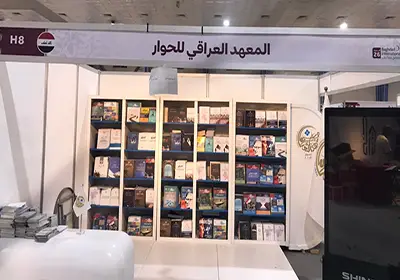
The Iraqi Institute for Dialogue, the logistical sponsor of the Baghdad International Book Fair, opens its own pavilion at the fair
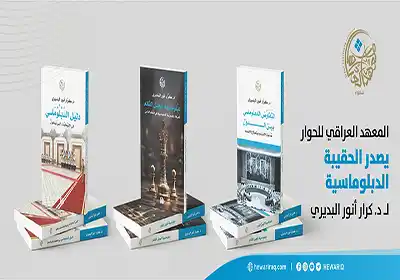
The Iraqi Institute for Dialogue publishes "The Diplomatic Portfolio" by Dr. Karrar Al-Badiri
Official agreement between Iraqi Institute for Dialogue and the Iraqi Media Network to sponsor The Seventh Annual International Conference of “Baghdad Dialogue” 2025
Invitation to the 79th issue of Dialogue of Thought
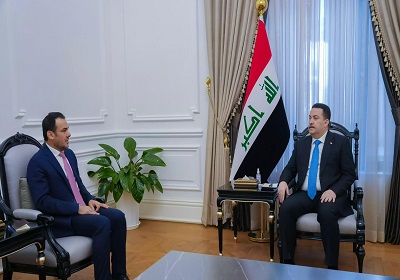
Prime Minister: The path of development will make Iraq a regional political and economic powerhouse
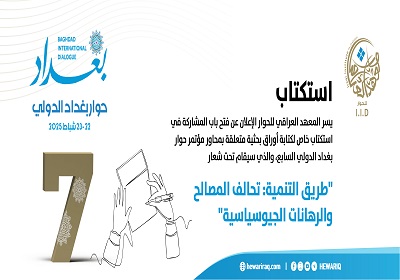
Seventh Baghdad International Dialogue Conference Call for Papers
Praise for the Baghdad International Dialogue: Strengthening Iraq's pivotal role and a meeting point for visions
Comments