



By Abdi Walid Siyaganis - Translation by the Iraqi Institute for Dialog
Indonesia and its quest for 'blue gold': Its Strategy in the International Seabed Area
Indonesia ratified the 1982 United Nations Convention on the Law of the Sea (UNCLOS) by Law No. 17 of 1985. This ratification was not just a diplomatic formality, but a true reflection of Indonesia's desire to be part of the global maritime governance system and the regulation of navigation and marine resources. Together with 158 other nations, Indonesia is committed to ensuring that marine resources, including minerals, are managed according to the principles of responsibility and shared prosperity.
The international legal framework and Indonesia's role
The 1982 Convention defined the maritime areas subject to the sovereignty and jurisdiction of states, as well as the international areas known as "The Area," which is the seabed, ocean floor and subsoil beyond the limits of national jurisdiction. All natural resources in the Area are considered "the common heritage of mankind," as stated in the preamble of the Agreement for the Implementation of Part XI of the 1982 Convention on the Law of the Sea and confirmed by Indonesian national laws through Presidential Decree No. 178 of 1999.
The incorporation of international law into national legislation - as in Law No. 17 of 1985 and Presidential Decree No. 178 of 1999 - not only demonstrates Indonesia's commitment to international law, but also gives it an opportunity to play an active role in the international seabed area.
This role is further materialized through Presidential Regulation No. 80 of 2023 on Indonesia's Active Role in the International Seabed Area (ISA), which aims to strengthen the country's participation in the management of mineral resources and marine scientific research in accordance with the regulations of the International Seabed Authority (ISA) in a sustainable manner.
From exploration to exploitation: The long road to the deep sea
Mining activities in the Zone are highly regulated and have clear phases:
1. Prospecting:
It is the initial research phase to determine the general geological characteristics and indicators of mineralization and to estimate the resources, their distribution and economic value, without granting any exclusive rights. It is a purely scientific stage.
2. Exploration phase:
It targets the most promising sites identified in the previous phase, and includes in-depth studies to determine the quality and quantity of minerals, in addition to environmental impact assessment and the necessary technical preparations.
3. Exploitation:
Minerals are extracted from the seabed, processed and distributed, with strict adherence to environmental protection standards and marine system sustainability, in accordance with International Seabed Authority (ISA) regulations.
Indonesia at the center of international maritime activities
Indonesia's involvement in the activities of the Area has become clearer with the issuance of Ministerial Regulation No. 11 of 2025 of the Ministry of Energy and Mineral Resources (Permen ESDM 11/2025) on mechanisms for the management and exploitation of minerals in the International Seabed Area.
This regulation opens the door for government and private companies and local and foreign investors to participate in the investigation, exploration, and exploitation phases, but under strict conditions that include the submission of detailed administrative and technical documents, thoughtful and transparent work plans, and environmental assessments in accordance with international authority standards.
Legal and technical requirements
The first phase (investigation): Requires a detailed plan outlining the location, coordinates, area selection, survey methods, and analysis.
The second phase (exploration): Requires the fulfillment of legal, technical and environmental standards. Foreign companies are required to provide proof of their legitimacy and commitment to national and international laws and sign a contract with the international authority.
The third stage (exploitation): This is the culmination of the process, requiring all legal, environmental and financial conditions to be met. The Indonesian government grants legal guarantees to companies that have successfully passed the exploration phase.
The business plans are evaluated by a government coordination committee comprising several ministries and organizations to ensure they meet international and national standards. If the documents meet all conditions, the Minister of Energy grants approval within 15 working days, before sending the certificate of support to the International Seabed Authority (ISA).
Towards a reorganization of mineral exploitation policies
These developments show that the 1982 Law of the Sea Convention has become the cornerstone of Indonesia's policy in managing the region's mineral resources, which are recognized as the common heritage of mankind. However, there are still national legal gaps related to the regulation of exploration and exploitation, especially in the "downstreaming" or "processing" stages of extracted minerals.
The Indonesian government therefore needs to develop an integrated national legal framework in line with UNCLOS principles and international authority regulations, not only to realize economic gains, but also to consolidate its geopolitical position and strengthen its maritime sovereignty.
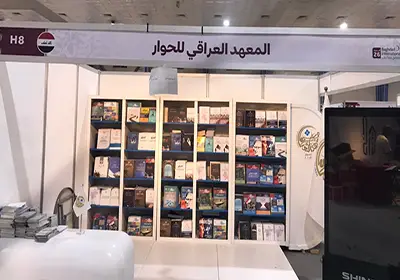
The Iraqi Institute for Dialogue, the logistical sponsor of the Baghdad International Book Fair, opens its own pavilion at the fair

The Iraqi Institute for Dialogue publishes "The Diplomatic Portfolio" by Dr. Karrar Al-Badiri
Official agreement between Iraqi Institute for Dialogue and the Iraqi Media Network to sponsor The Seventh Annual International Conference of “Baghdad Dialogue” 2025
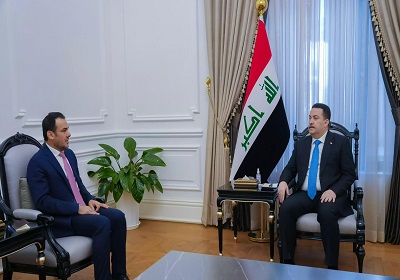
Prime Minister: The path of development will make Iraq a regional political and economic powerhouse

Invitation to the 79th issue of Dialogue of Thought
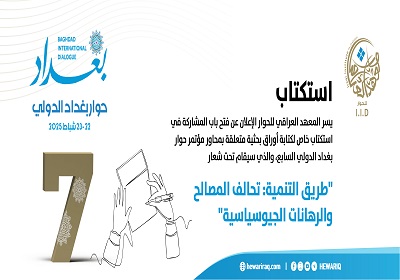
Seventh Baghdad International Dialogue Conference Call for Papers
Praise for the Baghdad International Dialogue: Strengthening Iraq's pivotal role and a meeting point for visions
Comments