


By Katie Stallard – The New Statesman
Is the U.S. preparing for war in Venezuela?
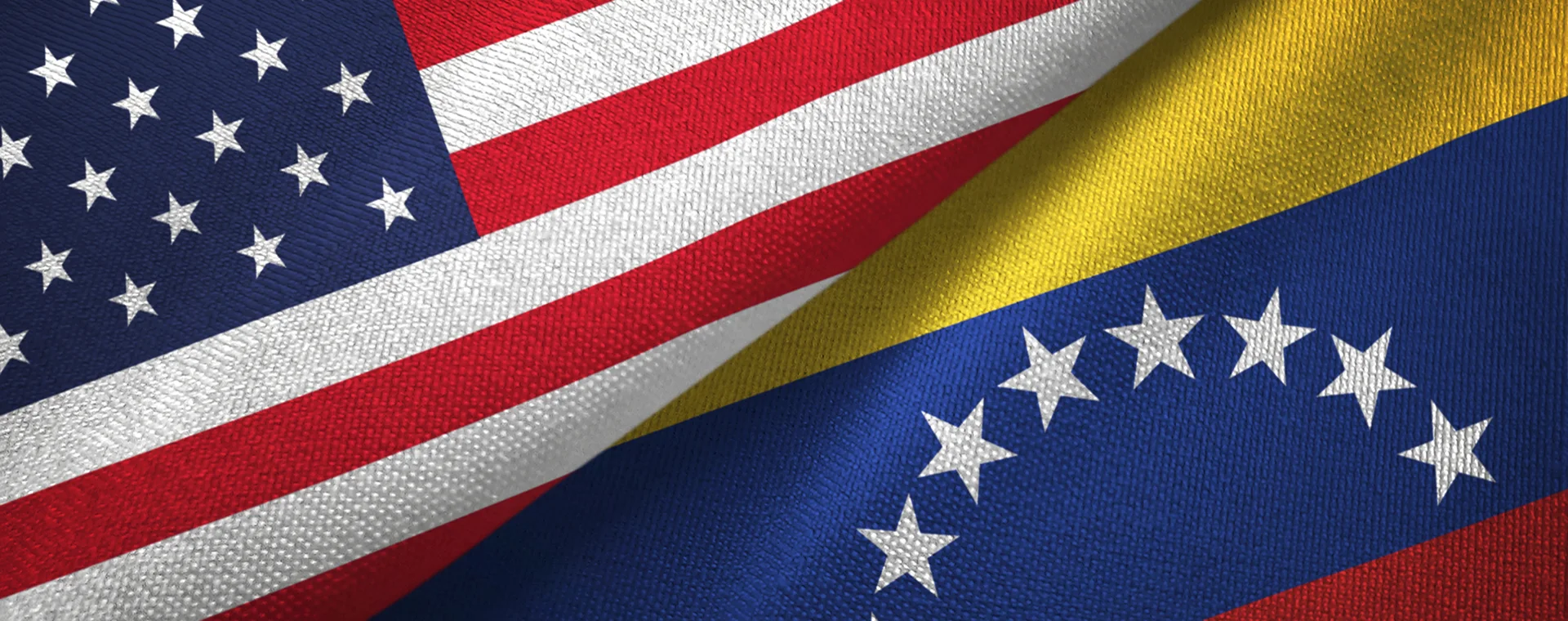
For months, the Caribbean has been witnessing an unprecedented US military buildup around Venezuela's Nicolás Maduro regime, raising serious questions about whether Washington is moving toward direct military action.
Since August, a U.S. naval force has been stationed in international waters off the Venezuelan coast, and on October 24, Defense Secretary Pete Hegseth - renamed "Secretary of War" under Trump - ordered the deployment of the USS Gerald Ford, the world's largest aircraft carrier, and its battle group to the Caribbean. About 14 percent of the U.S. Navy's surface fleet will be concentrated in that sensitive region.
The operations have not been limited to military showmanship. Since early September, US forces have conducted 14 raids against small boats in the Caribbean Sea and the Eastern Pacific Ocean, killing at least 61 people. President Donald Trump has justified these strikes as targeting "drug smuggling boats" that pose a "threat to U.S. national security," without providing evidence.
But the UN High Commissioner for Human Rights, Volker Türk, said on October 31 that these attacks "have no international legal basis" and constitute "extrajudicial killings."
In recent weeks, U.S. aircraft have flown close to Venezuelan airspace. Two B-1 Lancer bombers flew only about 20 miles off the coast on October 27, and B-52 bombers and F-35 fighters conducted a military display dubbed the "Strike Bomber Review" on October 15 within 50 miles of Venezuela.
Prominent US media outlets such as the Miami Herald and the Wall Street Journal have recently reported on the possibility of imminent strikes against targets inside Venezuela, including military installations, with sources saying the decision could be implemented "within hours or days," although Trump has yet to issue a final order.
A combination of psychological and military pressure
The question remains: Is Washington really serious about bombing Venezuela, or is this just a pressure campaign to force Maduro to step down? The answer is likely both.
Trump is known to have a long-standing personal grudge against Maduro. In his first term, he publicly threatened military intervention and discussed the idea of invading Venezuela with his advisors, before being dissuaded by senior officials. This time, however, the president is back with new accusations, accusing Maduro of leading a major drug trafficking organization known as the Cartel de los Soles, which has ties to gangs such as Venezuela's Tren de Aragua and Mexico's Sinaloa Cartel, both of which are designated by Washington as "foreign terrorist organizations."
Although some Venezuelan officers are indeed involved in the drug trade, ICG experts stress that "there is no evidence of an organized and stable cartel by that name," noting that the US accusations are questionable, especially since the most dangerous drug that threatens Americans, fentanyl, comes mostly from Mexico, not Venezuela.
"War on Narco-terrorism"
However, US officials continue to justify the military operations as part of a campaign against "drug-related terrorism." Marco Rubio, who serves in the Trump administration as secretary of state and national security advisor, said that "this operation targets terrorists funded by the drug trade ... al-Qaeda in the Western Hemisphere," adding that "Venezuela has become a cartel-run drug state. Al-Qaeda in the Western Hemisphere," said Marco Rubio, who serves in the Trump administration as secretary of state and national security adviser.
Stephen Miller, deputy White House chief of staff and architect of the Trump administration's immigration policies, promoted the same narrative, asserting that "what governs Venezuela is not a government, but a drug cartel."
Psychological warfare And a huge reward
Alongside the military mobilization, Washington is waging an intense psychological war on Maduro and his inner circle. The State Department has offered a $50 million reward for information leading to his arrest, in an attempt to push those around him to defect. Trump also announced earlier that he has authorized the Central Intelligence Agency (CIA) to conduct covert operations in the country.
These moves are intended to convince Maduro that his days are numbered, or to push military leaders to oust him before they are forced to fall with him.
"Maduro is trapped and may soon discover that he cannot leave the country even if he wanted to," the Miami Herald quoted a source as saying, adding that "there is more than one general ready to hand him over." But such leaks could also be part of a psychological disinformation plan to convince Maduro that a coup against him is imminent.
Possible scenarios
It could all be a deliberate deception by Trump to show that he is about to launch a war he doesn't intend to fight, hoping that the regime will implode. But this is a dangerous gamble.
In Washington's best-case scenario, Maduro is forced to step down without a fight, and the opposition led by Maria Corina Machado takes power, ushering in a "new democracy" that reduces the flow of migrants and drugs into the U.S. - as the White House hopes.
However, the United States' long history of attempting regime change in Latin America does not bode well. Washington has repeatedly failed to transform authoritarian regimes into stable democracies, and its interventions have often ended in bloody quagmires and endless wars.

The Iraqi Institute for Dialogue, the logistical sponsor of the Baghdad International Book Fair, opens its own pavilion at the fair
The Iraqi Institute for Dialogue publishes "The Diplomatic Portfolio" by Dr. Karrar Al-Badiri
Official agreement between Iraqi Institute for Dialogue and the Iraqi Media Network to sponsor The Seventh Annual International Conference of “Baghdad Dialogue” 2025
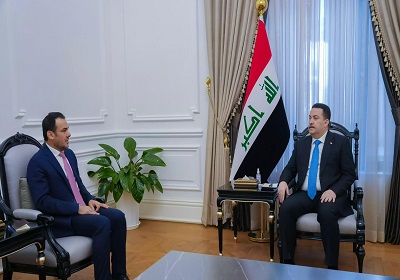
Prime Minister: The path of development will make Iraq a regional political and economic powerhouse
Invitation to the 79th issue of Dialogue of Thought
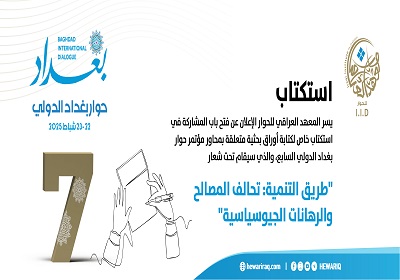
Seventh Baghdad International Dialogue Conference Call for Papers
Praise for the Baghdad International Dialogue: Strengthening Iraq's pivotal role and a meeting point for visions
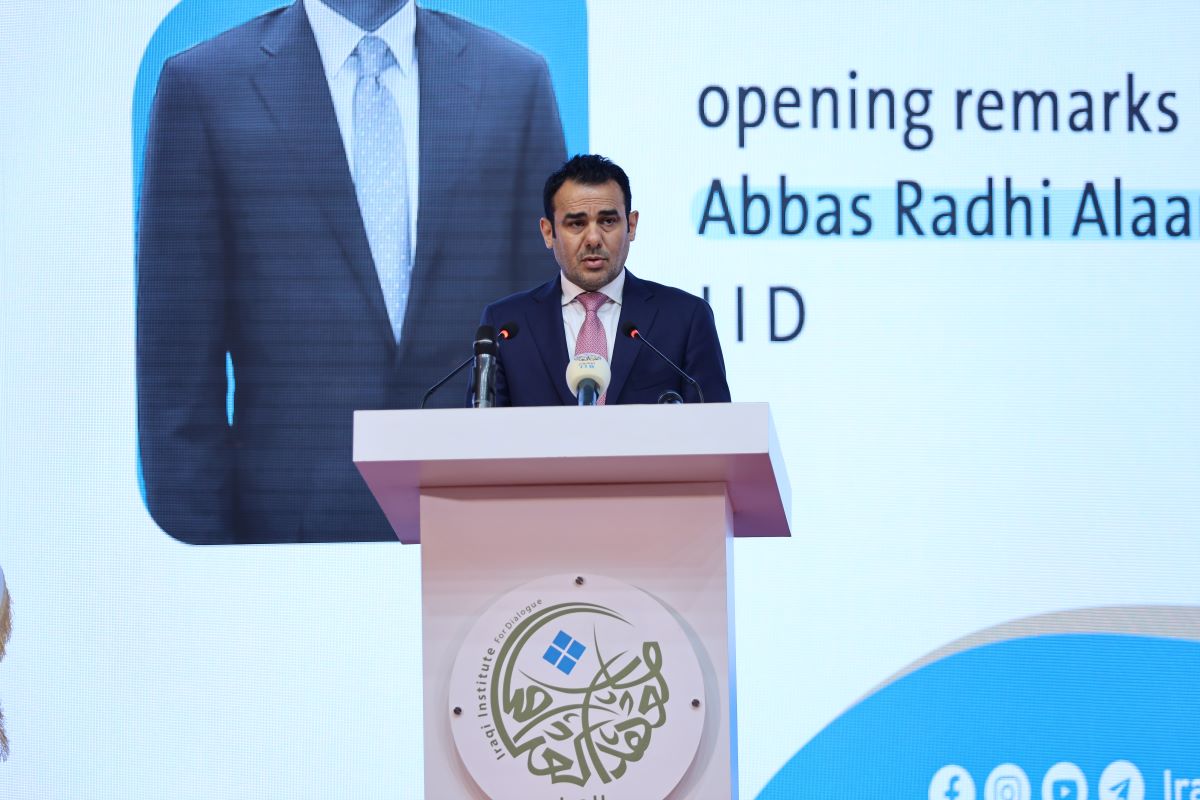
Comments