

Translation: Iraqi Institute for Dialog
Iraqi elections: 12 questions that will determine the future of governance and sovereignty
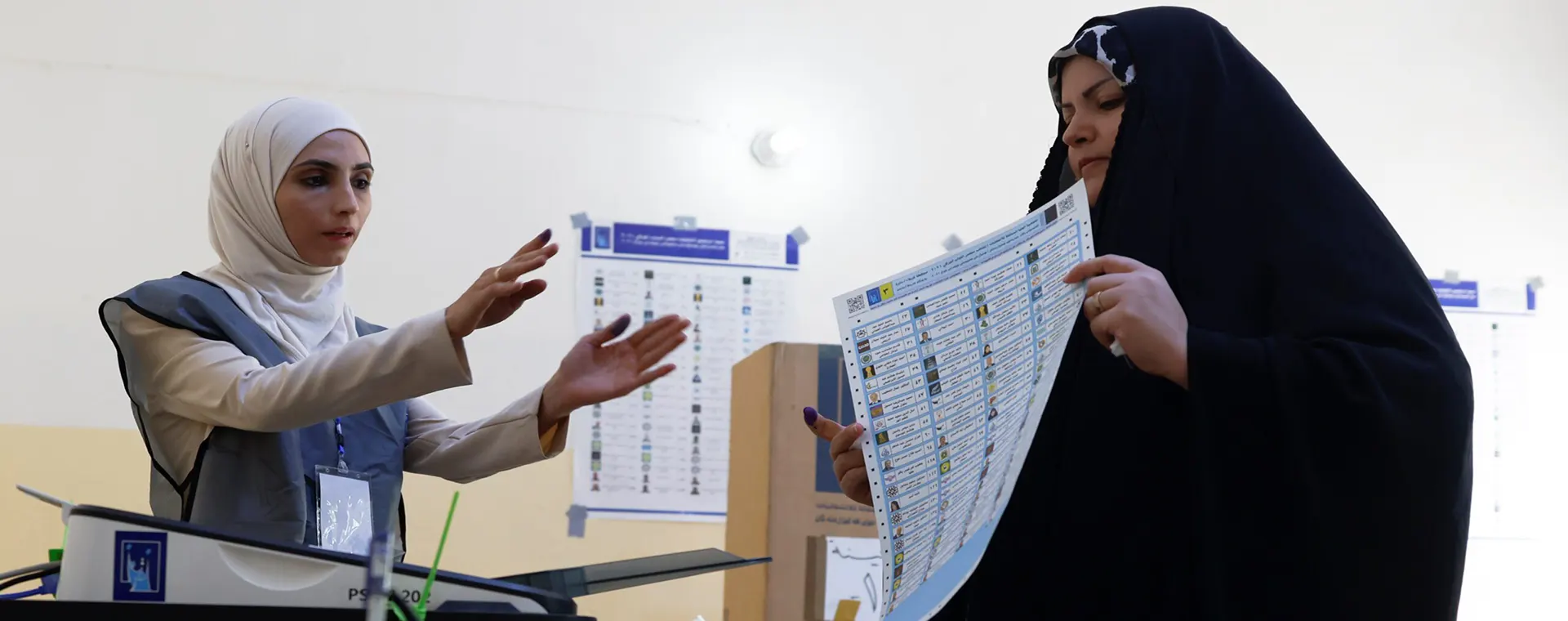
Iraqis are looking forward to the parliamentary elections scheduled for November 11, the sixth since the fall of Saddam Hussein's regime in 2003, amid a state of sharp political division and economic and security challenges.
In an extensive report published by the Atlantic Council, leading Iraqi and international experts and analysts answered twelve key questions that will shape the next phase in Iraq.
1. What are the key issues that concern the Iraqi voter?
Voting in Iraq is still based on sectarian and ethnic affiliations, with a clear decline in voting based on political programs, says expert Abbas Anbouri, head of the Baghdad Riwaq Center for Public Policy.
He adds that the coalition led by Prime Minister Mohammed Shi'a al-Sudani could win about 60 seats in parliament if it can convince voters of the merits of its service performance.
2. Will Sudanese get a second term?
Anbouri believes that Sudani's chance of a second term is very weak due to divisions within the Shiite coordinating framework, as well as international factors such as the American and Iranian positions, and the limited intervention of the Najaf authority this time around.
3. What is the Coordination Framework and its role in government formation?
Expert Sajjad Jiaad describes the Coordination Framework as the most prominent Shiite bloc in the country, which seeks to replicate its traditional style: Running elections with multiple lists and then forming a coalition to share power and positions.
He notes that the internal conflict between the parties to the framework is still strong, but they realize that no government can be formed without them.
4. What is Muqtada al-Sadr's influence and position on the boycott?
Analyst Tamer Badawi confirms that the Sadrist Movement's boycott will have a significant impact on the turnout, especially in Shiite areas, noting that the absence of the Marja'iyya's call for participation this time gives the boycott an implicitly legitimate dimension.
Researcher Aqeel Abbas says Sadr may surprise his opponents at the last minute by directing his supporters to vote against the Coordination Framework lists.
5. Where does the Sunni component stand in the electoral landscape?
According to expert Omar al-Nada, the Sunni competition is centered between Mohammed al-Halboosi (Taqaddum), Muthanna al-Samarrai (Azm) and Khamis al-Khanjar (Siyada), explaining that Sunni alliances are still fragile and personal in nature, and there is no unified national project due to the absence of a strong external sponsor to unify the ranks.
6. How influential is Iran in Iraqi politics today?
According to researcher Rand al-Rahim, Iran's influence has declined over the past year as a result of the war with Israel and the United States, the deterioration of the Iranian economy, and the decline in the power of its allies such as Hezbollah and Hamas.
But they emphasize that ideological and political ties remain, and that Tehran will maintain its strategic influence in Baghdad despite its diminished tools on the ground.
7. What about the Kurds and the impact of the KRG formation crisis?
Researcher Yervan Saeed explains that the failure of Kurdish parties to form the Kurdistan Regional Government (KRG) since the 2024 elections has weakened their negotiating position in Baghdad, noting that the conflict between the KDP and the Patriotic Union has made the Kurds lose their traditional role as the "golden egg" in the governing equation.
8. Where do Tishreen youth stand on the elections?
Al-Nada says that Hirak Tishreen is still divided between those who decided to run in the elections through alliances such as Al-Badeel, and those who withdrew from the political process altogether.
The real test for them is to avoid the divisions that weakened their MPs after the 2021 elections.
9. Will independents repeat their previous success?
Aqeel Abbas believes that independents have fewer chances this time around due to high boycott rates, but he believes that the Alternative Alliance may attract some disaffected voters and ensure limited representation in parliament.
10. How do assassinations affect the political environment?
Tamer Badawi points out that the assassination of candidate Safaa al-Mashhadani in the Baghdad belt sent a strong threatening message to opposition candidates, emphasizing that impunity fosters a culture of fear and undermines confidence in the elections.
11. Will Iraq's foreign policy change after the elections?
The balancing act between Washington and Tehran will continue, with the tone or level of independence likely to change depending on who the next prime minister is.
12. What is the expected role of the United States after the election?
Aline Romanowski, former US ambassador to Baghdad, says Washington will continue to engage in Iraqi affairs to ensure security and political stability, with a focus on integrating the Popular Mobilization Forces into official institutions, and continuing the strategic dialogue between the two countries on security and economic issues.
Conclusion
The experts' answers reveal that the upcoming elections will not be decisive in changing the Iraqi political process, but they will redraw the balance of power within the Shiite, Sunni and Kurdish blocs, while Sudan's chances of retaining the presidency of the government remain weak, unless he succeeds in building a cross-sectarian coalition with simultaneous regional and international support.
The Iraqi Institute for Dialogue, the logistical sponsor of the Baghdad International Book Fair, opens its own pavilion at the fair
Official agreement between Iraqi Institute for Dialogue and the Iraqi Media Network to sponsor The Seventh Annual International Conference of “Baghdad Dialogue” 2025
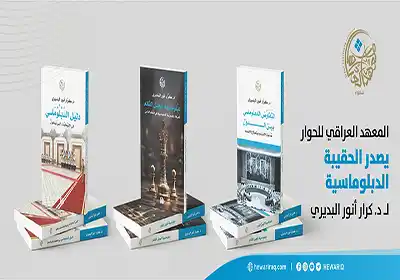
The Iraqi Institute for Dialogue publishes "The Diplomatic Portfolio" by Dr. Karrar Al-Badiri
Invitation to the 79th issue of Dialogue of Thought
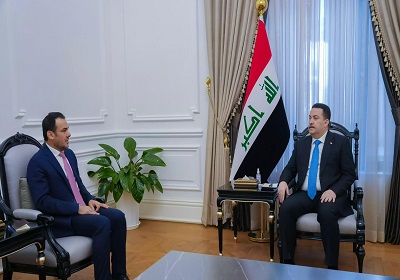
Prime Minister: The path of development will make Iraq a regional political and economic powerhouse
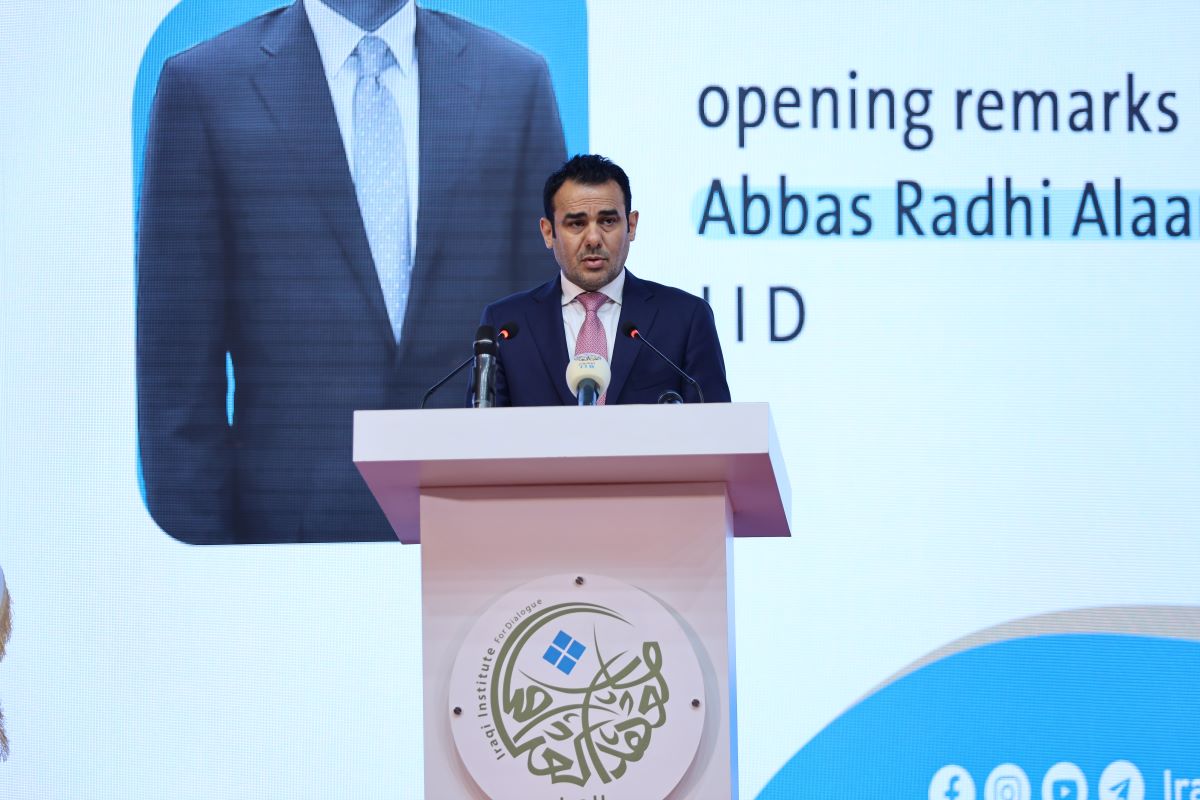
Speech of the Director of the Iraqi Institute for Dialog at the Sixth Baghdad International Dialog Conference
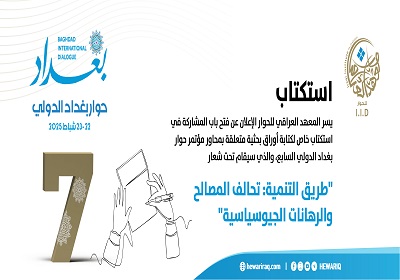
Seventh Baghdad International Dialogue Conference Call for Papers
Comments