


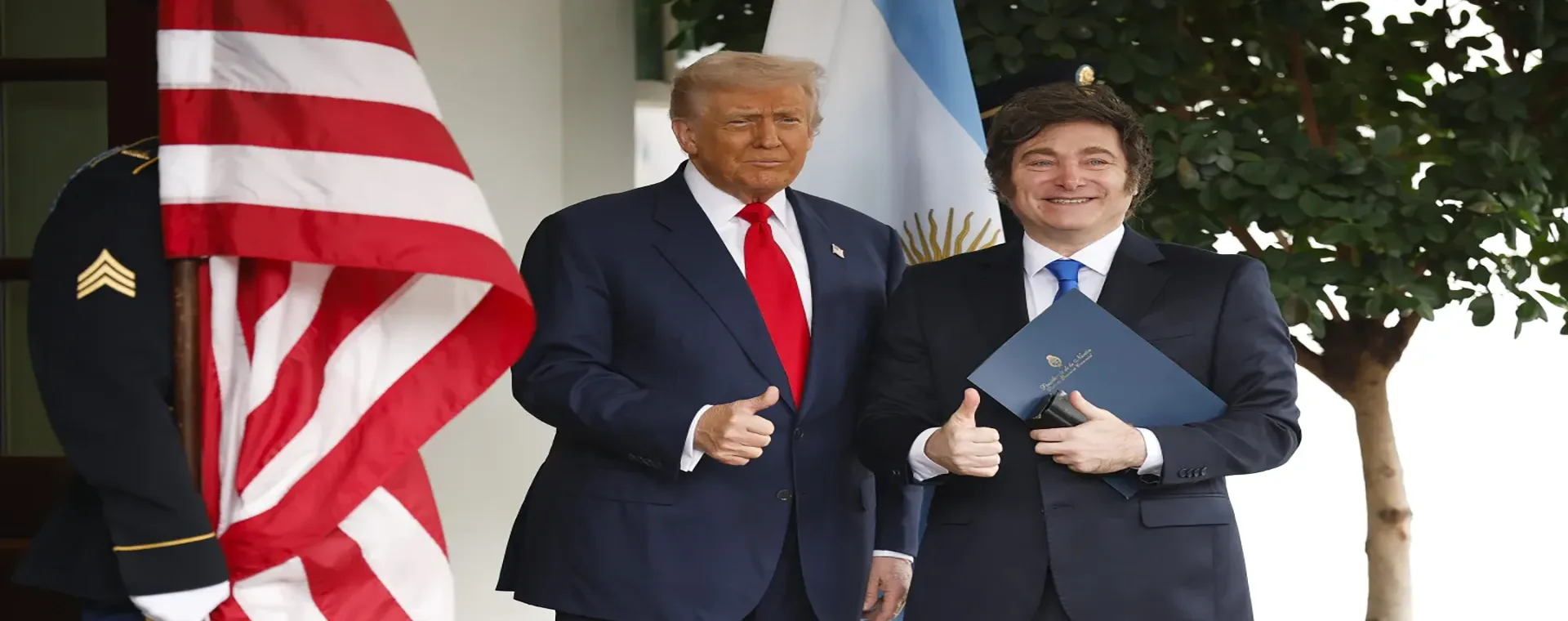
Translation: Iraqi Institute for Dialog
Why is South America more important than ever to Trump?
During his second term as US president, Donald Trump has shown that he is paying special attention to South America in various ways.
For example, he ordered an unprecedented deployment of military forces in the southern Caribbean, as well as a series of bombings off the coasts of Venezuela and Colombia against vessels he claimed were carrying narcotics, without providing any evidence.
Trump also entered into a political and trade conflict with Brazil, imposing 50 percent tariffs on its imports to prevent the prosecution of his ally, former Brazilian President Jair Bolsonaro, who is accused of a coup attempt.
He has also shown particular interest in Argentina, offering an unprecedented $20 billion in financial aid to Javier Meli's government ahead of the recent parliamentary elections.
While congratulating Melli on his election victory, Trump said: "We're now very focused on South America, and we're going to have a strong hold on that region in many ways."
Analysts say the trend stands in stark contrast to how Latin America has been ignored by previous U.S. administrations throughout the 21st century, including much of Trump's first term between 2017 and 2021.
Under George W. Bush (2001-2009), who was preoccupied with the "war on terror," under Barack Obama, who pursued a "pivot to Asia," and under Joe Biden, who was preoccupied with the wars in Ukraine and Gaza before handing over power, South America was not among Washington's priorities.
But in the nine months since the Republicans returned to the White House, the situation seems to have changed.
"A region that matters again"
"After many years, South America has once again become an important region for the United States," Monica De Poli, a senior researcher at the Peterson Institute for International Economics in Washington, told BBC Mundo.
But what caused this shift in U.S. policy?
Trump has shown his desire to subjugate South American countries to his policies through a "punishment and reward" approach.
When he welcomed the ultra-liberal Javier Meli to the White House before Argentina's parliamentary elections, he said that his aid to Argentina "won't make much of a difference to the United States," but "it will make a lot of difference to South America."
"If Argentina succeeds, others will follow. There are a lot of countries that are starting to follow our example."
Trump pointed to Bolivia as an example, where centrist politician Rodrigo Paz recently won the presidency, declaring his desire to resume relations with Washington after they had been cut off since 2008 under the "Movement for Socialism" government.
Analysts see the US seeking to expand its access to South America's resources - from strategic minerals to rare elements - and build vital supply chains to ensure its economic security.
They also believe that by showing power and influence in the region, Trump is trying to keep China at bay.
When a reporter asked Trump during his meeting with Melli at the White House about the currency swap deal between Argentina and China and the Chinese space base in Patagonia, the US president drew a "red line," saying: "They can trade a little bit, but they shouldn't go beyond that. Certainly there shouldn't be any military relationship with China, and if that happens, I'll be very angry."
China and Economic Dominance
In this century, China has expanded its presence in South America to the point where it has become the region's largest trading partner, surpassing the United States, and has established strategic relationships with a number of its countries.
"In recent years, South America as a whole has become a Chinese sphere of influence: "In recent years, South America as a whole has become a Chinese sphere of influence, and I think Trump is seeking to reverse that trend to bring it back into the American sphere of influence." But she warns that "changing this situation will be very difficult."
One sign of this complexity is that after U.S. financial aid to Argentina, American farmers complained that the move subsidized Argentine soybean exports to China, a crop that Beijing has stopped importing from the United States due to the trade war between the two countries.
Politics without a coherent strategy
"U.S. policy in the region seems opportunistic, geographically limited and lacking a comprehensive strategy," says Margaret Myers, director of the Asia and Latin America Program at the Inter-American Dialogue in Washington.
The rivalry with China has clearly influenced Washington's view of the Southern Hemisphere, "especially in terms of competition for resources and concerns about maritime security," Myers said.
"This approach has yielded short-term gains because it has raised concerns in the region about agreements with China," she told BBC Mundo, but noted that "Beijing remains committed to the region, and trade relations with it remain a critical factor in the decisions of its leaders."
The Ideological Dimension of Trump's Policy
The Trump administration has also shown an ideological outlook toward South America.
The US president said that Javier Melly caught his eye even before he became president, when he was "very conservative in his positions."
"Millie is a loyal follower of the MAGA (Make America Great Again) movement," he added, before replacing the word "America" with "Argentina" in his slogan.
Meanwhile, Washington says its deployment of warships, fighter jets, bombers, Marines and its largest aircraft carrier to the Caribbean is part of counter-narcotics operations.
Since early September, at least 57 people have been killed in U.S. attacks on boats accused by Washington of transporting drugs in Caribbean and Pacific waters, attacks whose legality is questioned by experts.
Many believe that one of Trump's goals with this military buildup is to intimidate and topple Venezuelan President Nicolas Maduro, whom Trump accuses of leading a "drug cartel," a charge Maduro denies.
Marco Rubio and the Shaping of Latin American Politics
Marco Rubio, secretary of state and national security adviser in the Trump administration, is considered the chief architect of Washington's Venezuela strategy, whose covert operations include the Central Intelligence Agency (CIA).
Rubio, born in Miami to Cuban immigrant parents, has called for a tougher U.S. stance on Venezuela, Cuba and Nicaragua since he was a senator, and has repeatedly warned against China's growing influence in Latin America.
Reports suggest that the region may feature prominently in the US national security and defense policy that the Trump administration intends to announce soon.
Recently, Washington imposed sanctions on Colombia's leftist President Gustavo Petro, who has accused the U.S. of committing "murders" by attacking civilian boats, while Trump accuses him of encouraging drug production.
This has increased tensions between Washington and Bogota, a traditional U.S. counter-narcotics ally, amid warnings that the dispute could complicate security cooperation between the two countries.
Asked about the possibility of Washington targeting drug traffickers in allied countries such as Ecuador or Mexico, Rubio denied it, saying during his visit to Ecuador: "In many cases there is no need for that in friendly countries, because their governments cooperate with us. They can carry out the missions themselves and we provide the support," Rubio said during his visit to Ecuador.
A volatile relationship with Brazil
Although Trump has maintained his tariffs on Brazil, which put his relationship with leftist President Luiz Inácio Lula da Silva on the line, the two leaders recently met on the sidelines of a summit in Malaysia, and relations appear to be improving.
The return of the Monroe Doctrine?
Some observers see Trump's moves in South America as an attempt to redefine the "Monroe Doctrine," which was declared by US President James Monroe in 1823 to counter European colonization on the American continent under the slogan "America for the Americans."
Alan McPherson, an expert on U.S.-Latin American relations and head of the Center for the Study of Power and Diplomacy at Temple University in Philadelphia, notes Trump's "general tendency to expand U.S. influence and adopt an authoritarian attitude."
But he rejects the idea that the "Monroe Doctrine" is the driving force behind Trump's policies in South America, saying: "What all these motives have in common is that Latin America, unlike China or Russia, does not have the capabilities to counter American power, so it is an easier target for him."
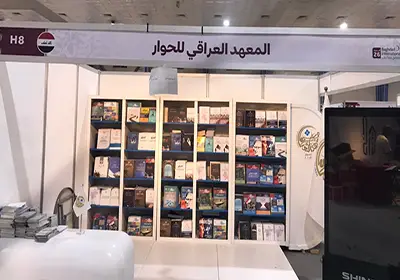
The Iraqi Institute for Dialogue, the logistical sponsor of the Baghdad International Book Fair, opens its own pavilion at the fair
Official agreement between Iraqi Institute for Dialogue and the Iraqi Media Network to sponsor The Seventh Annual International Conference of “Baghdad Dialogue” 2025
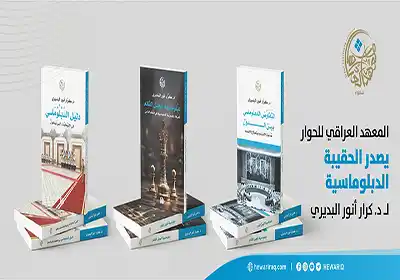
The Iraqi Institute for Dialogue publishes "The Diplomatic Portfolio" by Dr. Karrar Al-Badiri

Invitation to the 79th issue of Dialogue of Thought
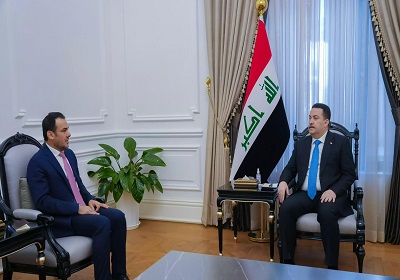
Prime Minister: The path of development will make Iraq a regional political and economic powerhouse
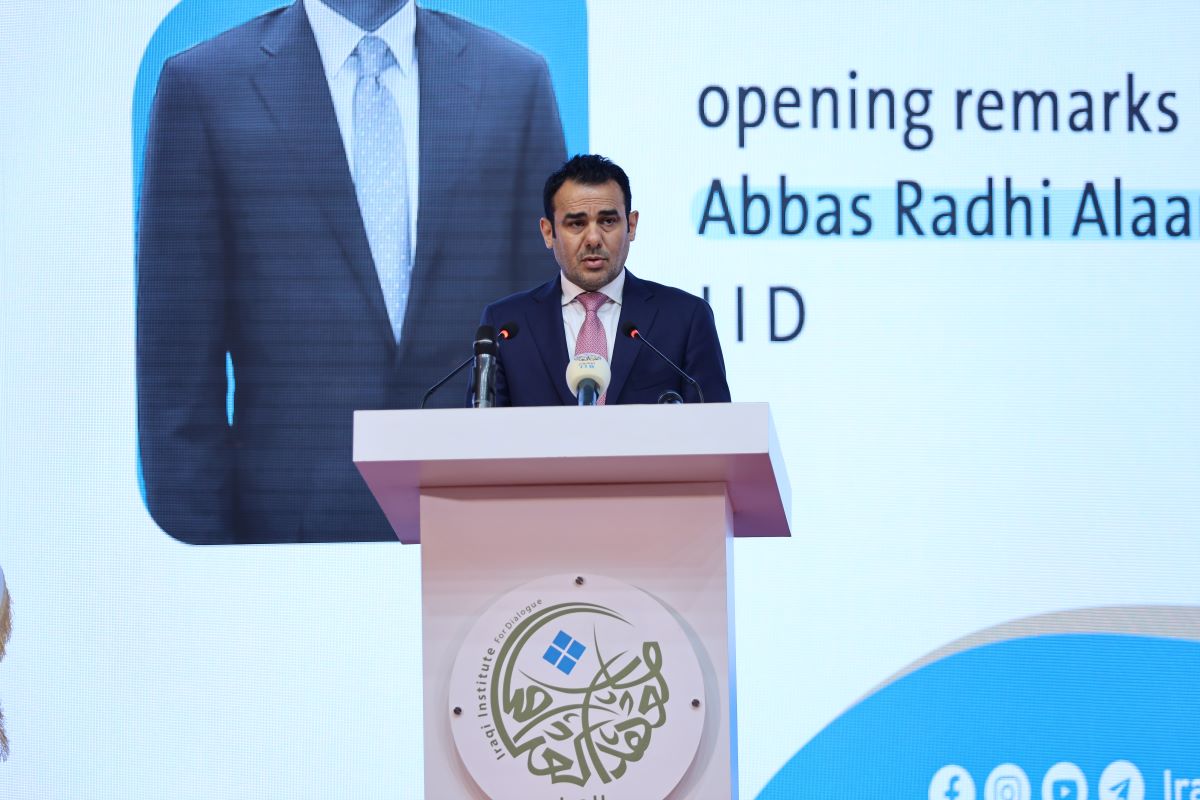
Speech of the Director of the Iraqi Institute for Dialog at the Sixth Baghdad International Dialog Conference
Seventh Baghdad International Dialogue Conference Call for Papers
Comments