



Translation: Iraqi Institute for Dialog
What would the British do in a new nuclear arms race?
It seems fortunate that the Doomsday Clock is only adjusted once a year. This clock, which measures the level of existential danger to humanity, advanced one second towards midnight at the end of 2024, to 59 seconds before the end. The main reason for this was the war in Ukraine, and the very real risk that a direct confrontation between the United States and Russia could escalate into a nuclear war.
Towards the end of 2025, the hand of the clock is likely to move again towards midnight. Ironically, the latest crisis appears to be the result of ill-considered statements from US President Donald Trump.
Trump's remarks spark a new crisis
Returning from South Korea after a summit with Chinese President Xi Jinping on the sidelines of the APEC conference on October 30, Trump announced that "because of other countries' nuclear testing programs," he had ordered the Pentagon to reactivate nuclear weapons testing "on an equal basis" and said that "the process will begin immediately."
The announcement followed Russian President Vladimir Putin's remarks about the testing of the new nuclear-powered Borivestnik missile, followed by another announcement about the testing of the Poseidon nuclear torpedo.
Although both weapons are capable of carrying nuclear warheads, they are not nuclear weapons per se, as Russia has not conducted a nuclear test since the end of the Cold War, nor has China, which is the third largest nuclear power after the United States and Russia.
Moscow responds, worried about a return to the Cold War
Putin quickly responded by announcing his country's resumption of nuclear testing, citing Trump's statements and the ongoing U.S. nuclear modernization program. Meanwhile, Russian diplomats are holding talks with their American counterparts to clarify Washington's intentions, with the White House and State Department refusing to provide a clear response.
The scene is reminiscent of the Cold War, when controlling the balance of terror between two powers capable of destroying the entire planet required extreme caution.
Britain in the crosshairs
Tom Vaughan, a lecturer in international security at the University of Leeds, points out that Britain is moving ahead with the purchase of F-35 stealth fighters capable of carrying nuclear bombs, but cannot use them without U.S. authorization. Britain's Trident nuclear deterrent also relies on U.S. support and maintenance.
Vaughan says this makes the UK "a potential target in any nuclear war between two unpredictable and violent powers."
These fears are reminiscent of the 1970s and 1980s, when the world felt close to disaster before leaders like Ronald Reagan and Mikhail Gorbachev managed to pull it back from the brink. With the fall of the Berlin Wall and the end of the Cold War, those days seemed to be gone forever.
An arms race reflected in popular culture
This accelerated diplomatic escalation has not gone unnoticed by filmmakers either. American director Kathryn Bigelow - of The Hurt Locker and Zero Dark Thirty fame - has released a new Netflix movie, House of Dynamite, about how US officials might react if a nuclear attack seemed imminent.
Mark Lacy, a professor of philosophy at the University of Essex, said the movie offers a fictionalized portrayal of the confusion and complexity of such a situation, especially in light of the increasing risk of cyberattacks that could disrupt communications at critical moments.
Fortunately, this is still a fantasy, but the exchange of statements between Trump and Putin makes the scenario seem less unlikely.
Mamdani: The politician who listens
The other big US news this week came from New York, where Zahran Mamdani, a social democratic politician, won the New York mayoral election, defeating former Governor Andrew Cuomo (with 41.6% of the vote) and Republican Curtis Sloia (with 7%).
Mamdani is the first Muslim mayor in New York's history, the youngest since 1892, and the first African-born mayor. He campaigned on a platform of lowering the cost of living, imposing rent controls, providing free public transportation and childcare for all, through higher taxes on the wealthy.
As usual, Trump attacked him as a "communist" and said he would defund the city (although he does not have the constitutional authority to do so), while Israeli Prime Minister Benjamin Netanyahu called him a "propaganda mouthpiece for Hamas." But most New Yorkers shrugged off these criticisms.
A policy of listening
Daniel Hatton Ferris, a professor of political theory at Newcastle University, says that one of the most important reasons for Mamdani's success is his ability to listen to others, even his opponents, noting that during his election tours he was keen to ask people for their opinions.
He adds that this approach is not just political correctness, but an effective tactic under New York's preferential voting system, where voters choose to rank candidates in order of preference rather than vote for a single candidate. This system penalizes candidates with extreme rhetoric and rewards those who seek to broaden their support base with dialogue.
U.S. policy shifts
Mamdani wasn't the only winner on Tuesday. Democrats won victories in two gubernatorial races, and California voters passed Proposition 50, which allows for redistricting - a move that could give Democrats five more seats in the 2026 midterm elections.
Andrew Gawthrop, an expert in American politics at Leiden University, said the results point to a possible disintegration of the electoral coalition that brought Trump to the White House in 2024, with analysis showing that segments of Latino voters and suburban families who previously supported Trump are returning to the Democrats.
Gawthrop cautions against jumping to conclusions about the outcome of the upcoming election, but argues that the so-called "most popular Republican president in history" may not actually be as popular as he claims.

The Iraqi Institute for Dialogue, the logistical sponsor of the Baghdad International Book Fair, opens its own pavilion at the fair
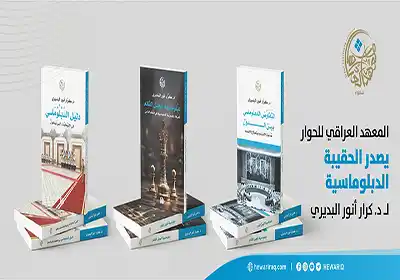
The Iraqi Institute for Dialogue publishes "The Diplomatic Portfolio" by Dr. Karrar Al-Badiri
Official agreement between Iraqi Institute for Dialogue and the Iraqi Media Network to sponsor The Seventh Annual International Conference of “Baghdad Dialogue” 2025
Invitation to the 79th issue of Dialogue of Thought
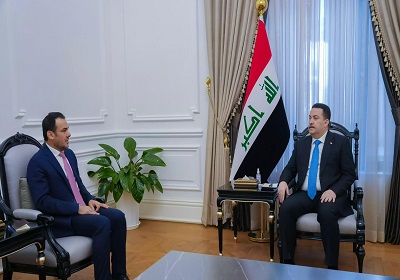
Prime Minister: The path of development will make Iraq a regional political and economic powerhouse
Seventh Baghdad International Dialogue Conference Call for Papers
Praise for the Baghdad International Dialogue: Strengthening Iraq's pivotal role and a meeting point for visions
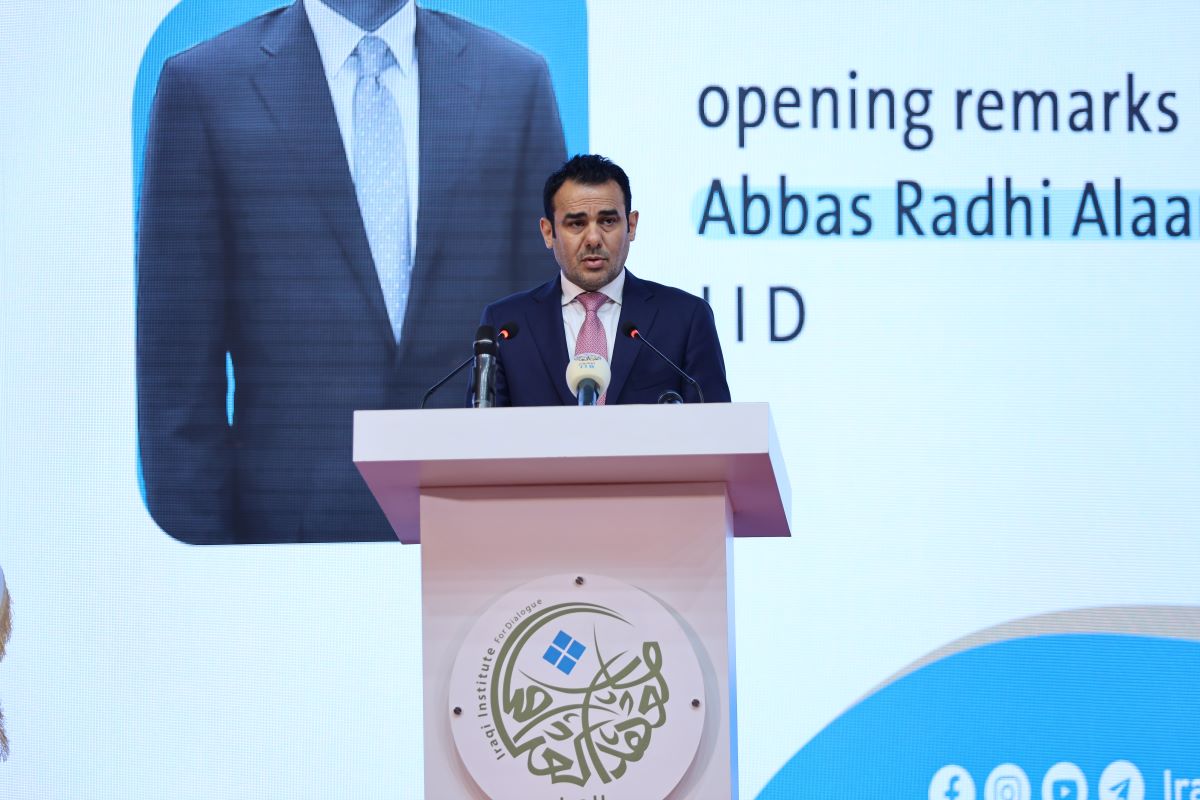
Comments