


Interview with the head of the Iraqi intelligence service, Mr. Mustafa Al-Kadhimi
Dialogue of Thought magazine conducted an interview with the head of the Iraqi intelligence service, Mr. Mustafa Al-Kadhimi, which was published in issue (49) issued in September 2029.
Introduction to the dialog
There is an old Iraqi desire to reassure the return to consolidate relations with the Russians due to the fear of America leaving its support for the post-2003 regime in Iraq, and this desire is monitored by America and tries to obstruct it and neutralize the Iraqi-Russian common spaces at the level of security and economy. There is an old Iraqi desire to reassure the return to consolidate relations with the Russians because of the fear of America leaving its support for the post-2003 regime in Iraq, and this desire is monitored by America and tries to obstruct it and neutralize the Iraqi-Russian common spaces at the level of security and the economy. All these questions and complications about Iraqi-Russian relations are answered by the head of the Iraqi National Intelligence Service, Mr. Mustafa al-Kadhimi, in his first interview after assuming his position and after he became a security man who holds dangerous information and is an expert in areas of concern and security stability.
Dialogue of thought: Where is the region heading after the US-Iranian escalation and where is Iraq in all this?
Mr. Mustafa Al-Kazemi: Even if escalation has become a prevailing language during the past few weeks, it is noticeable that there are serious trends from the region and beyond towards calm, as tension is a dilemma whose effects will be reflected on everyone, and that war, God spare us its evils, and if it is excluded so far, it is a disastrous option for the region and the world. As for where Iraq is, it is in the midst of the conflicting trends seeking to calm down and exploit its great relations with all parties to the investigation.
Dialogue of thought: How do you assess the future of security in the region in light of the shifting spheres of influence and the shifting map of conflicts?
Mr. Mustafa Al-Kazemi: The region to which Iraq belongs has not calmed down since the determination of influence in it after the First World War and the ill-fated Bellefleur promise, every now and then there are voids and gaps in the security and political situation and wherever the void is, attempts are made to fill it, by bypassing the prevailing considerations and standards, and this is the current situation, there is Israel, there is the situation in Syria, there is Iraq, there is Yemen and others, all of which have created voids, and attempts to fill them and Iraq is aware of this reality and tries to avoid side effects by moving in all directions, as for the future of security, it believes that Iraq is now much better in its ability to achieve local stability under a
Dialogue of thought: Can we say that Iraq has gone from an insecure region to an international mediator?
Mr. Mustafa Al-Kazemi: Iraq's policy, its foreign relations, its historical and human potential, and its geopolitical position qualify it to be a player, and Iraq is advanced in this field with steps to define views and seek to bring them closer at times between different parties, and this policy adopted by Prime Minister Dr. Adel Abdul Mahdi represents a basis for openness to all away from the policy of axes, which is the most effective policy at this stage.
Dialogue of thought: Your Excellency is considered a security man who holds dangerous information, and you have become an expert in areas of concern and security stability, so that you have been called the man of dangerous missions. Where is the region heading in terms of security and politics?
Mr. Mustafa Al-Kazemi: I have already pointed out that the region is witnessing voids and gaps in the security wall, and this began since the end of the 1970s, and the struggle is still intense to fill these voids, and there are calculations related to the global economy and the reordering of the priorities of the countries of the region, and all of these and all of them are ongoing projects that have not yet been completed, and until their completion, these unrests that exhaust the citizen and countries, and the stage of turmoil and tension becomes a suitable environment in psychological warfare efforts to push the citizen and the state to ultimately accept the stability and security of others, and Iraq seeks to benefit from what cannot be accepted now, and here comes the role of strategic construction of security
Dialogue of thought: What is the impact or relationship between the Russian-Israeli understanding and the Russian-Iranian alliance and cooperation in the framework of political and security arrangements in the Syrian arena?
Mr. Mustafa Al-Kazemi: Russia is a superpower that has been present in the region militarily and openly today, and it calculates the influential parties in the conflict arena, including Israel, which is supported by the United States, so it is natural to make an understanding with it, and certainly it looks at Israel from a different angle than the one through which Arabs and Muslims look at it, and the impact of this understanding on its relations with Iran will be related to the amount of profit and loss achieved by Russia, which protected itself in a conflict zone, and generally there are no permanent friends in politics, but rather permanent interests.
Dialogue of thought: Will the Russian-Israeli relationship affect intelligence cooperation within the framework of the quadripartite cell for intelligence cooperation ... Especially since it held a meeting two months ago in Damascus at the level of chiefs of staff, from which Russia was absent?
Mr. Mustafa Al-Kazemi: The efforts of the intelligence quartet are ongoing and focused on combating terrorist organizations that threaten the security of the region. This does not conflict with its understandings and Russia's international relations, as evidenced by the continued Russian-Iranian-Syrian cooperation on the one hand, in conjunction with the Russian-Israeli understanding on the other.
Dialogue of thought: What are the necessary internal factors capable of forming a national position in dealing with the Strategic Framework Agreement?
Mr. Mustafa Al-Kazemi: The most important factor that we should keep in mind is the interest of Iraq, and that all of us seek to achieve the interest of Iraq, whether with the American side with whom we signed a strategic agreement or with others, and the interest of Iraq is to be a security umbrella that prevents the continuation of terrorism and to increase our combat capabilities to form an army and security and intelligence services capable of achieving the state's goals in securing deterrence, and that Iraq is not an arena to influence the expertise and experiences of others, including the Americans and the international coalition in the context of achieving this goal, focusing on the training aspect of the agreement to develop capabilities, as well as utilizing the articles of the agreement to move the wheel of development.
Dialogue of thought: What are the challenges facing Iraq in the field of cybersecurity and what are the dilemmas of the national team in cybersecurity operations?
Mr. Mustafa Al-Kazemi: The next generation of wars will be in cyberspace, where the ability to influence opinions, convictions and ideas, manipulate human will in certain directions, and play roles of influence in everyone in a court that can be controlled by those who are more capable than others technically, scientifically and psychologically on this, and in order for the state to protect its society and anticipate The state must develop its capabilities in this field on the one hand, and take protective measures on the other hand, especially with regard to chaos and the establishment of specialized centers and alternative awareness efforts and care for national capabilities in this field, and for the state to have the ability to influence its society in a way that minimizes the influences of others on it.
Dialogue of thought: What is the impact of the Turkish-Iranian strategic visions on Iraqi national security?
Mr. Mustafa Al-Kazemi: The countries because they are Iraq's neighbors and each of them has strategies, interests and visions in the present and future, and they are countries that compete among themselves to achieve their interests and this is a natural issue in international politics, but if the competition develops to the level of conflict, as is sometimes the case between Saudi Arabia and Iran and between Turkey and Saudi Arabia, it can negatively affect Iraq, which is located at the midpoint of this regional scramble and tries to distance its yard from its effects and the most dangerous for it at the present time and the future is to become an arena for this conflict and this is what the government seeks to spare the country.
Dialogue of thought: To what extent can Iraq use the Saudi opening to build peaceful pillars in Saudi-Iranian regional politics?
Mr. Mustafa Al-Kazemi: Iraq has not closed its doors to any country that extends a hand for a hidden relationship with it, and Saudi Arabia and Iran are two historical neighbors with good potential that can be taken advantage of, especially in the field of investment, exchange of experiences and economic cooperation, and Saudi Arabia's security is related to Iraq's security, and any disturbance in Iraq affects Saudi Arabia, as we can say that we share with the Saudis a common national security and it is in our interest to coordinate and cooperate, and Iran has great commonalities with Iraq historically, socially and culturally, and we have common interests at the political, economic and security levels, in addition to the existence of a large common border connecting us with Iran and all
Dialogue of thought: While the structure of the regional order remains constant, the roles are shifting... In light of Saudi Arabia's new orientations and the US vision of Iran's regional role, how likely is it that new roles will be formed in the region, whether it will witness a decline in the Iranian role in favor of Saudi Arabia or a regional consensus in the region?
Mr. Mustafa Al-Kazemi: It is difficult to predict the nature of the roles, which are not clear in the first place, but the general indicators show that the interest of the influential international politics in the region is that the Saudi and Iranian roles continue in the same direction. It is difficult to predict the continuation of the Saudi and Iranian roles in the same direction, and if there is a change, it is a slight change that will obtain the same ends and organize them more accurately, and no matter how long and complex the conflict is, the parties will eventually sit at the dialogue table because the interests of the peoples will impose themselves on everyone.
Dialogue of thought: Is Iraq an ally or a friend of Russia?
Mr. Mustafa Al-Kazemi: Russia has interests in the region, and Iraq has interests in strengthening its security and rebuilding its capabilities, and it is in its interest to be friends with everyone.
Dialogue of thought: Is Russia interested in participating in the reconstruction of Iraq after the victory over ISIS?
Mr. Mustafa Al-Kazemi: Russia has good expertise and capabilities, and it is in its interest to participate in reconstruction. We believe that it has intentions to be part of building Iraq, and we have to provide a suitable atmosphere for participation, whether Russia or others.
Dialogue of thought: The Moscow conference at the end of April on Russia's role in the field of reconstruction and refugees in Syria and Iraq could renew the Russian coordinating role in the information field to support the peacebuilding process in the liberated areas?
Mr. Mustafa Al-Kazemi: The philosophy of dealing with information has changed at the present time. The philosophy of information for those who need it no longer exists at the present time and has been replaced by the philosophy of information for those who share it. Iraq, as a democratic state, is open to the countries of the world to share appropriate information with them in the service of international peace and security. For example, terrorism threatens humanity and therefore it is necessary to share with others the information we obtain and they share with us the information they obtain, as is the case with the good expertise that Iraq has in combating terrorism, organized crime and others. This is an international approach that we agree with and follow in Iraq's footsteps.
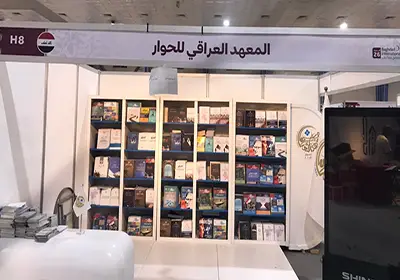
The Iraqi Institute for Dialogue, the logistical sponsor of the Baghdad International Book Fair, opens its own pavilion at the fair
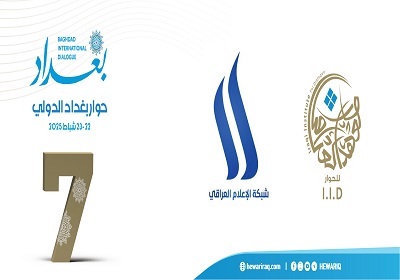
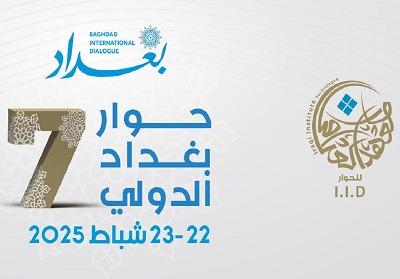
Official agreement between Iraqi Institute for Dialogue and the Iraqi Media Network to sponsor The Seventh Annual International Conference of “Baghdad Dialogue” 2025
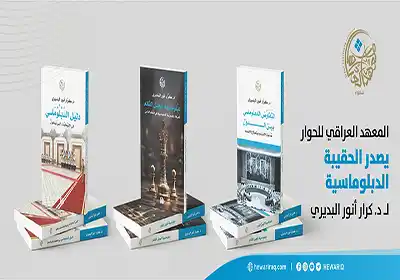
The Iraqi Institute for Dialogue publishes "The Diplomatic Portfolio" by Dr. Karrar Al-Badiri
Invitation to the 79th issue of Dialogue of Thought
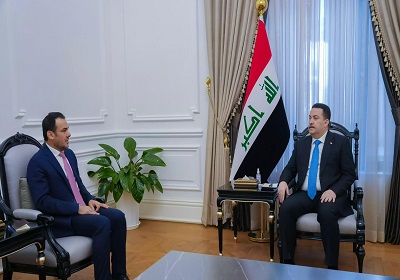
Prime Minister: The path of development will make Iraq a regional political and economic powerhouse
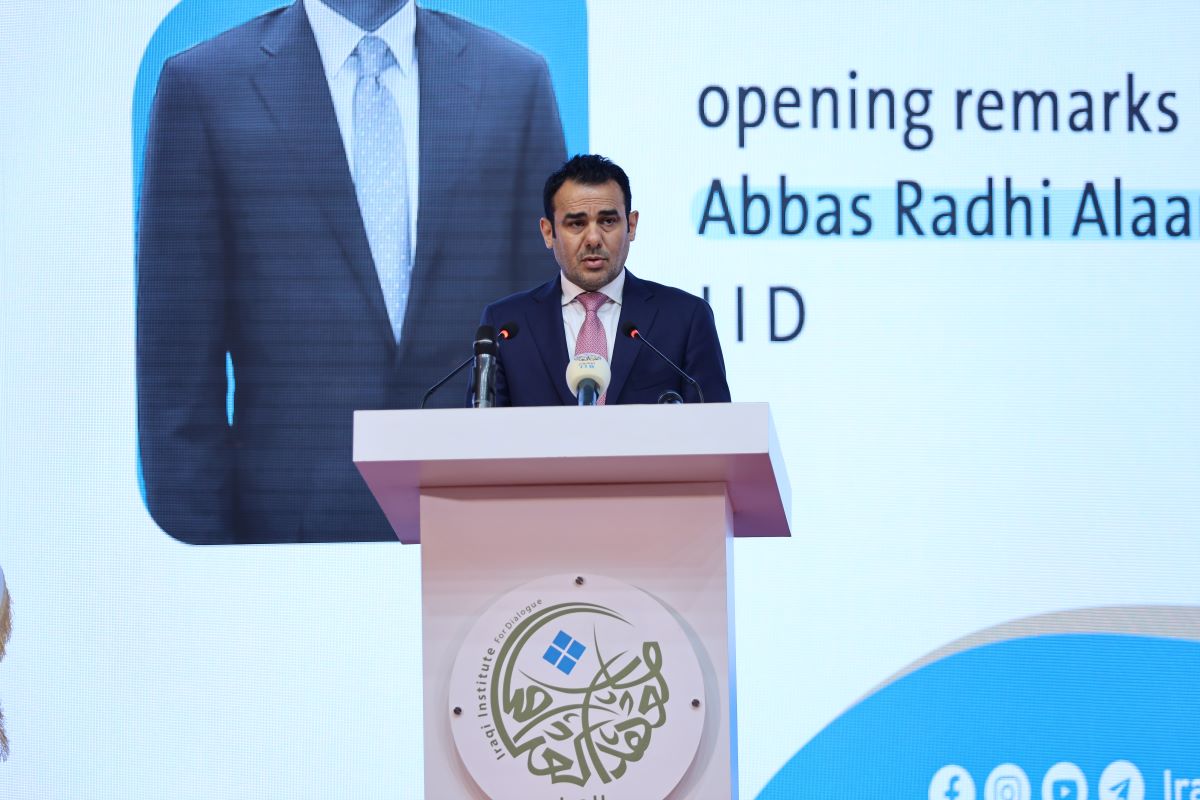
Speech of the Director of the Iraqi Institute for Dialog at the Sixth Baghdad International Dialog Conference
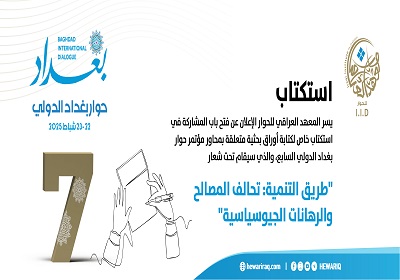
Seventh Baghdad International Dialogue Conference Call for Papers
Comments