


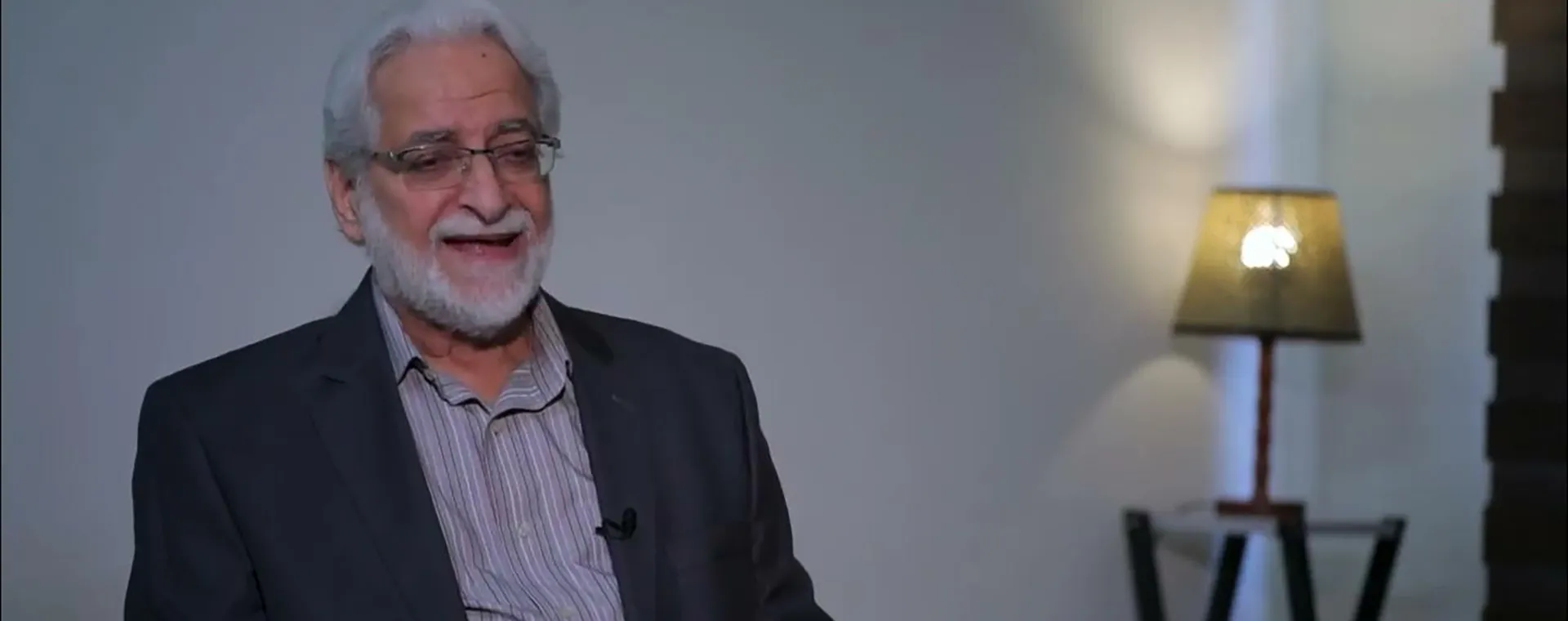
Dialogue of Thought interviews researcher and writer Muhammad Abdul Jabbar al-Shabout
In this interview conducted by Dialogue of Thought in Issue 16 of March 2011, writer and researcher Mohammed Abdul Jabbar al-Shabout addresses the pivotal role played by political parties in rebuilding the Iraqi state after 2003, reviewing historical models and experiences from the West to clarify the relationship between party democracy and building a modern civilian state.
The Iraqi experience was characterized by complex circumstances that made the building process different from others, as political parties faced the challenges of establishing in the absence of a unified national vision, and fell into the trap of quotas and consensus instead of building a state of citizenship.
"Iraq's nascent democracy faces a fundamental dilemma of practicing democracy with undemocratic tools," he said, stressing that the success of the modern state project depends on the ability of parties to adopt institutionalized national programs based on competence, citizenship, and political pluralism rather than sectarian and ethnic identities.
Dialog text
Dialogue of thought:Tell us about the role of political parties in rebuilding the state with reference to the Iraqi case?
Mohammed Abdul Jabbar Al-Shabout:Political parties play a major role in the political life of modern societies, especially with regard to building the state, the political system and its various authorities, in addition to building society in terms of political socialization and spreading a culture that helps in the process of political, economic and social construction.
In democratic systems, a party is a group of citizens who share a single vision of the state, power and society that constitutes a political program that they seek to implement through peaceful access to power through periodic elections that may also remove them from power in the next cycle. For a party to be able to contribute to building a modern democratic civil state, it must be democratic in its principles, programs, and internal life. Its political program must believe in the peaceful transfer of power, freedom of expression, media and political work, minority rights, etc. Its leaders must be democratic in the sense that they believe in democratic principles, and in the sense that they are able to embody these principles in political and social practice.
Since the birth of the modern state, especially after the Treaties of Westphalia in 1648, political parties in this sense have had a tangible role in shaping and rebuilding states, building their societies, and influencing their citizens to gain their support to achieve the political project that these parties advocate. In these historical experiences, intellectuals, writers, poets and writers also had a tangible role in these calls through their implicit or explicit involvement in the activity of these parties. The emergence of modern political parties was one of the indicators and precursors of the birth of the modern democratic civil state.
Dialogue of thought:How can Iraq's political and cultural elites play their real role in building the institutions of a modern state, making the human being the center and goal of political action?
Muhammad Abdul Jabbar Al-Shabout:"The process of building the institutions of a modern state falls on the shoulders of its political and cultural elites. The more the elites are aware of what political action is and the interests of society, the more they will build a modern state whose system ranks with civilizationally advanced countries that use the human being as an end rather than a means to achieve interests. The political system in a country is a reflection of the orientations of the political parties that are active in the social conflict. If they are non-institutionalized political parties that resort to violence and tyranny among themselves, their orientations are reflected in the form of the political system. If they are institutionalized political parties that resort to dialogue and ballot boxes in their social conflict, they reflect the civilized face of the democratic system, which refers to the popular vote to reach political power."
This important role in building a democratic state was evident in Britain from the first movements in 1215 that led to the adoption of the famous Magna Carta and its signing by King John after a year-long war, to the efforts of great thinkers such as Hobbes, Locke and others, through the British Revolution, which laid the foundations of the constitutional democratic monarchy, and in France, where the efforts of political parties, intellectuals and thinkers such as Jean-Jacques Rousseau, Voltaire and Montesquieu led to the French Revolution in 1789, the establishment of the first French Republic and the declaration of the first Bill of Rights in the modern world, in the United States, which led to the French Revolution in 1789 and the declaration of the first human rights bill in the modern world.
In these and other similar historical experiences, all these parties played a major role in mobilizing the masses around the project of building a modern democratic civil state, and in spreading a new political culture that contributed to the democratic upbringing of generations, making democracy part of their mainstream culture, behavioral habits, and daily relationships. American Douglas Feith describes the relationship of American people with democracy as follows: "Working within the law, sharing differences, and accepting majority rule are habits that we Westerners practice as a matter of course because they are integrated into our thinking and activity from an early age."
When we talk about state-building, we have to distinguish between the state, the political system and power, although the term state-building or rebuilding may include all of them, once in a general and generalized way and once in a specific and specific way. The state is the total entity consisting of land, society, power and sovereignty.
Dialogue of thought:How do you assess the nature of the political system in Iraq today, and does it truly reflect the scientific concept of the political system as a system for distributing values, making decisions and achieving social integration?
Mohammed Abdul Jabbar Al-Shabout: AThe Encyclopedia of Political Science defines a political system as "the set of overlapping and interlocking interactions and roles that concern the authoritarian allocation of values, that is, the distribution of things of value by binding political decisions (David Aston), or that involve the actual or threatened use of legitimate physical coercion to achieve the internal and external integration and adjustment of society (Gabriel Almond), or that revolve around power, authority and governance (Robert Dahl), or that concern the identification of issues and the making and implementation of political decisions."
As for power, it is divided into three branches: the executive, legislative and judicial branches.
The role of political parties, social institutions, and intellectual, cultural, and literary activists in building all these elements together, especially in the absence of land, as the Prophet Muhammad did in his efforts to obtain land to establish the new religion, which culminated in going to Medina, and in the event that the land is occupied by foreign forces, it must be liberated first in order to establish the state, as the Algerian revolution did. Parties may also play an important role in mobilizing society and working to spread a new political culture that paves the way for building the hoped-for state, and preaching it intellectually and in the media. The role of parties is at its clearest when they work to establish a political authority and system that embodies their concept and perception of the state they seek to establish.
Therefore, the role of political parties varies according to the current situation, from seeking to provide all four elements of the state, to establishing a new political system, or simply building a new political authority on the ruins of an old one, without going to rebuild the entire state from scratch, which is what usually happens in democratic systems that believe in the peaceful transfer of power, where political parties succeed to power according to the results of peaceful periodic elections.
Parties play an important role in building the state in terms of: They create the land needed to build the state, build the nation or people who form the backbone of the state, and build the political system through which the state is administered legislatively, executively, and judicially.
The parties cooperate in this great historical act with all the existing human energies and activities, which are embodied by intellectuals, politicians, scientists, writers, poets, poets, and activists, both men and women.
The success of the parties in this historic task depends on their ability to put forward a national democratic program to build a modern civil state, on the belief of their leaders in democracy in thought and practice, on the ability of this leadership to employ resources (primarily the masses) and manage them successfully in the state-building project, and on their ability to take advantage of all local and external circumstances and variables, and to face the difficulties facing the state-building process.
The Iraqi case
The role of Iraqi political parties in building the new Iraqi state after the fall of the dictatorship in 2003 is different from the role of political parties in other countries, some of which I have already mentioned. This difference stemmed from objective and subjective conditions that characterized the Iraqi political movement with its many different parties.
Before the fall of the regime, starting in 1968, Iraqi political parties, most of which were underground parties, chose, in gradual stages, to oppose the political system established by the Arab Socialist Baath Party after it seized power in a military coup on July 17 of that year.
Throughout the 35 years of opposition, which lasted as long as the regime itself, the Iraqi opposition was divided into four main axes:
First axis: The Kurdish opposition is a national liberation movement that aims to achieve the national goals of the Kurdish people, first through bilateral partnership in the one homeland (during the era of the First Republic under the leadership of Abdul Karim Qasim), then through autonomy (as expressed in the March Agreement with the Baathist regime), and finally (after 1991) through the right to self-determination, which was expressed by choosing a federal relationship with Iraq within the framework of a federal state (after the fall of the Baathist regime). The Kurdish movement focused on the national concern of the Kurdish people, and did not find time to theorize enough about the question of statehood and the reconstitution of the Iraqi state, except for the coupling of the slogan of democracy for Iraq with the slogan of autonomy for Kurdistan.
Second axis: The Islamist opposition, both Sunni and Shiite, was busy theorizing about the establishment of an Islamic state or government that would implement Islamic law. Although this movement practically stopped preaching the Islamic state in the early 1980s, it did not put forward an alternative vision for the new Iraqi state, that is, it did not put forward a program for rebuilding the state after the Islamic state project was withdrawn from circulation.
Third axis: The secular opposition, led by the Communist Party, which was also preoccupied with Marxist-Leninist arguments about a socialist state led by the working class and its vanguard political party. When the Soviet Union collapsed and Marxism-Leninism declined as a political ideological project, the Communist Party did not offer a new, different and alternative political program to rebuild the Iraqi state.
Fourth axis: The nationalist-Arab opposition, which was smaller in size and role than the three previous axis parties, and was not known to have proposed a project for rebuilding the new Iraqi state.
And the bottom line In the years leading up to the change, the Iraqi opposition parties, with their four axes, were preoccupied with opposing the Baathist regime on the one hand and their ideological or nationalist visions on the other, and did not develop a vision and program for rebuilding the new Iraqi state after the fall of Saddam's regime. The Iraqi opposition in exile, in Iran, Syria, Britain and elsewhere, did not witness serious discussions on this issue, although there were many discussions between these parties on many other political issues. These parties were more preoccupied with the project of leading the opposition than with the project of overthrowing the Baathist regime, at one level, and more preoccupied with working to overthrow the Baathist regime than with the project of the new state after it, at a second level. The project of building a modern democratic civilian state was not raised in the literature of the Iraqi parties in exile during the years of exile, and no serious discussions were held on this topic.
In December 2002, I wrote a paper on the transition from opposition to statehood, in which I said: "With the increasing possibilities and probabilities of political change and the fall of the dictatorial regime in Iraq, the need for the transition of Iraqi political forces from opposition to statehood, power and governance is emphasized. This transition is not only reflected in a change in the psychological and emotional state of the opponents, but also in their orientation towards developing state-building plans, formulating policies, and forming agencies."
The paper called for building the new Iraqi state on "national, democratic and humanitarian foundations that respect the Islamic identity of Iraqi society; not through a sectarian political solution that means sharing the leading state positions (the presidency of the republic, the prime minister, the presidency of the parliament, the army command and others) among the religious, sectarian or national components of society."
The paper indicated that the new Iraqi state should be built on the following foundations:
First, democratic mechanisms, meaning attributing the highest positions in the state to the popular will, either by direct public referendum, or through representative councils, or both. This requires providing the constitutional and legal foundations to guarantee political and civil freedoms, party pluralism, and the establishment of representative institutions, which are essential to ensure the free expression of popular opinion, as well as the principle of peaceful transfer of power.
State democracy does not mean:
A. The dictatorship of the majority and its monopolization of power, or the tools to reach it.
b. Or persecute the minority and take away their right to participate.
C. Or a minority monopoly on power and control.
Second, patriotism, in the sense that the state considers personal competence and good citizenship to be the basis for assuming positions and responsibilities in the state and society. Sectarian privileges, like sectarian oppression, are phenomena that contradict the national nature of the state. General social participation in public positions, meaning the contribution of various social formations in holding positions, is evidence of the state's democracy and patriotism, and the monopolization of high positions by a few groups, whether sect, party, or otherwise, as the current Iraqi state is based on, is contrary to patriotism and democracy.
Third, decentralization, or federalism, the Iraqi state must be a decentralized state, in the sense of expanding the distribution of powers between the center and the regions, states, or provinces in a way that prevents the concentration of power in the hands of the central government, and this requires giving provinces and local officials broad powers in matters that concern their provinces, regions, and responsibilities. Defense, foreign policy and economic planning will remain within the jurisdiction of the central authority. Education, curricula, media, social, economic, agricultural and industrial development will occupy a large space in the powers of local administrations, because these matters must be carried out in proportion to the local requirements of the governorates, whether natural, social or cultural.
The Kurdish region (Kurdistan) will occupy a special place in this reconsideration after recognizing the right to self-determination of the Iraqi Kurds, who have chosen federalism as a form of self-determination. The new Iraqi state must respect this will.
FourthIn other words, the Iraqi state must recognize the principles of political, civil, social and economic human rights declared in international documents, and these rights must be incorporated into state legislation, including the permanent constitution. The new Iraqi state must adhere to these rights in its legislation, practices and relations with its citizens. Violations of human rights, including forms of sectarian or national discrimination, should be considered crimes punishable by law.
FifthIn other words, the Iraqi state must be a "state of law" in which the authority of the law prevails over the authority of the ruler, and its practices and the practices of its citizens and the relations between them are based on the law.
SixthRespecting the Islamic identity of Iraqi society, while protecting religion from state interference in its private affairs.
The paper was distributed at the Iraqi opposition conference held in London. But the topic remained without serious discussion.
American role
The United States short-circuited the Iraqi opposition on the issue of overthrowing the Baathist regime on the one hand, and the issue of building the new state on the other. It then invited the Iraqi opposition to participate in the new authority and participate in building the new state.
But the issue was that the U.S. had prepared the war plan and victory so well that the war led to the toppling of the regime with minimal casualties and minimal time. The preparation for state-building was not at the same level of seriousness. In some episodes leading up to the launch of the war, this issue was handled with some disregard and disregard for the issue, despite its seriousness and complexity. In any case, the governance of Iraq and the leadership of the new state-building process was entrusted to Ambassador Paul Bremer, who was not sufficiently experienced in this subject on the one hand, and was not sufficiently experienced in the Iraqi file on the other hand. His appointment was like a gift that fell from the sky, with no prior preparation. Although the Future of Iraq Project, prepared by the State Department under Tom Warwick, developed some ideas related to state-building, former US Secretary of Defense Donald Rumsfeld neglected the project.
Bremer began building the new Iraqi state based on general impressions, which may have been confirmed by some Iraqi opposition figures who moved to Iraq. Bremer's project was based on the idea of building the state by sharing it on the basis of quotas between sects, ethnicities and parties rather than on a national and democratic basis. This was the beginning of the "foundation flaws" that accompanied the state-building process after the fall of the Baathist regime, flaws that were accompanied by many "practice mistakes" committed by the Iraqi political parties that were in opposition and are now the parties of power. Among the founding flaws were the following:
Disadvantages of the foundation
The first drawback: Failure to crystallize and agree on a clear project for the state that could constitute a national social charter and a governing idea for the constitution and related works. Iraqi political forces, both internal and external, entered the political process after the formation of the government in 2003 without a unified vision for the Iraqi state. They entered as component forces, not as political forces with a political program to build the state. They do not trust each other, and each seeks to obtain as much of the legacy of the deceased regime as possible. This was expected to be reflected in the text of the permanent constitution. A permanent constitution is usually a national social contract that establishes a national state. It is difficult to say the same about the Iraqi constitution. In fact, the absence of a national social contract has led to the overriding of the constitution in many cases. The current constitution has not solved this issue.
The second drawback: The lack of crystallization of the political sphere and its mixing with other spheres of society: One of the negative effects of the three-and-a-half decades of dictatorship was that it prevented the development of the political sphere in Iraqi society. This is what every dictatorship does to society. In the years since the fall of the regime, we have not been able to build a new political sphere and politics has been mixed with other politics in a way that may not be positive. This leads to the practice of politics in non-political and sometimes non-peaceful ways. The absence or mixing of the political sphere makes it difficult to establish a democratic and civil political tradition in the country.
The third drawback: No clear distinction between state and government: The governments that have come to power in Iraq since the Saddamite Baathist era have not made a clear distinction between the state and the government. The lack of distinction reached its peak under Saddam Hussein, who declared, "I am the state and I am Iraq." The current political class has yet to break free of this inability to distinguish between the state and the government. The current political class has yet to break free of this inability to distinguish between state and government.
Fourth disadvantage: Focusing on government formation and power-sharing rather than state-building: The first and third flaws led the political class to indulge in the game of sharing the gains and spoils of power rather than state-building. Prime Minister Nouri al-Maliki said too late, "Today, work begins to build the state, not just the government." This was a factor in the decline of construction and reconstruction and the intensification of efforts to build various state institutions, including the number of judges, courts, school buildings, etc.
Fifth disadvantage: The priority of the sectarian or ethnic component over the citizen in building the state and forming power. After the change, the political class acted with the mentality of the components it claims to represent and not with the mentality of the citizens it is supposed to represent and express. This was reflected in the general mentality of the constitution, which was based on ethnic, sectarian, and religious components rather than citizenship. The state and power became formed based on the representation of components and the participation of components and what was called the national balance, which is meant to be the balance between the components. This led to the impossibility of establishing a direct relationship between the citizen and the state, in exchange for the emergence of a new link between them, which is the component. To be minister of defense, you have to be a Sunni, and to be minister of interior, you have to be a Shiite. And so on.
Sixth disadvantage: The uncreative blending of consociational and pluralistic democracy: These are two different systems of democracy. The first is based on coalition, consensus, proportional representation and self-government. The first is based on coalition, consensus, proportional representation and autonomy. The second is based on political majority, opposition and respect for the minority. The political class tried to implement both systems at the same time. It formed the parliament, which is supposed to be the place to practice pluralistic democracy, but it did not form an institution to practice consensual democracy. This led to obstructing the work of both the parliament and the government, in cases where the political class assumed that something needed a consensus decision, i.e. consensus, it went to the homes, not to the parliament, to make this consensus decision.
The seventh drawback: Consensus quotas: This flaw was the culmination of all the previous flaws. The political class seeks to share all state organs, including the government and the various legislative and executive institutions, by dividing them on a partisan, sectarian or ethnic basis. All positions must be divided by the number of political blocs that claim to represent the components. Quotas paralyze the state, and the value of competence and citizenship in holding positions is diminished. This is another version of the political sectarianism practiced, for example, in Lebanon.
The eighth drawback: The confusion between the social component and the political entity: Based on the idea of consensus and quotas, the idea of a government of national unity emerged, followed by the idea of a government of national partnership. In both cases, everyone is meant to participate in the government. But what is the meaning of the whole? At first, the mind was focused on the components. The whole country became three-dimensional: Shiites, Sunnis and Kurds, with minorities. After the recent elections, partnership took on a different meaning, namely the participation of all political entities, i.e. parties, in the government. Democratic systems, even in India with its enormous pluralism, do not require such a condition, of course.
The ninth drawback: The idea of electoral entitlement: This is a strange idea and an Iraqi invention. The political class envisions that every bloc that won the elections, even if the victory was in the form of one or two seats in parliament, has the right to participate in the government. Parliamentary seats and ministerial portfolios were calculated on the basis of points. Each "two heads" with a point, and each cabinet position with a number of points. Ancient Iraqis invented the wheel and the council system. Modern Iraqis invented the electoral merit system. Ancient inventions led to human progress, but modern inventions lead to the obstruction of the political process!
The tenth drawback: A reluctance to oppose: By virtue of the electoral entitlement, there is no longer a place for opposition. Iraqi politicians oppose if they are excluded from participating in a national partnership government formed on the basis of electoral entitlement, not out of a belief that opposition is a natural position in a democratic system. No distinction is made between governance and government. Governance consists of the government and the opposition. Iraqi parties believe that those who do not participate in the government are excluded from participating in governance. The absence of the opposition is a major shortcoming in building a democracy, as it weakens the possibility of accountability and monitoring.
Substantial disadvantage
But the fundamental flaw in building Iraqi democracy is that it is being built by undemocratic people. We have a democracy, but we don't have democrats. Many of the country's current leaders have been vocal in their rejection of democracy, under various pretexts, the most important of which is that democracy is contrary to Islam. They occupied important positions in the state, some of them very sensitive, such as the Ministry of Education, which was held in Nouri al-Maliki's first government by a person known for his hostility and rejection of democracy. The French Revolution paid special attention to the Ministry of Education in order to prepare a democratic generation. The nascent Iraqi democracy should have given this ministry to a person who truly believes in democracy, in thought and practice, in order to carry out the same task.
Not only is there a lack of belief in democracy, there is also confusion in understanding it. Some of the state builders who had to accept democracy understood it as majority rule and elections. Otherwise, democracy did not exist for them. This misunderstanding was one of the reasons for the founding flaws, some of which I mentioned in the previous pages. This led me to argue that the representative democracy that Iraqi political parties are now supposedly practicing is no longer sufficient and unable to fulfill the core purpose of democracy, which is to provide as much opportunity and space as possible for citizens to participate in public life, at least as the Iraqi constitution stipulates. Many political thinkers in the West have realized the inadequacy of representative democracy to fulfill the essential meaning of democracy after humanity entered the information age. They say that representative democracy was sufficient in the industrial age, which has now passed, as humanity is rapidly entering the information age. They argue that mankind must invent new types of democracy that can fulfill the essential meaning of democracy. He was one of them:
Clement Bezold theorized the concept of Anticipatory Democracy in his book Anticipatory Democracy: Humans in the Politics of the Future" in 1978.
Alvin Toffler was "the first to coin its name and talk about its content" in his 1970 book Future Shock.
John Keane advocated for "Monitory Democracy" in his 2009 book The Life and Death of Democracy.
Benjamin Barber called for "Strong Democracy" or "Participatory Democracy" in his 1984 book of the same title.
Many now call for "semi-direct democracy", a combination of direct democracy, which was practiced in Athens and is now practiced in some cantons of Switzerland, and the well-known representative democracy.
Until this moment, the political parties in power in Iraq do not seem interested in addressing the shortcomings of representative democracy and moving to a higher level of democracy that achieves more citizen participation in public political life in accordance with the letter and spirit of Article 20 of the Iraqi Constitution, which states: "Citizens, men and women, have the right to participate in public affairs and enjoy political rights, including the right to vote, elect and be elected."
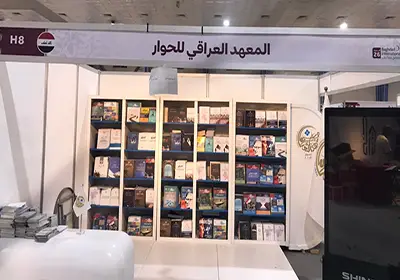
The Iraqi Institute for Dialogue, the logistical sponsor of the Baghdad International Book Fair, opens its own pavilion at the fair
Official agreement between Iraqi Institute for Dialogue and the Iraqi Media Network to sponsor The Seventh Annual International Conference of “Baghdad Dialogue” 2025
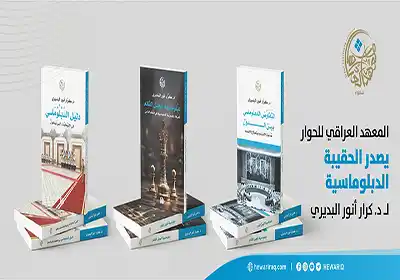
The Iraqi Institute for Dialogue publishes "The Diplomatic Portfolio" by Dr. Karrar Al-Badiri
Invitation to the 79th issue of Dialogue of Thought
Prime Minister: The path of development will make Iraq a regional political and economic powerhouse
Speech of the Director of the Iraqi Institute for Dialog at the Sixth Baghdad International Dialog Conference
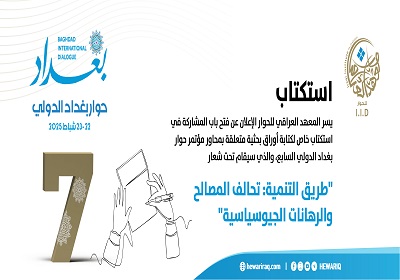
Seventh Baghdad International Dialogue Conference Call for Papers
Comments