


Translation: Iraqi Institute for Dialog
Trump-MBS meeting sparks talk of Saudi mediation with Iran
The Saudi crown prince's high-level visit to Washington has sparked controversy inside Iran, especially since the trip came after a message from Tehran to Riyadh. The controversy was fueled by U.S. President Donald Trump's statement that he "wants a deal" with Iran, reviving speculation that the kingdom could play a mediating role between Tehran and Washington.
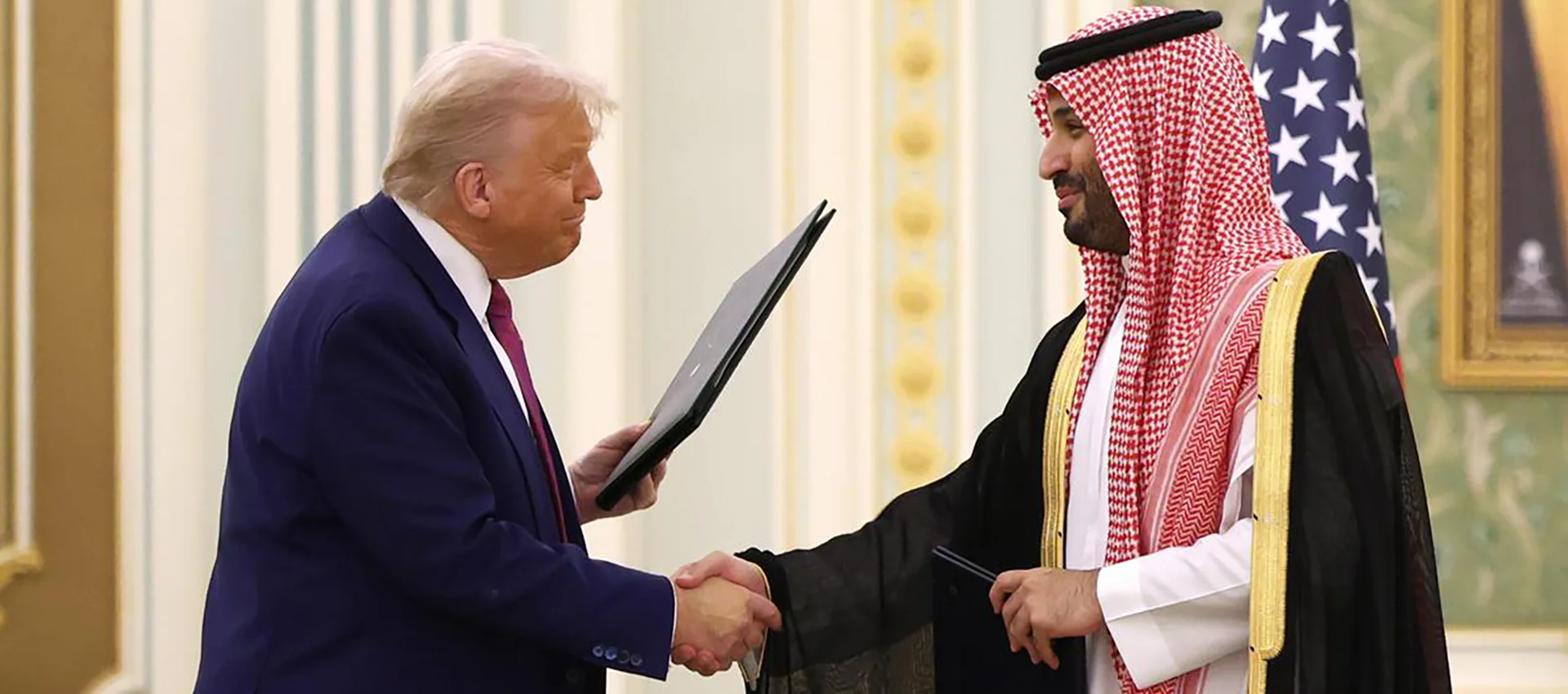
During an appearance with Prince Mohammed bin Salman at the White House on November 18, Trump said that Iran "wants a deal very badly" and that he is "very open" to it. "We're talking to them, and we've started a process," he added. It was not immediately clear whether he was referring to the five rounds of indirect dialog that took place earlier in the year before they were interrupted following the U.S.-Israeli attack on Iran in June.
Asked if he had been briefed on the state of Iran-US diplomacy and how it might affect Saudi security interests, Mohammed bin Salman said: "We are close allies and we are working closely together on this file. We will do our best to help reach an agreement between the U.S. and Iran."
"We believe it is good for Iran's future to have an agreement that meets the expectations of the region, the world and the United States, and we will work hard to see that happen."
The visit was highlighted by the White House's attempt to highlight the "strengthening" of the strategic partnership with the kingdom, announcing a preliminary agreement to share civilian nuclear technology. However, it remains unclear whether the agreement includes uranium enrichment capabilities, the central issue in Washington's dispute with Tehran, which the US has so far refrained from selling to Riyadh.
Iranian officials have vehemently rejected the idea that there are any ongoing negotiations with the United States.
On November 19, Foreign Ministry spokesman Esmail Baghaei denied Trump's statements, asserting that "there is no negotiation process." He accused the US of repeatedly violating its commitments and seeking to impose the terms of any future agreement.
Baghaei explained that President Masoud Pazeshkian's letter to Mohammad bin Salman, which was delivered before the latter's visit to Washington, was limited to bilateral relations, including thanking Riyadh for its cooperation during this year's Hajj season.
Increased speculation about mediation
Bazhakian's letter has fueled speculation that Saudi Arabia could play a mediating role between Iran and the Trump administration. Despite official denials, reformist newspapers reported on the potential Saudi mediation scenario.
Sharq newspaper wrote that the timing of the letter "carries political weight" even if it is officially about pilgrimage affairs. Etemad described the letter as an "important development" amid broader efforts to revive nuclear diplomacy.
Arman Amroz went on to propose scenarios through which Saudi Arabia could pressure the two sides to return to the negotiating table.
A media outlet close to Ali Shamkhani, a senior aide to Supreme Leader Ali Khamenei, questioned the possibility of Saudi mediation.
It described Trump's remarks as "repetitive babble," and quoted an informed official as saying that Oman and Qatar-not Saudi Arabia-are the permanent channels of indirect communication between Tehran and Washington.
On Iranian social media, initial reactions centered on the ambiguity of Trump's statement that there was "constant communication" with Iran.
Commentator Mostafa Karji criticized the lack of transparency, asking why Iranians hear such news "from others."
Political analyst Rahman Kahramanpour expressed skepticism, saying that "nothing substantial has happened" to warrant a major diplomatic shift, emphasizing the need to "separate wishes from facts," and noting that "conditions are not ripe" for a deal at the moment.
Speculation about a possible new Saudi mediation to launch an Iranian-American dialog is not new.
In February, a senior Iranian source told Amaj Media that Tehran had a "positive feeling" toward the idea of Saudi mediation after reports that Riyadh had made such a proposal.
At the time, some reformist newspapers welcomed the idea, noting that MBS's good relationship with Trump might enable him to play a constructive role. Opponents asserted that traditional intermediaries such as Oman and Qatar had more stable and reliable channels.
The new wave of speculation comes at a time when the Supreme Leader rejects any talk of negotiating with Washington.
Last month, Leader Ali Khamenei reiterated his opposition to the talks, arguing that the Trump administration's concept of a deal is to "dictate" rather than negotiate. He also stressed that Iran's missile capabilities are "still intact" and rejected Trump's claim that the U.S. has "annihilated" Iran's nuclear program.
In contrast, figures close to Khamenei have expressed a conditional openness to negotiation. Kamal Kharrazi, head of the Strategic Council on Foreign Relations and advisor to the Leader, said on November 16 that Iran has "always shown a willingness to negotiate" provided the dialogue is based on equality and mutual respect, emphasizing that the United States should "take the first step" and abandon its policy of pressure.
Any potential Saudi role in facilitating dialogue between Tehran and Washington is linked to the kingdom's strengthening diplomatic position, its growing relationship with both Iran and the United States, and its desire to avoid the repercussions of any new war on Iran.
Saudi Arabia has long sought U.S. nuclear technology, but has faced opposition in Washington to granting it uranium enrichment capabilities. Normalization with Israel was also on the table as a possible condition for such cooperation. Changing regional circumstances due to the Gaza war appear to have removed some of the barriers to Riyadh's access to such technology.
Some U.S. analysts have warned that Washington loosening its restrictions on transferring enrichment capabilities to Riyadh could make it harder to persuade Iran to curb its nuclear ambitions.
Iranian-American expert Farzan Sabet noted that Saudi-U.S. nuclear cooperation could reshape the dynamics of nuclear diplomacy between Tehran and Washington, by giving Riyadh a new "endpoint" that could influence Iran's negotiating position that could affect Iran's negotiating position.
Future:
It remains unclear whether Saudi Arabia is actually seeking - let alone succeeding - in playing an active mediation role.
But Riyadh's growing diplomatic stature, its advanced connections to both Tehran and Washington, and its desire to stabilize the region make it unlikely that speculation about its potential role will fade.
If Tehran and Washington are looking for a "way out" of the tension, Saudi Arabia's role could have an important impact-especially if Trump is open to a regional framework for Iran's nuclear program.
The consortium scenario could include multiple options, including spreading the stages of the nuclear fuel cycle among several countries, or allowing both Iran and Saudi Arabia to conduct "token" enrichment within their borders.
Lab-scale enrichment within the kingdom may be linked to the emerging nuclear deal with the United States, especially since the Trump administration recently gave South Korea the green light to embark on a nuclear submarine program-without explaining how the highly enriched fuel it would normally need would be supplied.
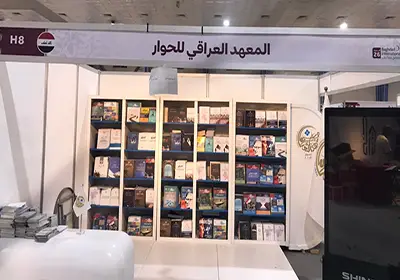
The Iraqi Institute for Dialogue, the logistical sponsor of the Baghdad International Book Fair, opens its own pavilion at the fair
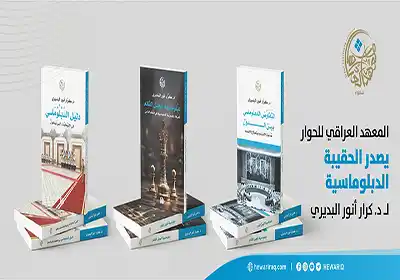
The Iraqi Institute for Dialogue publishes "The Diplomatic Portfolio" by Dr. Karrar Al-Badiri
Official agreement between Iraqi Institute for Dialogue and the Iraqi Media Network to sponsor The Seventh Annual International Conference of “Baghdad Dialogue” 2025
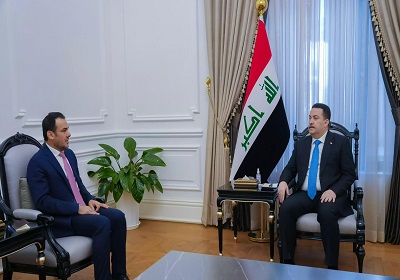
Prime Minister: The path of development will make Iraq a regional political and economic powerhouse
Invitation to the 79th issue of Dialogue of Thought
Seventh Baghdad International Dialogue Conference Call for Papers
Praise for the Baghdad International Dialogue: Strengthening Iraq's pivotal role and a meeting point for visions
Comments