


Translated by the Iraqi Institute for Dialog - Nicholas Oakes - Researcher in International Relations
The G20 without Washington: A new world order is taking shape
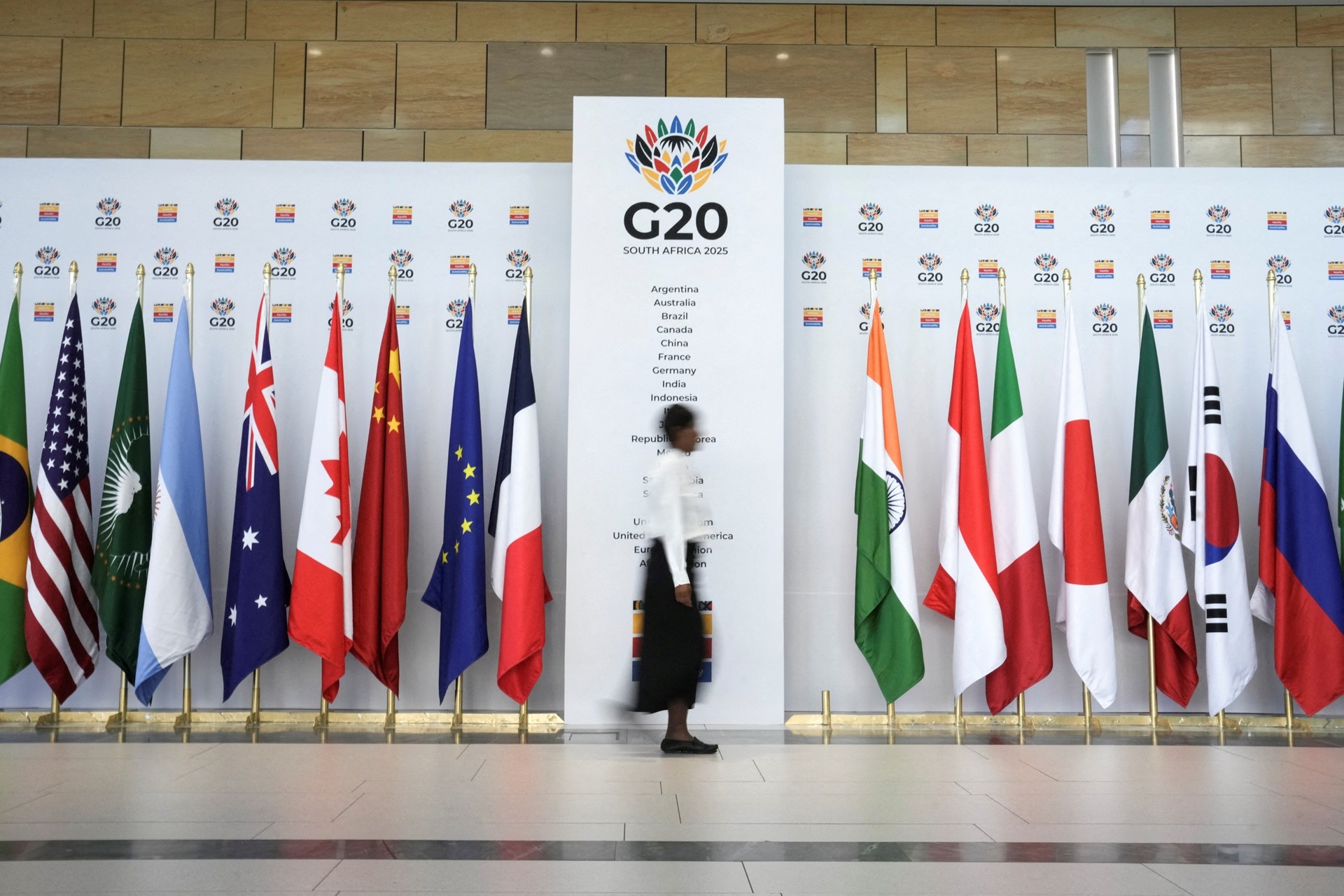
When South Africa opens the 2025 G20 Summit in Cape Town on November 22, it will not be just another high-level diplomatic gathering, but a test of what global leadership looks like in an era of debt crises, climate shocks, and fragmented geopolitics. The shape of the summit, as much as its content, will be determined by who is present and who is absent.
For the first time since leader-level attendance has become a tradition at G20 summits, the United States will not participate at the head of state level. This absence will cast a heavy shadow over a summit centered around three central themes that South Africa has placed at the center of its G20 presidency: solidarity, equality, and sustainability: Solidarity, Equality and Sustainability. These are not symbolic slogans, but principles that directly challenge the structure and priorities of the current international order, and Washington's absence will add political weight to them.
South Africa's vision for a more equal system
South Africa has made its vision for the summit clear. Its diplomats see the meeting as an opportunity to "rebalance global governance" and restore trust between advanced economies and the Global South.
It starts with the concept of solidarity-not as a moral call, but as a practical necessity in a world where competitive gaps are shrinking across almost all sectors.
South Africa emphasizes that the world is so interconnected across supply chains, energy markets, debt risks, and climate shocks that no country can pursue growth on its own. In its view, solidarity means sharing responsibility for global risks and all nations having a voice in shaping international rules.
Debt restructuring is expected to be a major focus of the discussions, as dozens of low- and middle-income countries are approaching the brink of deficits, and many see the G20 as the only platform capable of bringing China, Western banks, and the IMF to the same negotiating table. South Africa aims to push for more predictable mechanisms, faster timelines, and deeper debt reduction.
The issue of equality will be even more acute. Pretoria argues that the international financial system remains structurally biased. IMF voting quotas do not reflect modern economic realities, climate finance packages shift risks to poor countries while shifting accountability to them, and supply chain standards reflect the priorities of rich countries more than producing countries.
South Africa seeks to push advanced economies to move away from small steps and recognize the countries of the South as partners in the design of the global economy, not just beneficiaries.
Sustainability as an economic imperative
This year's summit puts sustainability at the center of its agenda. South Africa is expected to focus on financing climate adaptation, enhancing food security, closing renewable energy infrastructure gaps, supporting green manufacturing, and addressing the economic impacts of climate-induced displacement.
Pretoria has a clear message: Sustainability is not an environmental chapter of the global economy, it is the global economy itself. The systems built today will determine the resilience of people to the shocks of the next decade.
The symbolism of America's absence
Despite the futuristic nature of the summit's topics, one issue dominates the headlines: The United States is boycotting the meeting and is not sending a delegation.
This absence is seen by many as a clear political message. At a time when the global agenda is being reshaped around solidarity, burden-sharing, debt relief, and climate vulnerability, the United States is choosing not to sit at the table.
Some delegates see this absence as further evidence of what they expected: Washington favors bilateral influence and trade deals over multilateral governance-that is, it chooses power over partnership.
This decision will have far-reaching consequences. If Washington is not present to craft the language of solidarity or set sustainability goals, other powers will take on that role. The United States loses not only its presence, but its ability to shape the norms that will define the future of global cooperation.
As the international system's shift toward multipolarity accelerates, the influence of the power-based approach that Washington spearheaded in the previous unipolar system will diminish.
China and India fill the void
China will enter the summit with confidence even though President Xi Jinping will not participate in person. Beijing has spent recent years consolidating its position as the Global South's premier development partner. A summit based on solidarity and equality fits perfectly with its political message: It offers a more inclusive and less conditional model of international cooperation-and the appeal of this rhetoric will increase with the absence of the United States.
Yuan-denominated lending mechanisms are also expected to be discussed on the sidelines of the summit, supporting the trend away from Western financial structures.
India will present itself as the democratic partner of choice for developing countries, focusing on supply chain diversification, digital equality, and climate-resilient infrastructure. It will also push for greater representation of the South in multilateral institutions-a message that resonates particularly well in Africa and Southeast Asia.
Europe is trying to lead... But cautiously
European leaders will enter the summit ready to engage on issues of sustainability and climate finance, but the absence of Washington will limit their leverage. Europe does not have the financial muscle of the United States, nor the massive development machine of China.
Despite their rhetoric of solidarity, Europeans are more cautious about broad debt relief, new climate commitments, and reforms that could reduce their voting shares in international institutions. This reluctance makes Europeans appear - in the eyes of many developing countries - as an extension of the Western system, rather than a leading alternative to it.
A summit that signals a global shift
If South Africa succeeds in crafting a summit centered around solidarity, equality and sustainability, it could represent the biggest philosophical shift in the G20 since its founding.
The summit will not be remembered as an occasion for major breakthroughs, but for something quieter and more impactful: A watershed moment in global governance in which the United States took a step back and the rest of the world showed that it can take a step forward.

The Iraqi Institute for Dialogue, the logistical sponsor of the Baghdad International Book Fair, opens its own pavilion at the fair
Official agreement between Iraqi Institute for Dialogue and the Iraqi Media Network to sponsor The Seventh Annual International Conference of “Baghdad Dialogue” 2025
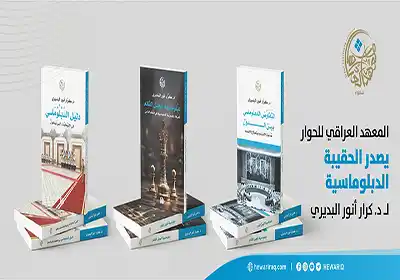
The Iraqi Institute for Dialogue publishes "The Diplomatic Portfolio" by Dr. Karrar Al-Badiri

Invitation to the 79th issue of Dialogue of Thought
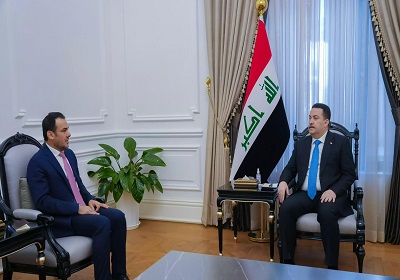
Prime Minister: The path of development will make Iraq a regional political and economic powerhouse
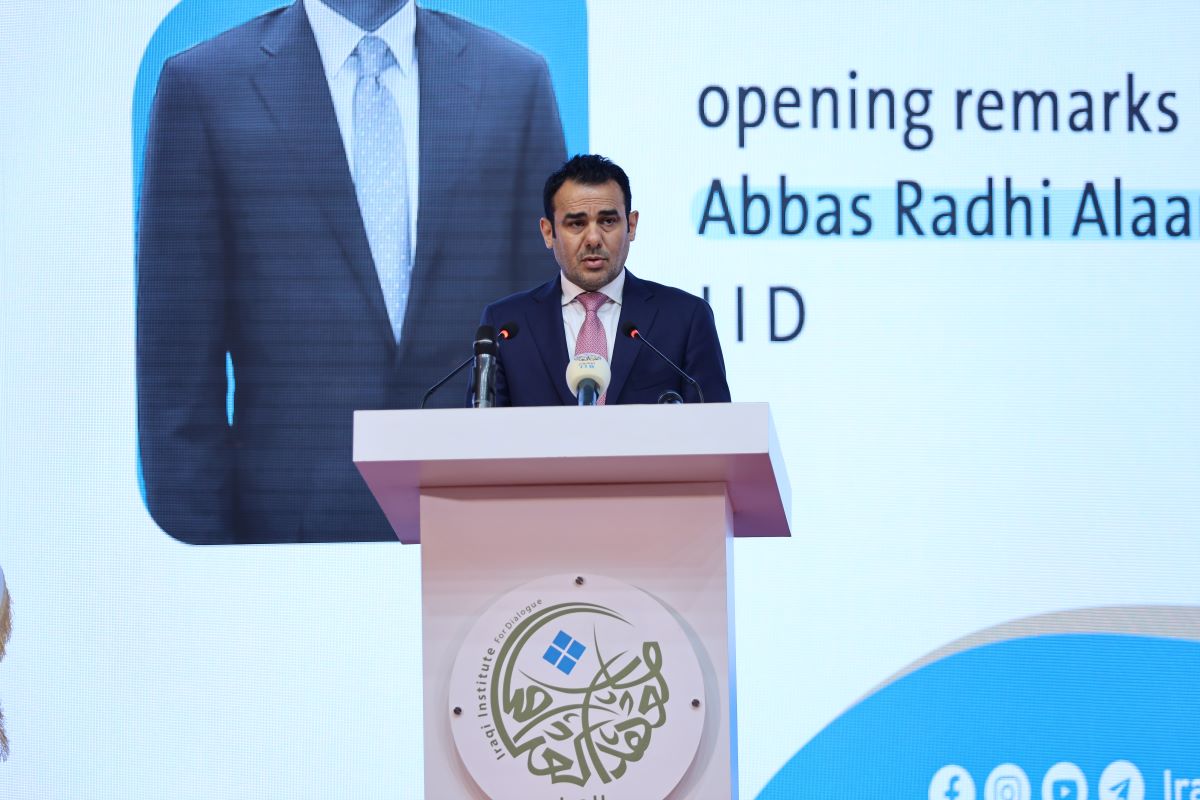
Speech of the Director of the Iraqi Institute for Dialog at the Sixth Baghdad International Dialog Conference
Seventh Baghdad International Dialogue Conference Call for Papers
Comments