

Iranian writer and journalist Ahmad Zeidabadi - translation of the Iraqi Institute for Dialog
Lebanon and Hezbollah's politics
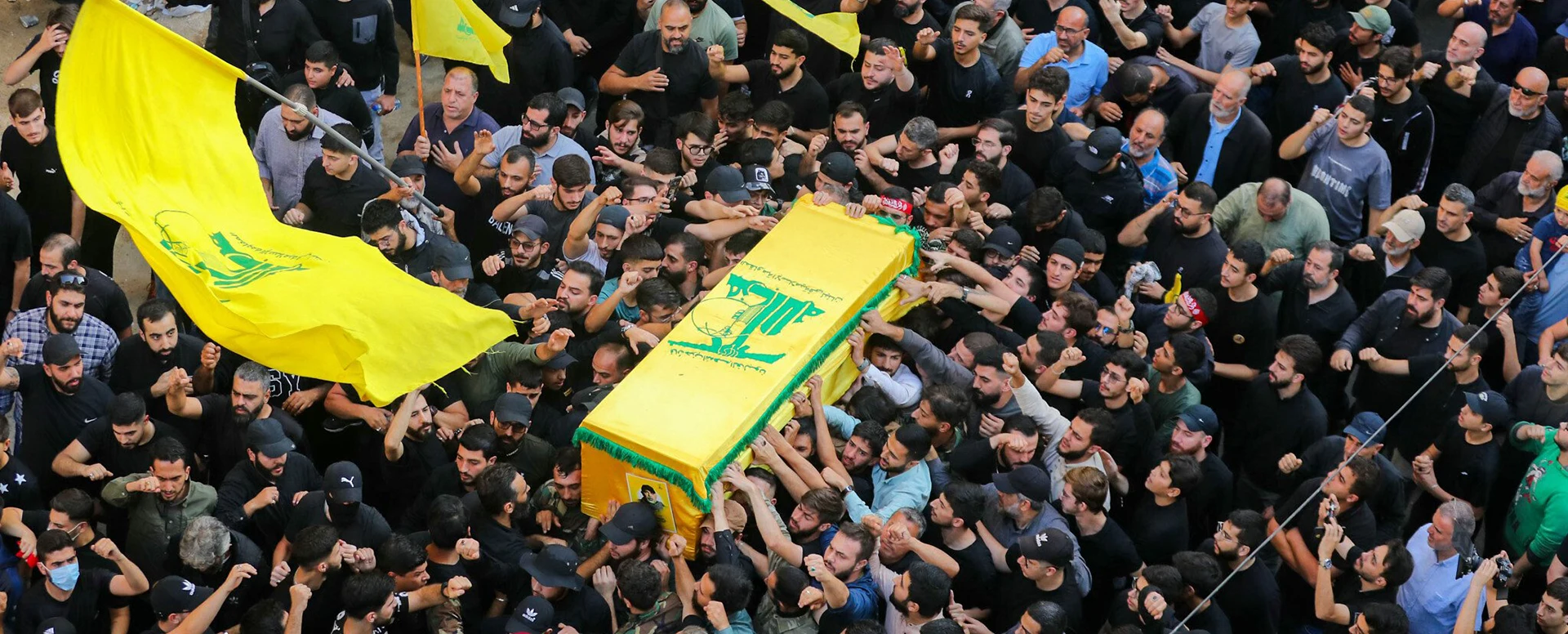
The assassination of Haitham Ali Tabatabai, Hezbollah's chief of staff, and several of his aides in a Beirut suburb by the Israeli army has brought the country back to a state of heightened tension. It has been a year since the ceasefire agreement between Hezbollah and Israel, but during that time Israel has targeted hundreds of Hezbollah members inside Lebanese territory. Hezbollah considers these attacks a clear violation of the agreement, while Israel accuses it of procrastinating on dismantling its bases south of the Litani River and planning to rebuild its military capacity.
In practice, the war continued for an entire year in a limited and unilateral manner, with Israeli attacks on targets inside Lebanon without any military response from Hezbollah. With the assassination of Hezbollah's highest-ranking military official, the debate in Beirut and a number of Arab capitals about the nature of Hezbollah's response widened.
The Netanyahu government claims that Haitham Ali was leading the movement in favor of rebuilding Hezbollah's military power and was therefore targeted, hoping that his assassination would strengthen the influence of the more flexible currents within Hezbollah.
So far, the data indicates that the movement calling for a diplomatic response to the assassination has outweighed the advocates of a military response within Hezbollah, which has led to a reduction in tensions. However, Hezbollah's popular base is pressuring its leadership to respond militarily to Israel, making the decision even more difficult.
Beyond the ceasefire: The Demand for Disarmament
The ceasefire negotiations centered on Hezbollah's withdrawal from south of the Litani, but later the complete disarmament of Hezbollah became a key condition put forward by the United States, Israel, some Arab states, and the Lebanese president and prime minister.
Although the Lebanese government emphasizes the need to confine weapons to the state, it believes that implementation should be gradual and include Israel's withdrawal from five military positions inside Lebanon. However, Israel and its allies are exerting strong pressure on the Nawaf Salam government to expedite the disarmament of Hezbollah without conditions.
According to these pressures, Lebanon will not receive any international reconstruction aid unless Hezbollah is disarmed, and Israel and possibly the government of Ahmad al-Sharaa in Syria will be allowed to launch military operations inside Lebanon.
Thus, Hezbollah faces pressure from every direction to quickly come up with a formula to give up its weapons, while Israeli strikes and assassinations are causing its supporters to become angrier and demand a military response.
An Unwanted War and More Complex Choices
After the experience of the last war, most parties, both inside and outside the Lebanese state, do not see a direct confrontation with Israel as being in Lebanon's interest. Therefore, Hezbollah's popular base is almost the only party that favors the war option.
When war is out of the question, two options remain:
1. Continuation of the status quo (strategic patience)
However, Israel has made this option very costly, intensifying its attacks on Hezbollah's arms depots, commanders and combat elements, in addition to targeting civilian facilities, without any response from the Lebanese side.
2. Engage in a diplomatic process of disarmament
It is an application of the slogan used by the president, the prime minister, and many Lebanese leaders: "One state, one government, one army."
But this option would mean a radical change in Hezbollah's doctrine and strategy, which, in the current circumstances, seems unaffordable for Hezbollah and the Islamic Republic of Iran, which supports it.
However, most Lebanese circles believe that this transformation is necessary to protect Lebanon from Israeli aggression. Some of these parties accuse Iran of being the main obstacle to Hezbollah's transformation into a fully political party. Iranian officials deny this and consider Hezbollah to be independent, although they emphasize that its weapons are a red line.
After the assassination of Haitham Ali, regional and international media attention focused on how Tehran would respond and its recommendation to Hezbollah. Iranian positions have been cautious and ambiguous, including statements by Ali Larijani, the secretary of the National Security Council, which some interpreted as a call for a military response, although the text of his statement did not explicitly include this.
In any case, the Hezbollah weapons crisis seems to have reached its limit. The continuation of the status quo is no longer possible, and there seems to be no way out other than one of two options:Going to war or laying down arms.
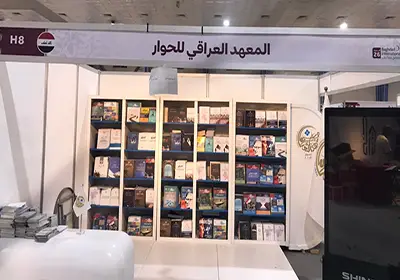
The Iraqi Institute for Dialogue, the logistical sponsor of the Baghdad International Book Fair, opens its own pavilion at the fair
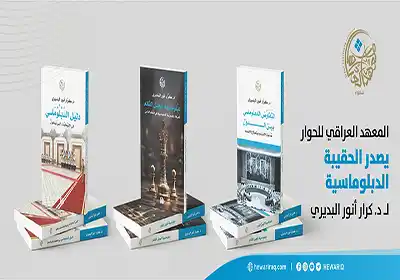
The Iraqi Institute for Dialogue publishes "The Diplomatic Portfolio" by Dr. Karrar Al-Badiri
Official agreement between Iraqi Institute for Dialogue and the Iraqi Media Network to sponsor The Seventh Annual International Conference of “Baghdad Dialogue” 2025
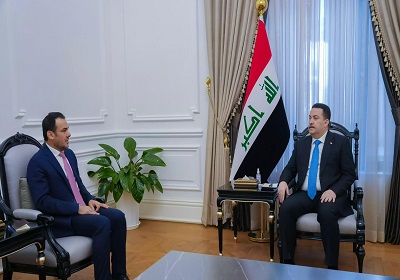
Prime Minister: The path of development will make Iraq a regional political and economic powerhouse
Invitation to the 79th issue of Dialogue of Thought
Seventh Baghdad International Dialogue Conference Call for Papers
Praise for the Baghdad International Dialogue: Strengthening Iraq's pivotal role and a meeting point for visions
Comments