


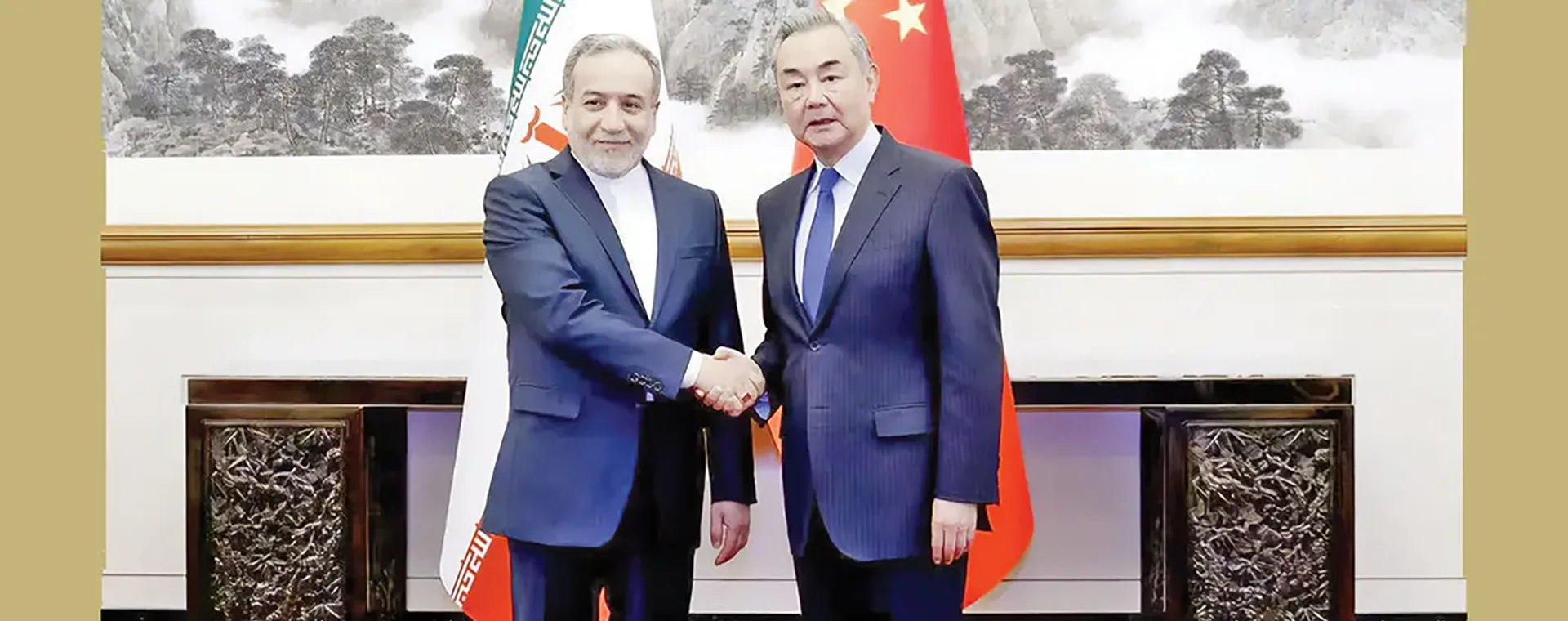
Translation: Iraqi Institute for Dialog
Washington is pressing… Will Iran-China relations be affected?
As pressure mounts and the United States sanctions on Chinese oil refineries and ports to stop buying oil from Iran and Russia, the continued sale of Iranian oil to China despite the sanctions has returned to the media spotlight.
In a report published last week, Bloomberg News reported that sanctions and a drop in Chinese demand for oil have led to the highest volume of Iranian oil stored on tankers in two and a half years.
And according to the report, the volume of Iran’s floating oil stockpile reached 54 million barrels, the highest level since May 2023, and almost double the amount recorded in the previous month. However, Iranian officials and media say there has been no decline in oil exports to China in recent months. The U.S. continues to increase pressure on China and India to reduce their imports of sanctioned crude oil from Iran and Russia.
And about 130 Chinese ports, refineries, banks and institutions have been placed on sanctions lists in recent years because of their links with Iran, a source familiar with the matter revealed. During the fall, Washington imposed several new packages of sanctions on individuals and institutions accused of participating in Iran's sanctioned foreign trade networks. And yet Iranian diplomats stress that the volume of Iran’s oil exports to China has not changed, and that it is continuing at its usual pace.
Iranian Ambassador: Relations with China are progressing
Iran’s ambassador to China, Abdolreza Rahmani Fazli, took part this week in a meeting of the Iranian parliament’s National Security and Foreign Policy Committee, where he described relations between Tehran and Beijing as “in a state of development.”
The spokesman of the committee said that the ambassador presented a detailed report on bilateral cooperation in the political, economic, cultural and trade fields, noting the success of the Iranian president's visit to China this year. He also stressed that the 25-year comprehensive cooperation agreement between the two countries is "under implementation and progressing," and that part of it has already become practical.
Since the US withdrew from the nuclear deal, Iran's foreign trade and foreign-exchange earnings have become unprecedentedly dependent on China and its neighbors; About 80 percent of Iran’s trade is with just five countries, making vulnerabilities in Iran’s foreign trade network more obvious and easier to target with sanctions.
And the Trump administration's energy secretary, Chris Wright, had stated earlier this year that Washington was "fully capable of stopping Iranian oil exports." But events over the past nine months have shown the difficulty of implementing this threat, without a noticeable change in the volume of Iran's oil exports.
Strategies to circumvent sanctions
"In recent years, Iran has developed various tools to circumvent sanctions, including:
Selling oil to intermediary clients via Malaysia – and more recently Indonesia, using front companies, operating a “shadow fleet” of oil tankers, and strengthening economic ties with China.
With the exception of the period from November 2019 to September 2020, which witnessed the collapse of global demand due to the Corona pandemic and the sharp decline in Iran's exports, Tehran was able to recover a large part of its exports as of September 2020, as exports of crude and oil products exceeded one million barrels per day, and rose to more than 1.6 million barrels the following winter, according to Tanker Trackers data.
Why is China buying Iranian oil?
As the world’s largest energy importer, China benefits from buying Iranian and Russian oil at discounted prices to reduce its dependence on U.S. allies. And media reports have said that Iran and Russia are offering deep discounts to attract buyers in global markets.
Bloomberg recently claimed that Iran has doubled its cuts from $4 to $8 per barrel of crude, boosting its market competitiveness. And Kepler data indicates that China’s imports of U.S. crude oil have been zero for five consecutive months.
Escalating the maximum pressure policy
In his second term, President Donald Trump reactivated the policy of "maximum pressure" on Iran through a presidential memorandum, adding to previous sanctions new measures aimed at depriving Tehran of its oil revenues and preventing sanctions from being circumvented. It has also made moves to reinstate some Security Council sanctions.
Stopping Iran's oil exports to China is a central goal of this policy. And U.S. Treasury Undersecretary for Terrorism and Financial Intelligence John K. Hurley has visited a number of West Asian countries — including Israel, Turkey, the United Arab Emirates and Lebanon — in pursuit of sanctions-busting networks.
In recent months, Washington has also imposed sanctions on a number of private refineries and ports in China under the pretext of buying Iranian and Russian oil, in addition to targeting "shadow fleet" tankers that transport oil to global markets.
And reports suggest that the sudden increase in Iran’s floating oil stockpile reflects less of a Chinese retreat in purchases than difficulties in finding safe routes to circumvent sanctions. According to Bloomberg, sanctions on major ports such as the port of Rizaw — one of China’s most important Iranian oil entrances — have disrupted offloading operations and forced some tankers to change course.
The shipments come from Iran, but they do not reach China completely
Kepler maintains that the volume of oil leaving Iranian ports has not decreased, but sanctions on China’s ports have caused delays in shipments. And while Iran continues to ship nearly 2 million barrels per day in September and October, data suggests that only about 1.2 million barrels were actually reaching China per day, meaning a significant amount remains floating waiting for buyers or alternative ports.
And Kepler believes that part of the decline is temporary, due to the depletion of import quotas in Shandong’s independent refineries. With the resumption of these quotas, the corporation expects Iranian exports to China to return to normal quickly. And independent refiners in China have already received their additional share of oil imports, meaning imports could increase starting in December, says analyst Amneh Bakr.
Beijing-Washington relations and their impact on Iran
And despite concerns that China is seeking a trade pacification deal with the United States that would include curbing its imports of Iranian oil, the recent trade deal between Washington and Beijing has not clearly affected China’s oil imports. Tehran insists that economic ties with China continue as before.
But to avoid sanctions, China is officially hiding its imports of Iranian oil. According to Chinese customs data, no official imports of Iranian oil have been recorded since 2022, while shipments through Malaysia and Indonesia or by transporting shipments from one ship to another and changing the origin of shipments are recorded in official papers.
What is the Shadow Fleet? And what is the difference between it and the "gray fleet"?
In recent years, severe sanctions targeting energy exports from Iran and Russia have led to the emergence of the phenomenon of the "shadow fleet" or "dark fleet".
Most of them revolve around the so-called "gray fleet", which is different from the dark fleet in that it operates in semi-legal ways, but with the use of various methods to circumvent sanctions, such as:
ship registration through modern companies or interfaces, the use of insurance alternatives, changing names and banners during the voyage, turning off tracking devices to complicate cargo monitoring.
And Kepler data shows that the market share of tankers operating within the "gray fleet" has increased by 2,800% during the last three years, and that about 10% of global demand for large oil tankers has become dependent on this fleet, with the percentage expected to reach 13% by the end of 2025.
A report by the European Parliament reports that the absence of precise definitions has added to the confusion of assessing the scale of this behavior in the global market. But in December 2023, the International Maritime Organization (IMO) provided the first clear official definition of a "shadow fleet" and ships operating in illegal contexts to circumvent sanctions, evade inspection, insurance and environmental obligations.
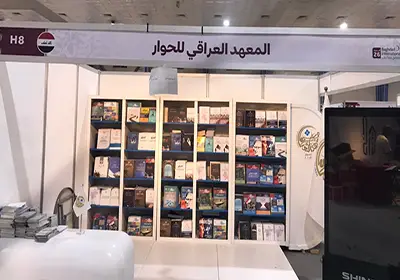
The Iraqi Institute for Dialogue, the logistical sponsor of the Baghdad International Book Fair, opens its own pavilion at the fair
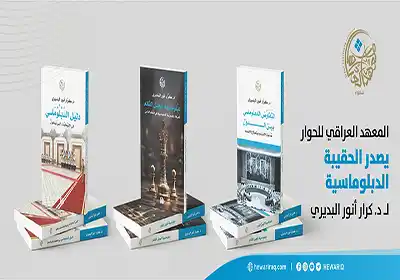
The Iraqi Institute for Dialogue publishes "The Diplomatic Portfolio" by Dr. Karrar Al-Badiri
Official agreement between Iraqi Institute for Dialogue and the Iraqi Media Network to sponsor The Seventh Annual International Conference of “Baghdad Dialogue” 2025
Invitation to the 79th issue of Dialogue of Thought
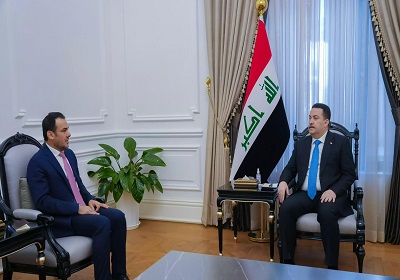
Prime Minister: The path of development will make Iraq a regional political and economic powerhouse
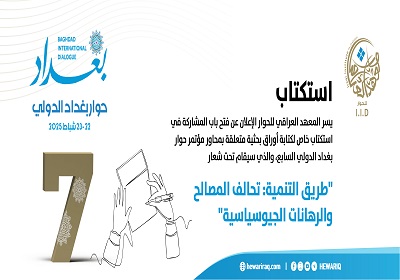
Seventh Baghdad International Dialogue Conference Call for Papers
Praise for the Baghdad International Dialogue: Strengthening Iraq's pivotal role and a meeting point for visions
Comments