


Translation: Iraqi Institute for Dialog
The Case for Controlling Discourse and Diplomacy in a Nuclear Age
There is an old saying from the time of the First World War: "The loose lips sink ships." It served as a warning to American sailors and civilians that disorderly speech could expose the movements of troops or naval deployments of spies, which could lead to catastrophic losses at sea. The warning is still valid today, but the stakes are much higher: loose talk can still sink ships, but today it could also help spark a war.
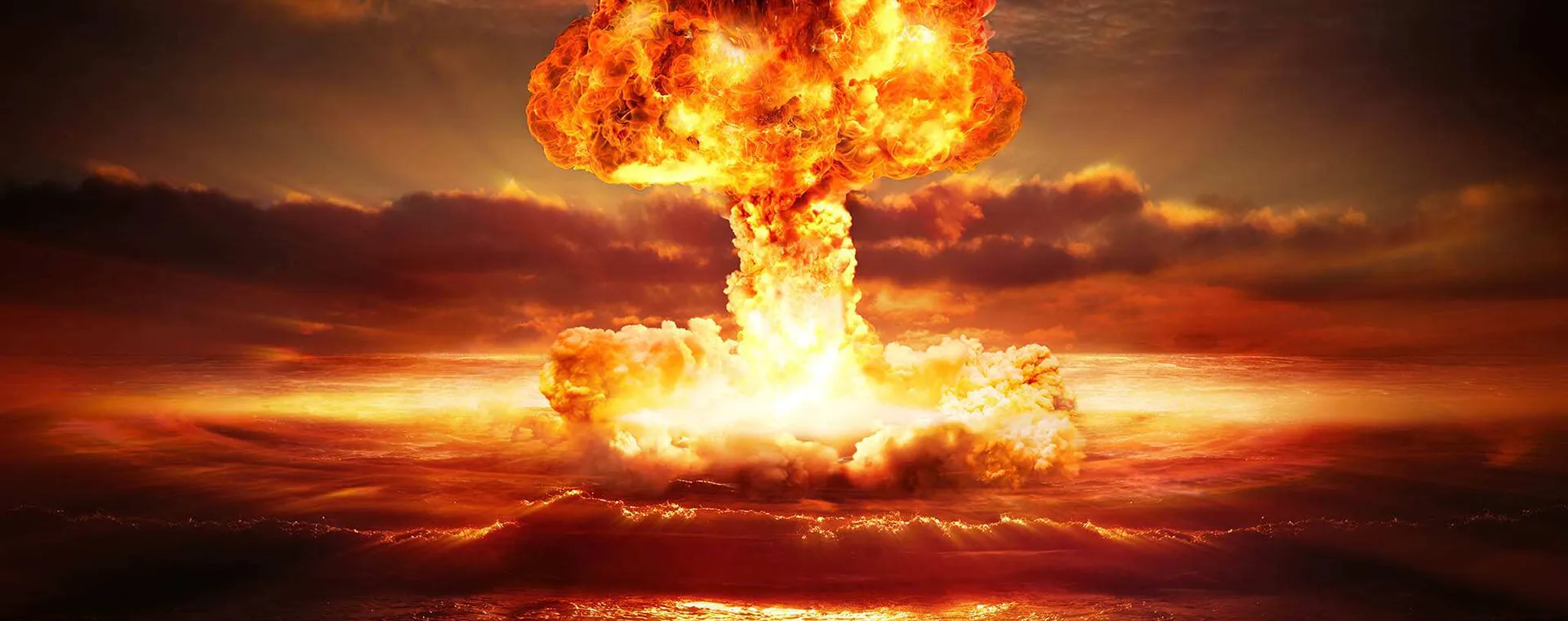
And if that war involves forces that possess nuclear weapons, its consequences could go beyond the fate of any fleet to threaten the entire planet. The rhetoric of Russia, China, and the United States is not limited to concern, but is increasingly uneven. Statements that would have previously been considered dangerous recklessness are now openly said by senior military and political officials, and are being treated as normal or even wise.
U.S.-China tensions over Taiwan
Beijing insists that Taiwan is an internal affair, and it appears fully determined to achieve reunification, if necessary by force. Chinese leaders point out that any blockade or invasion would be a matter of sovereignty, while planners in Washington treat the Taiwan scenario as a major test of U.S. credibility in Asia.
No one knows for sure whether Washington will intervene militarily if China imposes a blockade on the island or invades it, but the likelihood seems high. And the Pentagon’s operational plans reportedly assume deep conventional strikes on command posts, air defenses and missile platforms inside China—targets that Beijing may see as a threat to its nuclear deterrent capability, as some missiles and platforms are dual-use or overlapping.
There is no U.S. policy declaring an automatic nuclear response to conventional strikes on the Chinese mainland, but Chinese military writings discuss scenarios for using nuclear weapons to deter U.S. intervention, including "first strike" or "warning strike" options. Studies suggest that PLA publications frequently explore limited nuclear use in Taiwan crises, such as firing missiles near U.S. bases or in the wide ocean to force Washington to back down.
Chinese nuclear threats to allies
Voices close to the Chinese state have issued more direct nuclear warnings to allies. In 2021, a video linked to the Chinese military appeared threatening nuclear strikes against Japan if it intervened in the Taiwan crisis. Regional experts today warn of an increased risk of “nuclear blackmail” in the event of a crisis in the strait.
And new Japanese Prime Minister Sanayi Takaishi has stepped up tensions by suggesting that Japan could join the United States if Taiwan is attacked. She told parliament that China’s use of force could pose a “threat to Japan’s existence” under the 2015 security legislation, allowing the use of “collective self-defense” in specific circumstances.
Beijing reacted with fury, accusing Tokyo of sending a "shocking signal" and threatening that it would "bear all the consequences." The escalation amounted to the Chinese consul in Osaka using violent language about "beheading" that goes beyond its borders—a threat that Tokyo interpreted as directed at the prime minister herself.
More obvious Russian threats
Russia has been more vocal in its threats. On December 2, 2025, Vladimir Putin declared that Moscow was "ready" for war if Europe started one, repeating a pattern of threats to NATO throughout the Ukraine war. And he warned that Russia would inflict an “absolute defeat” on any aggressor as U.S.-Russian talks on Ukraine continued.
From 2023 to 2025, Dmitry Medvedev issued repeated threats to use the strategic nuclear arsenal against Western capitals if Russia lost its occupied territories or if NATO forces intervened directly. Russian state media talked about scenarios for "wiping out" the UK with strategic missiles, with illustrations showing the time needed for nuclear warheads to reach London.
This is not official doctrine, but deliberate messages to raise the level of nuclear terror for Britain and its allies. Moscow links those threats to British military support for Ukraine, portraying London as one of the most "hostile" countries to Russia.
A radical shift in German strategy
In Germany, the government is adopting a new military strategy that describes Russia as an "existential threat" and calculates the possibility of a direct confrontation with Moscow by 2029.
Defense Minister Boris Pistorius stresses that the German army should be "able to fight the war" by 2029, which entails rebuilding heavy forces, strengthening air defenses and accelerating defense procurement.
The previously secret "German Operational Plan", a 1,200-page document, includes Berlin's readiness to receive and support up to 800,000 NATO troops heading to the Eastern Front in the event of a full-scale war.
The Need for Controlling Discourse and Diplomacy
To avoid a slide into disaster, two things are necessary:
Speech tuning: The major powers cannot continue to talk about war as a possible or acceptable option, because this same discourse creates escalation dynamics.
Restoring serious diplomacy: to understand China's and Russia's true intentions, and to test the accessibility of stable arrangements that prevent disaster.
The article asks basic questions:
What exactly does China want? And are their targets limited to Taiwan?
And what does Russia want? Do you stop at Ukraine, or do you really seek to rebuild a Soviet empire?
Knowing the intentions of the two parties is not a theoretical matter, but rather the basis of the decision: Is making concessions understood as avoiding war? Or as a prelude to a larger war, as occurred in the 1930s?
When does appeasement become dangerous?
Appeasement is not an error in itself; It depends on the intentions of the adversary.
It becomes disastrous only when the opponent's ambitions are unlimited.
If its goals are limited, appeasement may be a way to avoid a devastating war.
The article stresses that understanding intentions is the core of the political industry, and that true leadership requires acknowledging that an adversary also has interests that he or she deems essential.
conclusion
In an age when nuclear powers exchange threats as if they were press releases, the world cannot afford reckless rhetoric. Disciplined rhetoric, sober analysis, and diplomacy based on a clear understanding of adversaries’ intentions are required—because words, like weapons, can set off a trajectory that leads to unavoidable disaster.

The Iraqi Institute for Dialogue, the logistical sponsor of the Baghdad International Book Fair, opens its own pavilion at the fair

The Iraqi Institute for Dialogue publishes "The Diplomatic Portfolio" by Dr. Karrar Al-Badiri
Official agreement between Iraqi Institute for Dialogue and the Iraqi Media Network to sponsor The Seventh Annual International Conference of “Baghdad Dialogue” 2025
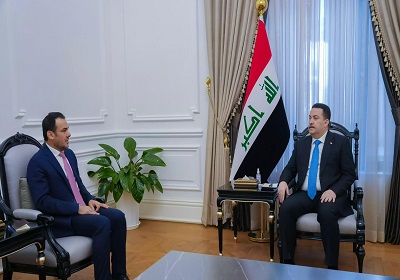
Prime Minister: The path of development will make Iraq a regional political and economic powerhouse

Invitation to the 79th issue of Dialogue of Thought
Seventh Baghdad International Dialogue Conference Call for Papers
Praise for the Baghdad International Dialogue: Strengthening Iraq's pivotal role and a meeting point for visions
Comments