

By James Dorso - Publisher: Middle East Foundation - Translation: Iraqi Institute for Dialog
Challenges the new Iraqi leadership will face: Water shortages and economic pressures
Iraqis voted in the November 11th parliamentary elections, and although pre-election polls predicted a record low turnout, the final turnout was 56.11%, according to the Independent High Electoral Commission. (Turnout in the 2021 parliamentary elections was 43.3%) The Reconstruction and Development Coalition, led by current Prime Minister Mohammed Shiaa al-Sudani, won 46 of the 329 seats in the Iraqi Council of Representatives.
Now, after the elections are over, al-Sudani faces the task of forming a coalition government. (After the 2021 elections, it took a year to form a government.) Thirty-eight political parties have won seats in the elections, making Iraq's complex political landscape require negotiations and consensus-building to form a government. Other notable winners include former Prime Minister Nouri al-Maliki (Shia coalition/State of Law), former Parliament Speaker Mohammed al-Halbousi (Sunni/Progressive Party), former armed faction leader Qais al-Khazali (Shia/Sadeqon Movement), and the Kurdistan Democratic Party (KDP).
Those who can muster enough support to become Iraq’s next prime minister face four major challenges: the water crisis, public finances, relations with the United States, and regional tension with Iran.
Managing the water crisis
Water scarcity is the most pressing problem in Iraq. And Iraq relies on Turkey and Iran to provide about 75% of its fresh water through the Tigris and Euphrates rivers, which originate from the upper reaches of the river. Tuhrah al-Mufti, Sudan's water adviser, warns that Iraq's fragility stems from these cross-border flows.
There is some good news: According to the Mufti, the amount of water flowing from Turkey into the Tigris River has doubled in two years. And Iraq is taking some proactive steps, such as the Iraq-Turkey Water Agreement signed in November 2025, which establishes a mechanism for water management between the two countries for five years. Under this agreement, Turkey will oversee water releases and rehabilitation of related infrastructure, including dams and distribution networks, during this period, after which control will return to Iraq.
However, 2025 is the driest year in Iraq since 1933. Lack of rain and Turkish and Iranian dam projects have reduced the water levels of the Tigris and Euphrates rivers by up to 27%. Reservoirs currently have a capacity of less than 8 billion cubic meters, the lowest in more than eight decades.
And in September, the government suspended wheat cultivation due to water shortages. And southern Iraq, particularly Basra, home to 3.5 million people, is facing a worsening humanitarian crisis, with residents relying on trucked-in water.
Weak public finances
Iraq's economy is dependent on oil revenues, which make up more than 90% of the federal budget, exposing the country to global price fluctuations, geopolitical tensions, and OPEC+ production quotas. Operating expenses (including salaries of public sector employees) accounted for 94% of total government spending, while investment expenses did not exceed 6%.
And that dependence has intensified as oil prices have fallen over the year, putting pressure on the 2025 budget and prompting calls for tighter government spending. Iraq exports about 35% of its exports to China, making it vulnerable to slowing Chinese economic growth and Washington's anti-China policies.
The Sudanese government has employed 370,000 public sector employees, and expanded the social welfare network to ease popular discontent and achieve temporary political stability, but at the expense of avoiding reforms and entrenching patronage networks.
And Iraq’s energy sector is seeing improved efficiency and is a source of future savings. Baghdad is striving to end the burning of natural gas by 2027 and use it to generate energy locally, which eliminates its import, especially from Iran, which necessitated Washington's lifting of sanctions. The measure will save $4 billion a year. "Iraq has become self-sufficient in many petroleum products, including gasoline, diesel, and kerosene, and Sudan's government has ordered a halt to imports, saving up to US$10 billion a year."
Instead of relying permanently on high oil prices, Baghdad is diversifying its economy. The 2024-2028 development plan aims to reduce dependence on oil, attract foreign investment, and expand sectors such as infrastructure, agriculture, and finance. The Iraqi development road project aims to reduce dependence on oil by making Iraq a trade corridor between Asia and Europe, although it may face security challenges and resistance from neighboring countries that host competing projects.
Balancing Relations with the United States
U.S. forces withdrew from Iraq in 2011, but returned in 2014 to fight the Islamic State (IS) group. Washington has vowed to achieve the “ultimate defeat” of ISIS, a mission that justifies its long-term presence.
Under a recent agreement, U.S. combat forces began withdrawing in September 2025, with a full withdrawal expected by September 2026. However, small units will remain in Iraqi Kurdistan and Ain al-Asad Air Base to assist in counterterrorism operations.
And in October, U.S. Secretary of State Marco Rubio urged Sudan to disarm “Iran-backed militias that undermine Iraq’s sovereignty,” which Baghdad considers different from the Popular Mobilization Forces (PMF) – a 240,000-strong force, a government institution established under Iraqi law to fight ISIS. "The United States pressured Iraqi lawmakers to withdraw a bill that would have brought the PMF under full government control, but internal disagreements also contributed to the bill's failure." Al-Sudani recently announced that armed groups have two options: join official security institutions or switch to peaceful political action.
Complicating U.S. demands and forming a government coalition, three pro-militia parties (the Sadeq Movement, the Badr Organization, and the Rights Movement) won 51 seats, a large number of the Shiite bloc's 184 seats. Sadeq is the political wing of Asaib Ahl al-Haq, which is designated by the United States as a foreign terrorist organization. Its leader, Khazali, has been subject to personal U.S. sanctions for his involvement in attacks on U.S. and coalition personnel and their alliance with the Iranian Revolutionary Guard Corps.
And militias do not pose a threat to the Iraqi state, as Amir al-Ukaili points out, “armed factions no longer threaten to bring down the state because they have become, in many ways, the state itself. It controls ministries, directs security forces, and dominates the economic landscape, using the ballot box to assert its existing authority."
And if the new government enacts legislation that puts the PMF under its full control, it will strain relations with the Americans. However, Washington has no right to object to political parties winning power publicly through the ballot box, especially as U.S. President Donald Trump celebrates a former member of al-Qaida who fought U.S. forces in Iraq, and is now the unelected interim president of Syria, in the White House.
The invasion and occupation of Iraq cost the Americans more than 4,400 lives and more than $3 trillion. The US now faces an "intervention trap" - a vicious circle of its own making, in which intervention creates new problems that decision-makers feel compelled to manage indefinitely. Iraq is still stuck in this vortex: Washington wants to withdraw but cannot afford the risks of doing so.
Removing Iraq from the U.S.-Iran Conflict
The third challenge for the next Iraqi government will be to avoid becoming embroiled in the long-running U.S.-Iranian rivalry. Since the 1979 Islamic Revolution, Washington has sought to remedy what it sees as a national insult: the ouster of its ally, the Shah of Iran, and the 444-day hostage crisis that followed, which may have affected the 1980 presidential election.
Over the decades, both sides have waged a hidden war — from sanctions and cyberattacks to assassinations and economic sanctions. Iran's ballistic missile, drone, and nuclear weapons programs have become U.S. justifications for continuing its policy of containment.
"In June 2025, U.S. airstrikes targeted three Iranian nuclear facilities." Trump claimed that the operation had "eliminated" Iran's nuclear program, although U.S. military intelligence was not sure. Meanwhile, Israel, America's closest ally in the region, has reportedly continued assassinations and covert operations against Iranian scientists and facilities.
Iraq is in danger of becoming a proxy war zone. In May 2025, U.S. Congressmen Joe Wilson and Greg Stubb called for sanctions against Iraq as part of the "maximum pressure" campaign against Iran. They demanded comprehensive sanctions against the PMF, a large part of Iraq's banking and oil sectors, the finance minister, "Iran collaborators in Iraq," the head of Iraq's Federal Supreme Court, and former prime ministers - in a full-scale assault on Iraq's economy and sovereignty.
The International Institute for Strategic Studies notes that "Iraq has succeeded in maintaining its neutrality, bypassing regional tensions through diplomatic restraint rather than military intervention." Iraq has strived to conclude ceasefires in Lebanon and Palestine, facilitated the delivery of aid to Gaza and Lebanon, and played a role in the recent reconciliation between Iran and Saudi Arabia.
The slogan of the Sudanese political project is "Iraq first", but Washington considers Iraq a tool to pressure Iran, and all the money and military casualties justify America's right to sovereignty; But this dynamic threatens Iraq's national stability. The next prime minister must strengthen the economy and state institutions to reconcile the interests of the United States, Israel and neighboring Iran, in order to preserve Iraq's fragile independence.
Balancing domestic needs with external pressures - particularly from the United States and Iran - will determine Iraq's future far more than the outcome of direct elections.
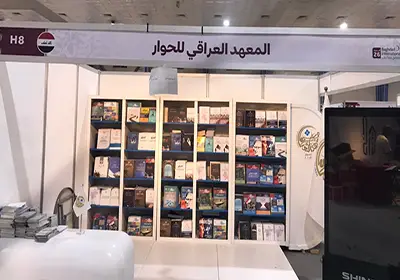
The Iraqi Institute for Dialogue, the logistical sponsor of the Baghdad International Book Fair, opens its own pavilion at the fair
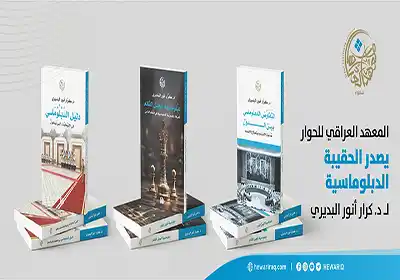
The Iraqi Institute for Dialogue publishes "The Diplomatic Portfolio" by Dr. Karrar Al-Badiri
Official agreement between Iraqi Institute for Dialogue and the Iraqi Media Network to sponsor The Seventh Annual International Conference of “Baghdad Dialogue” 2025
Invitation to the 79th issue of Dialogue of Thought
Seventh Baghdad International Dialogue Conference Call for Papers
Praise for the Baghdad International Dialogue: Strengthening Iraq's pivotal role and a meeting point for visions
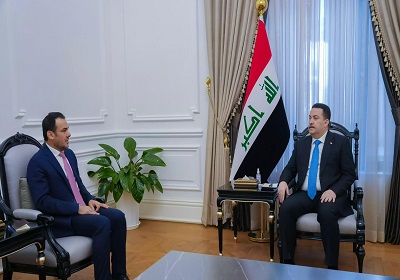
Prime Minister: The path of development will make Iraq a regional political and economic powerhouse
Comments