
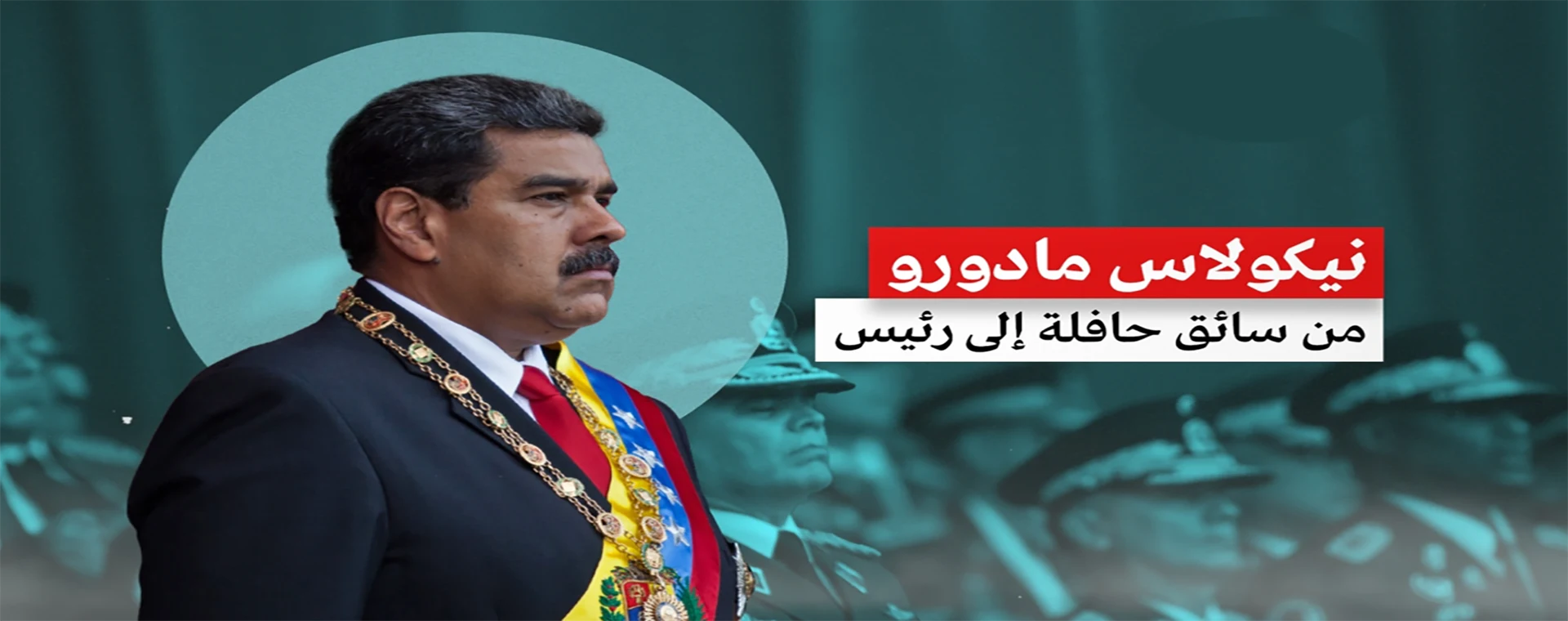
Nicolás Maduro, from bus driver to president of Venezuela
Nicolás Maduro's 12-year presidency, after he rose to power in 2013, succeeding his long-time ally, Venezuelan leader Hugo Chavez, after his death from cancer, was not calm until his arrest at dawn on Saturday in a "lightning" operation ordered by US President Donald Trump, after a maximum pressure campaign that lasted for months.
The former bus driver and union leader had neither the grassroots nor the charisma Chavez possessed, according to a CNN report, as the opposition challenged his victory in the 2013 presidential election.
Venezuela has since experienced bouts of economic turmoil and crisis under Maduro, amid growing U.S. sanctions and mismanagement of the country’s vital oil industry.
And in 2017, Maduro sought to redefine and expand the president’s powers to bypass the National Assembly, then under opposition control, amid weeks of street protests in the capital, Caracas.
In 2018, during an election denounced by opposition leaders and the international community, Maduro won another six-year term, but the international community widely denounced the election as illegitimate.
The first Trump administration indicted Venezuela’s leader on drug-related terrorism in 2020, and since then, the U.S. president in his two divergent administrations has stepped up economic and military pressure on the Maduro regime, with a $50 million reward for any information leading to his arrest.
Maduro and his inner circle, who have over the years called themselves “revolutionaries,” have been reluctant to cede power, in part because of U.S. criminal indictments and international sanctions they face outside of power.
The President and the Bus Driver
Nicolás Maduro was born on November 23, 1962, in the capital Caracas, to a working-class family with clear left-leaning tendencies, as he grew up in a popular neighborhood.
Maduro did not fully complete his high school education at Lecio Jose Avalos, and only later taught political education in Cuba in 1986 at the Communist cadre training school.
Maduro began his working life as a bus driver in the Caracas metro, where he emerged as a union activist, and in the 1970s and 1980s, he founded an informal transport workers' union (despite the then government ban), and became a strong representative of workers, forming the basis of his revolutionary leftist political orientation. He also participated in left-wing groups such as the League of Socialists and the Bolivarian Revolutionary Movement-200.
Chavez: The Tipping Point
Maduro’s most significant turning point in life was in 1992, after a failed coup attempt led by Chavez against President Carlos Andres Perez, when he and his future wife Celia Flores, a prominent lawyer, campaigned for Chavez’s release, which was achieved in 1994.
Maduro then became a close associate of Chavez, contributing mainly to the founding of the Fifth Republic Movement, the party that brought Chavez to the presidency in 1998.
With Chavez's rise to power, Maduro's star began to rise, in 1999 he was elected to the Chamber of Deputies and then to the National Constituent Assembly that drafted the new constitution.
And between 2003 and 2012, Maduro was named foreign minister, having played a prominent role in strengthening regional alliances, adopting an anti-imperialist rhetoric and supporting Palestine and Libya under deposed President Muammar Gaddafi.
And in October 2012, Chavez appointed him as his vice president after suffering from cancer, a move that surprised many because it bypassed stronger figures within the healing mainstream such as Diosdado Cabello.
And about 5 months later, in March 2013, Hugo Chavez died, and Maduro assumed the presidency temporarily according to the constitution, winning on April 14 in the special presidential election by a slim 50.6% against opposition candidate Henrique Capriles, to become a constitutional president.
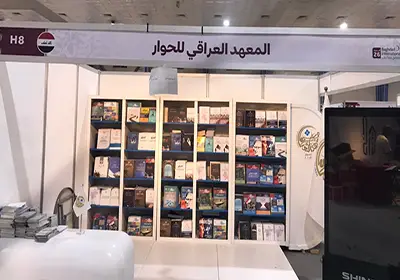
The Iraqi Institute for Dialogue, the logistical sponsor of the Baghdad International Book Fair, opens its own pavilion at the fair
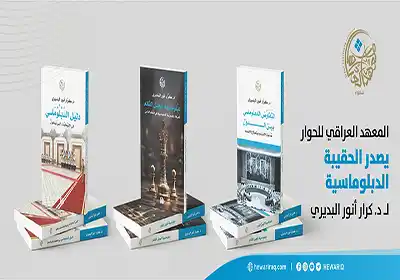
The Iraqi Institute for Dialogue publishes "The Diplomatic Portfolio" by Dr. Karrar Al-Badiri
Official agreement between Iraqi Institute for Dialogue and the Iraqi Media Network to sponsor The Seventh Annual International Conference of “Baghdad Dialogue” 2025
Invitation to the 79th issue of Dialogue of Thought
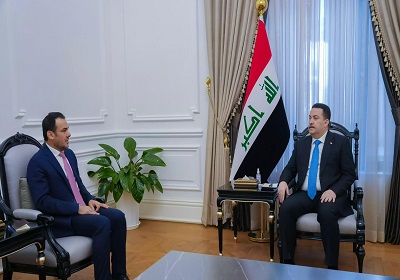
Prime Minister: The path of development will make Iraq a regional political and economic powerhouse
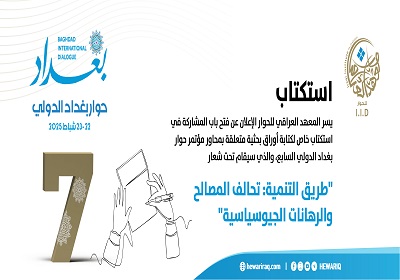
Seventh Baghdad International Dialogue Conference Call for Papers
Praise for the Baghdad International Dialogue: Strengthening Iraq's pivotal role and a meeting point for visions
Comments