


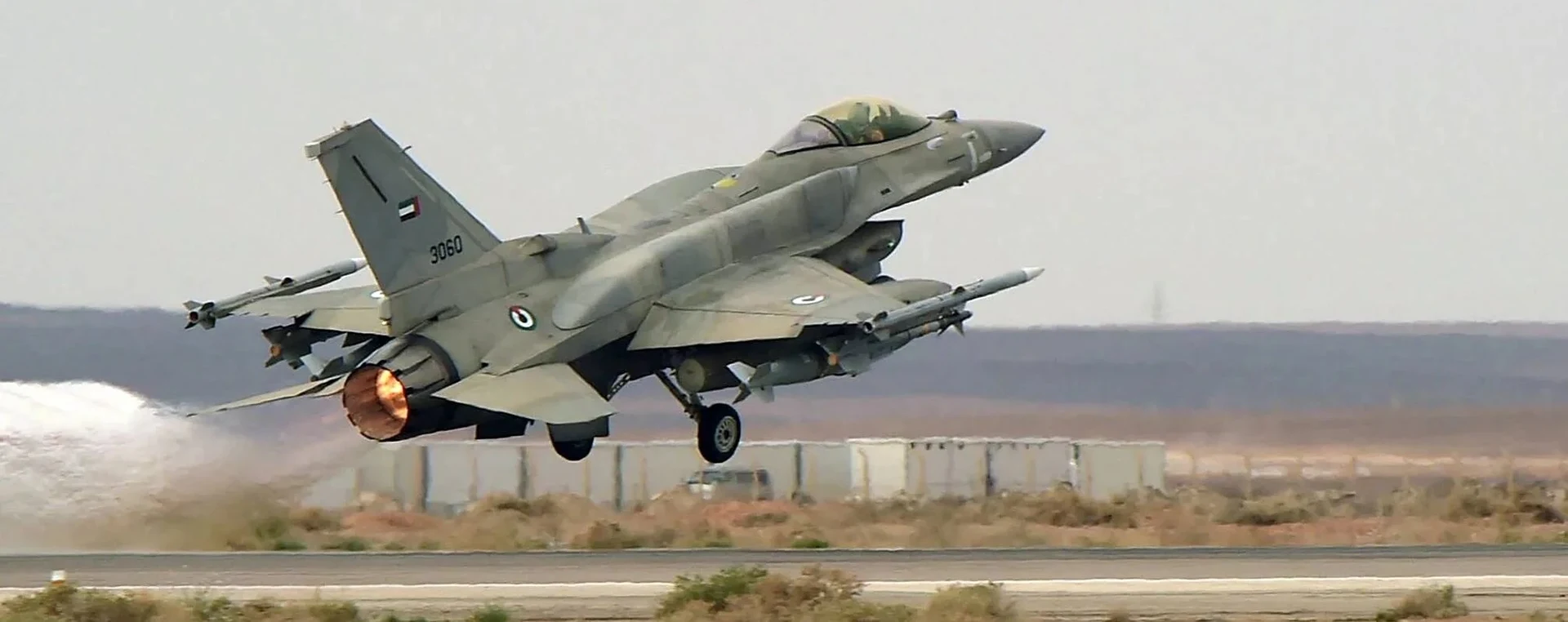
Report: Jordan a "focal center" for possible US military preparations against Iran
A February 22 report by The New York Times revealed that a military base in central Jordan had become a "major hub" for US military preparations for possible strikes against Iran, based on satellite imagery and flight tracking data.
According to the report, photos taken on Friday showed the number of US warplanes at the Muwaffaq Al-Salti air base rising to more than 60, more than three times the previous number. Flight tracking data also indicated that at least 68 cargo planes had landed at the base since last Sunday, with additional aircraft likely to be inside bunker barns.
The aircraft shown in the photos included F-35 stealth fighters, along with drones and helicopters. The report also said that U.S. forces had set up additional air defense systems to protect the base in anticipation of a possible Iranian missile attack.
A cautious Jordanian position
Jordanian officials told the newspaper that the deployment of the aircraft and equipment comes within the framework of an existing defense agreement with Washington. In contrast, Ynet quoted a Jordanian source as officially confirming that Amman will not allow its territory to be used for an attack on Iran, in an effort to show neutrality and avoid direct involvement in any confrontation.
This coincided with previous Iranian warnings that any regional state providing military facilities to the United States in the event of a conflict would be considered a party to the confrontation.
"Building Regional Security"
In October, The Washington Post revealed leaked documents indicating meetings between officials from six Arab countries and their counterparts from the United States and Israel between 2022 and 2025, in what was described as "regional security construction."
According to the documents, this framework aims to integrate air defense systems to counter Iranian missiles and drones, with the participation of countries including Jordan, Qatar, Bahrain, Egypt, Saudi Arabia and the UAE.
wider military build-up in the region
The military buildup in Jordan is part of a broader U.S. buildup in West Asia. And U.S. President Donald Trump has hinted at a possible strike on Iran if no deal on its nuclear program is reached on Washington’s terms, setting a deadline of 10-15 days from February 19.
And reports suggest that any potential attack could be broader than the strikes on Iranian nuclear sites last June, with expectations of a major Iranian response that could include the use of ballistic and hypersonic missiles against U.S. and Israeli bases.
And Ali Vaez, an expert on Iran at the International Crisis Group, told PBS that “a limited strike this time may not be possible, because an Iranian response could make a full-scale escalation inevitable.”
Defense expert Seth Jones of the Center for Strategic and International Studies also noted that the current military package, while large in air and naval terms, does not include the deployment of large ground forces as occurred in the 1991 Gulf War or the 2003 invasion of Iraq, which means there are "clear limits" to the nature of the potential operation.
Aircraft carriers and air reinforcements
And the US military moves include the stationing of the aircraft carrier USS Abraham Lincoln in the Arabian Sea since late January, in addition to sending the USS Gerald R. Ford to the region recently, accompanied by missile-guided destroyers.
Dozens of fighter jets, including the F-35, F-22, F-15 and F-16, have been moved to bases in the region, along with the deployment of dozens of refueling aircraft and more than 170 military cargo aircraft.
regional flammable landscape
The developments come amid escalating tensions between Washington and Tehran over the nuclear file, amid fears that the region could slip into a wide-ranging confrontation. And while the parties involved assert their attachment to diplomacy, the mutual military buildup reflects the magnitude of the risks surrounding the current phase, and makes any miscalculation susceptible to turning political tension into a direct military clash.

The Iraqi Institute for Dialogue, the logistical sponsor of the Baghdad International Book Fair, opens its own pavilion at the fair

The Iraqi Institute for Dialogue publishes "The Diplomatic Portfolio" by Dr. Karrar Al-Badiri
Official agreement between Iraqi Institute for Dialogue and the Iraqi Media Network to sponsor The Seventh Annual International Conference of “Baghdad Dialogue” 2025
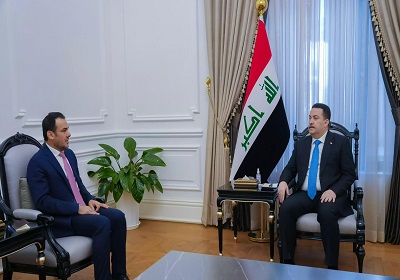
Prime Minister: The path of development will make Iraq a regional political and economic powerhouse

Invitation to the 79th issue of Dialogue of Thought
Seventh Baghdad International Dialogue Conference Call for Papers
Praise for the Baghdad International Dialogue: Strengthening Iraq's pivotal role and a meeting point for visions
Comments