


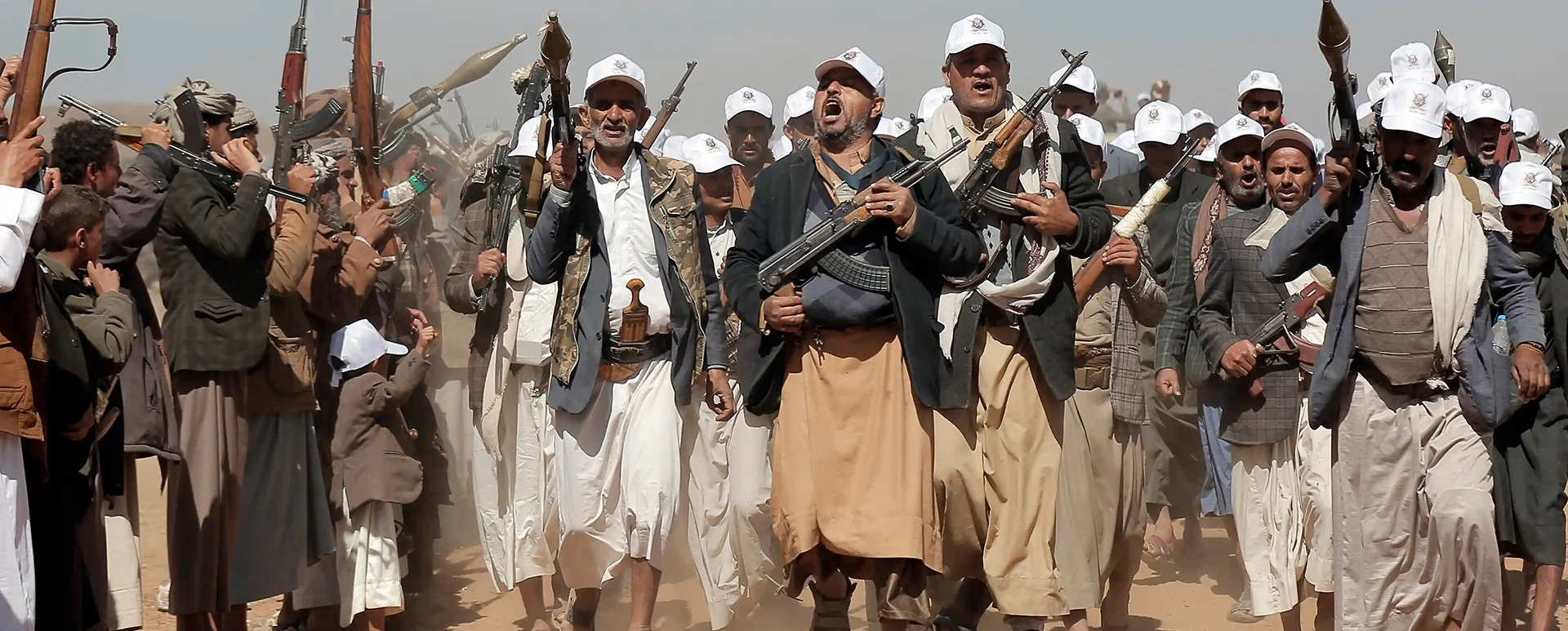
Yemen and Red Sea Security: Transformations of the Conflict and Its Implications for U.S. Policy (2015–2026)
For more than a decade, Yemen has been one of the most prominent arenas of interaction between internal conflicts and regional and international rivalries, due to its geopolitical location overlooking the Bab al-Mandab Strait, one of the most important and vital global sea lanes for international trade and energy security. And the overlap of domestic factors with foreign interventions has transformed the Yemeni conflict from a conventional civil war into a complex regional security crisis that touches on the security of the Red Sea and the balance of power in the Middle East, and is imposing itself on the U.S. policy agenda on a renewed basis.
The current phase of the Yemeni conflict began in 2015, when the Houthi group (Ansar Allah) took control of the capital Sana'a and large parts of the north and west of the country, prompting the internationally recognized Yemeni government to request external military support. A Saudi-led coalition intervened militarily in March of the same year, turning Yemen into a proxy battleground between Riyadh and Tehran, with growing Iranian support for the Houthis militarily and technically. Over time, divisions within the anti-Houthi camp deepened, and the STC emerged as a UAE-backed separatist force, adding a new layer of complexity to the political and military landscape.
"Since the 2022 truce, widespread ground confrontations have subsided, but the absence of a comprehensive political settlement has left the lines of contact frozen without a radical treatment of the causes of the conflict." And in late 2025, the government camp saw a deep rearrangement after a Saudi intervention against the STC, which led to its dissolution and the reconstitution of the Presidential Leadership Council, and strengthened Saudi Arabia’s position as the main security and political patron of the Yemeni government. And despite these shifts, the Houthi group has remained the dominant force in northwestern Yemen, while continuing to enhance its military and missile capabilities.
The most significant shift in the course of the conflict was its transition to the maritime domain since October 2023, when the Houthi group began carrying out attacks on commercial ships in the Red Sea and Bab al-Mandab, and linked these operations to the war in Gaza. This development has moved Yemen from the margins of international attention to the forefront of discussions related to the security of international navigation, as trade lines have come under increasing pressure, insurance and shipping costs have risen, and Western military assets have been redeployed to the region to ensure freedom of navigation. The group also launched long-range attacks on targets inside Israel, giving it a regional dimension that transcends internal conflict.
"In this context, the United States has reformulated its approach to Yemen." "After years of scaling back direct engagement, Washington expanded its military operations against the Houthis in spring 2025 to deter naval attacks." It also reclassified the group as a foreign terrorist organization, activated economic sanctions tools, and pushed for an international approach in the Security Council focused on depriving the Houthis of military and financial resources. At the same time, however, the policy sought to avoid a descent into a full-blown confrontation with Iran, recognizing the sensitivity of regional balances and the rising tension in the Middle East.
These developments reflect a shift in the nature of the Houthi threat. "The group is no longer just a local actor contesting power in Sana'a, but rather a player with capabilities that influence the equation of maritime and regional deterrence."
External support, the accumulation of combat experience, and the development of drone and missile systems have all enhanced their ability to impose asymmetric deterrence equations in the Red Sea. "This shift places Yemen in what can be described as a Red Sea security complex, where the interests of regional and international powers intersect in a narrow but highly sensitive geographic space."
In contrast, the human dimension remains one of the most tragic aspects of the crisis. "Yemen, already one of the poorest Arab countries, is suffering from a widespread economic collapse, a severe lack of humanitarian funding, and restrictions on aid access, especially in Houthi-controlled areas." And while the pace of major fighting has decreased since 2022, damaged infrastructure, declining basic services, and the continued institutional fragmentation are all keeping the humanitarian crisis at a critical level. The continuing humanitarian deterioration is not only a social tragedy, but also a factor of instability and provides a favorable environment for the activity of extremist groups.
"At the strategic level, the Yemeni landscape can be read within a broader framework of regional rivalry between Saudi Arabia and Iran, as Yemen represents one of the arenas of influence testing." The Yemeni file is also linked to the US deterrence calculations towards Iran, especially in light of the overlapping paths of regional tension from Gaza to the Red Sea. "This interdependence makes escalation on one battlefield a potential reigniting factor on the other, reinforcing the fragility of existing relative stability."
Future scenarios seem open to multiple possibilities. An internal military stalemate may persist with sporadic naval escalation aimed at improving the terms of negotiation. And the widening regional confrontation could lead to deeper involvement of international powers, raising the risk of a descent into wider conflict. A less costly scenario is a gradual political settlement that requires regional consensus, mutual security guarantees, and rebuilding Yemeni state institutions on the basis of a more inclusive partnership.
"In sum, Yemen is no longer an isolated internal conflict, but rather a focal point of interaction between international navigation security, regional competition, and major deterrence strategies." "An approach that focuses on the military instrument alone will not be sufficient to ensure long-term stability unless it is integrated into a comprehensive vision that addresses the roots of the political and economic crisis and supports a sustainable negotiating path." Yemen's stability has become a necessary condition for the stability of the Red Sea, and one of the main keys to understanding the dynamics of security in the Middle East during the next stage.

The Iraqi Institute for Dialogue, the logistical sponsor of the Baghdad International Book Fair, opens its own pavilion at the fair
Official agreement between Iraqi Institute for Dialogue and the Iraqi Media Network to sponsor The Seventh Annual International Conference of “Baghdad Dialogue” 2025

The Iraqi Institute for Dialogue publishes "The Diplomatic Portfolio" by Dr. Karrar Al-Badiri

Invitation to the 79th issue of Dialogue of Thought
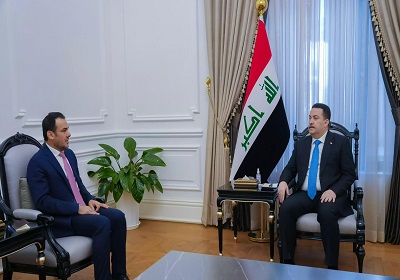
Prime Minister: The path of development will make Iraq a regional political and economic powerhouse
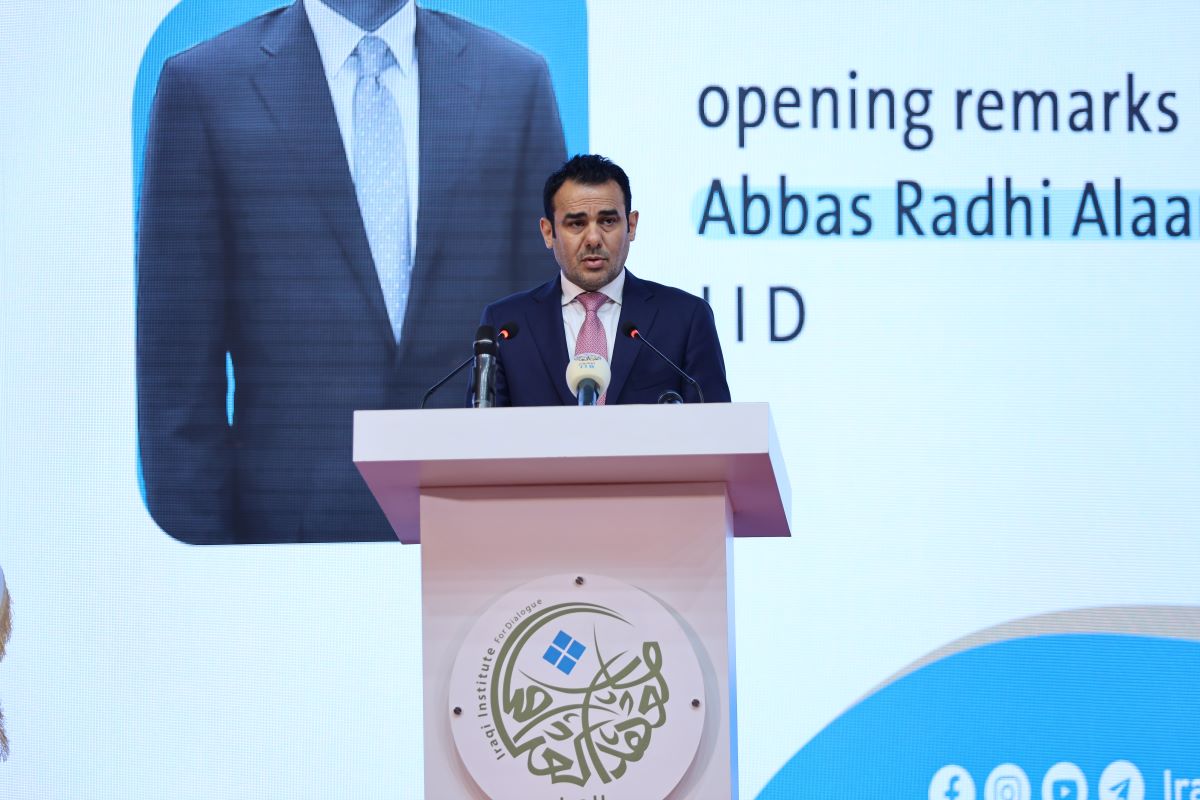
Speech of the Director of the Iraqi Institute for Dialog at the Sixth Baghdad International Dialog Conference

Seventh Baghdad International Dialogue Conference Call for Papers

Comments