

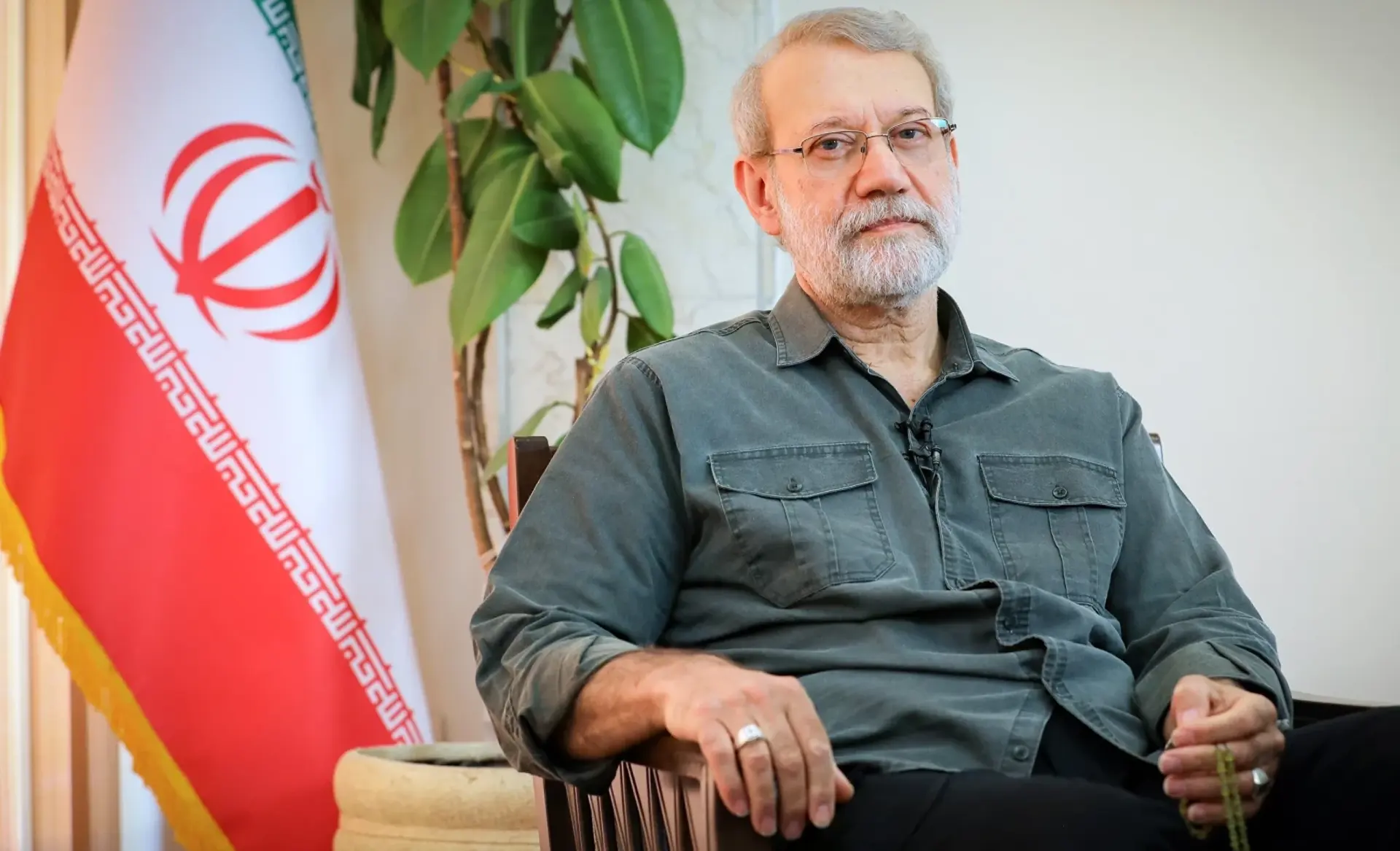
Who is Ali Larijani? The career of one of the most prominent architects of security and political decision-making in Iran
"By Ali Larijani's citation, the Islamic Republic has lost one of its most influential men in shaping its domestic and foreign policies, a figure who for decades has played a pivotal role in building the regime's political and security structure, and in managing the most sensitive files, from media and propaganda, to national security, the nuclear file, and regional relations."
And the Supreme National Security Council of Iran confirmed, on the evening of Tuesday, March 17, 2026, the martyrdom of its Secretary Ali Larijani in an Israeli attack, ending a long political and security path for a man described as one of the most prominent figures in Iran after the revolution. Larijani, according to the account contained in the text, was martyred at the age of 68, along with his son Murtada and a number of his companions, in an assassination described as "directed."
statesman
Ali Larijani was not just a government official who held a number of positions, but also a "decision maker" in the Islamic Republic, a figure who combined institutional influence with the ability to adapt to political shifts within the regime. In his later years, he acquired the image of a "pragmatic" or "pragmatic" politician, but this pragmatism, according to the text, was not separate from his strict commitment to the core principles of the regime, whether in defending its basic policies or in managing its propaganda and security tools.
His influence has extended to a wide range of strategic files, including Iran's nuclear program, relations with Russia and China, the administration of Tehran-allied armed groups in the region, as well as his role in lawmaking Inside.
From a Window Family to the Heart of Power
Ali Larijani was born in 1957 in Najaf, Iraq, and grew up in a family with extensive religious and political influence in post-revolutionary Iran. He is the son of Mirza Javad Hashemi Amli, and is also associated with the family of prominent Islamic thinker Morteza Motahari. He was surrounded by brothers who in turn occupied influential positions in the state, including Mohammad Javad Larijani, Sadeq Amli Larijani, Baqir Larijani, and Fadhil Larijani, making the family one of the most prominent families present in the joints of the state.
He received his education in Qom, then in 1979 he obtained a master's degree in computer science from Sharif Industrial University, before receiving a doctorate in philosophy from the University of Tehran, and his thesis was on "Mathematical Methodology in Kant Philosophy".
Larijani was influenced intellectually by Ahmed Fardid, the author of the theory of "alienation from oneself", and by Morteza Motahari, who sought to build an Islamic discourse against Western political thought, especially Marxism.
Starting with the media and then moving to the Guard
Larijani entered the regime's institutions early after the revolution, when he joined Iranian radio and television on the recommendation of Morteza Motahari, and worked as the director general of foreign media and the Central News Unit, and then took over the presidency of the news unit between 1981 and 1982. The narrative in the text states that the Iranian official media attributed him, at that stage, a pivotal role in confronting the regime's opponents, including the "People's Mujahedeen" organization and Abu al-Hassan Bani Sadr, the first president of the republic after the revolution.
In 1982, he joined the Revolutionary Guard, parallel to entering government employment. He held various positions, including Parliamentary Assistant to the Minister of Labor, then Legal and Parliamentary Assistant in the Ministry of Post and Communications, before between 1986 and 1989 he assumed the position of Legal and Parliamentary Assistant in the Ministry of the Revolutionary Guard, then Deputy Chairman of the Joint Chiefs of Staff of the Guard between 1989 and 1992.
An influential face in the official propaganda machine
With Ali Akbar Hashemi Rafsanjani as president, Larijani served as minister of culture and Islamic guidance between 1992 and 1993, succeeding Mohammad Khatami who resigned from the post. The text indicates that his appointment came at the insistence of the late Leader of the Islamic Revolution, Ayatollah Seyyed Ali Khamenei, and within a trend to close the relative cultural margin that existed at the time.
However, his most prominent roles in the media and propaganda field were manifested during his long presidency of the Iranian Radio and Television Organization (IRTV) between 1993 and 2004. During his reign, the organization turned into a huge media apparatus, expanding from two television and radio networks to a wide system that includes multiple national, local and international channels. Overseas-oriented networks such as Jam Jam Jam, Sahar, and Al-Alam were also launched in that era, with the aim of spreading the Islamic Republic's political and religious narrative beyond its borders.
During that phase, his name was also associated with the famous "Hoyt" program, which was used as a media platform to attack Iranian dissident or independent intellectuals, writers and researchers, who were tools for the "cultural invasion".
From Media to National Security
"In June 2004, Larijani was appointed as Supreme National Security Council (SNSC) representative of Supreme Leader Ali Khamenei and then secretary of the council, moving from managing the regime's media discourse to the heart of strategic decision-making." His rise to the post came at a sensitive moment, after the signing of the "Saadabad Statement" under which Iran accepted a voluntary suspension of uranium enrichment activities, which provoked the opposition of the conservative movement.
And in this context, Larijani sought to establish his image as one of Mr. Khamenei's trusted men, criticizing the nuclear deal at the time, and presenting himself as an advocate of a "realistic and pragmatic" approach. He ran in the 2005 presidential election, attacking previous nuclear understandings, and considering that Iran "offered a precious course and took a candy," a reference to Tehran making major concessions in return for limited gains. He finished sixth among seven candidates and failed to reach the presidency.
With Mahmoud Ahmadinejad in power, Larijani stressed that Iran's exit from the Nuclear Non-Proliferation Treaty was not in the country's interest, but his differences with Ahmadinejad quickly worsened, culminating in his resignation from the secretariat of the Supreme National Security Council in October 2007.
Longest-Remaining Parliament Speaker
Larijani returned to the forefront through the parliamentary gate, when he ran in the Shura Council elections in 2008 for the city of Qom, and succeeded in winning its seat, before assuming the presidency of the parliament. He continued in this position for three consecutive sessions, becoming the longest-serving Speaker of the Shura Council in the history of the Islamic Republic.
During his years as president, he faced sharp clashes with President Ahmadinejad, especially in light of the frequent tensions between the legislative and executive branches. This dispute culminated in the case of the video recording that Ahmadinejad showed during the interrogation of one of his ministers, in which he accused Fadel Larijani, Ali's brother, of seeking to exploit the family's influence to facilitate the interests of businessman Babik Zanjani.
And in contrast, his relationship was more in line with President Hassan Rouhani, and this was clearly demonstrated during the passage of the 2015 nuclear deal "Bergham" within parliament at a record speed, as Larijani defended the agreement and was a supporter of its implementation. This position weakened his position within fundamentalist circles, even though the agreement had the support of Mr. Khamenei at the time.
Political decline
After his parliamentary presidency ended in 2020, Larijani appeared to be losing his position on the political scene. Despite continuing in advisory positions, as an adviser to the Leader and a member of the Expediency Council and the Supreme Council of the Cultural Revolution, he has been increasingly marginalized.
And the most prominent blow to this path was when the Guardian Council rejected his eligibility to run for the presidential elections in 2021, before he was again excluded from the presidential race in 2024.
"This exclusion clearly demonstrated the decline of his position within the regime's internal balances and, for many, represented a kind of political humiliation for a figure who was once close to the top echelons of government."
Return in a Time of Crisis
But Larijani's decline was not final. With the rise of Massoud Bezeshkian and the rise of regional and international tensions, the man gradually returned to the fore. "In November 2024, he dispatched a special envoy for Ali Khamenei to Syria and Lebanon, during which time he delivered a speech combining political radicalism with a conditional willingness to compromise with the United States on the nuclear file."
And after the war between Israel and Iran in 2025, his name is back on the scene again, especially after his unannounced visit to Moscow and meeting with Russian President Vladimir Putin. Then, in August 2025, he was reappointed as secretary of the Supreme National Security Council, a move that reflected his regaining weight within the regime's "hard core."
And in his first foreign trip after returning to this position, he visited Iraq and Lebanon, at a time when the Hezbollah arms crisis was worsening, prompting Beirut to accuse Tehran of unacceptable interference in its internal affairs. According to the text, parties close to Hezbollah saw that Larijani was working to "unify the Shia front" and keep the "axis of resistance" alive.
The "Informal Leader" in Wartime
In the last weeks of his life, with the launch of the US-Zionist aggression against Iran, Ali Larijani emerged as one of the most prominent faces of Iranian power. "This role was reinforced by the assassination of Ali Khamenei at the beginning of the war, with foreign media reporting Larijani as the man who effectively ran the country, waiting for the new leadership to be resolved."
During that period, he was keen to show that the assassination of the Supreme Leader did not change anything in the fundamentals of the regime, and continued to make sharp threats against the United States. Among his most prominent statements was what he published in Arabic on the "X" platform, when he threatened that any targeting of the Iranian electricity network would lead within half an hour to power outages in the entire region, adding that darkness would be a suitable opportunity to "hunt down fleeing American soldiers."
A week before he was killed, he also responded to a threat by US President Donald Trump over the Strait of Hormuz, saying: "Be careful not to let go."
In the midst of the ongoing war, the United States has offered a reward of up to $10 million for information on a number of senior Iranian officials, including Ali Larijani. After the announcement of his death, Israeli Foreign Minister Gideon Sa'ar was quoted as saying, referring to the US bounty: "We did it for free."
The end of a man from the heart of the system
Ali Larijani's path embodies the story of a man who is embedded in almost every corner of the Islamic Republic: from the official media to the Revolutionary Guard Corps, from the Ministry of Culture to the nuclear file, and from the presidency of parliament to the secretariat of the Supreme National Security Council. Each of those stations reflected a high ability to move within the system, adapting to changing balances of power, while remaining an inherent part of a solid governance structure.
"In his martyrdom, Iran is losing not just a senior official, but one of its most experienced men in combining security and politics, and one who has contributed, to varying degrees, to shaping the Islamic Republic's discourse, regional mechanisms, and alliances, and to managing its major crises over recent decades."
The Iraqi Institute for Dialogue, the logistical sponsor of the Baghdad International Book Fair, opens its own pavilion at the fair
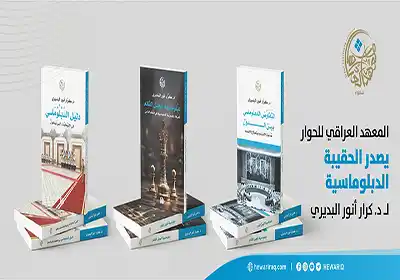
The Iraqi Institute for Dialogue publishes "The Diplomatic Portfolio" by Dr. Karrar Al-Badiri
Official agreement between Iraqi Institute for Dialogue and the Iraqi Media Network to sponsor The Seventh Annual International Conference of “Baghdad Dialogue” 2025
Invitation to the 79th issue of Dialogue of Thought
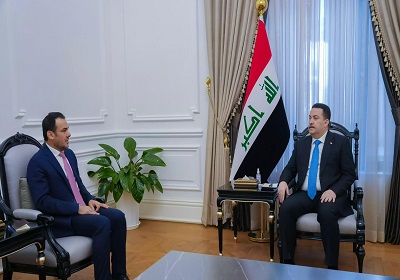
Prime Minister: The path of development will make Iraq a regional political and economic powerhouse
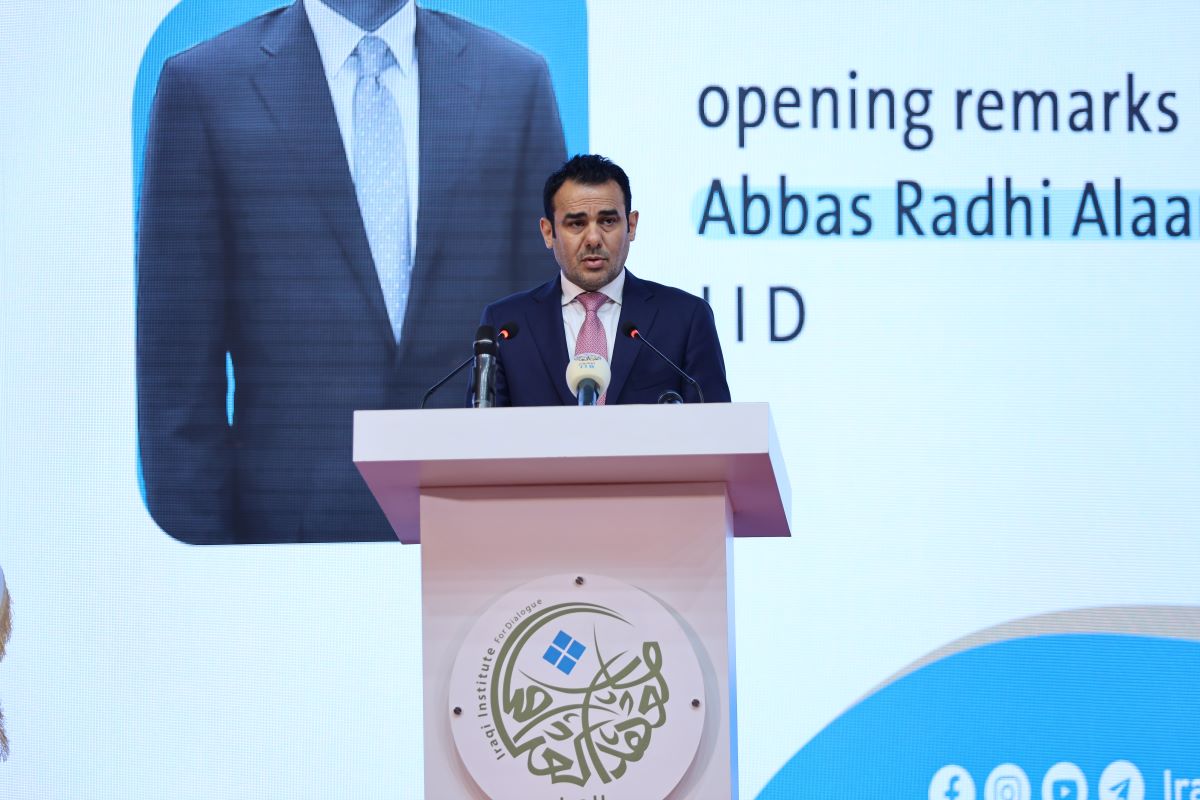
Speech of the Director of the Iraqi Institute for Dialog at the Sixth Baghdad International Dialog Conference
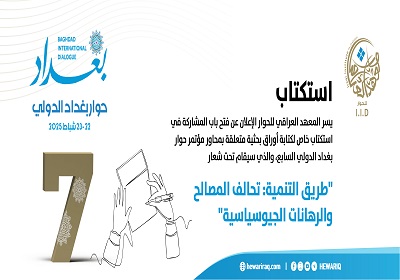
Seventh Baghdad International Dialogue Conference Call for Papers
Comments