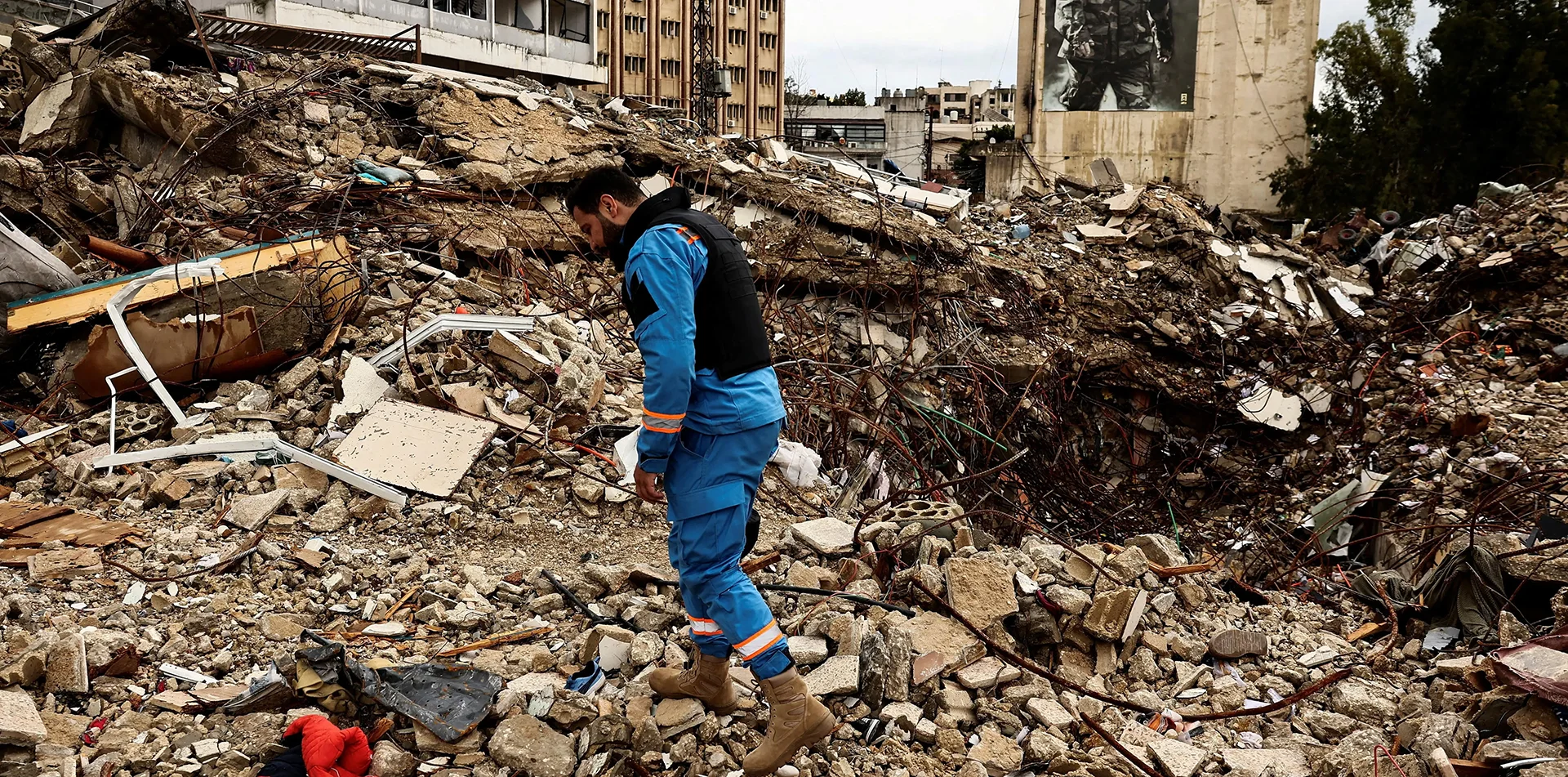
The Israeli Defense Minister announced this week that Israeli forces are working to implement the "Rafah and Beit Hanoun model" in southern Gaza Lebanon, raising fears that Israel plans to destroy entire towns in an effort to eliminate the Hezbollah permanently.
With Israel poised for a massive invasion, the contours of this new, more violent approach are beginning to take shape, despite the preoccupation of international attention with the U.S.-Israeli war against Iran. The Israeli war in Lebanon has so far killed more than 1,000 people in a country of just 6 million people, and indications are that it is entering a harsher phase that could continue even if the war with Iran ends.
Prior to any large-scale ground operation, Israel had forced civilians to evacuate large swathes of southern Lebanon and some neighborhoods Beirut, which has been hit by waves of airstrikes. And many residents have responded to these calls, displacing about 20% of the population. Al-Litani", which separates the south from the rest of the country, the rest of the population has no choice but to take shelter."
Analysts believe that the Israeli strategy, as happened with the Hamas movement in Gaza, is unlikely to succeed in the complete elimination of Hezbollah. Indeed, a prolonged occupation, as Israel has hinted, could give the party a chance to reorganize, especially after its declining popularity at home, which could be a setback to American and Israeli efforts to disarm it.
And experts warn that continued occupation could push even Hezbollah opponents inside Lebanon to join the resistance, citing past experiences in the conflict.
"Burning the earth" instead of "mowing the grass"
"Hezbollah's roots go back to the Israeli invasions of Lebanon in the 1980s, when armed groups formed in the south during the 1982 invasion, before evolving into an influential political and military force."
Although the party did not have the support of the majority of the Lebanese, it gained some kind of legitimacy as a result of its military successes, most notably forcing Israel to withdraw from Lebanon in 2000 after a two-decade occupation.
In the 2006 war, Israel adopted what came to be known as the "Dahiya Doctrine," which is based on the use of excessive force and destruction of civilian infrastructure to pressure Hezbollah and incite Lebanese public opinion against it, including the destruction of large parts of the southern suburbs of Beirut.
And Israel reintroduced this doctrine during its operations in 2024, targeting infrastructure and buildings. And despite an agreement to stop the fighting nearly two months later, airstrikes continued sporadically.
And today, after Hezbollah escalated its rocket fire following the killing of the Iranian leader Ali Khamenei", Israel appears headed for greater escalation, adopting an operational-like approach to Gaza."
Analysts have described this strategy as a transition from "mowing the lawn" to "burning the ground," targeting civilian facilities such as gas stations, bridges and homes.
This approach has drawn criticism even from within Israel, with military leaders warning that a deep incursion without clear political objectives could return Israel to the "Lebanese quagmire" without real security.
"Escalation and prolonged occupation could destabilize not only Lebanon, but also" Syria.
At the same time, reports indicate that Hezbollah has reorganized its forces in preparation for a long war of attrition, through a decentralized structure that relies on small units to maintain operational secrecy.
Possible repercussions and international responses
These developments come at a time when Lebanon has begun to take steps to restrict Hezbollah, including considering its military wing illegal. But a prolonged occupation could give the party a chance to regain its popularity.
Statements by Israel's finance minister about annexing southern Lebanon to create a "buffer zone" have also raised additional concerns, along with accusations of using internationally banned weapons.
In contrast, Hezbollah fired more than 3,500 rockets into Israel, causing civilian casualties and forcing residents in some areas to take shelter in shelters.
And the military operations have caused extensive damage to civilians, including targeting ambulance teams, according to reports by international organizations.
And the Israeli campaign provoked international criticism, as the Spanish Prime Minister warned against repeating the "Gaza model" in Lebanon, while the Secretary-General of the United Nations stressed that this model "must not be repeated."
"The United States has largely remained silent, despite estimates that Washington has tacitly given a green light to Israeli operations."
And observers believe that the continuation of this approach may exacerbate regional tensions and lead to long-term repercussions on the stability of the region.





Comments