


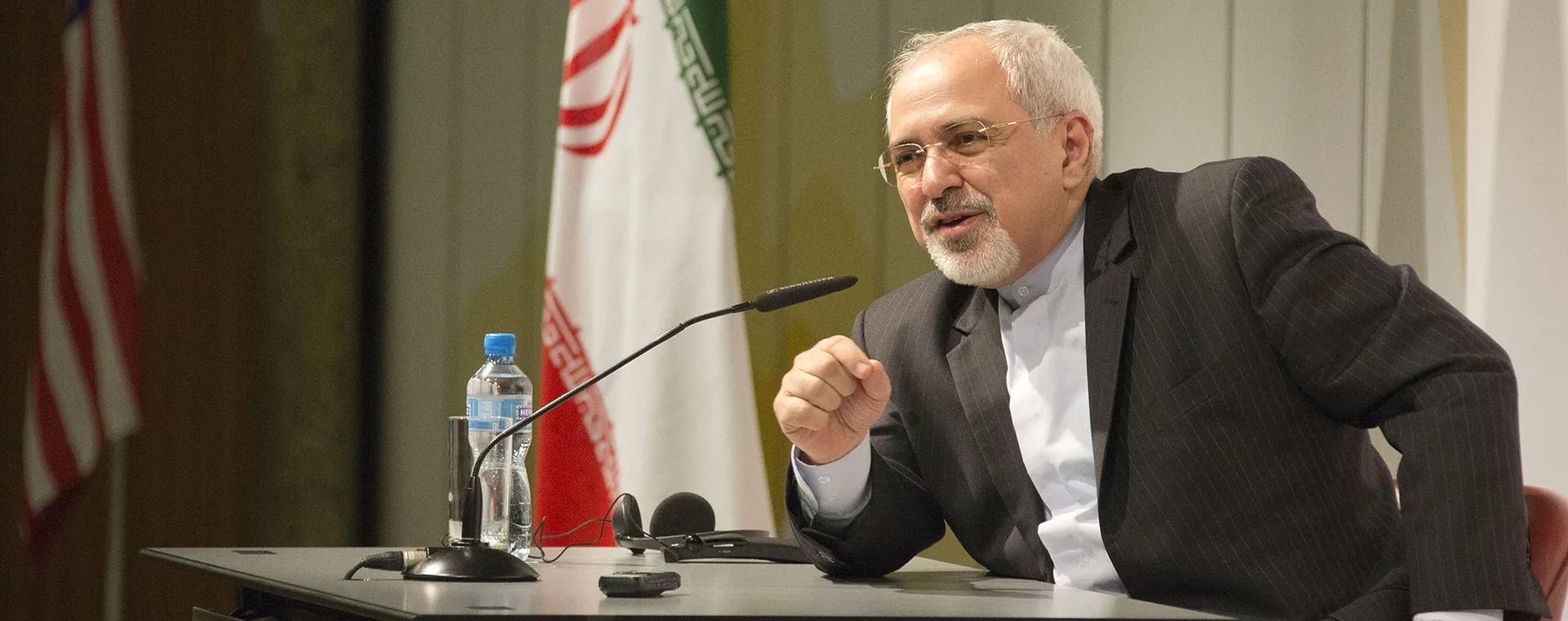
Lessons from War: A Call for Strategic Reassessment in West Asia
Source: Al Jazeera Net
"The Iranian attacks have also led to a sharp loss of confidence in Iran among GCC states, which requires Iran to initiate serious efforts to rebuild trust," the GCC said in a recent statement.
And while rebuilding confidence in our region is a lofty and fundamental goal, and while Iran has always taken the initiative in this regard, it is essential that all parties acknowledge their role in this deplorable current situation.
The unjustified aggression against Iran was the result of miscalculations and gross mistakes. This was based on the illusion that Iran had been weakened, and therefore unable to resist and respond forcefully to a massive attack by two nuclear powers, aided and abated by regional actors.
Policymakers in Washington, Tel Aviv, and in some regional capitals have convinced themselves that a swift campaign of economic pressure, sabotage, covert operations, beheadings, and indiscriminate war crimes could break the Islamic Republic, leaving it with little chance of retaliation. They were wrong.
"Iran's response, both measured and firm, demonstrated not only its military flexibility, but also its ability to respond on a scale that reverberated far beyond the region."
Our Arab neighbors in the Council have had their share of miscalculations, and Iran may have played a role in misleading them.
For five decades, they have consistently stood on the wrong side of history — supporting Saddam Hussein’s aggression and even helping Israel intercept Iranian missiles launched in self-defense in the wake of Israel’s assassination of an Arab leader in Iran.
Some of them have actively encouraged the United States to take military action against Iran, and even demanded that the latter add Iranian naval forces to its target list.
In return, they allowed the United States to use its bases within their territory to launch and support many acts of aggression and war crimes against Iran logistically. They even openly sided with the United States when it committed war crimes against Iran, reminding the Iranians of the sad days when these Muslim brothers and sisters sided with Saddam Hussein when he used chemical weapons against Iranian and Iraqi Kurdish civilians.
The Iranian people have been severely harmed by these illegal attacks, which have been deliberately launched and supported from the territories of neighboring sovereign Arab States.
Even as it became clear unequivocally that the United States was preparing to commit systematic war crimes against Iran’s civilian population — including strikes on populated areas and critical infrastructure — it had already demonstrated its unwillingness to prohibit or even restrict the use of its territory, airspace, and military facilities to commit such war crimes against its Muslim brothers and sisters in Iran.
Some of our Arab neighbors in the Council have wrongly hoped that Iran would either be incapable and unable to respond, or that it would continue to turn a blind eye to its complicity in an aggression that has explicitly targeted its territorial integrity and even its very existence.
"This illusion proved to be a tragic wish, and Iran had no choice but to reluctantly respond - in a measured and restrained manner - to attacks launched or logistically supported from the GCC states' territories."
Going forward, it is essential that our neighbors abandon these distorted perceptions of the past and their erroneous statements about being victims.
Our region is now facing a moment of transition. The conflict has exposed the fragility of imported security structures and the strength of local forces and enduring regional security networks.
Instead of sticking to yesterday's alliances, it would be wise for our brothers and sisters in the region to stop and reassess the situation. The right lessons from this episode point to a future of self-reliance, regional effectiveness, and a comprehensive security network.
firstIran and its Arab neighbors remain here. Iran has withstood sanctions, foreign-backed terrorism, hybrid warfare and even beheadings for nearly five decades.
Its people, despite their diversity, have shown time and again that they will unite around their banner when faced with any foreign interference. Tehran has the means to counter existential threats, and its geographical location gives it leverage that could impose dire consequences on global markets if it pushes too far.
Iran's practice of restraint for too long created the false impression that the Strait of Hormuz could be open to all while Iran was essentially deprived of it; Because of the illegal and immoral U.S. sanctions — which have benefited our neighbors greatly, they have built their fortunes on the illegal misery imposed on their Iranian brothers.
More importantly, Iran's power is neither imported nor artificial; It is a force of local origin, rooted in constant variables: a thousand-year history of a permanent and continuous civilizational state, a rich and cohesive culture, a young and educated people, and an instinct for survival honed by centuries of resistance to external domination.
No amount of external pressure can change these fundamentals. Neighbors who continue to bet against this reality blame themselves for ignoring geography, history, and demography.
second, the "security and development model" followed by many Arab states has proved deeply flawed.
For years, the equation has been simple: buy security by spending lavishly on buying America’s most sophisticated weapons systems, hosting U.S. military bases — and even Israeli intelligence and terrorism centers — and inviting foreign investment under the umbrella of this imported security.
This model offered neither the real security nor the sense of stability needed to achieve sustained economic growth.
The belief that some Arab capitals have sided with the United States and Israel against a sister Islamic state has earned them a bad reputation throughout the Muslim world.
Those reputational damage were later exacerbated by the crude and condescending rhetoric of the US president.
Now, reports that Washington is considering forcing our neighbors to bear the costs of a war being waged at their expense and for Israel's benefit only underscore the cynicism at the heart of this arrangement.
The biggest mistake would be to stick to this failed model once the guns are silent. The continued association of national security and the economic future with external parties that use their bases as a springboard for aggression against their neighbors and treat them as obedient agents is a recipe for permanent subordination and repeated humiliation.
third", the war has produced political and legal realities that our neighbors need to recognize." The existence of U.S. bases — from which the aggressive “annihilation of Iranian civilization” was launched and logistically supported — cannot be considered an innocent and neutral security partnership, but an existential threat to Iran — as has been demonstrated during the past two wars, and even in past hostilities against Iran.
"These rules were established here not to protect host countries, but to harm Iran even at its own expense." The Arab states that continue to host such facilities are actively involved in the militarization of the region, including the Strait of Hormuz, a vital waterway for their economies.
fourth", the deepening Israeli presence in the region has brought nothing but conflict and will only bring insecurity and erosion of state independence."
"Israel not only occupies territory, but also infiltrates political systems through complex networks of lobbyists." It undermines sovereignty from within, turning national decision-making into an extension of its own interests.
To understand this pattern, it is enough to consider how the American Israel Public Affairs Committee (AIPAC) has managed to control key power joints in Washington, or how similar organizations have replicated the model in European capitals.
Just pay attention to the disgust in the United States at the way Israel — which has not taken a single step to help American donors — has imposed its whims at the expense of American blood and money.
Arab states that have rushed to normalize relations with Tel Aviv — or want to repeat their behavior — have sacrificed long-term independence for short-term gain.
The people of our region deserve better treatment than to see their Governments' foreign policies increasingly dictated to them from afar. A regime that actively blackmails its backers, including through Epstein's files, cannot be expected to treat better those who wish to delegate their security to its worn-out Iron Dome.
fifth"More importantly, Iran's previous initiatives - such as the Hormuz Peace Initiative (HOPE), the Association for Islamic Dialog in West Asia (MODA), and the Middle East Network for Research and Atomic Progress (MENARA) - have demonstrated a genuine desire to reach out to its neighbors to establish comprehensive regional cooperation networks."
To ignore or even reject these initiatives, believing that Washington would provide absolute protection, was a grave historical mistake. The solution lies in righting the wrongs of the past and adopting a system of genuine local security networks, rooted in common interests.
West Asia has vast wealth, abundant energy resources, ancient and ancient cultures, a common religion, and a centuries-old intertwined history.
These resources should be used to build a new regional network capable of addressing common challenges — from water scarcity and climate change to economic diversification and technological progress — without external tutelage. Building a security network by and for the region is no longer a utopian slogan, but a strategic necessity.
The war ended the era of convenient illusions. It has become clear that security cannot be bought or outsourced. Security cannot be achieved at the expense of insecurity and threats against Iran.
In this war, the facts cannot be ignored, and Iran's grievances cannot be covered up. Foreigners here only exploit, and they will leave as soon as the losses outweigh the benefits. But we are destined to live together until the day of Judgment.
Iran has proved itself invincible with the war machines of the most evil power, and yearns to live in peace with its Muslim brothers and sisters in the region.
The real question isWill the rest of West Asia be wise enough to adjust to this established reality? Let us all seize this moment to build a future based on respect, dignity, security and mutual prosperity.
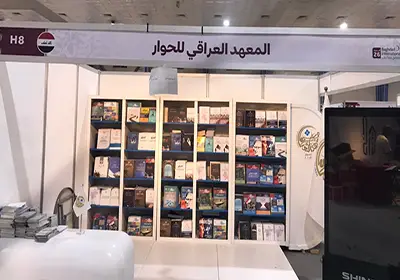
The Iraqi Institute for Dialogue, the logistical sponsor of the Baghdad International Book Fair, opens its own pavilion at the fair
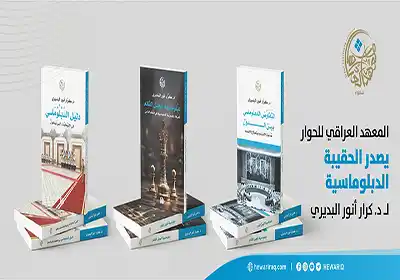
The Iraqi Institute for Dialogue publishes "The Diplomatic Portfolio" by Dr. Karrar Al-Badiri
Official agreement between Iraqi Institute for Dialogue and the Iraqi Media Network to sponsor The Seventh Annual International Conference of “Baghdad Dialogue” 2025

Invitation to the 79th issue of Dialogue of Thought
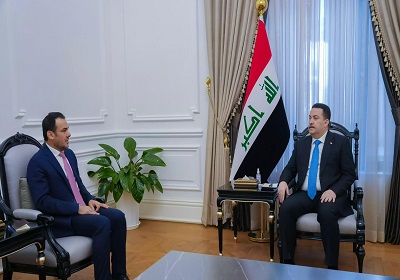
Prime Minister: The path of development will make Iraq a regional political and economic powerhouse
Seventh Baghdad International Dialogue Conference Call for Papers
Praise for the Baghdad International Dialogue: Strengthening Iraq's pivotal role and a meeting point for visions
Comments