

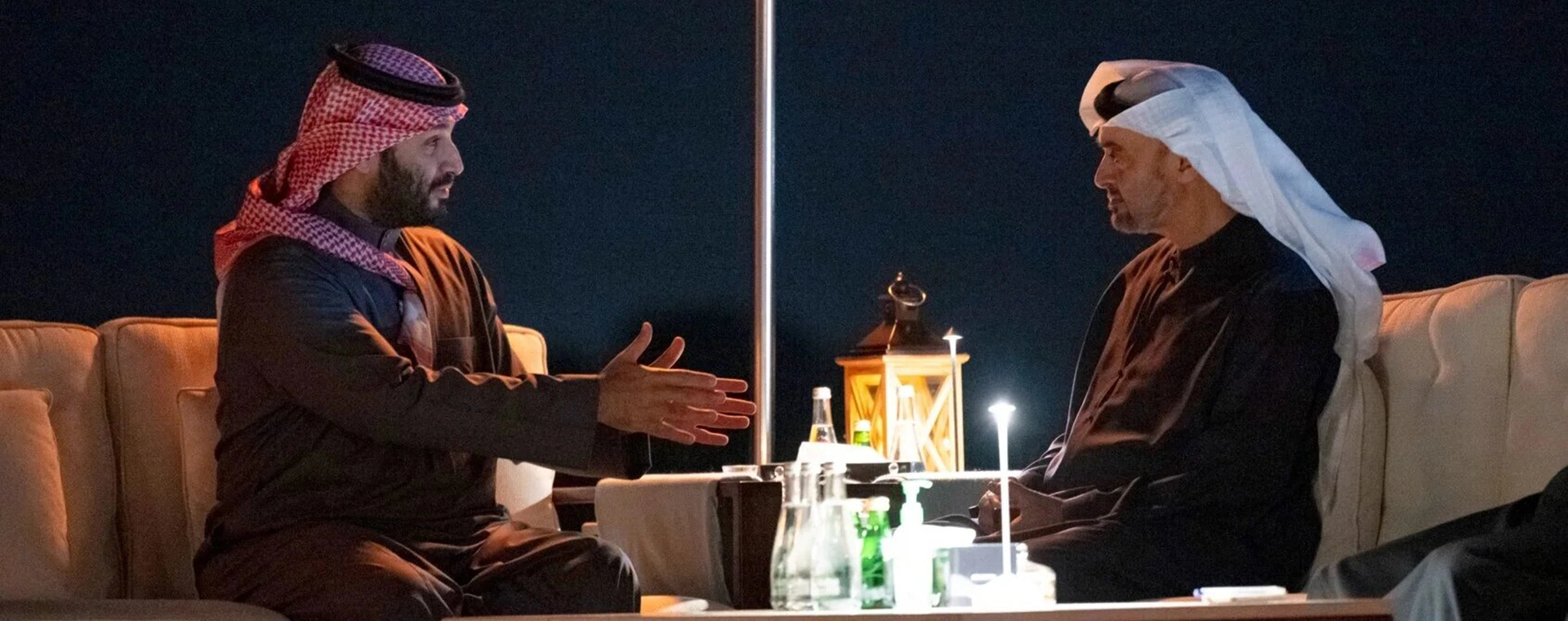
Why are the UAE's relations with some Arab countries tense?
With a population of over 11 million, the UAE is the second most populous Arab country in the Gulf region after Saudi Arabia. And yet, foreign nationals make up about 90% of its population, and belong to more than 200 different nationalities, most of whom came to work from India, Pakistan and Bangladesh, and Indians alone make up about 38.45% of the total population.
In contrast, according to 2025 statistics, the number of UAE citizens is about 1.310 million people. Men make up 63.8% of the population, while the share of women is 36.2%; It is a gap mainly due to the heavy presence of migrant workers who reside without their families.
The UAE's GDP is about $504 billion, and its per capita purchasing power is about $53,000. The UAE economy relies heavily on oil, which accounts for about 30% of GDP and 41% of public revenues, with the country producing 3.38 million barrels per day with proven reserves of 113 billion barrels.
Abraham Accord
In 2020, the UAE, along with Bahrain, Morocco, and Sudan, signed the "Abraham Accord" to normalize relations with Israel, declaring that the goal is to "prevent the annexation of the West Bank and save the two-state solution." These relations were strengthened by a free trade agreement in 2022, and the volume of non-oil trade increased from $160 million in 2020 to $2.3 billion in 2023. Despite the Gaza war, trade continued and increased by 11% between 2023 and 2024.
Relations with Iran
Between 2017 and 2021, the UAE participated in the blockade of Qatar on charges of "supporting terrorism and close relations with Iran." The UAE also claims sovereignty over three islands (Abu Musa, the Greater and Lesser Tunbs) that are under Iranian sovereignty and are located near the strategic Strait of Hormuz.
In practice, however, the UAE has more economic ties with Iran than any other Gulf state; In 2023 and 2024, the UAE was Iran’s second-largest trading partner after China. And despite the downgrading of diplomatic representation in 2016 after the attack on the Saudi embassy in Tehran, security and economic relations have returned to their highest levels since 2019.
Mercenaries in Yemen
In 2015, the UAE joined the Saudi-led military coalition in Yemen. And in 2019, it announced the withdrawal of its forces, but kept special forces to combat "terrorism." The BBC's investigations revealed that the UAE had hired American mercenaries since 2015 to carry out political assassinations targeting leaders of the Islamic Islah party.
In December 2025, coalition fighter jets targeted an arms shipment in the city of Mukalla that was said to be "sent to UAE-backed separatists." Saudi Arabia accused the UAE of "inciting" separatists to attack government forces in Hadramawt and al-Mahra, considering it a threat to its security. "Subsequently, the UAE announced the end of its operations in Yemen, while the Yemeni government accused Abu Dhabi of running secret prisons in Mukalla."
Ending Bashar al-Assad's Isolation
The UAE was a pioneer in ending the isolation of the Syrian regime, reopening its embassy in Damascus in 2018. Sheik Mohammed bin Zayed and Sheik Abdullah bin Zayed paved the way for many meetings that led to Syria's return to the Arab League in May 2023. A Reuters investigation revealed the role of Assad's economic advisor in transferring precious belongings of the Assad family to the UAE via private flights.
Betting on Khalifa Haftar in Libya
The UAE intervened in the Libyan conflict to support certain factions; In 2014, UAE jets bombed Fajr Libya positions in support of Khalifa Haftar. And a BBC investigation revealed that Emirati drones killed 26 students at a military school in Tripoli in 2020, despite the UAE's denial of direct military intervention.
Civil War in Sudan
Reuters reports that the UAE has set up a military center to train thousands of RSF troops near the Ethiopian border. And the Sudanese government filed a complaint against the UAE in the International Court of Justice on charges of participating in a “genocide” in Darfur, which Abu Dhabi described as a “propaganda play.”
Somalia and Israel
In early 2024, Somalia canceled a cooperation agreement with the UAE, accusing it of "violating sovereignty." This is due to Israel's recognition of "Somaliland" (Somaliland) as an independent state, as it is widely believed in Mogadishu that the UAE played a pivotal role in this decision, in addition to its support for an agreement that allows Ethiopia to establish a naval base there.
The Escalating Crisis with Algeria
Relations soured after President Abdelmadjid Tebboune accused the UAE of meddling in his country's affairs. Algeria accuses the UAE of supporting Khalifa Haftar near its borders, and of coordinating with Morocco and Israel to support the separatist "Movement for the Self-Determination of the Kabylie Region," which Algeria classifies as "terrorist."
From soft diplomacy to the “war on terror”
Since its founding in 1971 by Sheik Zayed, the UAE has been known for its "zero problems" policy and charitable work. But the 2011 “Arab Spring” marked a turning point; Abu Dhabi saw the rise of the Muslim Brotherhood as an existential threat. The UAE supported the military's overthrow of Mohamed Morsi in Egypt in 2013, which led to a rift in the Gulf states' positions (especially with Qatar).
In 2017, Sheik Abdullah bin Zayed criticized European leaders for "tolerating" Islamists, warning of the emergence of extremists in Europe. And in France, the leader of the left, Melenchon, accused the UAE of funding reports aimed at tarnishing the image of the Muslim Brotherhood through funded disinformation campaigns targeting French institutions.
Source: BBC
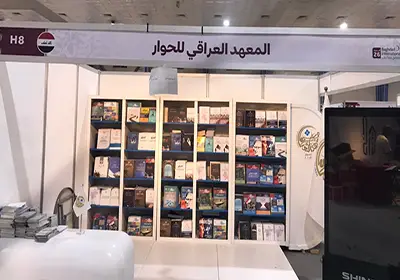
The Iraqi Institute for Dialogue, the logistical sponsor of the Baghdad International Book Fair, opens its own pavilion at the fair
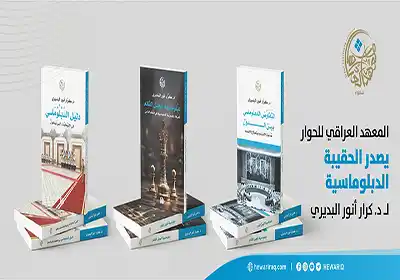
The Iraqi Institute for Dialogue publishes "The Diplomatic Portfolio" by Dr. Karrar Al-Badiri
Official agreement between Iraqi Institute for Dialogue and the Iraqi Media Network to sponsor The Seventh Annual International Conference of “Baghdad Dialogue” 2025
Invitation to the 79th issue of Dialogue of Thought
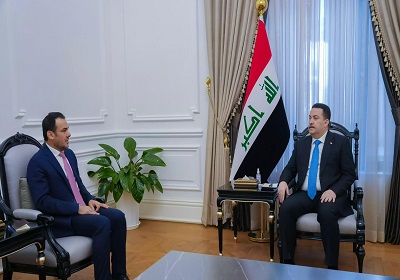
Prime Minister: The path of development will make Iraq a regional political and economic powerhouse
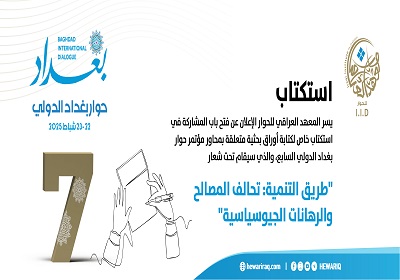
Seventh Baghdad International Dialogue Conference Call for Papers
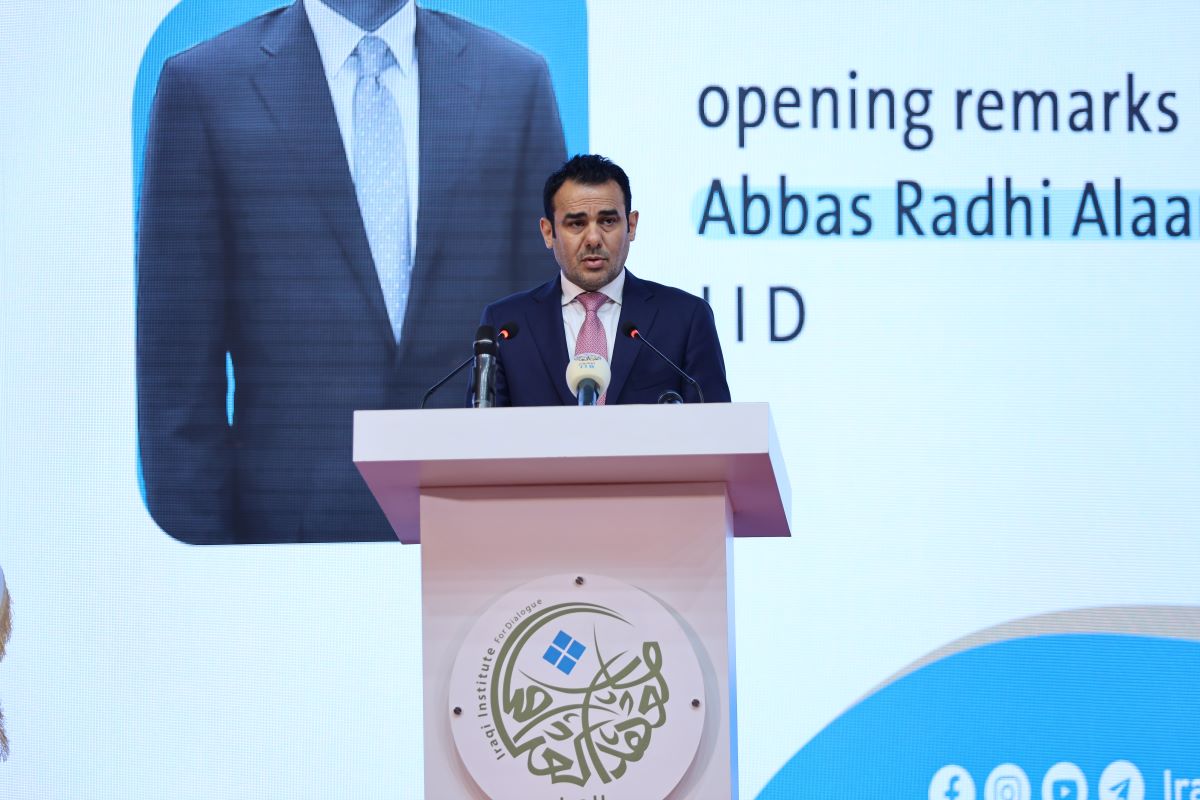
Speech of the Director of the Iraqi Institute for Dialog at the Sixth Baghdad International Dialog Conference
Comments