


The Theory of Everything for Political Economy in the Middle East
Ziad Daoud provides a comprehensive analysis of the rentier phenomenon in the Middle East, documenting how rentier economies are a common feature among resource-rich and resource-poor countries alike, and exploring the implications of this unified theory for the political future and transformations in the region.
introduction
A feature unites the seemingly disparate economies of the Gulf Cooperation Council, Iraq, Egypt, Jordan, and perhaps other countries in the Middle East and North Africa; They all rely on “rents” – income earned with relatively little effort. These windfall gains shape not only economic relations, but also the shaping of political systems.
The region’s rents take five forms: oil and gas exports are the most obvious, but they are not the only example. Other forms include: income from sovereign wealth funds, revenues from trade routes such as the Suez Canal, foreign aid, and land sales.
The story of the Middle East and North Africa is often told as a tale of two regions; On the one hand, resource-rich countries (especially in the Gulf) are overflowing with petrodollars and sovereign wealth funds, and on the other, resource-poor countries like Egypt and Jordan, are struggling to meet the huge needs of their populations. But “Spring” offers a unifying theme — the “Theory of Everything” — for these disparate stories.
This unified theory of rents is not just an intellectual aesthetic, but has predictive implications:
First, many countries in the region dream of a “post-rentier” future – one in which productivity and innovation drive growth. But these ambitions often ignore political realities; The rents create a web of patronage and privilege that resists change. Attempts to transition to a productive economy through technical-only policies, without addressing underlying political structures, are therefore unlikely to succeed.
Second, grim predictions of the region’s collapse if the world shifts away from fossil fuels are likely exaggerated. The Middle East has proven to be “innovative” when it comes to generating new sources of rent, both historically and today. Although the transition to a productive economy remains a distant dream, the region's ability to survive, even in its current form, should not be underestimated.
From cradle to medium: rent everywhere
What is rent already? It is an income that meets three conditions: first, the source is external. Second, it doesn't require much work to generate. Thirdly, the Government is the main recipient of this income. Economist Hazem El-Beblawi (who later served as Egypt's prime minister) is a central figure in understanding rentier economies.
The classic example in al-Beblawi's paper "The Rentier State in the Arab World" was oil and gas rents, especially in the Gulf. And in a more recent paper, Emirati academic Abdulkhaleq Abdulla argued that these economies are now in a "post-oil, post-rentier" phase. My hypothesis here is that the rentier model is not only alive and well in the Gulf, but is a powerful force shaping the wider Middle East, far beyond fossil fuels.
Let’s start with Iraq – a typical rentier state that relies almost entirely on oil, with crude oil accounting for 97% of its exports, and 90% of the state’s income. Oil extraction operations employ only a small percentage of the Iraqi workforce. The distribution of oil is another story; The government employs about 40% of the public sector workforce and pays them twice as much as the private sector, which is not for productive work, but rather serves as a crude and inefficient means of distributing oil income, distorting the larger economy.
Is the Gulf in the "post-oil and post-spring" phase?
Abdulkhaleq Abdulla made a bold claim that the GCC countries exceeded rentier, basing their oil on the fact that it was no longer pivotal, that they had introduced taxes, and that they owned the largest sovereign wealth funds.
First, IMF data indicate that the "external oil parity price" (the price needed to finance imports and remittances) has risen in Saudi Arabia, the UAE, and Kuwait since 2016, suggesting a "greater" dependence on oil. Overall, Gulf governments today need a higher oil price to balance their budgets compared to 2016.
Second, about taxes; Although VAT and corporate taxes have been introduced, their size remains modest (less than 5% of GDP), compared to 25% in advanced economies. Taxes are also still politically sensitive, and are marketed as a way to recycle wealth from foreigners to citizens, rather than as a "dismantling of the welfare state."
Third, SWFs are not a sign of a post-rentier future, but rather a tool to preserve the model for future generations. As Saudi Crown Prince Mohammed bin Salman has made clear, the goal is to make “investments the source of government income,” which is perfectly in line with the characteristics of rents: external income, meager local labor, and government control.
Jordan's Foreign Aid as a Spring
Jordan has not faced a currency crisis as recently as Egypt or Lebanon, although its trade deficit (the gap between exports and imports) is worse than Egypt. The secret is “foreign aid,” which is rent-compliant support (external, government-controlled, minimal effort). Jordan receives ongoing support from the International Monetary Fund, from the Gulf states (around $9 billion between 2011-2022), and from the United States, which pledged $1.45 billion annually through 2029. This "political rent" is the lifeline that has led credit rating agencies to raise Jordan's rating despite geopolitical tensions.
Egypt's Troubled Journey with Rentier
The late economist Samer Suleiman described Egypt as a "quasi-rentier state". Egypt moved between different types of rents: from oil exports (which ended in 2010), to natural gas (which fluctuated between export and import), to the Suez Canal whose revenues were damaged by 70% due to regional conflicts in 2023-2024.
Faced with the decline of traditional sources, the regime has found a new source: "land sales." Ras al-Hikma's $35 billion deal with Abu Dhabi is pure revenue (external source, minimal administrative effort, direct government flow). Other deals such as "Beautiful Head" may follow.
Bahrain: Land Reclamation Proceeds
Bahrain offers a unique model; With the decline in oil revenues, the island has expanded by 14% since 1991 by reclaiming land from the sea and selling it to foreign developers, turning “geography” into a continuous source of revenue that compensates for the lack of natural resources.
The Dilemmas of Spring
Rentier economies face three fundamental problems:
Volatility: Direct correlation with energy markets and geopolitical conditions.
Low Productivity: The rent is used to buy political loyalty through unproductive government jobs, making Arab countries the worst in global productivity growth.
Authoritarianism: “No representation without taxes”; When the government does not need citizens' taxes, political accountability diminishes.
Conclusion and Expectations
The region’s economic “visions” (2030, 2035, etc.) are numerous, but their success is contingent on addressing underlying political dynamics, not just technical solutions.
The region has demonstrated a superior ability to “rent-invent” (sovereign funds, trade corridors such as the development route, land sales) to prolong the life of regimes and postpone democratic opening. The mentality of “governments looking up to the sky hoping it will rain gold” persists, and innovation in renting always precedes the desire to share power.
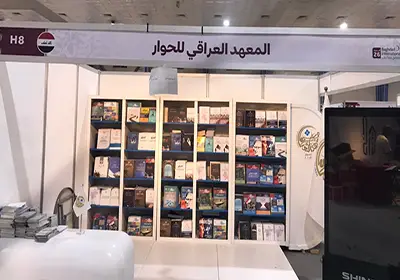
The Iraqi Institute for Dialogue, the logistical sponsor of the Baghdad International Book Fair, opens its own pavilion at the fair
Official agreement between Iraqi Institute for Dialogue and the Iraqi Media Network to sponsor The Seventh Annual International Conference of “Baghdad Dialogue” 2025
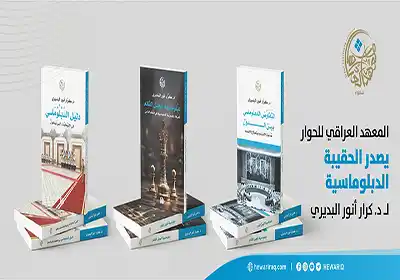
The Iraqi Institute for Dialogue publishes "The Diplomatic Portfolio" by Dr. Karrar Al-Badiri

Invitation to the 79th issue of Dialogue of Thought
Prime Minister: The path of development will make Iraq a regional political and economic powerhouse
Speech of the Director of the Iraqi Institute for Dialog at the Sixth Baghdad International Dialog Conference
Seventh Baghdad International Dialogue Conference Call for Papers
Comments