


Scott Kennedy
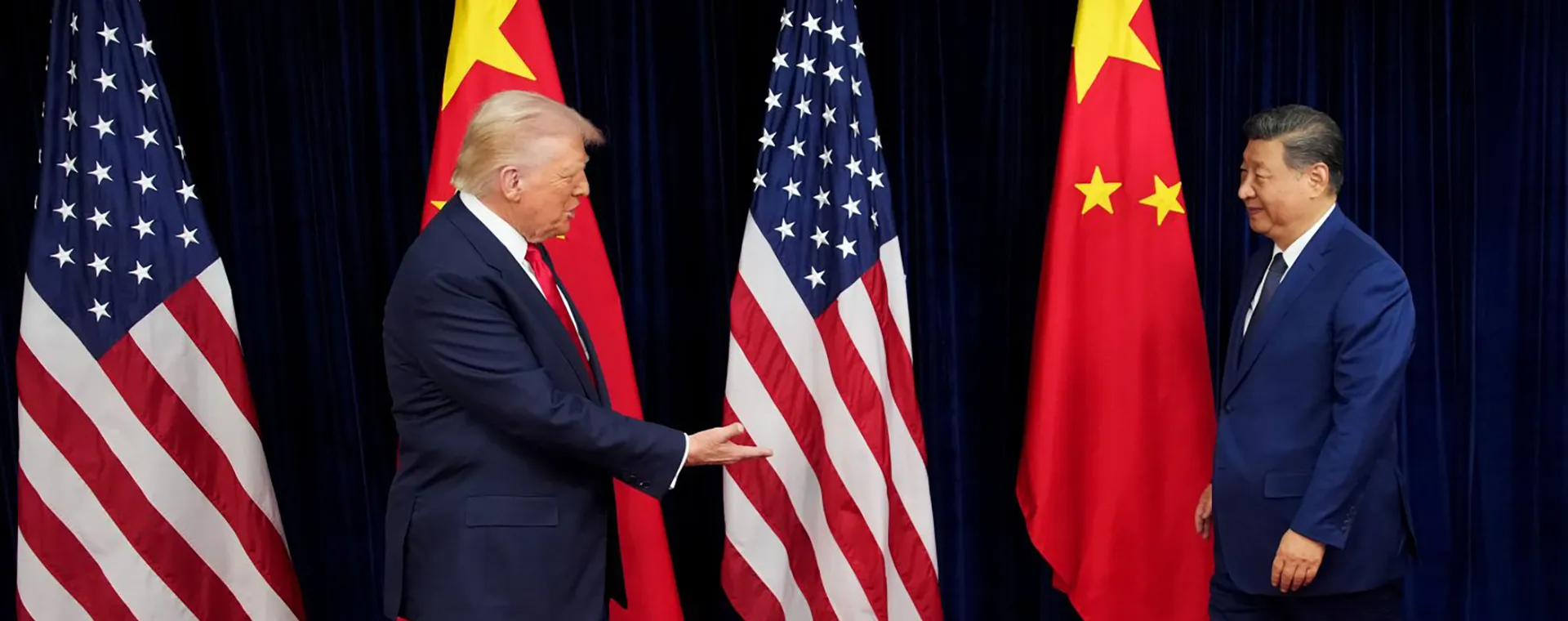
A Confident Beijing Welcomes President Trump
When President Donald Trump arrives in Beijing this week to meet with Chinese Communist Party (CCP) General Secretary and President Xi Jinping, he will find a city that has changed remarkably in the eight-and-a-half years since he last visited. In November 2017, China’s economy was still largely dependent on infrastructure-led growth, and the leadership was extremely skittish about how to deal with a highly unpredictable real estate mogul–turned–politician. As a result, the leadership was careful never to confront President Trump, and it did much to stroke his ego, with a high point being a tour of the treasures held within the Forbidden City, the home of China’s emperors during the Ming and Qing dynasties. A little over two years later, in January 2020, Beijing acceded to a lopsided trade agreement, the so-called Phase One deal, pledging to increase imports by $200 billion and to implement a series of regulatory reforms to protect intellectual property.
How times have changed. My observations and discussions in Beijing with a wide range of officials, businesspeople, and scholars over the past 18 months, including an intensive two-and-a-half-week trip in late April and early May, convince me that China’s leadership is genuinely confident about its ability to out-maneuver President Trump and gain the upper hand over the United States on China’s core foreign policy interests.
An Upgraded Capital
China’s confidence stems from three sources.
First, important elements of China’s economy have dramatically improved since President Trump’s last visit. China has gone from being a tech follower to a peer competitor of the United States. China’s innovation ecosystem—funding, talent, research and development, the promotion of intellectual property (yes, you read that correctly), and manufacturing capacity—has propelled China across a wide range of sectors, including electric vehicles (EVs), high-speed rail, robotics, pharmaceuticals, solar, wind, materials, and more. If the president had come a few days earlier, he would have been impressed by the cars on display at the Beijing Auto Show. Dozens of producers featured EVs with longer ranges and safer batteries, increasingly capable driver-assistance and autonomy features, and decked out interiors with dazzling infotainment systems.
Once President Trump does make his way to Beijing, he will also see that the capital city itself has changed. Per capita income in Beijing is still only $13,000, compared to $111,000 in Washington, D.C., and approximately $52,000 in New York City, but life expectancy in Beijing (83.9 years) now beats out both Washington (77.4 years) and New York City (83.2 years). Beijing’s progress mirrors the growth of its subway system, which reached 565 miles in length and carried 3.5 billion passengers in 2025. New York’s subway system is longer (665 miles), but it carried only 1.3 billion passengers in 2025. And Washington’s system is less than a quarter the distance (130 miles) and carries only 4 percent (147 million) of the number of passengers. Growing use of public transportation, more EVs, and the movement of manufacturing to other provinces may explain why Beijing’s air has continued to improve. The levels of fine particulate matter (PM2.5) have dropped by over half since 2017, with the number of clear days rising from 226 to 311 over the same period. And although crime is down substantially in the United States, Chinese streets are still safer.
Beijing Tacos
The second factor buoying the Chinese leadership’s confidence is their record of effectively deflecting U.S. pressure and turning the tables on President Trump over the past year. The administration’s “Liberation Day,” April 2, 2025, which saw Washington impose sky-high tariffs on countries around the world, including China, turned out to be Beijing’s liberation day. With its blocking of rare earths exports, Beijing forced the Trump administration to lower its tariffs and agree to limit further technology measures against China. When the United States attempted to extend existing export controls to all of the subsidiaries of Chinese firms already blacklisted (the “Affiliates Rule”) in September 2025, Beijing countered by announcing a global regime regulating products that contained rare earths from China. Instead of re-escalating, in late October 2025, in Busan, South Korea, the two sides agreed to a one-year ceasefire, capping potential restrictions and giving Beijing more time to focus on expanding its tech capabilities and handling various internal challenges. And Beijing probably could not have believed its good luck when the U.S. Supreme Court ruled against the president’s International Emergency Economic Powers Act (IEEPA) tariffs in February 2026, further reducing the barriers to Beijing’s exports.
China’s success in getting President Trump to cry uncle confirms its analysis that one can successfully resist his pressure by credibly threatening to use coercive tools that can impose substantial pain where it hurts him most—such as a falling stock market. Just about every official I spoke with in Beijing in the last six months knows the acronym TACO stands for “Trump always chickens out.” Moreover, officials explained that they have figured out how to use these threats to avoid further escalation and maintain a stable relationship.
Beijing’s ability to deflect Washington is also buoyed by a recognition that the president’s concerns are quite narrow. Not only is the administration focused primarily on economic issues (and has shown scant concern for human rights), but it is also mainly pursuing specific commercial arrangements, for example, sales of aircraft and agricultural products and investment deals. These arrangements may be couched in the form of a new “Board of Trade” and a “Board of Investment,” but discussion in these bodies likely will not target, as the United States has before, China’s broader industrial policy system, which is a key source of China’s growing imbalances with the rest of the world. Moreover, Washington’s use of arbitrarily set tariffs, industrial policy, and other economic coercive instruments means it can no longer press Beijing to meet multilateral commitments Washington itself has abandoned.
Escaping Isolation
The final factor uplifting Beijing’s spirits is that it has made progress in the competition for support from the rest of the world. The pandemic and the Biden administration’s effort to strengthen partnerships with allies and like-minded countries left Beijing on the defensive as its actions were viewed as a key source of global economic and security risks. But the tide has begun to turn. As worries about the direction of the United States have grown over the past six months, a series of Western leaders have beaten a path to Beijing’s door, among them: South Korean President Lee Jae-myung, Canadian Prime Minister Mark Carney, United Kingdom Prime Minister Keir Starmer, German Chancellor Friedrich Merz, and Spanish Prime Minister Pedro Sánchez. In just about every instance, Beijing has made minimal concessions—mainly withdrawing previously imposed penalties—but it has been able to gain a broader reset in relations.
These visits reflect a widespread view among foreign countries, including close U.S. allies, that, for the time being, decoupling from China is not an option. Despite deepening worries about growing imbalances that could threaten some of their own industries, the value of commercial ties to their economies is just too great. This conclusion even applies to a wide range of advanced technologies, where countries would prefer, if possible, to mitigate the attendant economic and security risks while continuing to do business. And where tariffs are rising, Beijing is in discussions to gain access to these sectors through direct investment. These trends reassure Beijing that it will be able to continue to successfully limit other countries’ efforts to restrict trade and investment ties in any meaningful way.
In short, Beijing believes it has the technological prowess and diplomatic skill to effectively push back against the United States and avoid ever being isolated, regardless of Washington’s efforts.
Underlying Problems
All of the above is not to say that all is well in the Middle Kingdom. To the contrary, China’s leadership faces some serious problems. Most important is the country’s weakening macroeconomic picture. Despite (or perhaps because of) the massive investments directed at advanced technology, production far outstrips domestic demand, causing what China refers to as “involution.” This has meant growing inventories and falling prices, and a renewed dependence on exports for growth.
But most worrying are signs of rising unemployment. Even though the official urban unemployment rate is just over 5 percent, many interlocutors told stories of both college grads and blue-collar workers being unable to find jobs, a problem that many expect to worsen with the growing adoption of AI and robotics. Also clouding the picture is a weakening fiscal picture, with insufficient revenues available to cover growing needs. The result could be a “Slow Tech Dragon” which produces world-beating gizmos yet is weighed down by ever-expanding debt and rising inequality.
The second problem is politics. President Xi Jinping looks to be firmly in control and on a path to reappointment for a fourth term when the 21st National Congress of the CCP meets in late 2027. However, China’s politics seem awkwardly unsettled. Xi has carried out an anticorruption campaign for seemingly his entire time in office, which has translated into a shrinking number of members of the CCP’s Central Committee being available to attend major meetings. Currently, he is in the midst of carrying out a massive purge within the People’s Liberation Army (PLA), including very senior generals whom he himself appointed, ostensibly because of widespread corruption. These developments raise reasonable questions about whether elite politics are less settled than they appear.
And third, although Beijing has stabilized official ties with many countries and negative attitudes of China have receded among publics around the world, China’s relationship with the rest of the world is still uneasy. While Beijing may gain by others seeing it as the “stable” choice relative to a Trumpian United States gripped by social and political tensions internally and behaving more erratically internationally, China’s heavy hand in its economy and politics, its focus on self-reliance, and its deep anxieties about potential foreign interference in its domestic affairs make it more difficult to generate broad-based goodwill among the publics of other countries.
If President Trump looks out his car window while making his way around Beijing, he might notice the decline in the presence of foreigners. The number of expatriate business executives (and their families) living in China has plummeted since his last visit. Whereas there were just under 12,000 American students in 2017, the number is below 2,000 today. And the number of foreign scholars doing field work has dropped dramatically, as formal and informal barriers to interviews and surveys have grown. Although China has rolled out visa-free travel and foreign tourist numbers are up, in many ways, China feels less welcoming than a decade ago. This growing sense of divide between China and many parts of the rest of the world means greater misunderstanding, the possibility for rising tensions, and more difficulty cooperating to solve common challenges, such as the risks associated with artificial intelligence and climate change.
A Pair of Twos
The problems besetting China’s macroeconomy, its uneasy politics, and simmering tensions with others are far from universally recognized in China, but they are still substantial constraints. Beijing’s confidence in managing relations with Washington derives from the fact that it has been able to gain the upper hand over Washington despite these issues. Doing so is in part a product of China’s skillful diplomacy, but it is also a result of the United States’ own missteps.
China’s problems, particularly on the economic front, explain why Treasury Secretary Scott Bessent in April 2025 said China was “playing with a pair of twos” and, hence, should not escalate tensions with the United States. The treasury secretary’s comments also reflect a high degree of confidence within the Trump administration that the United States has so much economic and military leverage that it can make any competitor yield to its demands. It could be that President Trump’s success in getting the Phase One deal in his first term and the concessions other trading partners made to the United States left him unprepared for China’s more aggressive approach this time around.
When Trump and Xi meet this week, both will be going into this high-stakes game highly confident of the cards they are holding. The rest of the world will be watching to see whether President Xi is able to continue to amass more chips or whether President Trump will do something unexpected to throw Beijing off balance and reclaim the advantage.
Scott Kennedy is a senior adviser and trustee chair in Chinese business and economics at the Center for Strategic and International Studies in Washington, D.C.

The Iraqi Institute for Dialogue, the logistical sponsor of the Baghdad International Book Fair, opens its own pavilion at the fair

The Iraqi Institute for Dialogue publishes "The Diplomatic Portfolio" by Dr. Karrar Al-Badiri
Official agreement between Iraqi Institute for Dialogue and the Iraqi Media Network to sponsor The Seventh Annual International Conference of “Baghdad Dialogue” 2025

Invitation to the 79th issue of Dialogue of Thought
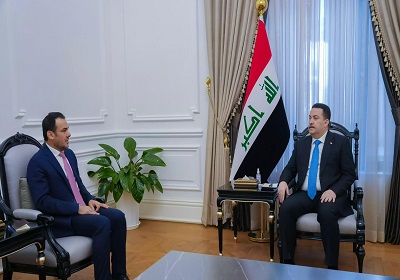
Prime Minister: The path of development will make Iraq a regional political and economic powerhouse
Seventh Baghdad International Dialogue Conference Call for Papers
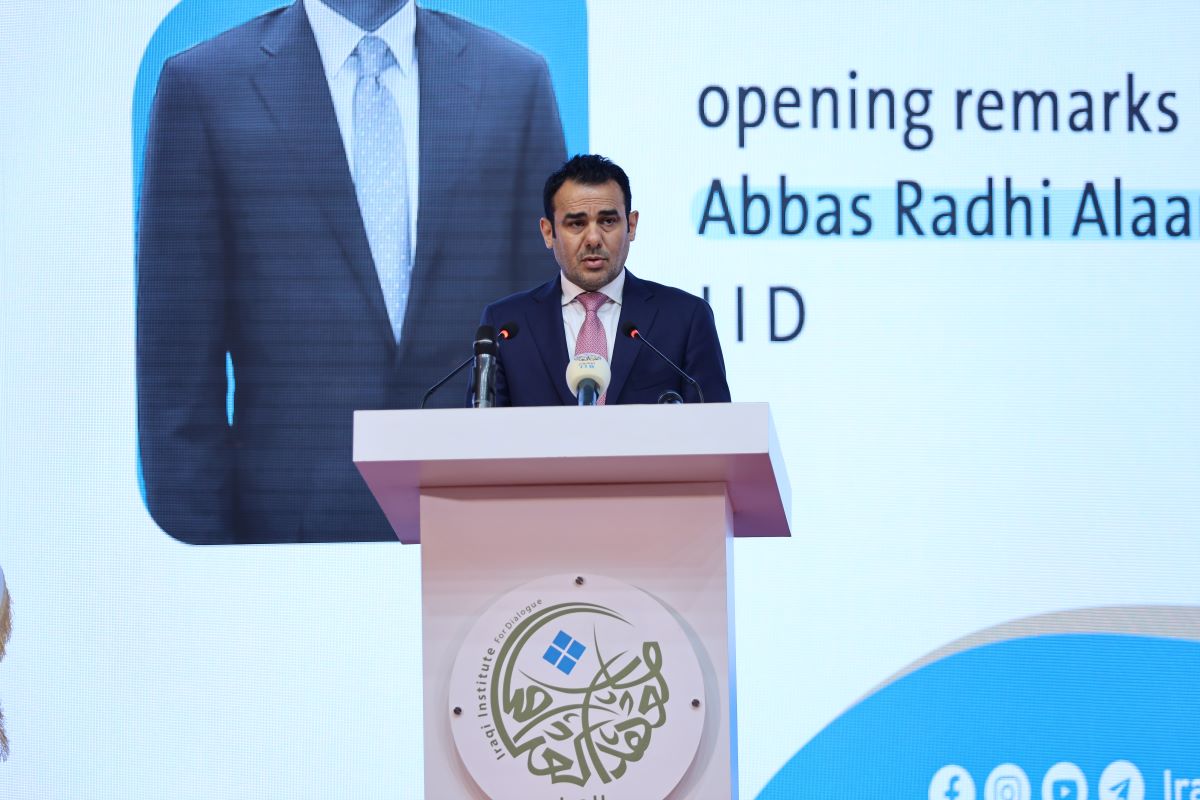
Speech of the Director of the Iraqi Institute for Dialog at the Sixth Baghdad International Dialog Conference

Comments