


By: Tanya Goudsouzian
Is It Time for the US to Step Back from the Persian Gulf?
The cost and rationale for the US military presence in the Persian Gulf are no longer adding up.
In a tense discussion on Al Jazeera English on May 5, retired US Brigadier General Mark Kimmitt challenged critics of the US military presence in the Persian Gulf, arguing that if regional states believe that presence is now a liability, they should “handle Iran” themselves. Across from him, Sultan Barakat, a professor at Qatar Foundation’s Hamad Bin Khalifa University, pushed back, arguing that the real driver of America’s posture is not gulf security, but the defense of Israel’s interests and the preservation of US regional dominance.
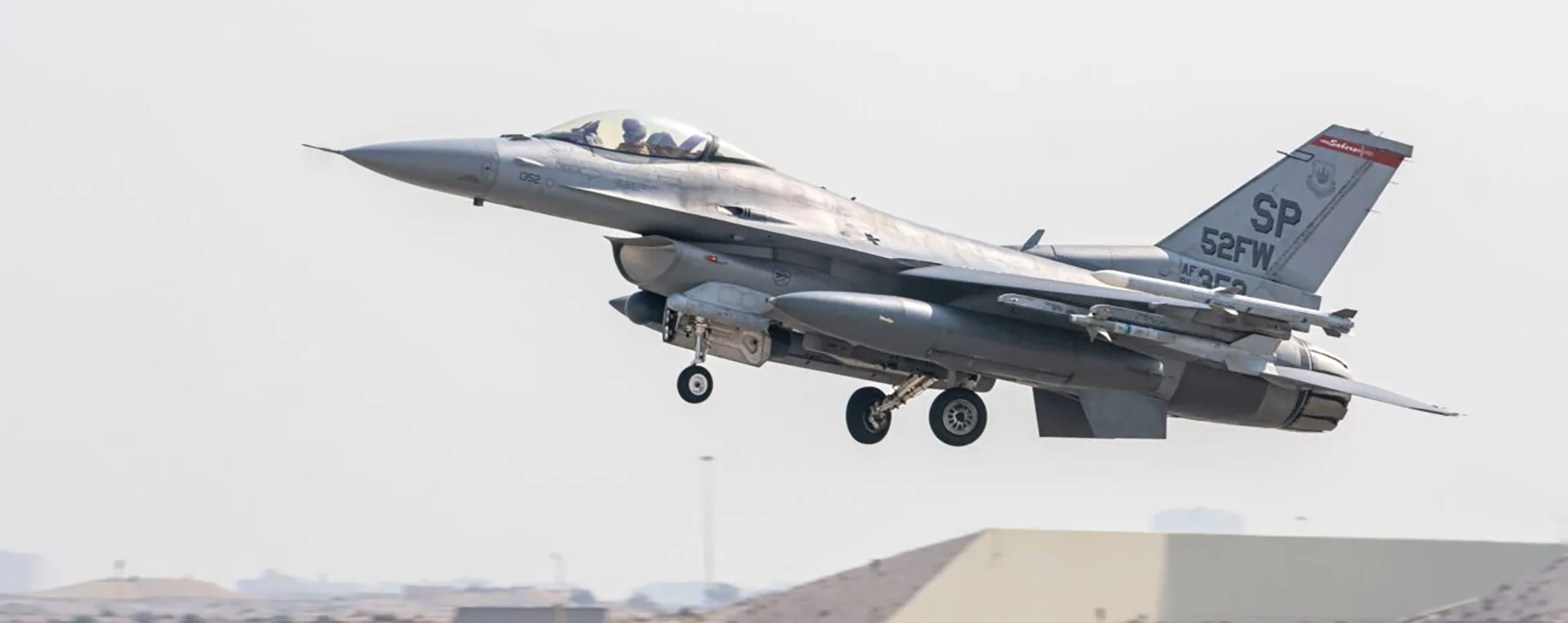
The exchange revealed a growing crack in the justifications of American power in the gulf. Washington’s military posture in the gulf no longer functions as a stabilizing force, the ostensible justification for its presence. Increasingly, it poses the risk of escalation in a region long weary of instability. American bases are a manifestation of non-neutrality, making the host countries potential de facto parties to any conflict the United States chooses to enter in the region. Moreover, the bases are not impregnable fortresses. The Washington Post reports that Iranian airstrikes have destroyed at least 228 structures and other military targets at US military facilities across the region since the war began on February 28.
At the same time, decades of over-reliance on the assumption of American protection have discouraged the emergence of a genuinely regional security framework capable of balancing interests without outside enforcement. As gulf scholar Abdullah F. Alrebh recently put it, “Rather than building a unified regional doctrine, individual member states rely heavily on divergent hedging strategies to secure their borders and advance their national visions.”
The sheikhdoms of the Persian Gulf continue to depend heavily on Washington’s security umbrella, while the United States remains vulnerable to escalatory spirals outside its core interests. The region’s security architecture is still based on assumptions from the aftermath of the Iranian Revolution and the Gulf War, perpetuating a cycle of militarization rather than regional equilibrium.
American strategy has been predicated on overwhelming conventional superiority, built around air power, naval dominance, missile strikes, and the implicit threat of invasion. The assumption was that prolonged military pressure and the “obliteration” of critical targets would eventually force Iran into submission. Yet after months of absorbing relentless US-Israeli attacks, Iran has retained the capacity to threaten gulf infrastructure, maritime routes, and regional stability. And according to a US intelligence review, Iran could withstand a blockade of the Strait of Hormuz for several months. The US strategy of attrition has failed.
Not only has the strategy failed, but the United States should have realized it would fail. It failed in Vietnam, it failed in Afghanistan, and it will most likely fail in Iran. While studying the conventional campaigns of Napoleon Bonaparte, the US military should have paid attention to Leo Tolstoy’s novel War and Peace: “The two most powerful warriors are patience and time.”
The strategy of patience and resistance is the core of Iran’s war effort. That means waiting as President Donald Trump faces the mid-term elections, plummeting public support, and the rising costs of depleting war stocks needed to fight China and defend Ukraine. Iran believes it can win by not losing—and crushing any internal opposition.
America’s global military posture is colliding with fiscal reality at a moment when the scale of its commitments continues to expand. In addition to the $29 billion cost of the war, maintaining the US military’s other bases, carrier groups, missile defense systems, and permanent deployments requires enormous and continuous expenditure, even as the US national debt now exceeds its gross domestic product (GDP). Annual debt payments now exceed the defense budget.
The “Ferguson Limit,” theorized by the historian Sir Niall Ferguson, notes the point at which empires are unable to sustain the cost of imperialism. According to this theory, an empire begins to decline when it spends more on debt servicing than its defense budget. The United States reached that point in 2024. While the $1.5 trillion budget request from the Department of Defense would significantly raise defense spending, it would only increase US debt in the long term.
The solution—scaling back US military commitments, including in the Persian Gulf—would not mean a retreat into isolationism. A reduced military footprint would still leave Washington with substantial room to protect its interests through diplomacy, security and intelligence cooperation, and rapid deployment capabilities positioned “over the horizon.”
A smaller American footprint would also move regional actors to take greater responsibility for their own diplomacy and defense. US methods are viewed as fundamentally coercive, with gulf allies little more than client states. A more balanced relationship among gulf allies could rebalance those relationships.
Great powers rarely weaken by withdrawing from regions of strategic interest. They weaken when they mistake permanent presence for strategic necessity. The gulf’s future security order should ultimately be the prerogative of the region that bears the consequences of security. The gulf can no longer host a permanent US presence, and America can no longer provide one.
About the Author: Tanya Goudsouzian
Tanya Goudsouzian is a Canadian journalist who has covered Afghanistan and the Middle East for over two decades. She has held senior editorial roles at major international media outlets, including serving as opinion editor at Al Jazeera English. Her work has also appeared in The National Interest, Responsible Statecraft, War on the Rocks, The New Arab, and Engelsberg Ideas.

The Iraqi Institute for Dialogue, the logistical sponsor of the Baghdad International Book Fair, opens its own pavilion at the fair

The Iraqi Institute for Dialogue publishes "The Diplomatic Portfolio" by Dr. Karrar Al-Badiri
Official agreement between Iraqi Institute for Dialogue and the Iraqi Media Network to sponsor The Seventh Annual International Conference of “Baghdad Dialogue” 2025

Invitation to the 79th issue of Dialogue of Thought
Prime Minister: The path of development will make Iraq a regional political and economic powerhouse
Seventh Baghdad International Dialogue Conference Call for Papers
Speech of the Director of the Iraqi Institute for Dialog at the Sixth Baghdad International Dialog Conference
Comments