


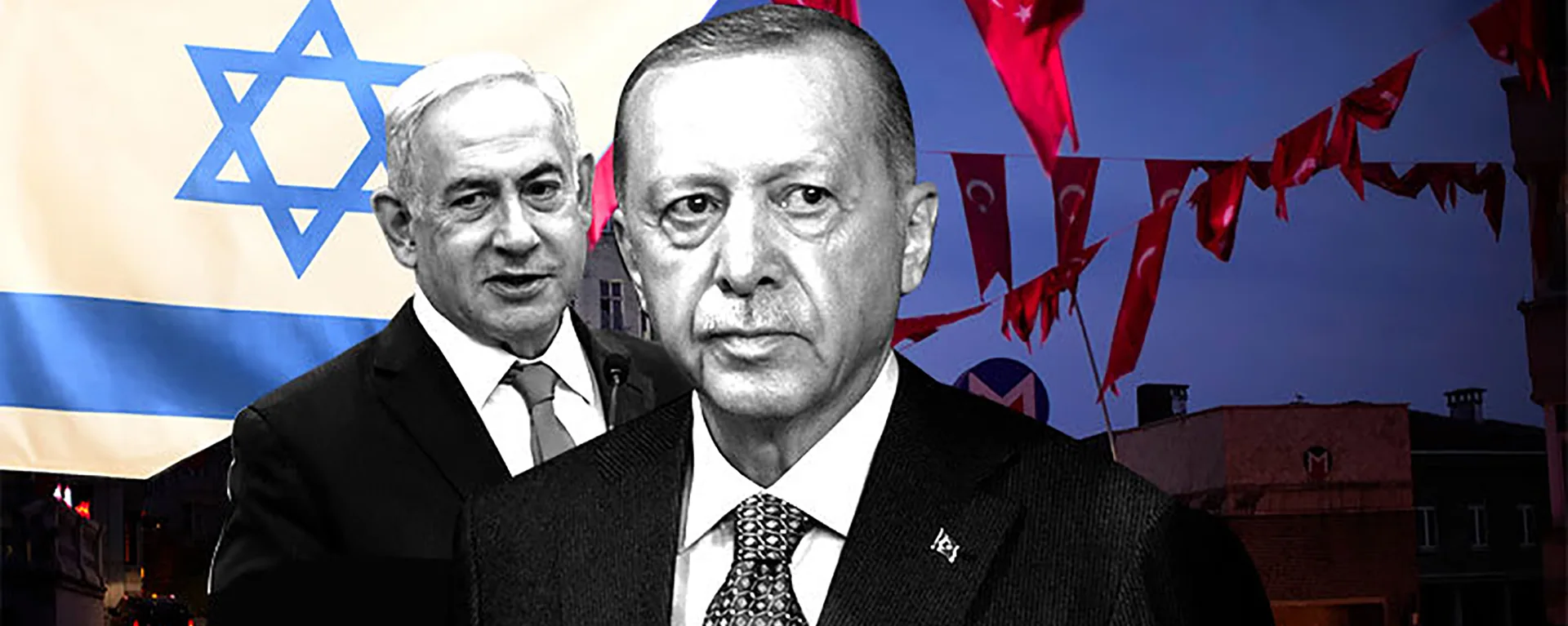
Israel's strategy of portraying Turkey as the "next Iran" backfired
Published by: Turkiye Today
Published: 5 June 2026
Translated by: Faisal Abdullatif
Portraying Turkey as the leader of a Sunni axis against Iran was not a new idea in international circles. A few years ago, however, Israel quietly began to recast the concept. At the time, Israeli officials believed that Ankara was so preoccupied with Ukraine, Syria, Palestine and other conflicts that it did not notice. Under this new strategic framework, Turkey will not be seen as a Sunni counterweight to Iran, but will become the next adversary after Iran.
The idea first emerged through a few pro-Israel Arab bloggers before spreading to small media outlets. Later, several research centers tried to legitimize it further. As the genocide in Gaza continues, and ahead of the 2025 12-day war, Israeli officials and anti-Turkish voices in the Arab world and the West have begun to promote the concept more openly.
They believed that the Iranian regime would collapse within months, that Gaza would be completely under Israeli control, and that Syria would eventually accept Israeli demands.
Israeli circles have already been discussing real estate projects and offering plans in Washington, hoping to engage those close to President Trump.
Israel began to portray Turkey as a leading country in the Sunni power bloc. Qatar was placed on its side, while Pakistan was quietly added to the picture. And Israel has worked to undermine Turkey’s growing cooperation with Saudi Arabia and Kuwait.
Nor was Israel comfortable with the expansion of technological and defense ties between Ankara and the UAE. The goal was clear: to reduce Turkey’s influence in Syria, keep it out of the Gulf, and reintroduce it as a new Iran.
Ankara recognized this endeavor from the beginning. Instead of changing course, Turkey continued its engagement with the United States and the Gulf states while maintaining its own policies. One source familiar with the discussions summed up Ankara's approach: "The best plan was simply to continue with our plan."
Aware that international politics is as much psychological as technical, Ankara responded by focusing on mediation efforts and its Gulf partnerships. Realizing that international politics is as much psychological as technical, Ankara has certainly responded to the mediation efforts and its Gulf partnerships. According to a source familiar with the operation, all Israeli statements hostile to Turkey were met with criticism from Gulf capitals and Washington. Israel's broader record in the region has also come under further scrutiny.
Turkey reaps the fruits of war
Israel initially sought to compete with Turkey in southern Syria, but those expectations did not bear fruit. The 12-day war gave Israel what it believed was military and psychological superiority. And as the conflict and its global ramifications have widened, President Trump and his team have increasingly come to the conclusion that Ankara’s previous warnings are correct.
With the costs of war with Iran increasing and the risk of escalation spreading to the Gulf and Lebanon, the United States and Europe have approached Turkey, Qatar and Pakistan in search of solutions. This actually constituted a collapse of Israel's long-standing efforts to classify these countries as a new hostile bloc centered around Turkey.
This idea has been cultivated by Arab bloggers, amplified by anti-Turkish voices in the West, and resonates between the lines of Netanyahu's speeches. But in the end, Turkey was the beneficiary.
Turkey's role in facilitating the exchange of prisoners during the Gaza war and its diplomatic efforts in the Ukrainian crisis was already clear. During this period, Turkey adopted a stabilizing approach in Syria, supported by significant influence on the ground. And the benefits of this approach are becoming increasingly apparent.
Ankara has emerged as one of the main channels of communication between Iran and the United States. And not only did it convey messages, but Turkey actively tested American positions, issued warnings, and proposed solutions.
At the same time, it urged Tehran not to expand the conflict. And again, after the Russian-Ukrainian crisis, Turkey’s role as a regional mediator was confirmed.
What Israel has tried to classify as a hostile Sunni alliance has emerged on the international stage as a legitimate diplomatic platform. In March, Foreign Minister Hakan Fidan met his counterparts from Pakistan, Saudi Arabia, and Egypt in Islamabad to discuss efforts to reduce regional tensions. Bilateral and telephonic diplomacy continued thereafter.
The countries that Israel hoped to portray as future enemies became intermediaries. Restraint, diplomatic engagement, and its common stand against escalation have helped pave the way for ceasefire efforts and peace talks. Israel's long-term strategy has effectively collapsed.
And despite the controversy surrounding some of his statements, the appointment of U.S. Ambassador Tom Barak as special presidential envoy for Syria and Iraq has strengthened Ankara's role in the region. And Turkey’s unique ability to communicate with all parties has become a strategic reality in Washington.
"Everybody hates you now"
The increasingly hostile climate created by efforts to isolate Turkey backfired. Instead of besieging Ankara, he has made Turkey an indispensable actor.
This reality is unlikely to change in the medium term, even after the U.S. election in November. Meanwhile, Israel's largely anti-Turkish rhetoric has been embraced by former officials, retired intelligence figures, and long-time anti-Turkish voices in a closed circle. At the same time, Turkey continued to send clear messages while maintaining its red lines. Ankara may consider normalization with Israel if the Gaza genocide ends, a Palestinian state is recognized, and attacks on the sovereignty of regional states stop.
That remains Turkey's position. "However, under the current Israeli government, these results seem unlikely." "What Turkey has shown throughout the Gaza war, Israel's campaign to portray it as an enemy, and the conflict with Iran, is that it will not abandon its core positions under pressure." "In both cases, Ankara has successfully established itself as a highly influential regional actor."
Israel finds itself in a very different situation. Trump himself has reportedly openly expressed his displeasure with Netanyahu, saying, "You... Crazy. I'd be in jail if I didn't come in. I'm saving you. Everybody hates you now. Everybody hates Israel because of this."
In short, while Israel spent years preparing to portray Turkey as its main enemy, it ultimately misread the geopolitical landscape. The result was that Israel found itself increasingly isolated, while Turkey reinforced its role as a pivotal diplomatic actor.

The Iraqi Institute for Dialogue, the logistical sponsor of the Baghdad International Book Fair, opens its own pavilion at the fair
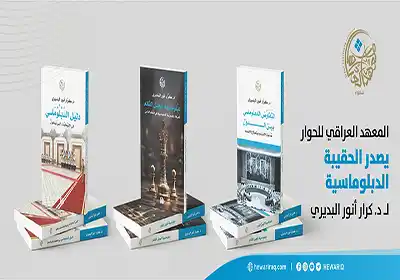
The Iraqi Institute for Dialogue publishes "The Diplomatic Portfolio" by Dr. Karrar Al-Badiri
Official agreement between Iraqi Institute for Dialogue and the Iraqi Media Network to sponsor The Seventh Annual International Conference of “Baghdad Dialogue” 2025
Invitation to the 79th issue of Dialogue of Thought
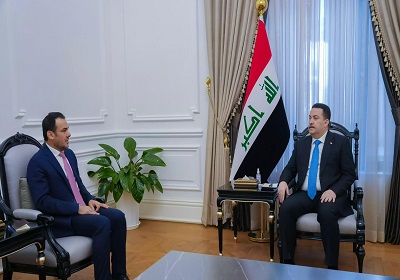
Prime Minister: The path of development will make Iraq a regional political and economic powerhouse
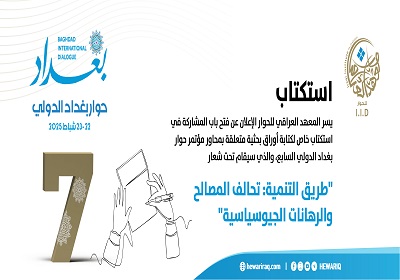
Seventh Baghdad International Dialogue Conference Call for Papers
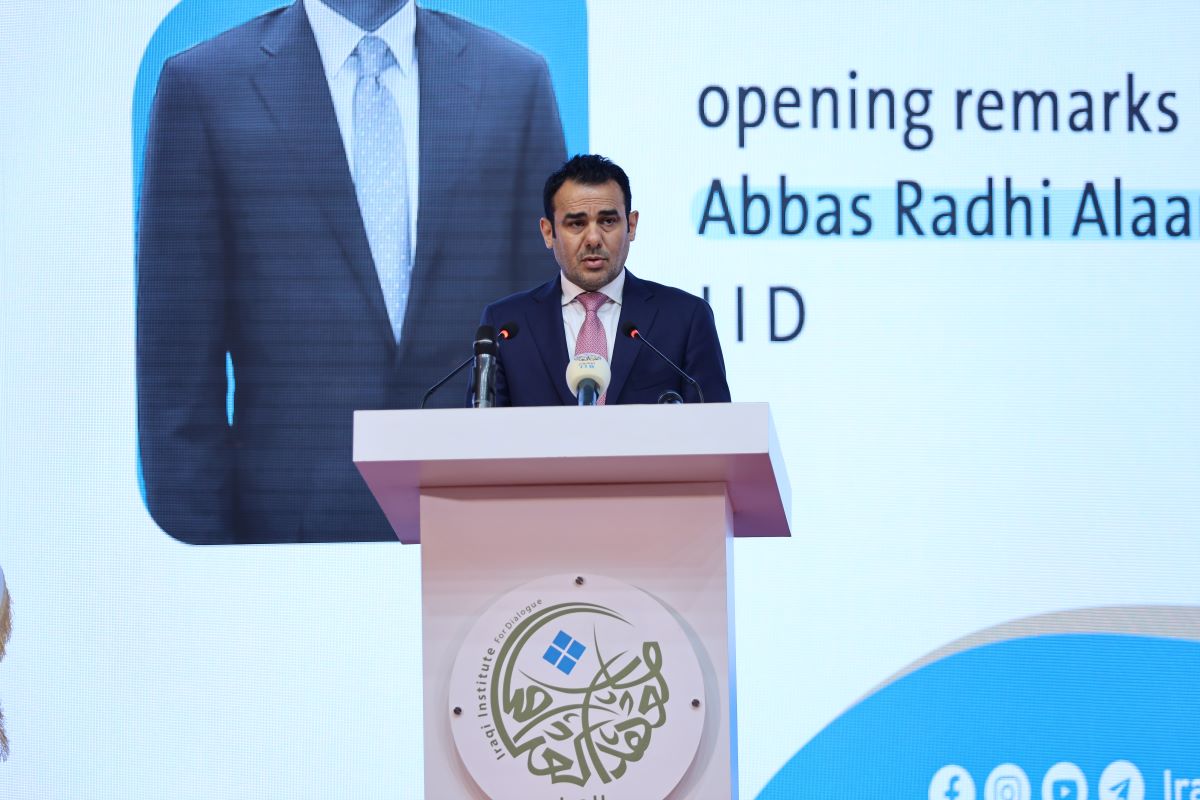
Speech of the Director of the Iraqi Institute for Dialog at the Sixth Baghdad International Dialog Conference
Comments