


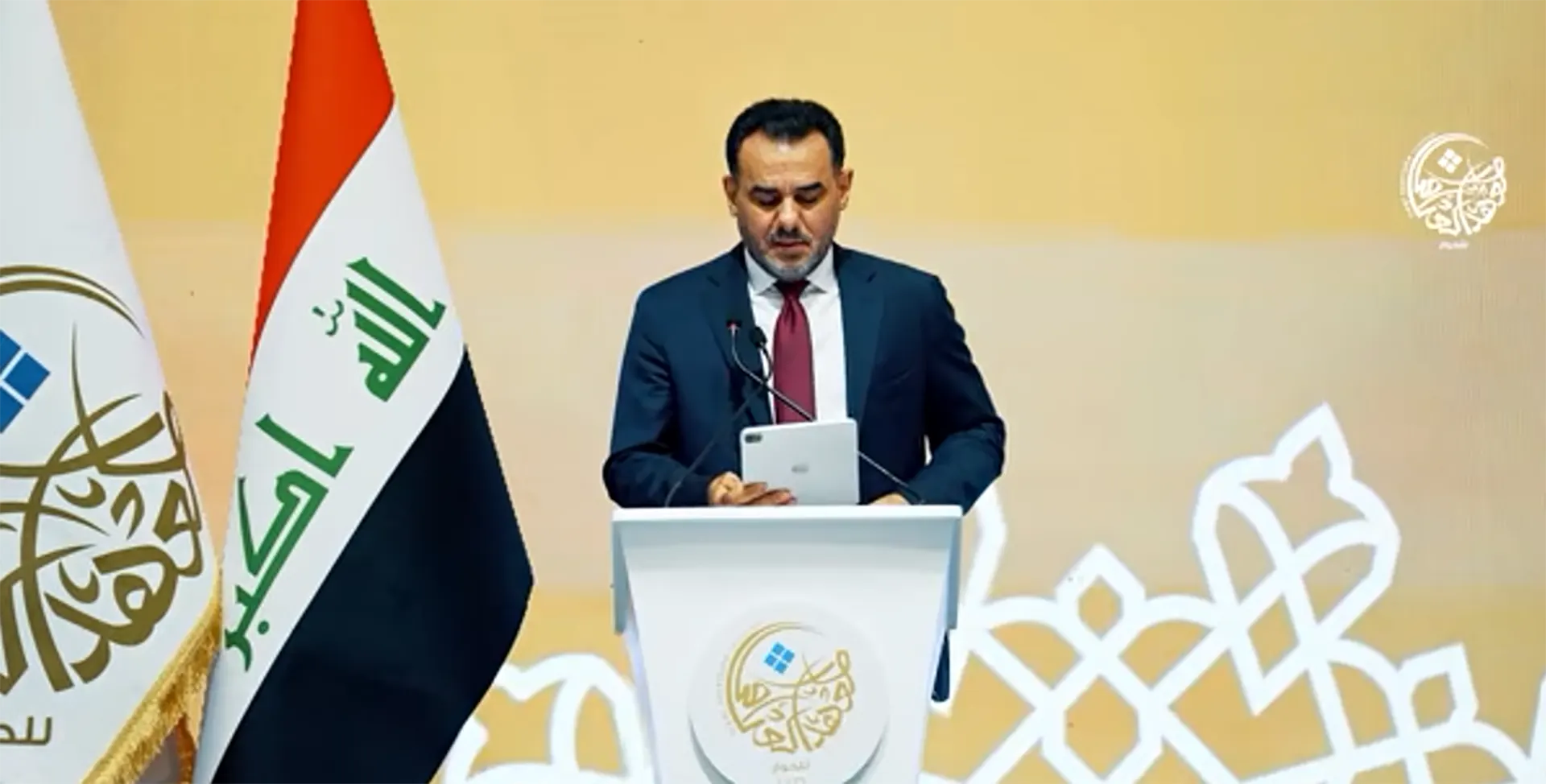
Director of the Iraqi Institute for Dialog during the opening of the 8th Baghdad Dialog: One hundred days is not enough to judge the government, but it is enough to read its direction
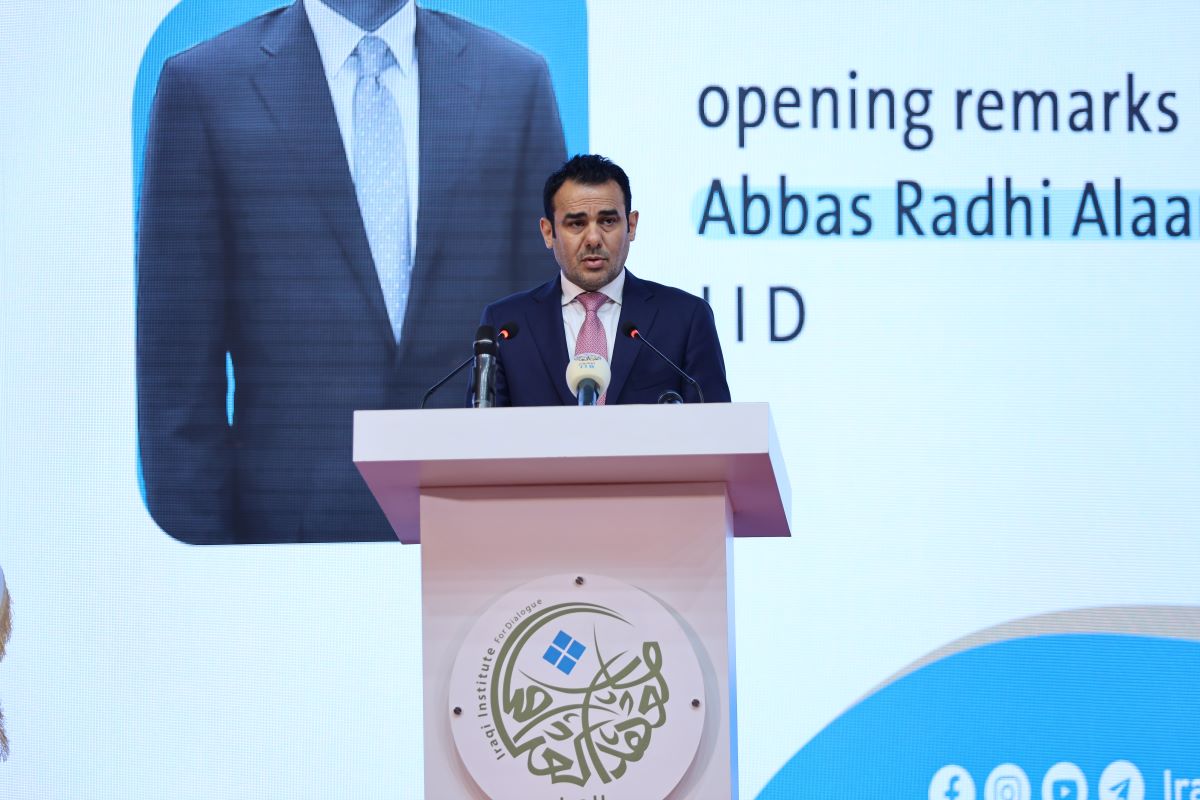
Dr. Abbas Radhi, director of the Iraqi Institute for Dialog, said that the 100 days that have passed since the formation of the government is not enough to judge its performance, but it represents a sufficient period to read its directions, stressing the importance of adopting think tanks and research centers in decision-making, and enhancing their independence and ability to provide opinion without influence or pressure.
And he said in a speech during the opening of the eighth edition of the conference of the "eighth Baghdad dialog", under the auspices of the Prime Minister, and in the presence of a number of officials, Their Excellencies, researchers and media, that the conference chose to stop at the passage of one hundred days after the formation of the government "carefully," explaining that the goal is not to give a certificate to the government, but to "read its direction."
The following is the text of the word
In the name of God the Merciful
Prime Minister,
Your Excellencies,
Ladies and Gentlemen,
Fellow researchers and media professionals,
Peace be upon you and God's mercy and blessings,
I welcome you to the eighth edition of the Baghdad Dialog, and I thank you for your presence on a day that we have chosen carefully: one hundred days after the formation of the government.
And let's be precise from the beginning: a hundred days is not enough to judge a government, but it is quite enough to read its direction.
We did not meet today to give a certificate, but to read a direction. And this is exactly what think tanks do when they act with sensitivity, without being influenced, pressured or favored, and respectful of those they address.
This year, the region has experienced one of its most violent moments in decades. Corridors shook, prices rose, and the flames spread to many limits.
An old question was posed to Iraq in a new format: Is it dragged into the fire, or does it survive on its own to exercise its moral role in helping those who were afflicted by the fire of war?
Staying out of a fire next door is not luck, not passive neutrality. It is a daily industry, the price of which is difficult decisions, not all of which are announced.
And I say it fairly: What happened in these 100 days did not begin. The policy of pacifying the neighborhood, opening channels, and turning Baghdad into a place where he speaks rather than fighting over it, is a policy that Iraq has accumulated and followed for years, and many diplomats and officials paid for it, some of whom were not mentioned.
Fairness to the former is not a diminution of the later; It is the only condition for foreign policy to become state policy, not government policy.
Then came the economic lesson: when one corridor was disturbed, an entire country's budget shook.
A budget based on a single resource is not a budget; It's a bet. And we bet long.
What is worth discussing at our conference today is not the mantra of diversifying state resources, but the form of partnerships that make it possible.
And the government is starting to knock on unusual doors: energy partnerships that go beyond the formula of “we sell crude and buy a product,” attempts to convert burned gas from a loss to a resource, and transportation corridors that make Iraq’s location an economic asset, not just a location on the map.
And these are attempts, not completed achievements. It is our duty to measure it, not to applaud it.
And I reach out to what concerns me as a person, and what brought us together in this room.
States that have the right decision-making process do not make the decision and then seek to justify it. Look first, then decide.
Think tanks are not a luxury in a time of prosperity; It's decision insurance in times of danger. the institutional memory when governments change, the voice that says “watch out” before the cost becomes a bill.
And Iraq is going through a real process in this regard. We went from a stage where research was an academic luxury or a protocol interface, to a stage where the decision maker started asking, and the researcher started asking.
And this is a start, but it is a start that needs to:
Finance that does not buy opinion,
and independence, not in the sense of rupture,
And a decision-maker is likely to hear what he doesn't like.
And finally,
We will spend two days discussing these themes. Our task is not to tell the Government that it has succeeded, nor to say that it has failed. Our job is to tell her and the public where exactly she is from what she has planned.
I renew my welcome to all of you.
Peace, mercy and blessings of God shall be upon you.
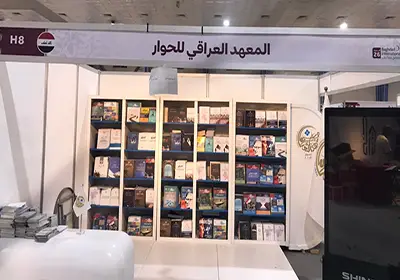
The Iraqi Institute for Dialogue, the logistical sponsor of the Baghdad International Book Fair, opens its own pavilion at the fair
Official agreement between Iraqi Institute for Dialogue and the Iraqi Media Network to sponsor The Seventh Annual International Conference of “Baghdad Dialogue” 2025
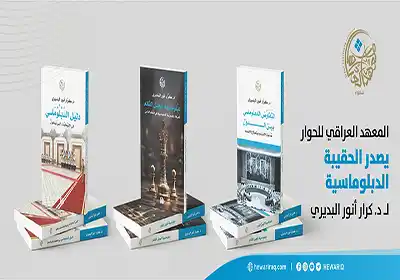
The Iraqi Institute for Dialogue publishes "The Diplomatic Portfolio" by Dr. Karrar Al-Badiri
Invitation to the 79th issue of Dialogue of Thought
Prime Minister: The path of development will make Iraq a regional political and economic powerhouse
Speech of the Director of the Iraqi Institute for Dialog at the Sixth Baghdad International Dialog Conference
Seventh Baghdad International Dialogue Conference Call for Papers
Comments