


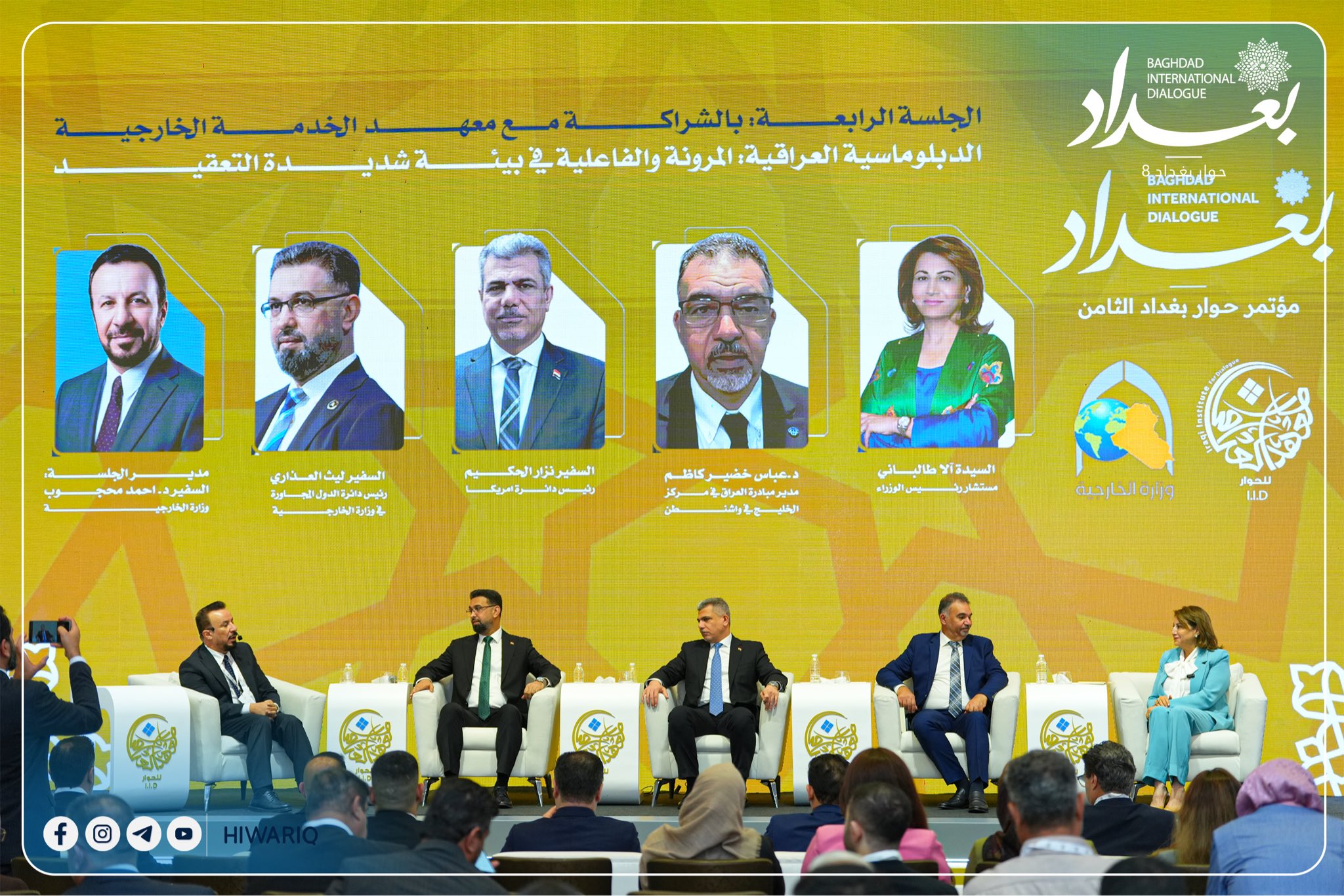
Day 1, 4th Dialog Session: Resilience and Effectiveness in a Highly Complex Environment
The fourth session of the activities of the first day of the eighth Baghdad Dialog Conference, organized by the Iraqi Institute for Dialog, discussed the challenges facing Iraqi foreign policy in light of the rapid regional and international transformations, and ways to develop the tools of Iraqi diplomacy and enhance its ability to deal flexibly and effectively with political, security and economic files, in line with Iraq's national interests.
This session was held in partnership with the Institute of Iraqi Foreign Diplomatic Service, under the title "Resilience and effectiveness in a highly complex environment", and with the participation of a number of political figures and researchers in political and security affairs, under the management of Ambassador Ahmed Mahjoub.
Al-Hakim: The outcomes of the economic visit to Washington were the main hinge
And the head of the US Department at the Ministry of Foreign Affairs, Nizar al-Hakim, revealed part of the results of the visit of Prime Minister Mr. Ali Faleh al-Zaidi to Washington, stressing that the visit focused on three main tracks: politics, economy and security, considering that the economic outputs formed the main hinge of the visit.
"The prime minister's visit to Washington focused on politics, economy and security," al-Hakim said, noting that the economic aspect occupied a central position within the results of the visit.
And added that the volume of contracts that took place in the United States amounted to 200 billion dollars, in an indication, according to the Iraqi proposal, of the size of economic opportunities that were discussed during the visit, and what it can open prospects for investments and partnerships between Iraq and the United States.
Iraq moves to address security challenges
And in the security file, al-Hakim stressed that the Prime Minister is determined to face security challenges and achieve progress in this path, pointing out that the security file represents one of the necessary paths to strengthen the stability of Iraq and protect its interests.
And this vision comes in conjunction with an Iraqi diplomatic move aimed at strengthening international and regional relations, allowing Baghdad to employ its external relations in facing security and economic challenges, and to consolidate its position as an actor in the region.
Al-Adhari: Diplomatic action moves Iraq from crises to partnership
Laith al-Adhari, head of the Foreign Ministry's neighboring countries department, reviewed developments in Iraq's relations with neighboring countries, especially Turkey and Iran. He said the Iraqi diplomatic move aims to move from crisis management to building long-term partnerships.
Al-Azari said that the Prime Minister's visit to Ankara was important, given the detailed files during which they were discussed, indicating that the memoranda of understanding signed in Turkey aim to move from crisis to partnership.
He pointed out that the water file represents one of the most prominent future challenges, warning of the possibility of Iraq being exposed in the coming years to a drought crisis, which requires the development of cooperation with neighboring countries and finding joint and sustainable solutions to manage water resources.
Iraq and Iran: Relations that transcend politics
On the regional issue, Al-Adhari described the Prime Minister's moves to build foreign relations as "courageous", stressing the importance of Iraqi-Iranian relations.
He pointed to the participation of about 3 million Iranian visitors in the Arbaeen visit, considering that this attendance reflects the depth and importance of the relationship between the two countries, as well as the social and economic dimensions that are related to these relations.
He explained that Iraqi relations with neighboring countries are not limited to political and security files, but extend to economic, commercial, water and humanitarian fields, which requires, according to his vision, building more stable frameworks to manage these common interests.
$27 billion in trade with Iran and Turkey
And on the economic side, Al-Adhari revealed that the volume of trade exchange between Iraq and Iran amounted to $11 billion, while the volume of trade exchange with Turkey amounted to $16 billion.
He stressed that these figures reflect the importance of economic relations with neighboring countries, and the need to employ them in strengthening partnerships and developing the Iraqi economy, instead of limiting relations to political and security files.
He pointed out that the transition from crisis management to building economic partnerships requires developing agreements and memoranda of understanding and turning them into practical projects that benefit Iraq and the countries of the region.
Iraq's Diplomacy in a Complex Regional Environment
The session dealt with a number of files related to Iraq's ability to move in a highly complex regional environment, in light of the overlapping security, economic and water crises.
The proposals stressed the importance of developing the tools of Iraqi diplomacy, diversifying international and regional partnerships, and benefiting from Iraq's multiple relations with the United States, Iran, Turkey and other neighboring countries.
The discussions also reflected a trend towards transforming Iraq's geographical location and balanced relations into elements of strength that enable it to play a greater role in settling regional crises and enhancing economic and security cooperation, instead of remaining affected by the repercussions of the conflicts surrounding it.
Diplomacy, Economics and Security: Integrated Pathways
And in this context, the visit to Washington emerged as an important economic and political milestone, while the visit to Ankara was considered a step towards building new partnerships in the fields of economy, water and energy, while the relationship with Tehran is based on deep political, economic and social ties.
The participants stressed that the success of these moves remains linked to Iraq's ability to fortify its internal front, achieve political stability, and develop state institutions, which gives Iraqi diplomacy more room for maneuver and movement and turn regional challenges into opportunities that serve national interests.
Talabani: Iraqi diplomacy can turn challenges into opportunities
For her part, the adviser to the Prime Minister, Ala Talabani, confirmed on Friday that Iraqi diplomacy is able to turn challenges into opportunities, noting that the visits of Prime Minister Ali Al-Zaidi to the United States, Iran and Turkey were among the most important visits during the past hundred days.
Talabani said during the session that "the Prime Minister's visits to America, Iran and Turkey were among the most important visits during the 100 days, and they were successful visits."
And she added that "the prime minister turned challenges into opportunities," indicating that "Iraqi components must invest in foreign relations to make Iraqi diplomacy successful."
And stressed that "women have an important role in politics and their presence in international forums," noting that "the environment is an important subject, and Iraq must come out through its international participations to get rid of climate challenges."
And pointed out that “Iraq inherited a lot of complications from the former regime,” indicating that “the government is the one that draws foreign policy, and the Ministry of Foreign Affairs is responsible for its implementation.”
And she added that “we have economic and security challenges, and the prime minister is continuing to address them, as well as political blocs,” stressing that “the stability of internal relations is reflected in the stability of foreign policy.”
Director of the Iraq Initiative in Washington, Mr. Abbas Khudair, during the Baghdad Dialog Conference 8: The greatest danger to Iraq is economic and Washington understands its neutrality
The session was attended by the Director of the Iraq Initiative at the Gulf Center - Washington, Mr. Abbas Khudair, who stressed that "the great danger to the country is purely economic," noting that "the US government understands the need for Iraq to adopt the principle of neutrality."
And Khudair said that "there are many achievements for Iraq in the field of international relations, for example, the relationship with America and its allies, including the countries of the Arab Gulf," noting that "there was a surge in foreign relations after the Prime Minister's visit to Washington, as the stereotype about the tension of the relationship between Iraq and America has changed."
And he added that "Washington is not asking Iraq to be a party to its conflict in the region," as the "government is trying to protect American interests in Iraq."
And Mr. Kadhim continued that "the United States of America does not have a problem with the government, but with other internal parties, and the US President Trump gave Al-Zaidi unconditional support."
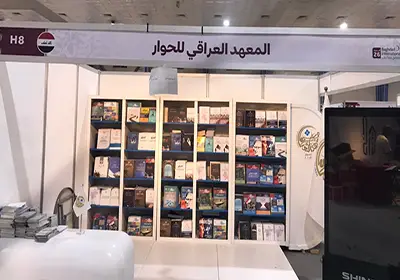
The Iraqi Institute for Dialogue, the logistical sponsor of the Baghdad International Book Fair, opens its own pavilion at the fair
Official agreement between Iraqi Institute for Dialogue and the Iraqi Media Network to sponsor The Seventh Annual International Conference of “Baghdad Dialogue” 2025
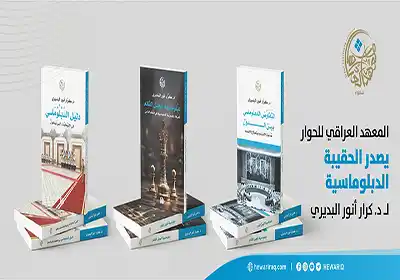
The Iraqi Institute for Dialogue publishes "The Diplomatic Portfolio" by Dr. Karrar Al-Badiri
Invitation to the 79th issue of Dialogue of Thought
Prime Minister: The path of development will make Iraq a regional political and economic powerhouse
Speech of the Director of the Iraqi Institute for Dialog at the Sixth Baghdad International Dialog Conference
Seventh Baghdad International Dialogue Conference Call for Papers
Comments