

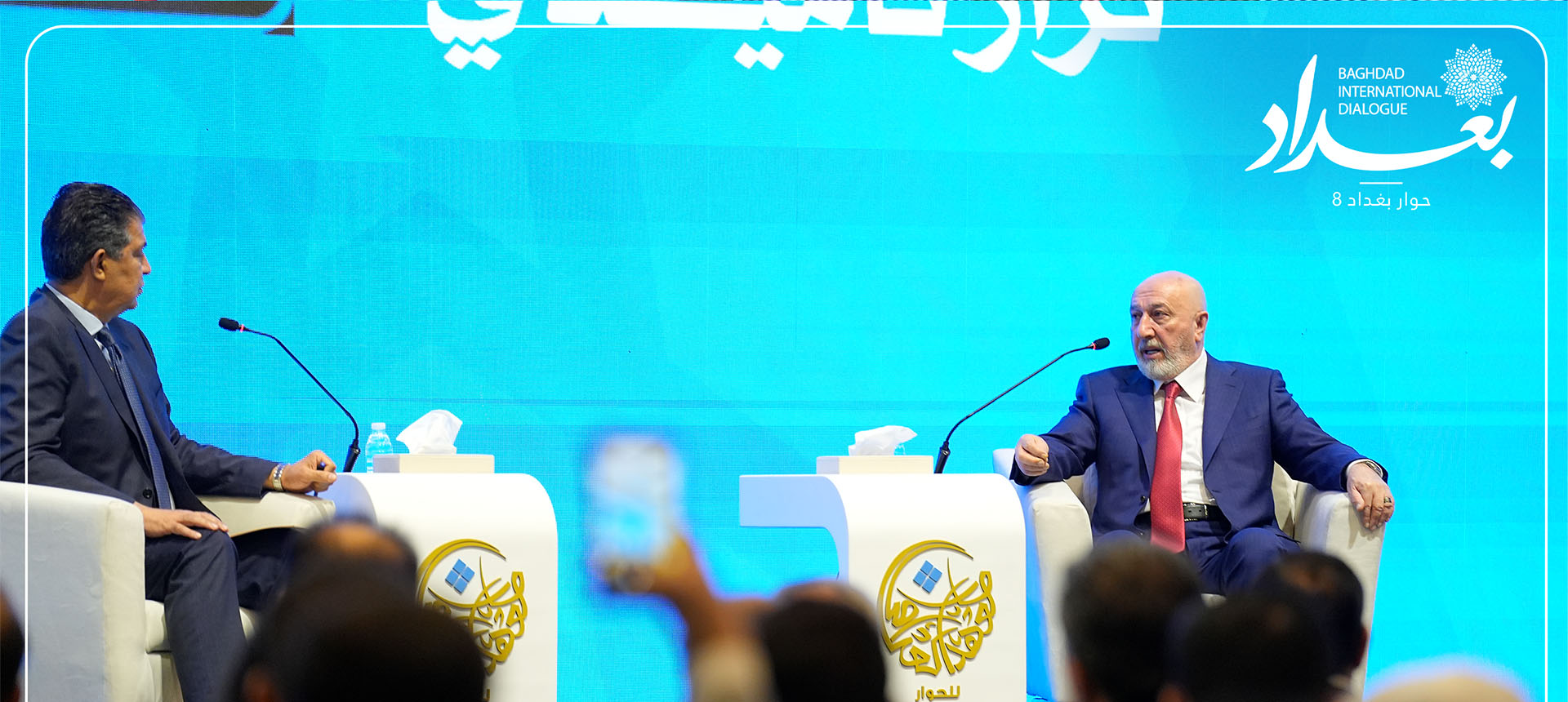
From Arms Control to Hormuz and Executions, President of the Republic Nizar Amedy opens the files of sovereignty, war, Peshmerga and economy in the eighth Baghdad dialog
During his hosting on the second day of the 8th Baghdad Dialog Conference, the President of the Republic, Mr. Nizar Amedy, touched on a number of political, security, constitutional and economic files, talking about the peaceful transfer of power, political differences and the completion of the ministerial cabin, as well as external influences, regional war, arms control, relations with Iran, Turkey and the United States, in addition to the file of the Peshmerga, executions and the environment.
Peaceful transfer of power. The presidencies are facing a new stage
And the President of the Republic said: "The previous sessions witnessed, unfortunately, a collision and incompatibility between the presidencies," noting that "this session we pledged to work together and coordinate between the presidencies in a way that serves the country," noting that "Iraq went through difficult conditions after 2004 and in many ways, and was exposed to many wars," but stressed that "despite the difficult circumstances faced by Iraqis did not leave the peaceful rotation of power."
Kurdish Entitlement and Ministerial Cabinet
Regarding politics, Amedy confirmed that "several differences occurred regarding the eligibility of the Kurdish component to the presidency of the republic," but stressed that "Iraq did not exceed the constitutional periods regarding the eligibility of the Kurdish component."
And he explained that "the political forces are keen to complete the ministerial formation, and we are getting closer to that," noting that "parliament has a major role in completing the ministerial formation."
Iraq is not an isolated country
And on external influences, the President of the Republic, Mr. Nizar Amedy, said that "the American influence in Iraq is evidence of the importance of Iraq's position, and external influence exists," noting that "Iraq is an unisolated country, and Iraq is not North Korea," stressing that "there is a national decision and we are trying to invest external influences nationally," stressing that Iraq "is keen not to be dragged into the battlefield."
And pointed out that "Iraq is affected by the war, and it is the largest country affected, and we have major security challenges," noting that "after the outbreak of the war, it turned out that the security file is fragile, and the economic costs indicated the existence of many problems."
War and the Strait of Hormuz. Iraq between crisis and oil
In the developments of the regional war, the President of the Republic, Mr. Nizar Amedy, stressed that "there is an open war in the region," noting that "the goal of the United States and Israel was not the Strait of Hormuz, but it has become an achievement."
And he explained that "the Strait of Hormuz now does not affect only Iraq, but the whole world," pointing out that "the American side seeks to end the war, but Iran does not want, and peace is rejected."
And Iran either wants to end the war completely and lift the sanctions, or the war remains.”
And in the oil export file, Mr. Amedy said that "Iraq has spoken frankly with the Iranian side, the United States and Turkey as well, and Iraq's interest first," noting that "he spoke with the Iranian leadership clearly about the need to export our oil through Hormuz."
And he explained that "the economic situation of Iraq is bad," noting that "there is a problem in the Ministry of Oil not having the national carrier, and the cost of ships is high and its obligations are difficult."
And he stressed that "there are complex problems in the Strait of Hormuz, and we continue to talk with the Iranian side and there is flexibility on their part," stressing that "the path to resolve the crisis of the Strait of Hormuz must be international to remove naval mines."
Letters to Iran... and the interest of Iraq first
On relations with Iran, President Nizar Amedy revealed that he "spoke with the Iranian president in Tehran in coordination with the presidencies, and we delivered clear messages on the issue of cooperation, reviewing the relationship and preserving the country's sovereignty."
And he added that "he spoke with Qalibaf that the economic situation of Iraq is bad," pointing out that the dialog with the Iranian side is continuing on the files that affect Iraq and its interests," calling on "everyone to rally around the government and support it, considering that the failure of the current government means that Iraq is sliding into the abyss."
And in regional relations, he stressed that "relations are on the path to improve with the Gulf countries," stressing that Iraq is working to maintain its relations with various parties to serve its interests."
Arms Control: A National Decision without Conflict
And in the file of arms limitation, the President of the Republic stressed that "all political forces and the Iraqi people call for arms limitation in the hands of the state," stressing that "the limitation of arms in the hands of the state is a constitutional, popular and sovereign requirement."
And he said that "limiting arms is a national decision without clashing with any of the factions or external influences," stressing that "there are no signs of clashing with the factions."
And he explained that "there are three types of weapons held by the factions," noting that "there are talks on the delivery of strategic weapons, missiles and drones," noting that "there is a mechanism for disengagement from the factions."
And he added that "there are three types of weapons, a strategic weapon, a weapons of the crowd, and a weapon obtained from the war of ISIS," stressing that "the file is not without complications, but in the end its existence will end."
And pointed out that "at the last meeting of the presidencies we agreed to limit the arms," noting that "the international coalition was present by an official government agreement, and the presence of foreign forces will end, and therefore there is talk of handing over weapons and there is a response."
And the President of the Republic, Mr. Nizar Amedy, stressed that "in the end, we will be able to control weapons without bloodshed, and no signs of clash with the factions."
Factions and Peshmerga. Files within the national track
And the President of the Republic, Mr. Nizar Amedy, stressed that the path of arms control "is not limited to the factions," referring to "the Workers' Party, the Iranian parties and the Sinjar formations as well."
Regarding the Peshmerga, he said that it is "a constitutional force like other security formations," noting that "the Peshmerga have a full history with the struggle."
He stressed that "the Peshmerga is not a party to the arms embargo, but a legal, constitutional military system."
And he added that "he did not hear a conversation in the State Administration Coalition about ending the Peshmerga weapons," stressing that "without dialog there is no end to the weapons," noting that "Kurdistan was bombed from inside Iraq during the war," stressing the importance of addressing security files through dialog."
Executions: A Backlog since 2006
On the issue of executions, the President of the Republic, Mr. Nizar Amedy, said that "the issue of executions is constitutional and national and does not relate to any category."
And he explained that "there is a problem in the file of executions, which has been accumulating since 2006," noting that "there are sentences in the thousands of foreigners, including Syrians, Saudis, Iranians and others."
And on the amnesty law, the President of the Republic explained that "our role is to send the relevant law-related files to the Judicial Council, which in turn takes action," noting that "there are 14 thousand convicts."
The effects of wars extend for decades
On the environmental issue, Mr. Amedy stressed that "Iraq has been exposed for five decades to many wars that have affected the environmental file, and development has stopped."
And he pointed out that "after the Paris climate agreement, we abolished the Ministry of Environment and merged," noting that "Iraq is obliged to spend $ 100 million annually for the climate."
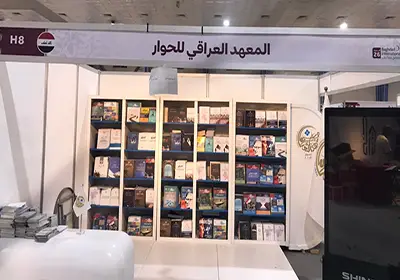
The Iraqi Institute for Dialogue, the logistical sponsor of the Baghdad International Book Fair, opens its own pavilion at the fair
Official agreement between Iraqi Institute for Dialogue and the Iraqi Media Network to sponsor The Seventh Annual International Conference of “Baghdad Dialogue” 2025
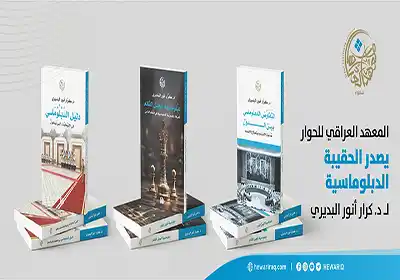
The Iraqi Institute for Dialogue publishes "The Diplomatic Portfolio" by Dr. Karrar Al-Badiri
Invitation to the 79th issue of Dialogue of Thought
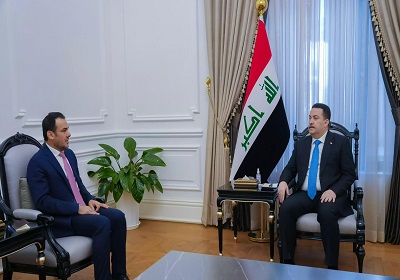
Prime Minister: The path of development will make Iraq a regional political and economic powerhouse
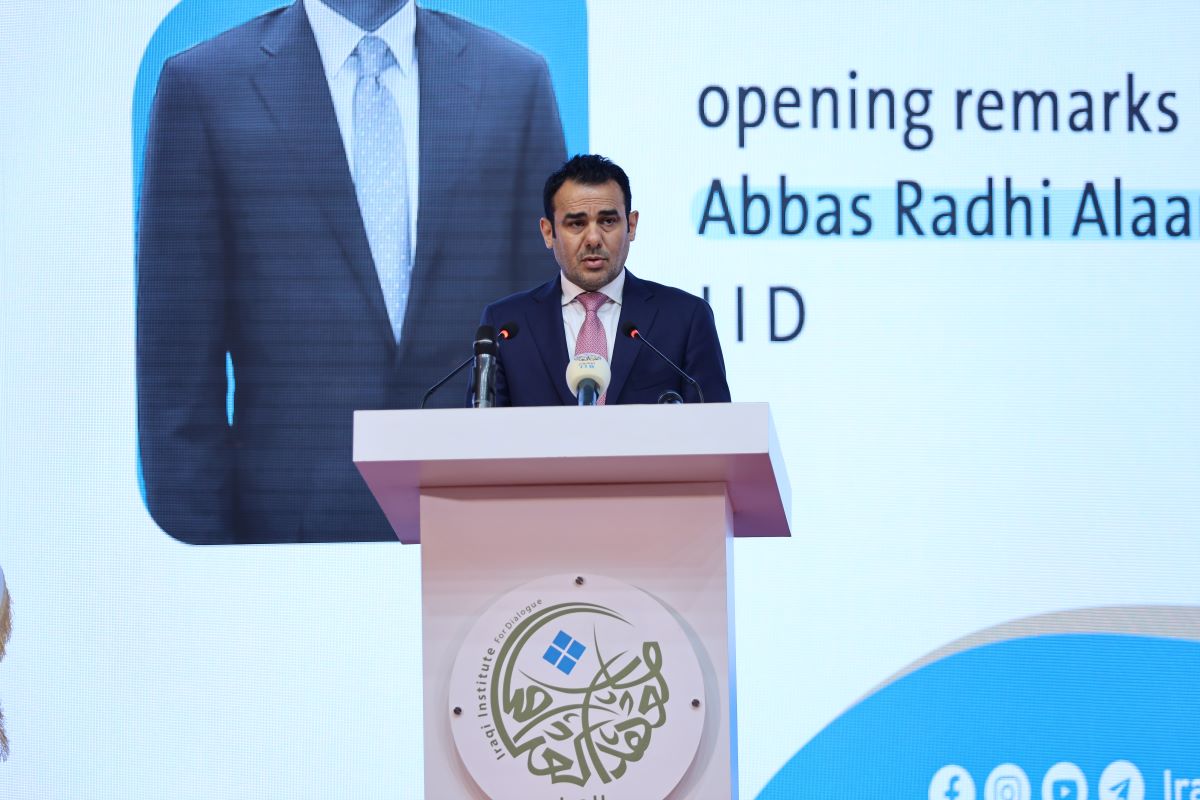
Speech of the Director of the Iraqi Institute for Dialog at the Sixth Baghdad International Dialog Conference
Seventh Baghdad International Dialogue Conference Call for Papers
Comments