

Why does Russia want Iran to join the Mecca Pact?
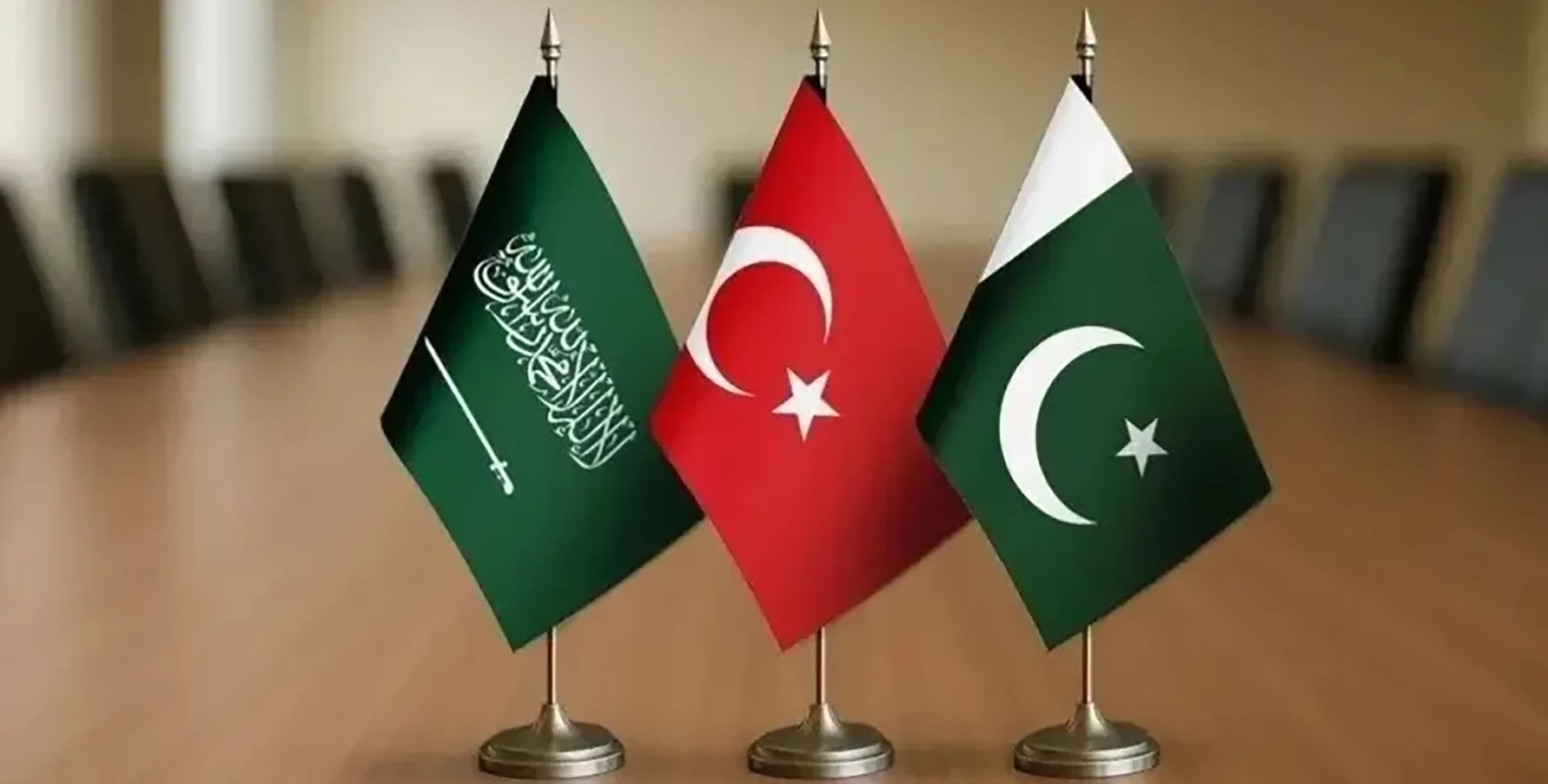
Russian Foreign Minister Sergei Lavrov's call for Iran's future accession to the Mecca Defense Pact has raised questions about Moscow's goals in expanding the new alliance, and the ability of regional countries to build a joint security system that includes Tehran along with Saudi Arabia, Turkey, and Pakistan.
And on August 7, 2026, Pakistan, Saudi Arabia and Turkey signed a joint defense agreement called the "Mecca Defense Charter", which stipulates that any armed attack on one of the three countries is an attack on the member states combined.
Pakistani Prime Minister Shahbaz Sharif and Turkish President Recep Tayyip Erdogan have stressed that the agreement is not aimed at a particular country, and that its door is open to other countries that wish to join it.
Lavrov opens the door to Iran
Speaking to students and professors at the Moscow State Institute of International Relations on September 7, Lavrov said it was time to organize regional cooperation with the participation of Saudi Arabia, Turkey and Pakistan.
He explained that the three countries share a common understanding of the concept of collective security and the defense alliance, pointing out that the membership of the charter can not be limited to the Gulf countries, but may include Egypt and other countries.
And the Russian Foreign Minister said that conditions may be set in the future to agree on a formula that allows Iran to join, considering that this step, if achieved, will be a practical application of the concept that Moscow has been proposing for years to build a regional security system.
And more than two decades ago, Russia proposed launching a dialog between the Gulf Arab countries and Iran, with the aim of formulating a common framework for regional security away from the policy of open axes and confrontations.
Saudi-Russian meeting after the statements
Lavrov's comments came a day before he met with Saudi Foreign Minister Prince Faisal bin Farhan in Moscow on September 8.
According to the Saudi Press Agency, the meeting dealt with regional and international developments and efforts to reduce escalation and contain crises, without announcing whether the two sides directly discussed the possibility of Iran joining the Mecca Charter.
And the Saudi minister’s visit coincided with the escalation of security tensions, after the Houthis in Yemen targeted sites inside Saudi Arabia with drones and missiles.
The Saudi Foreign Ministry said the attacks hit civilian and economic facilities and resulted in the injury of 73 civilians, including women and children. And with Iran accused of supporting the Houthis, the idea of Tehran joining a Saudi-led defense alliance seems very complicated at the current stage.
Can the Pact Absorb Iran?
Diplomats and experts have mixed assessments of Iran's potential to join the coalition. "Some see the move as unlikely in the near term, while others believe the long-term success of the pact may require it to be expanded to include Iran, Egypt, Iraq, Jordan, and other Gulf states."
Former Pakistani diplomat Abdul Basit believes that any defense alliance needs a high level of military cooperation, information exchange and mutual trust, conditions that are not yet complete between Iran and Saudi Arabia.
Abdul Basit believes that the continued presence of Tehran-backed non-state armed groups in Yemen, Lebanon, and Iraq will make Saudi Arabia wary of Iran's membership, even with the relative improvement in bilateral relations.
He also noted the multiplicity of decision-making centers within Iran, which makes it premature to consider Tehran's welcoming of the charter as proof of its willingness to join it on its current terms.
Common concerns and disagreement over treatment
Iran, Saudi Arabia, Turkey and Pakistan share some concerns about Israel's growing role in the region, but differ in the means to deal with it, said Khorram Iqbal, an associate professor at the National Institute for Intelligence and Security Studies at Qaed Azam University.
He adds that some hardline currents within Iran may view the Mecca Charter as an alliance of Sunni states, which places a political and ideological obstacle to Tehran's accession to it soon.
And former Pakistani Foreign Minister Shamshad Ahmed does not agree with the deal as a sectarian alliance, but rather sees it as a regional security project that could be expanded in the future to include Iran, Egypt, Iraq, Jordan and the Gulf countries.
Ahmed believes that the effectiveness of the Pact will remain limited if Iran remains outside it, because building stable security in the region will be difficult without the involvement of one of its largest and most influential countries.
Iran requires 'founder' status
Iran does not reject the idea of joining outright, but wants to renegotiate its position within the coalition.
And Secretary of Iran's Supreme National Security Council Mohsen Rezaei said, on August 22, 2026, that his country can join the Mecca Charter provided that it is recognized as a country participating in its establishment, and given a role in preparing its basic documents and rules.
Rezaei stressed that Iran and Egypt could not be excluded from security arrangements of this magnitude, but he refused that their entry would be merely a subsequent accession to a formula drafted by the three countries without them.
This stance reveals that Tehran does not want to join a ready-made coalition, but rather seeks to reconfigure it in a way that gives it a position parallel to that of Saudi Arabia, Turkey, and Pakistan.
What does Russia want?
"Russia's primary goal is to support Middle Eastern security arrangements in which the United States is less centralized as the main security guarantor of the region's states."
Moscow believes that holding Middle Eastern countries responsible for addressing their security crises will weaken the traditional system of alliances associated with Washington, and open the way for Russia and China to expand their political, diplomatic and economic presence.
In this sense, Iran's accession to a pact that includes traditional U.S. allies, primarily Saudi Arabia and Turkey, will give Russia an opportunity to support a multilateral system that is not fully subject to U.S. influence.
The expansion of the pact is also in line with Russia's vision of preventing the region from being divided between two rival camps: one led by the United States and comprising Arab states and Israel, and the other comprising Iran and its allies.
And if Moscow succeeds in encouraging a security rapprochement between Saudi Arabia, Iran, Turkey, and Pakistan, it will present itself as an international mediator capable of dealing with all sides, not just an ally of Tehran.
Possible Gains for Russia and China
According to Iqbal, Moscow and Beijing are benefiting from the emergence of any regional security system that is less dependent on the United States, as the decline in the American monopoly on security expands the space for movement for the two powers.
And the stability of the region could allow Russia and China to protect their energy, trade, investment and maritime interests, as well as strengthen their strategic partnerships with the Gulf states, Iran and Turkey.
Shamshad Ahmed believes that European countries may in turn support arrangements that achieve greater stability, given their interests are linked to energy security, navigation and international trade in the region.
Obstacles to the project
Despite the potential gains, the idea of expanding the Mecca charter faces major obstacles, most notably:
Weak military and security trust between Saudi Arabia and Iran.
and continuing disagreement over Tehran-backed armed groups.
The different countries involved in evaluating Israel and how to deal with it.
Iran's refusal to join as a later member and its insistence on co-founding.
Saudi Arabia and Turkey have extensive security and military ties with the United States.
Lack of a clear vision of the mechanisms of leadership, decision-making and information exchange within the Charter.
The lack of clarity on what is meant by a joint attack, especially in situations of conflict with non-State armed groups.
An additional problem arises as to how the principle of common defense would be applied if an attack occurred between a member state and an armed group associated with a candidate state, as in the Saudi-Houthi conflict.
Russian ambition collides with the reality of the region
Lavrov’s call does not mean that Iran’s membership is imminent, but it does reveal the way Russia views the Mecca Pact: a potential nucleus for a new regional security order that could be expanded to include the major powers in the Middle East.
Moscow wants to transform the pact from a limited tripartite alliance into a broader umbrella that dilutes Saudi-Iranian polarization, reduces the region's dependence on the United States, and gives Russia and China more leeway.
But the success of this vision requires addressing deep differences of trust, regional influence, armed groups, and relations with Washington. It also requires rewriting the charter in a way that gives Iran a role in making its rules, not merely accepting the conditions set by the founding states.
And given the tensions, Iran’s accession remains a distant possibility in the near term. "In the long term, expansion of the pact may become necessary if the founding states want to transform it from a tripartite defense pact into a genuine regional security system."
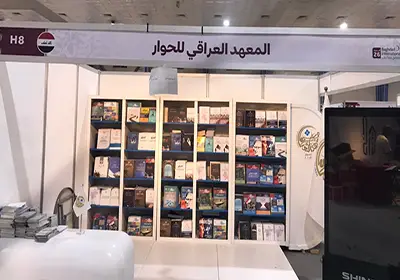
The Iraqi Institute for Dialogue, the logistical sponsor of the Baghdad International Book Fair, opens its own pavilion at the fair
Official agreement between Iraqi Institute for Dialogue and the Iraqi Media Network to sponsor The Seventh Annual International Conference of “Baghdad Dialogue” 2025
The Iraqi Institute for Dialogue publishes "The Diplomatic Portfolio" by Dr. Karrar Al-Badiri
Invitation to the 79th issue of Dialogue of Thought
Prime Minister: The path of development will make Iraq a regional political and economic powerhouse
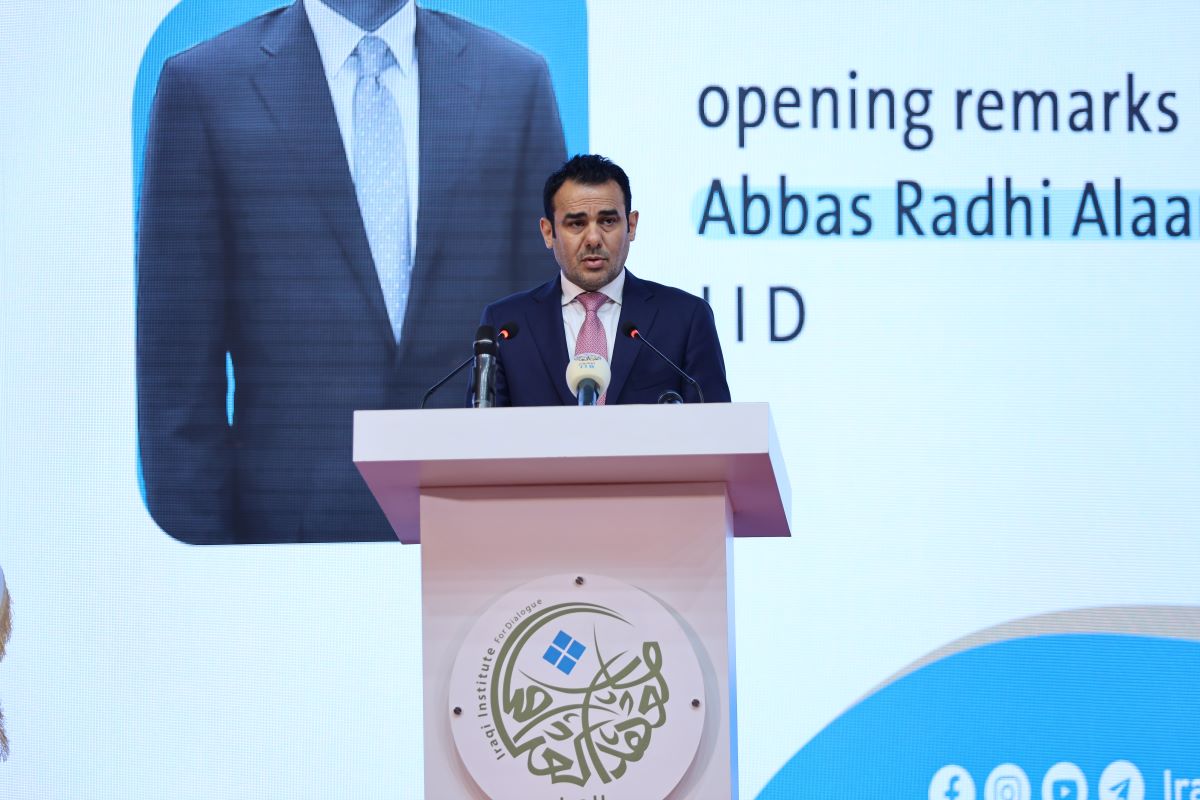
Speech of the Director of the Iraqi Institute for Dialog at the Sixth Baghdad International Dialog Conference
Seventh Baghdad International Dialogue Conference Call for Papers
Comments