

Referring Iran's nuclear file to the Security Council... What do you mean and what are its implications?
The IAEA Board of Governors' resolution formally reopened Iran's nuclear file from Vienna to New York for the first time in nearly 20 years, informing the Security Council of its non-compliance with its safeguards obligations.
And the resolution was issued on September 9, after the draft resolution submitted by the United States, Britain and Germany received the support of 23 countries, in exchange for the opposition of China, Russia and Niger, and eight countries abstained from voting.
And no member of the IAEA Board of Governors has a veto, so Moscow and Beijing have been unable to prevent the resolution from being passed, unlike the situation within the Security Council, where they can veto any binding resolution or new sanctions.
What is File Referral?
The most accurate legal characterization is that the IAEA Board of Governors informed the Security Council and the UN General Assembly of Iran's non-compliance with the nuclear safeguards agreement.
The measure does not automatically trigger new sanctions, nor does it authorize the use of military force, nor does it end the IAEA's role in monitoring and verifying Iran's nuclear activities.
But the resolution gives the Security Council the power to debate the issue as it relates to the maintenance of international peace and security, and allows it to take actions that start with a statement calling on Iran to cooperate, and may in theory reach a binding resolution or sanctions under Chapter VII of the United Nations Charter.
Reasons for the Agency's Decision
The decision was an extension of a previous position taken by the Board of Governors in June 2025, which concluded that Iran had not complied with its obligations, due to its failure to provide adequate answers and explanations on previously undeclared nuclear materials and activities.
These concerns were later joined by two key issues: the lack of access by IAEA inspectors to nuclear facilities that were attacked during the war, and the unclear fate of Iran's stockpile of enriched uranium.
Tehran rejects the accusations, calling the resolution political, and says the faltering inspections were a result of the war and U.S. and Israeli attacks on its nuclear facilities.
The IAEA maintains that Iran's obligations under the Safeguards Agreement remain in place regardless of security or military circumstances.
Difference from 2006
The IAEA's Board of Governors informed the Security Council of Iran's case in February 2006. The board then began issuing a statement demanding that Tehran implement the agency's demands, before the adoption of resolution 1696 in July of the same year, which called for a suspension of activities related to uranium enrichment.
And in December 2006, the Security Council adopted Resolution 1737, which imposed the first binding international sanctions on Iran’s nuclear program. This was followed by Resolution 1747 in 2007, Resolution 1803 in 2008, and then Resolution 1929 in 2010, which expanded the scope of financial, military and nuclear sanctions.
China and Russia had supported all those resolutions along with the US, Britain and France. Today, the international environment has changed dramatically; Moscow's relationship with Western countries deteriorated following the Ukraine war, and competition between Beijing and Washington escalated, while Russia and China became more supportive of Iran's position.
Legal Dispute Over Previous Sanctions
The disagreement over the Snapback mechanism or the automatic return of sanctions further complicates the situation.
"Britain, France and Germany activated the mechanism in August 2025, and the UN Secretariat believes that previous sanctions suspended under the nuclear deal and Resolution 2231 have returned to effect as of September 27, 2025."
But Iran, Russia and China reject the legality of this measure, and believe that Resolution 2231 ended in October 2025, and that the Security Council should consider the Iranian nuclear file closed.
This division has disrupted the work of the 1737 sanctions committee; The committee did not meet for a full year because China and Russia refused to recognize its reactivation.
The two countries also opposed updating sanctions lists and appointing members of the panel of experts, while the United States submitted a draft to extend the panel's mandate, to be put to a vote on September 17.
What will happen in the Security Council?
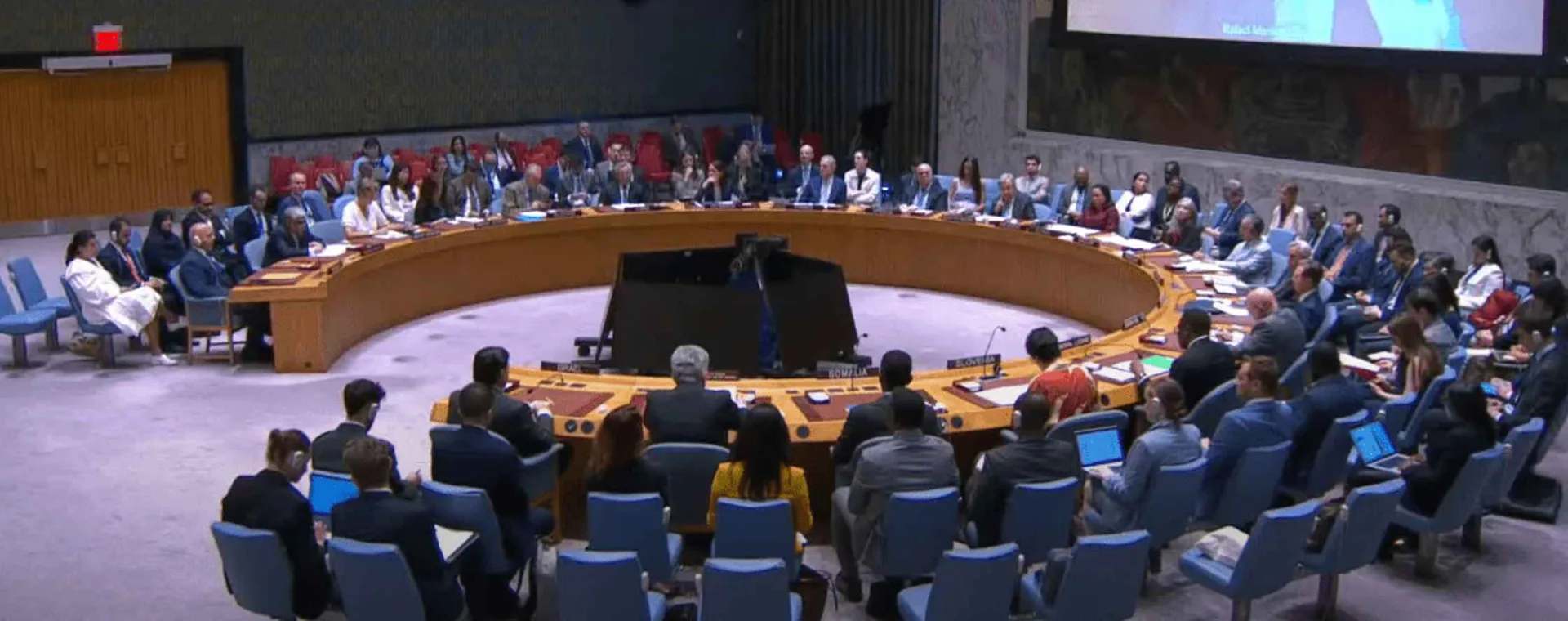
The Security Council is expected to hold a session to discuss the IAEA report, with the United States and European countries focusing on Iran's lack of cooperation with inspectors and the ambiguity surrounding its enriched uranium stockpile.
But the transition from a meeting to the adoption of a binding resolution seems more difficult; A draft resolution needs at least nine votes, with no veto from any permanent member: the United States, Russia, China, Britain and France.
Therefore, the likelihood of a repeat of the graduated sanctions scenario imposed between 2006 and 2010 does not seem high at the current stage.
And Russia or China can block any project that imposes new sanctions or mandatory measures, but they cannot cancel the IAEA report or prevent the Council from discussing the Iranian file.
Position of Russia and China
The positions of Moscow and Beijing in the recent period have shown a clear change compared to what was the case before the nuclear deal.
And in April 2026, the two countries vetoed a draft resolution on the security of navigation in the Strait of Hormuz, submitted by Bahrain in coordination with Arab countries and supported by the United States. Although the bill received the support of 11 members, it was dropped due to Russian and Chinese vetoes.
And on that track, they are likely to oppose any Western attempt to impose new, binding sanctions on Iran.
But their support for Tehran will not prevent a rise in political and diplomatic pressure on it, especially with the relaunch of its nuclear program at the highest level within the United Nations.
More political than immediate
The referral raises the level of political pressure on Iran and allows the United States and European countries to re-internationalize the nuclear issue, but it does not mean new sanctions are imposed immediately.
And the practical impact will depend on what the Security Council can agree on in light of the deep division between Western countries on the one hand, and Russia and China on the other.
The nuclear issue is no longer the only issue in the strained relationship between Tehran and Washington. War, the maritime crisis, and tension in the Strait of Hormuz have all become part of the landscape, making it difficult to discuss the nuclear issue in isolation from the broader regional conflict.
Iran's Possible Options
"Tehran has previously warned it would retaliate if its case were referred to the Security Council, but has not formally outlined what steps it might take."
And among the options that officials and observers have been deliberating over the past months is the possibility of Iran withdrawing from the NPT.
Withdrawing from the treaty does not mean having a nuclear weapon directly, but it will reduce international restrictions and oversight mechanisms, raise concern about the nature of Iran's program, and narrow the space for diplomatic solutions.
However, it is not known whether the Iranian leadership will choose this path, especially in light of the continuation of the war and the possibility of renewed military escalation.
A new stage and a different path
The return of the Iranian file to the Security Council represents an important legal and political development, but its current course differs from the circumstances of 2006.
The Security Council itself is divided over the legal status of sanctions, and Russia and China are no longer willing to back Western resolutions against Iran the way they did two decades ago.
"The new path could therefore lead to an escalation of international pressure on Tehran, but it could also end in political stalemate within the Security Council if Moscow or Beijing vetoed it."
Future developments will determine whether the referral of the file will open a new round of sanctions and confrontation, or turn into a long diplomatic crisis that remains suspended due to the division between the major powers.

The Iraqi Institute for Dialogue, the logistical sponsor of the Baghdad International Book Fair, opens its own pavilion at the fair
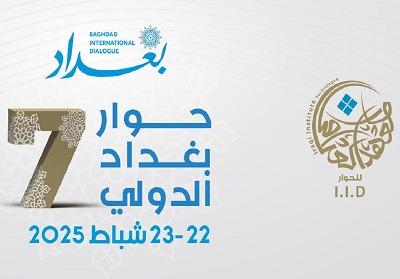
Official agreement between Iraqi Institute for Dialogue and the Iraqi Media Network to sponsor The Seventh Annual International Conference of “Baghdad Dialogue” 2025
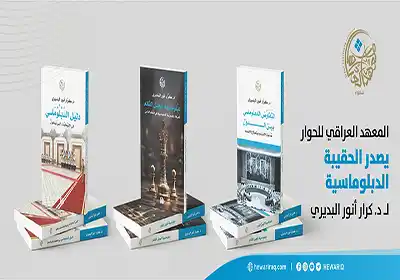
The Iraqi Institute for Dialogue publishes "The Diplomatic Portfolio" by Dr. Karrar Al-Badiri
Invitation to the 79th issue of Dialogue of Thought
Prime Minister: The path of development will make Iraq a regional political and economic powerhouse
Speech of the Director of the Iraqi Institute for Dialog at the Sixth Baghdad International Dialog Conference
Seventh Baghdad International Dialogue Conference Call for Papers
Comments