


Why Latin American Voters Are Turning Right
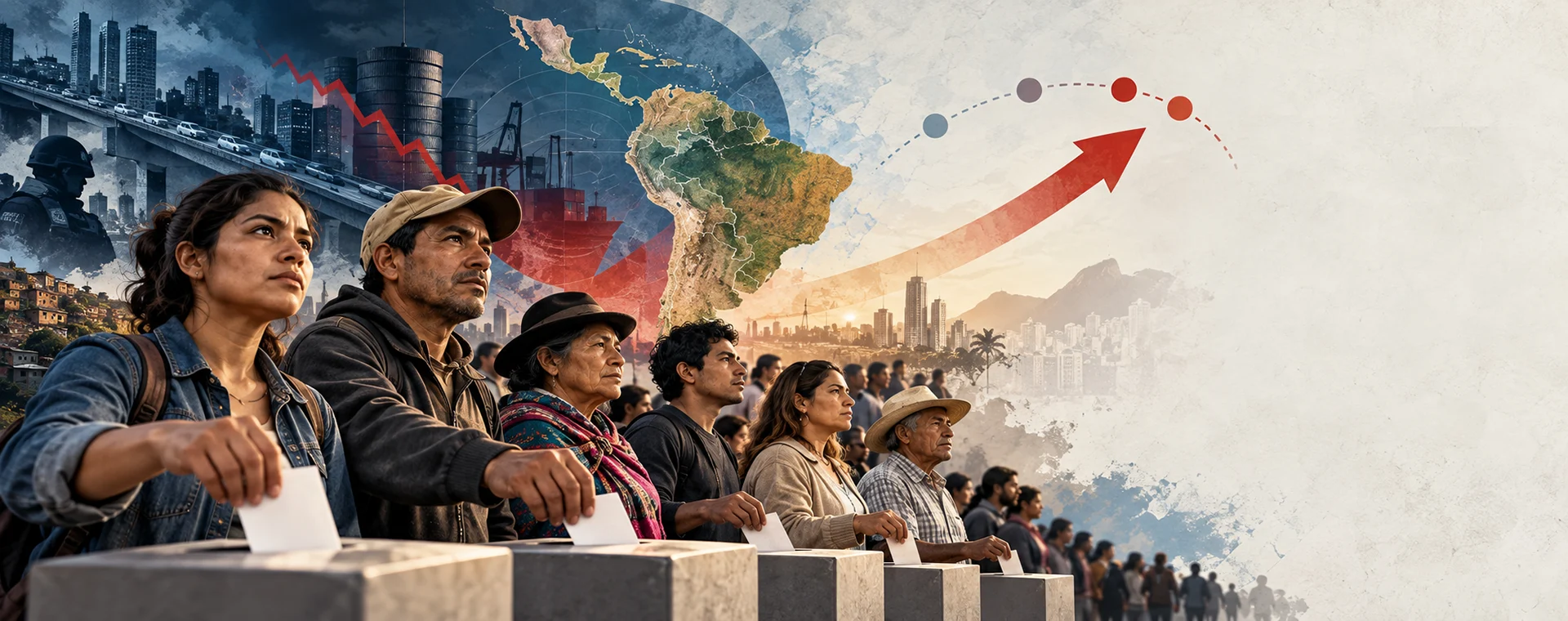
Latin America has undergone a remarkable political transformation in recent years, after right-wing parties and figures achieved a series of electoral victories that redrew the map of power in the region. This rise, however, does not necessarily reflect a permanent ideological shift, as much as it is related to worsening crime, declining confidence in governments, economic pressures, and voters' desire to punish the ruling forces.
And according to a report prepared by Gerardo Lysardi and published by the BBC Mondo, 12 countries in Latin America are now governed by presidents classified within the center right or beyond it, after 11 countries were at the beginning of 2023 under the leadership of governments belonging to different left currents.
Brazil and Mexico, the region's two largest democracies by number of voters, are still ruled by the left. But Brazil's October elections are expected to see a direct contest between leftist President Luiz Inacio Lula da Silva and right-wing senator Flavio Bolsonaro.
And despite the differences between right-wing leaders, both in degree of radicalization and propensity to populism and authoritarianism, many of them seek to present themselves as part of one political family, by exchanging electoral support and imitating controversial models, most notably the experience of Salvadoran President Néib Bukele in fighting gangs.
Security at the forefront of voters' concerns
The demand for more effective measures to confront crime and organized violence is one of the most prominent reasons for the rise of the right in Latin America, after security concerns have become ahead of many economic and social issues in the interests of citizens.
And in countries such as Ecuador and Peru, these fears have been heightened by a surge in violent crime and extortion. In Chile, opinion polls have shown that fear of crime is greater than in Mexico and Colombia, although actual murder rates in the latter two countries are much higher.
And it seems that right-wing candidates have been better able to capitalize on this concern, with a number of them coming to power after election campaigns that raised slogans of “restoring order” and following an “iron fist” policy. This wave included Keiko Fujimori in Peru, Abelardo de la Espria in Colombia, Daniel Noboa in Ecuador, Jose Antonio Cast in Chile, and a birdshot in Honduras.
Najib Bukele stands out as one of the most famous models of this current and its most popular leaders. He has reduced the influence of the guerrillas in El Salvador by imposing a state of emergency and a massive security crackdown, but his experience has drawn criticism for centralizing power and suspending constitutional guarantees and human rights abuses.
And according to Rajiana Bersan, a professor of international relations at the Federal University of São Paulo and a specialist in the region, Latin America has come to include mostly right-wing governments that deal very tightly with the public security file.
Bursan links the spread of violence to the persistence of poverty and inequality, arguing that left-wing governments have not succeeded in addressing these structural problems fully, which has allowed the right to offer quick security solutions as an alternative to social policies that have not achieved the expected results.
A new right is different from the traditional conservatives
The difference between the new right and traditional conservatives is not limited to security attitudes. Rising powers have mastered the use of social media in election campaigns and public opinion, and have adopted a more strident discourse toward opponents, particularly leftist parties.
In some cases, this discourse has gone beyond the usual political competition, becoming more skeptical of the rules of democratic coexistence and liberal institutions.
This style carries clear features of US President Donald Trump's political rhetoric. And his administration is seeking closer ties with right-wing governments in Latin America, as part of an effort to restore Washington’s influence in the region and counter China’s economic and political expansion.
Bersan warns that U.S. interference and political polarization could further divide countries in the region, particularly in Brazilian elections and tugs with Mexico. It also points to the danger that some hard-line governments will shift from strict security policies to practices that gradually break with democracy.
The Coronavirus Pandemic and the Collapse of Confidence in the Future
The results of the regional Latinobarometro survey reveal that the shift to the right has been taking shape since 2020. An increasing proportion of the population classifies itself annually on the right side of the political spectrum.
The foundation's director, Marta Lagos, links this shift to the social and economic repercussions of the COVID-19 pandemic, which deepened the vulnerability of the poor classes and weakened her confidence in her ability to improve their conditions.
Lagos says the collapse of positive expectations about the future has led to an increase in demand for populist rhetoric and hard-right solutions, after part of the electorate became convinced that changing the situation needs radical measures, not gradual reforms.
Economic indicators support this trend; Support for the market economy in Latin America increased from 58% in 2020 to 66% in 2024.
This may help to explain the proliferation of calls to reduce the size of the state and reduce public spending. And Argentine President Javier Mille embodied this trend during his 2023 election campaign, when he used an electric chainsaw to symbolize his plan to reduce state institutions and expenditures.
Voting as punishment for governments
However, the successive victories of the right do not mean that the peoples of Latin America have become definitively right-wing. Electoral behavior over the past decade shows that voters often vote to punish incumbent governments, regardless of their ideological identity.
During this period, the opposition candidates in the district elections achieved almost twice as many victories as those of the ruling parties. And so the current shift can be interpreted more as a rejection of the performance of previous governments than as a stable adoption of the ideas of the right.
The ability of right-wing governments to retain voter support will depend on their results in the security, economic, employment and service files, the very files that helped them to come to power.
Tough Tests for Right-wing Governments
Argentine President Javier Mille faces a complex economic test. Although his government has succeeded in reducing inflation and imposing a strict austerity and economic reform program, it is still required to transform economic indicators into tangible improvements in living standards, income, and employment.
And in Ecuador, President Daniel Noboa’s policy of iron fist and military mobilization has not ended the violence. In 2025, the country recorded more than 9,200 murders, according to official figures, making it among the countries with high rates globally.
In Chile, President Jose Antonio Cast's popularity has plummeted since he took office in March. And this came in light of the recession of the economy, the rise in unemployment to 9.4% between March and May, and the continuation of crime as one of the most prominent concerns of citizens.
These experiences suggest that security rhetoric and economic promises may bring quick electoral gains, but retaining power requires actual results. If right-wing governments fail to reduce crime and improve economic conditions, they could face the same wave of electoral punishment that has toppled their left-wing rivals.
Will the right-wing tide continue?
Marta Lagos does not believe that the right came to rule Latin America permanently. At the same time, it suggests that its failure does not necessarily mean a return of the left in its traditional form, but may lead to new forms of populism with sharper slogans.
The basic comparison is that the left has lost part of the voters' trust due to its inability to eradicate poverty and inequality, while the right may lose support if it does not succeed in providing security and order and improving living conditions.
And so it seems that the future of Latin America’s political map will be determined not by the traditional right-left struggle alone, but by the ability of governments to deliver on their promises. A voter who has given the right a chance because of his disillusionment with the left may quickly abandon him if he does not feel real results.
The current shift reveals, in the end, a broader crisis of confidence in political forces and institutions, and a growing willingness among citizens to experiment with more radical choices. But the survival of these options depends on their ability to address structural problems, not simply capitalizing on fear of crime and anger at previous governments.

The Iraqi Institute for Dialogue, the logistical sponsor of the Baghdad International Book Fair, opens its own pavilion at the fair
Official agreement between Iraqi Institute for Dialogue and the Iraqi Media Network to sponsor The Seventh Annual International Conference of “Baghdad Dialogue” 2025
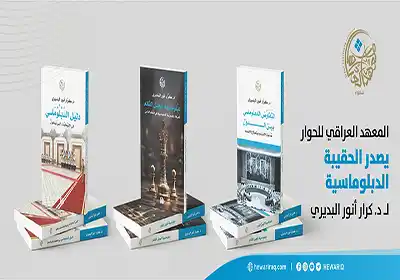
The Iraqi Institute for Dialogue publishes "The Diplomatic Portfolio" by Dr. Karrar Al-Badiri

Invitation to the 79th issue of Dialogue of Thought

Prime Minister: The path of development will make Iraq a regional political and economic powerhouse
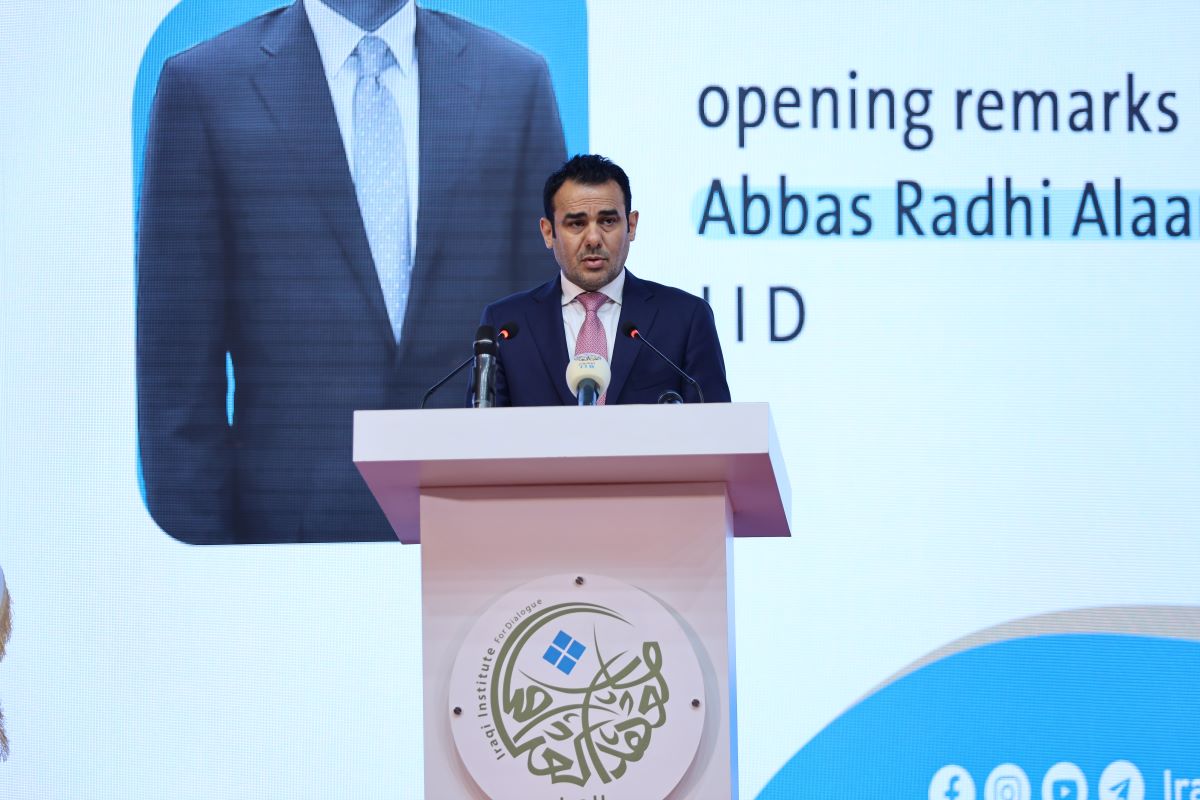
Speech of the Director of the Iraqi Institute for Dialog at the Sixth Baghdad International Dialog Conference
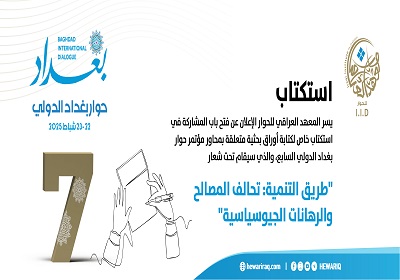
Seventh Baghdad International Dialogue Conference Call for Papers
Comments