


Can Israel Target Pakistan's Nuclear Weapons? A Geopolitical Time Bomb
In a series of relentless air strikes, Israel has managed to neutralize several nuclear ambitions in the Middle East and the Islamic world: Egypt's missiles in the 1960s, Iraq's Osirak nuclear reactor in 1981, Syria's Al-Kabar reactor in 2007, and now Iran in 2025. In a controversial article on Modern Diplomacy, "Once Israel Defeats Iran, Pakistan is Next," Pakistan's nuclear arsenal of 170 warheads is highlighted as a real geopolitical threat.
Pakistan's wobbly, Islamist-leaning governance, its links to jihadist groups and its role as a strategic ally of China form a complex web that deserves scrutiny. The article does not directly call for Israeli strikes on Pakistan, but it alerts us to a dangerous fuse that is primed and ready to ignite.
Pakistan is no small player. Its deployed arsenal, supported financially by Saudi Arabia and technologically by China, operates in a turbulent environment.
The report talks about scenarios that include possible Israeli and Indian strikes on less fortified Pakistani nuclear sites, with the possible disintegration of Pakistan into regions such as Sindh and Punjab, and the acquisition of Kashmir, which would also disrupt Chinese ambitions in the Indian Ocean. Pakistan appears to be a strategically sensitive area on the regional geopolitical front.
China relies on Pakistan as a geographical buffer in the Himalayas. Islamabad's weak position will hinder Beijing's regional plans and force it to reorganize its forces in the Asia-Pacific region. Pakistan's nuclear arsenal gives it a great deal of boldness, and although its sites are less fortified than those of Iran, their destructive power is no less dangerous.
Historically, Israel has proven its ability to hit long-range targets, such as the 1985 Tunisia raid that traveled 2,400 kilometers. With the decline of Syrian influence and the use of air bases in Jordan or Iraq, Pakistan becomes a technically reachable target. However, shifting from striking Iran to Pakistan may be a far-fetched challenge in the current circumstances.
Israel is currently preoccupied with several fronts: Hezbollah, Hamas, Syria, Iran and Yemen, which prevents it from opening a new, distant front. But Pakistan's chaotic state of affairs, and its hawkish rhetoric, makes its nuclear arsenal an uncalculated risk, especially if uncontrolled elements gain access to it.
Diplomatically, Pakistan is not an easy target. Russia, which is practically tied to India to counter China's influence, does not provide direct protection to Islamabad. Recent U.S. diplomatic attempts, including attempts to minimize Iran's alliances with Russia and China, have had little effect on the deep ties between China and Pakistan.
Pakistan's response to the recent war between Israel and Iran was provocative rhetoric and statements that reinforced the country's image as a powerful and influential entity. Iranian allegations of Pakistani nuclear support went viral, and mass demonstrations in Karachi called on the government to confront the "enemies of Islam."
The article calls on Europe to be vigilant, cautious, and make plans to address these challenges, as nuclear weapons in the hands of an unstable regime threaten global security. But it also warns that a military strike on Pakistan could lead to an even greater catastrophe, including massive waves of illegal immigration.
The EU has powerful levers of pressure, such as trade deals, financial concessions, its influence in the International Monetary Fund, and migrant deportations. It should use these tools to keep Pakistan under control and minimize risks before it is too late.

The Iraqi Institute for Dialogue, the logistical sponsor of the Baghdad International Book Fair, opens its own pavilion at the fair
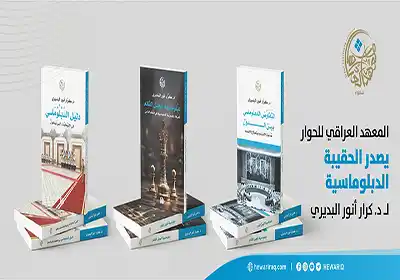
The Iraqi Institute for Dialogue publishes "The Diplomatic Portfolio" by Dr. Karrar Al-Badiri
Official agreement between Iraqi Institute for Dialogue and the Iraqi Media Network to sponsor The Seventh Annual International Conference of “Baghdad Dialogue” 2025
Invitation to the 79th issue of Dialogue of Thought
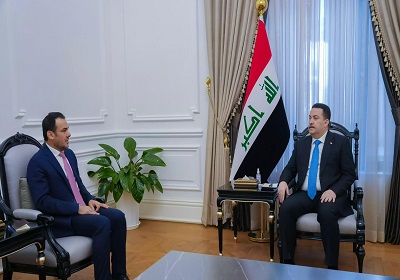
Prime Minister: The path of development will make Iraq a regional political and economic powerhouse
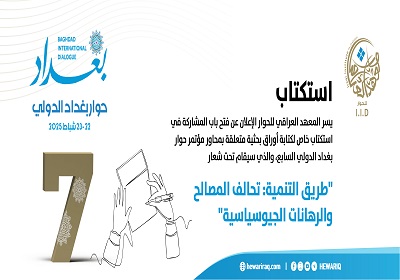
Seventh Baghdad International Dialogue Conference Call for Papers
Praise for the Baghdad International Dialogue: Strengthening Iraq's pivotal role and a meeting point for visions
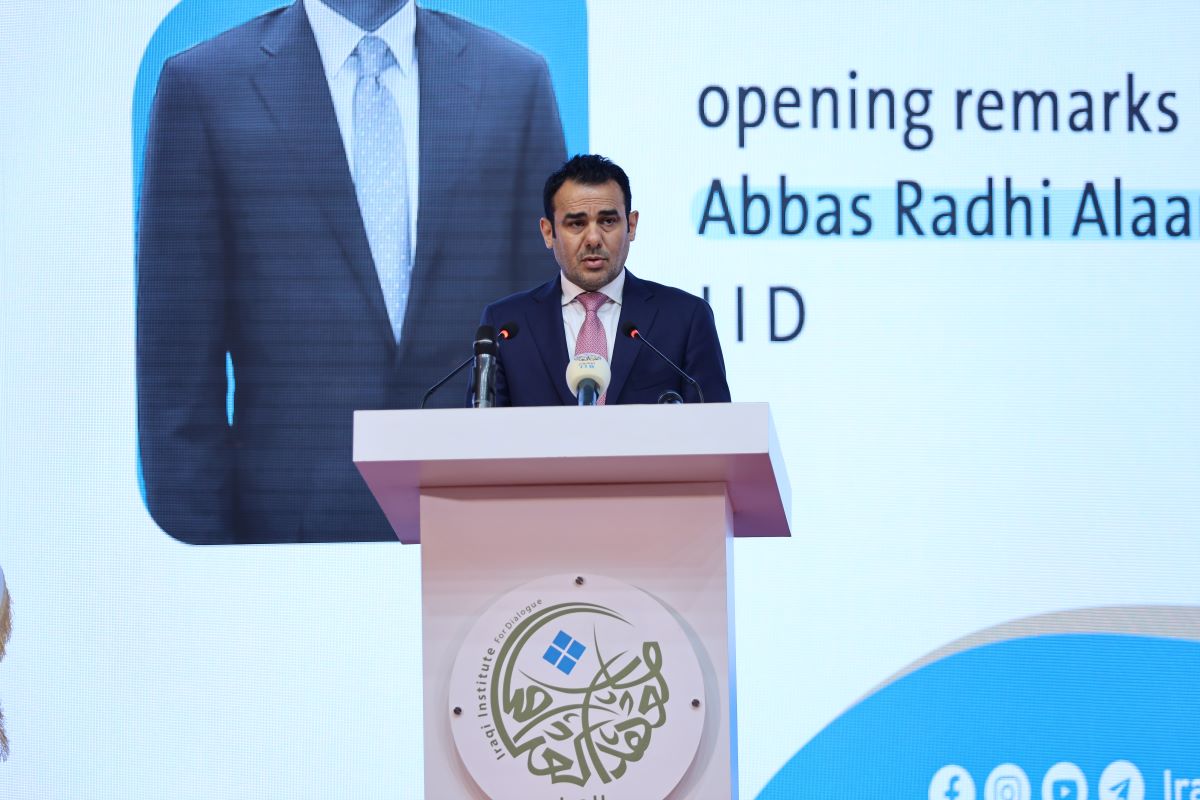
Comments