

Translation: Iraqi Institute for Dialog
Mohammad Javad Zarif: Time for radical change
Perhaps because of Iran's frustration with past experiences, the third pillar of paradigm shift - global diplomacy - is the most challenging. However, I firmly believe that Iran and the international community share existential interests that require overcoming those experiences and building a different future.
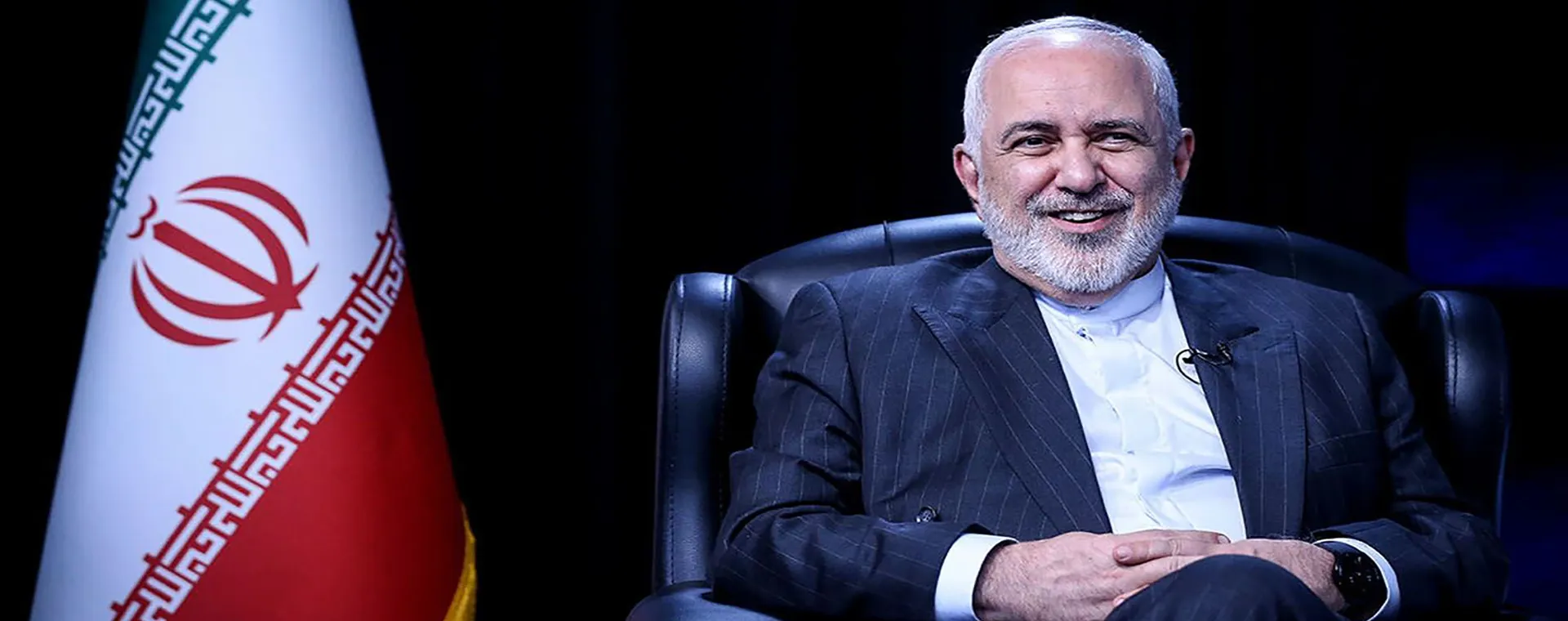
Mohammad Javad Zarif, Iran's former foreign minister, explained in an article published by Foreign PolicyHe emphasized that war profiteers benefit from the closure of any window of opportunity for diplomacy, and that we must take that opportunity away from them so that they cannot solidify their destructive threat paradigm. He emphasized: "The time to change the paradigm is now."
Zarif noted that West Asia is at a dangerous turning point. The ongoing disasters in Gaza, the recent attack on Iran that was countered by the resistance of our people and armed forces, and the continued destabilization of Syria clearly show that for Benjamin Netanyahu, Prime Minister of Israel, and his global backers, the so-called existential threat is actually "peace and stability."
This division of Israel-internal apartheid and ongoing regional conflict-threatens the foundations of the regional and global order. While a strong defense is necessary, a sustainable solution requires a bold diplomatic initiative and historic change for Iran and the region: Moving from a paradigm based on deep-rooted threat to one focused on opportunity and empowerment. This transition includes: Expanding relations with neighbors and the Global South, creating a new regional partnership among Muslims in West Asia, and resuming dialogue with Europe and the United States.
For decades, regional states have been trapped in vortexes of conflict and missed opportunities. Building a different future requires foresight, courage, and a conscious decision to break away from historical inevitability. For Iran, this change starts at home and radiates to its regional neighborhood.
By demonstrating that Iran is not easy prey and can resist nuclear-armed aggressors, Iran has the potential to shift from an approach focused on persistent threats to one focused on capitalizing on opportunities.
Such a transition is not only possible, it is profoundly beneficial for Iran, the region, and the international community. Its realization requires a firm internal will and the absence of external interference-not necessarily motivated by morality or international law, but by national interests.
Iran's greatest potential lies in its people. Over thousands of years, history has witnessed their extraordinary resilience. Invaders have invaded Iran's land, but they have always been integrated into the enduring Iranian culture, and have not been able to impose their values on the Iranian people.
This resilience has been a decisive factor in thwarting seemingly more powerful enemies, from the 1980 invasion of Iraq (with the support of world powers) to the recent actions of Netanyahu and Trump. For this reason, four decades of "maximum pressure" and "crippling sanctions" have not achieved their goals.
Despite unprecedented global restrictions-from Security Council resolutions to export restrictions deliberately designed to impede Iran's technological progress-the Iranian people have made domestic scientific and technical progress, especially in the fields of defense and nuclear energy. They are the country's greatest asset and should be empowered, nurtured, and given opportunities to prosper.
The second vital pillar of Iran's opportunity-based paradigm is its surrounding region. Bordered by fifteen countries, Iran sits at a unique Eurasian crossroads. More importantly, the region has deep and unbreakable historical and cultural ties, woven through the centuries by Iranian Sufi poets, philosophers, and scholars. These ties have withstood changing empires, invasions, and upheavals.
Yet true regional cooperation has remained elusive. In decades of diplomatic activity, I have been involved in initiatives that have always been thwarted by the paradigm of suspicion and threat-from the Gulf security proposal during the Iran-Iraq war, to the failed declaration of cooperation with neighbors on the southern Gulf coast after Iraq's 1990 invasion of Kuwait, and subsequent initiatives such as the Association for Regional Dialogue, the Non-Aggression Pact, the Hormuz Peace Initiative (Hope Plan), the Muslim Dialogue Association in West Asia (MODA), and most recently the Middle East Network for Research and Atomic Progress (MANARA)-all have been met with distrust due to mutual mistrust.
However, recent Israeli provocations have created a new awareness of shared vulnerability in the region. There is now a vital window of opportunity. Iran, along with Bahrain, Egypt, Iraq, Jordan, Kuwait, Oman, Qatar, Saudi Arabia, Syria, Turkey, the UAE, and Yemen-with the potential to expand to Pakistan, Central Asia, and the Caucasus-must seize this opportunity. Under UN supervision, we can establish a new charter with a strategic transition from fragmentation to synergy. Common energy corridors, non-proliferation and nuclear cooperation frameworks, economic cooperation, and cultural unity can become engines of shared prosperity.
From the perspective of the Paradigm of Opportunity, Iran, and even Russia and Turkey, can see the recent agreement in Washington between Azerbaijan and Armenia not as a threat, but as an opportunity-an opportunity to revive the Transcaucasian cooperation proposal between Iran, Russia, and Turkey, along with Armenia, Azerbaijan, and Georgia. The new agreement provides a global context that makes our regional initiative in 2019 more achievable and sustainable. At the same time, it will provide unprecedented investment opportunities for the private sector in the United States and elsewhere.
Perhaps because of Iran's frustration with past experiences, the third pillar of paradigm change - global diplomacy - is the most challenging. However, I firmly believe that Iran and the international community share an existential interest in moving beyond those experiences and building a different future.
For decades, Iran has contributed significantly to global stability. As a founding member of the United Nations, it was behind landmark initiatives: The 1974 proposal for a nuclear-weapon-free zone in the Middle East, the 1997 "Dialogue of Civilizations" initiative, and the 2015 Joint Comprehensive Plan of Action (JCPOA). Unfortunately, these well-intentioned Iranian initiatives have always been blocked by major powers.
The historical pattern is clear: The West's hostile reaction to Iran's 1951 oil nationalization that led to the 1953 coup; its support for Saddam Hussein's invasion of Iran in 1980; its actions that enabled Israel to acquire hundreds of nuclear warheads; its labeling of Iran as an "axis of evil" in 2002 despite Iran's post-9/11 cooperation; and the ongoing campaign of lies against Iran's peaceful nuclear program. Remarkably, these attacks were pursued by Israel, which is known for its refusal to sign the Nuclear Non-Proliferation Treaty and for possessing a large and illegal nuclear arsenal.
The story of the 2015 nuclear deal is emblematic of unfulfilled diplomatic promises. The 2015 deal was universally hailed as a diplomatic success, but Trump's withdrawal three years later has undermined confidence in diplomacy within Iran. On top of the devastating sanctions, Europe's recent move to activate the nuclear deal's dispute resolution mechanism amid Israel's attacks on Iranian facilities is deeply hypocritical.
For seven years, Europe has systematically failed to fulfill its obligations under Borjam and Security Council resolutions. The basic agreement-normalization of economic relations in exchange for a firm nuclear commitment-collapsed when the U.S. withdrew, and Europe proved unable or unwilling to implement even basic economic mechanisms such as INSTEX, a tool to bypass U.S. sanctions.
In response to the non-compliance by the US and the three European countries (France, Germany, and the UK) from 2017 to 2021, Iran legally activated countervailing measures for bridges. Instead of committing to diplomacy, the three European countries stated in June that they approved of Israeli military attacks on Iran; German Chancellor Friedrich Merz went so far as to say that Israel was doing "the West's dirty work." Europe's endorsement of war, followed by recourse to the nuclear deal's dispute resolution mechanism, has further weakened Iran's faith in diplomacy.
Given this bitter history, convincing the Iranian people and government that diplomacy is an option and an opportunity will be a major challenge. However, the alternative-endless wars-will undoubtedly lead to the collapse of regional order, increased radicalization, and chaos that will encompass West Asia and beyond. This path carries the risk of the United States and the West sinking into a vast historical quagmire.
The United States and Europe-not just Iran-have existential interests in encouraging this paradigm shift. By choosing war during negotiations, they effectively closed the door to diplomacy for themselves. Now the onus is on them to change course if they expect Iran to reciprocate. By engaging in a multilateral, forward-looking, results-oriented dialog, Iran will gain great benefits and avoid great misfortunes. The road ahead could include the establishment of a regional network for nonproliferation and peaceful nuclear cooperation (Beacon), and possibly a non-aggression pact between Iran and the United States.
We cannot ignore the past, nor should we stop learning from it. But we must avoid falling into the trap of our past failures; otherwise, we condemn ourselves to repeat an endless cycle of disasters.
War rogues thrive by closing every window to diplomacy. We must seize the opportunity to prevent them from entrenching the paradigm of destructive threat and extinguishing hope. The time to choose is now. The choice for Iran, the region, and the world powers is clear: A repeat of the disastrous past, or the courage to build a shared future. Now is the time to change the paradigm.
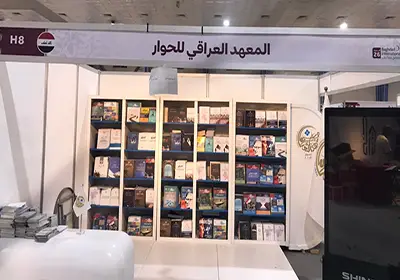
The Iraqi Institute for Dialogue, the logistical sponsor of the Baghdad International Book Fair, opens its own pavilion at the fair
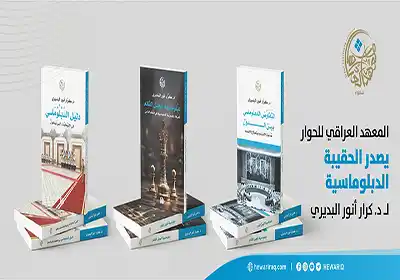
The Iraqi Institute for Dialogue publishes "The Diplomatic Portfolio" by Dr. Karrar Al-Badiri
Official agreement between Iraqi Institute for Dialogue and the Iraqi Media Network to sponsor The Seventh Annual International Conference of “Baghdad Dialogue” 2025
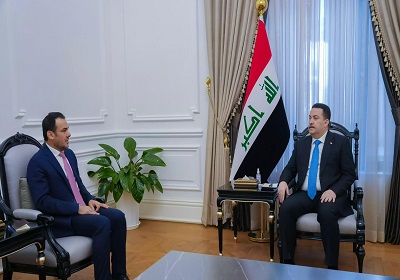
Prime Minister: The path of development will make Iraq a regional political and economic powerhouse
Invitation to the 79th issue of Dialogue of Thought
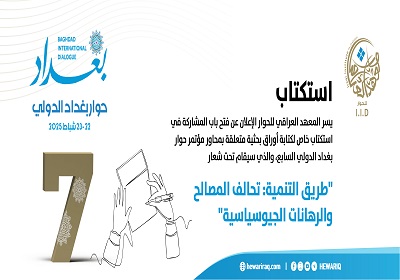
Seventh Baghdad International Dialogue Conference Call for Papers
Praise for the Baghdad International Dialogue: Strengthening Iraq's pivotal role and a meeting point for visions
Comments