


Translation: Iraqi Institute for Dialog
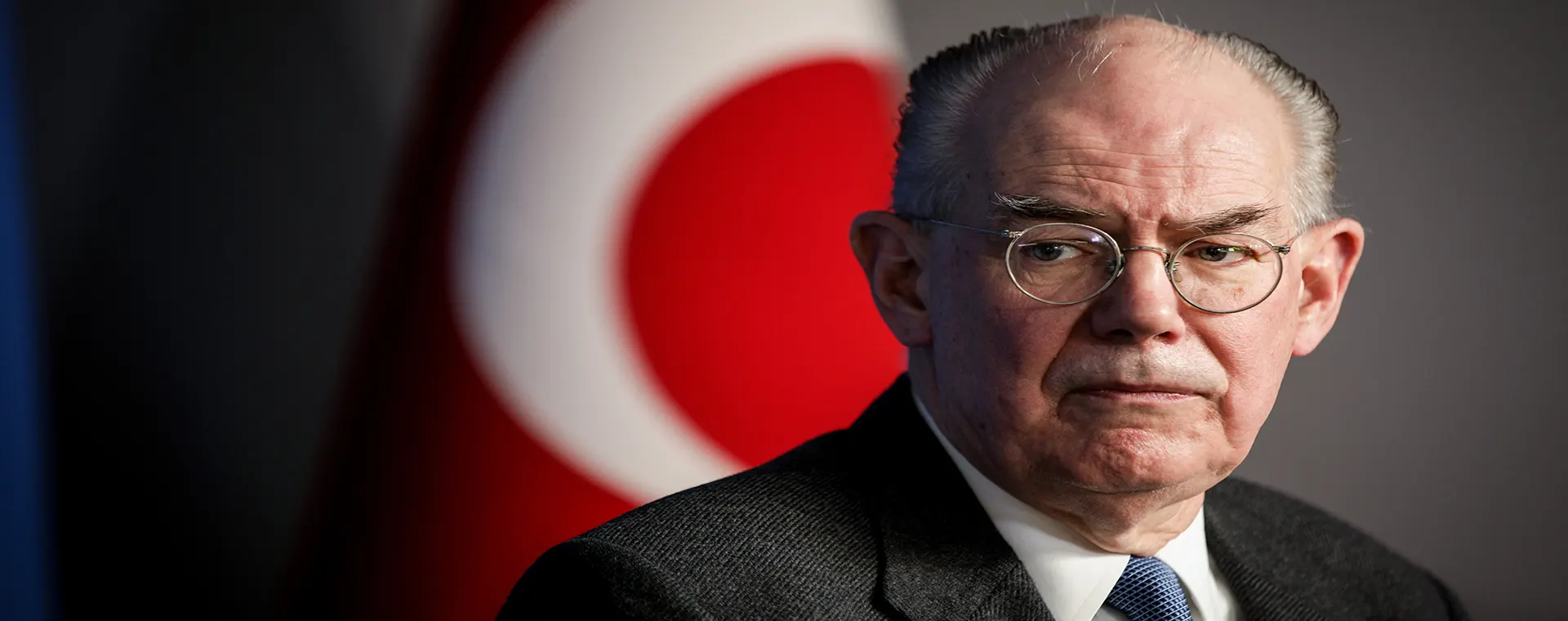
Mearsheimer on the Putin-Trump summit: "Theater" with no tangible results
In an in-depth interview with the Judging Freedom Podcast conducted by Andrew Napolitano, Professor John Mearsheimer, a leading expert in international relations at the University of Chicago, provided a comprehensive analysis of the current geopolitical landscape, including the Trump-Putin summit, developments in the war in Ukraine, the conflict in Gaza, and the influence of the Israel lobby in U.S. politics.
Trump-Putin summit: A "shadow play" with no tangible results
Mearsheimer believes that the meeting between Presidents Donald Trump and Vladimir Putin in Alaska is essentially a "shadow play" and will not lead to a substantive agreement to end the war in Ukraine. Russia has "non-negotiable demands" that Ukraine and the Europeans reject, and Trump himself does not seem to accept them.
Mearsheimer noted that Trump's contradictory statements and threats to impose "very severe" sanctions on Russia lacked seriousness, and that Washington has "no strong cards" to play. Trump was forced to arrange this meeting to avoid imposing secondary sanctions on countries like India and China, showing that his options are limited.
According to Professor John Mearsheimer, Donald Trump "desperately wants to reach a peace agreement with Russia," but reality imposes constraints that make this "impossible in the current circumstances."
Mearsheimer explained in a media interview that the main obstacle lies in Moscow's unchangeable conditions, which neither Ukraine nor Europe accepts. These conditions are:
-
The West's recognition of Crimea and four other Ukrainian regions joining Russia.
-
Kiev's commitment to neutrality and not joining NATO or receiving security guarantees from the United States and the West.
-
Stripping Ukraine of its offensive military capabilities so that it no longer poses a direct threat to Moscow.
Mearsheimer emphasized that these demands are "essential for Russia" and non-negotiable, while Ukraine and the EU categorically reject them, making it difficult to make any real progress toward a peace agreement.
The remarks come as the controversy over Putin and Trump meet in AlaskaSome called it a "historic step" while others described it as a "political shock," amid questions about the future of the war in Ukraine and the possibility of a diplomatic breakthrough.
Ukraine war: Manpower shortages and a turning point for Russia
Mearsheimer emphasized that Ukraine is in "deep trouble" due to a lack of manpower, giving Putin a "very big advantage" on the battlefield. While U.S. weapons continue to flow to Ukraine via European funding, the real issue is the "lack of infantry" and "lack of fighters," leaving the front lines vulnerable to Russian attacks.
Mearsheimer emphasizes that Putin has not changed his demands since the beginning of the "special military operation" and that Russia sees the conflict as an "existential threat," a perspective that the West does not accept, but which forms the basis of the Russian position. He also characterized Trump's proposal for "land swaps" as "absurd" and "unrealistic," especially after Trump himself made it clear to European leaders that he would not discuss this without Ukraine's presence.
Israel and Gaza: "Genocide" and U.S. Complicity
In a sharp analysis, Mearsheimer stated that "the Israelis are committing genocide in Gaza" and that the United States is "complicit in this genocide."
He explained that what is happening in Gaza is "a systematic effort by Israel to dismantle the Palestinian national identity," with the aim of expelling the Palestinian population from what Israel calls "Greater Israel." He described the Gaza campaign as "the third attempt at large-scale ethnic cleansing" after 1948 and 1967.
Mearsheimer strongly criticized US Senator Lindsey Graham's pro-Israel rhetoric, describing Israel as an "apartheid state" and a "burden" on the US, not a "strategic asset." He stressed that Washington's Middle East policy reflects an "Israel-first" approach, due to the "enormous" influence of the Israeli lobby in the US. He emphasized that Washington's policy in the Middle East reflects an "Israel-first" approach, due to the "enormous" influence of the Israel lobby in the United States.
Iran's Nuclear Capabilities and the Threat of an Israeli Strike
Mearsheimer also touched on the possibility of Israel launching a military strike on Iran, believing that Tel Aviv will "most likely attack Iran" when the time is right, especially in light of the absence of IAEA inspectors in Iran and its promises to resume its uranium enrichment program.
However, Mearsheimer expressed skepticism about Israel's ability to achieve a decisive victory, noting that Iran has "too many ballistic missiles" and a "second-strike" capability, making an Israeli strike risky. He noted that experts such as Professor Ted Postol of the Massachusetts Institute of Technology believe that Iran could easily develop a nuclear weapon clandestinely.

The Iraqi Institute for Dialogue, the logistical sponsor of the Baghdad International Book Fair, opens its own pavilion at the fair
The Iraqi Institute for Dialogue publishes "The Diplomatic Portfolio" by Dr. Karrar Al-Badiri
Official agreement between Iraqi Institute for Dialogue and the Iraqi Media Network to sponsor The Seventh Annual International Conference of “Baghdad Dialogue” 2025
Prime Minister: The path of development will make Iraq a regional political and economic powerhouse

Invitation to the 79th issue of Dialogue of Thought
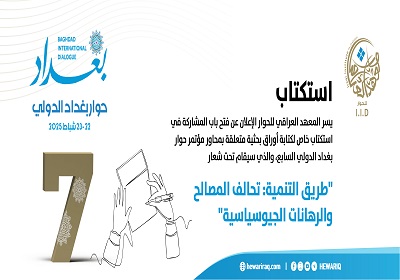
Seventh Baghdad International Dialogue Conference Call for Papers

Praise for the Baghdad International Dialogue: Strengthening Iraq's pivotal role and a meeting point for visions
Comments