

Translation: Iraqi Institute for Dialog
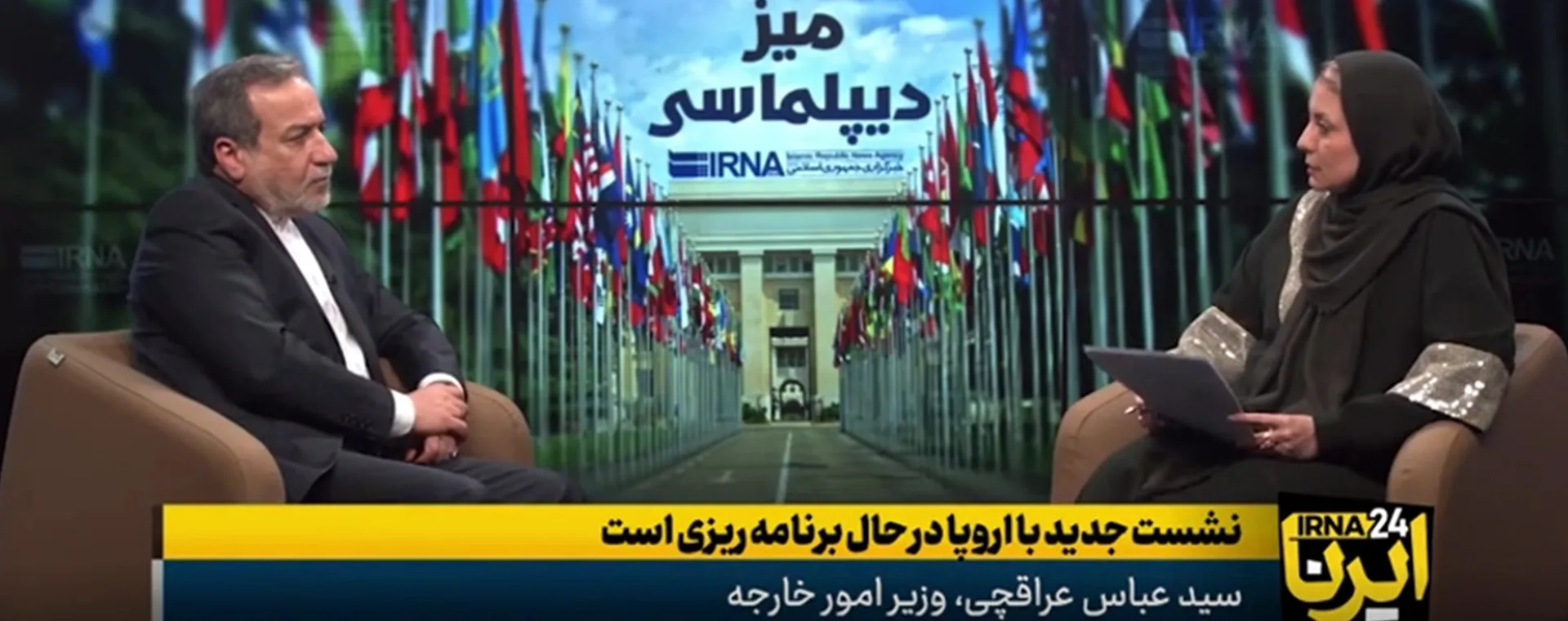
Iran's foreign minister talks about: Power, Negotiations, War, and Sanctions
In a lengthy interview with Iran's state-run IRNA news agency, Iranian Foreign Minister Seyed Abbas Araqchi responded to some of the criticism of his performance, saying: "We used all the powers available to us and we did the planning. The pre-war negotiations were planned in the Foreign Ministry, and we were able to progress within a specific framework. This framework does not allow any arbitrary position to be taken in the negotiations, because the goal of the negotiation is clear and cannot be deviated from."
On the eve of Government Week, one year into the 14th government, IRNA's Diplomatic Table program hosted Abbas Araqchi and asked him about the latest developments in the sanctions negotiations, the controversy surrounding his performance in a year, and of course some important regional issues, including the war in Gaza, relations with Syria and Lebanon, and the fate of the relationship with the Taliban government in Afghanistan. (You can read the first part of IRNA's interview with the foreign minister about the president's current visit to Armenia [here].
Neither negotiation nor war is sacrosanct or intrinsically evil
Question: One year after the start of the 14th government, it has had more than 300 eventful days. The president of the 14th government's foreign policy plan has been fairly straightforward, but recently Mr. Bazeshkian spoke about why the government supports negotiations to resolve conflicts, and his remarks were met with sharp reactions. As foreign minister in this government, how would you explain the government's approach to foreign policy, especially after the war?
Araqchi: The approach of the 14th government is clear. We have been seeking to increase diplomatic interactions, especially in the region and in the neighborhood. We have never hesitated to engage diplomatically with Western countries, including the United States, and to negotiate with America on the nuclear issue. We planned and even took action in this regard. Everyone witnessed that we had five rounds of negotiations that eventually led to war. In other words, our approach was to use negotiation and the tool of diplomacy in foreign relations and strengthening this approach was a focus.
I would like to reiterate here a sentence I have said repeatedly to avoid any misunderstanding: Negotiation and war are both tools chosen by governments to achieve their goals. Negotiation and diplomacy are less expensive and less risky methods, but sometimes, their cost is higher than war. War is usually expensive, but sometimes less expensive than negotiation that leads to surrender. Therefore, neither of these tools has an intrinsic sanctity and neither has an intrinsic evil. Everything depends on the circumstances in which either tool is used.
In some situations, you have to fight; if you don't fight, you've lost, and you've disregarded the country's interests. In some circumstances, you shouldn't fight because it will impose an unnecessary cost on the country. Sometimes, you have to negotiate and solve the country's issues through negotiation. Sometimes, negotiations should not be negotiated; especially when negotiating may lead to surrender, humiliation, or questioning a country's dignity. When a country's sovereignty is threatened and the other side wants to achieve demands through negotiation that they could not achieve through war.
These are issues that must be decided individually. The 14th government is fully committed to the principle that Iran's national interests and the supreme interests of the Iranian people determine what to do at every stage. Just as we withstood the war with seriousness, strength and competence, fought and resisted and saw the results; if necessary, we will withstand the negotiations with the same strength and competence and try to secure the country's interests. Just as we resisted in the war, we also resisted in the negotiation. When the other side lost hope of imposing demands contrary to Iran's interests and security in negotiations, it resorted to its next tool.
We entered into negotiations, but we did not compromise on the interests of the Iranian people and the rights of the nation. This is our approach. Mr. Dr. Bazeshkian has always expressed this point. Of course, he has his own language, and people voted for him based on this language. A language that stems, in my opinion, from his sincerity and popularity. He speaks his language, and we at the Foreign Ministry speak ours. But the crux of the matter and our approach to foreign policy is to use the tool of diplomacy where necessary and not to miss the opportunities that diplomacy creates. Neither negotiation nor war should be viewed in black and white; to see war as always sacred and negotiation as always evil and to be avoided is wrong and unrealistic.
Foreign policy decision-making is a sovereign affair, not a governmental one
Question: Can we talk about a good and acceptable compatibility between the opinions of Foreign Ministry experts and the government's foreign policy decisions during this year?
Araqchi: Absolutely. But when we talk about decision-making in foreign policy, another aspect emerges. When it comes to approaches, tactics, and operational behavior, the government takes action directly. But foreign policy decision-making is a sovereign affair, not just a governmental affair. The ruling group makes the decision, and the government in general, and the Ministry of Foreign Affairs in particular, are the implementers of the policies that are made at the ruling level.
This is completely self-evident and is practiced in all countries. In Iran, it is the same, and we have talked about it and emphasized it over and over again. The Supreme Leader has explicitly stated that the Ministry of Foreign Affairs - not only in Iran, but in all countries - is the implementer of decisions made at the level of the government.
Of course, the Foreign Ministry and the government have a role in the decision-making process, and they provide their opinions and analysis, but in the end, when a decision is made, everyone is bound by it; whether they vote on the decision or not. After that, it's a collective decision, and everyone has to follow it.
In this sense, the government and the Ministry of Foreign Affairs have always been the implementers of the regime's decisions made at the highest levels. In the end, the authority is the Supreme National Security Council; this council has its own decision-making procedures, and when it makes a decision, everyone must follow it. Reason also dictates that when a collective decision is made, everyone must implement it. No one can say they oppose the decision, so they won't implement it. If he doesn't want to implement, he can resign and step down. But as long as he is in office, he must be an enforcer of the higher decisions of the system.
In the 12-Day War, our diplomacy reduced the scope of the war more than the enemy had planned
Question: In recent months, you have been busy defending the indirect negotiations and, at the same time, making arguments about their feasibility. The question for part of the community is: Do you believe today, after the Twelve-Day War, looking back, that there was a way for diplomacy to prevent the military aggression of the Zionist entity?
Araqchi: This is exactly what we have been doing. In the last year, or more precisely, in the last 300 days, we've had an atmosphere of war. Maybe before this 12-day war, we came close to war at least three other times. Now, the extent to which society recognized that is a separate discussion. I think people knew the nature of the situation. At those stages, diplomacy was active and played its role.
Question: Can you explain what the diplomatic tool did in those three periods? Because I haven't seen any reference to that before. Did our regional diplomacy play a significant role?
Araqchi: Our regional diplomacy was very effective. I remember that in a short period of time I traveled to almost all the countries in the region, and there was a collective understanding in the region that war is in no one's interest, and if the war spreads in the region, it could cause devastating losses to all the countries in the region. This is exactly what the Zionist entity wants, for no country in the region to be strong. They want the region to be weak, fragmented and disjointed. We must not allow the Zionist entity to achieve this goal and expand the flames of war in the region.
Diplomacy alone cannot prevent war. It is the combination of state power that creates deterrence. Diplomacy is actually the language of a state's power, not its power itself. Power is realized when diplomacy succeeds in transforming the components of a state's power into security and interests.
In my opinion, this was the understanding that developed in the region, and the contacts and lobbies that were made by the countries in the region, the follow-ups that were made, as well as our own follow-ups, prevented, delayed, or limited the war at different stages. Even in the 12-day war, I think our diplomacy succeeded in keeping the scope of the war narrower than it could have been. That was thanks to diplomatic action.
But I should add another point; look, diplomacy is not the only thing that can prevent war. It is the combination of state power that creates deterrence. Diplomacy is actually the language of a state's power, not its power itself. Power is realized when diplomacy succeeds in transforming the components of state power into security and interests.
So, when we look at why a war did or did not happen, we have to take into account all the components of a country's power. Even in the times when there was no war and our policy was active and moving in the region, I attribute it not to diplomacy alone, but to the ability of our armed forces to respond forcefully, which prevented war. And in the war, it was this ability that brought it to an end. Of course, diplomacy was effective, but it was the Islamic Republic's ability to respond forcefully that drove the enemy to despair of continuing the war.
All the enemy's attempts in the early days of the war were aimed at eliminating this capability; by martyring leaders or hitting certain centers to reduce our ability to respond, but they did not succeed. And because they didn't succeed, after 12 days they saw that the blows they received were unbearable, and that's why they asked for a ceasefire. So, diplomacy has its place and its role, but it basically completes the set of state forces that lead to change.
Sometimes war is unavoidable
Question: Can I infer from your statement that you don't think that diplomacy at that time could have done more to prevent the war?
Araqchi: Sometimes war is inevitable, whether there is diplomacy or other factors. In the end, the circumstances are such that you are forced to fight. In the negotiations that took place, America insisted on a demand that was impossible from our point of view.
America's demand from the beginning was that Iran should not have the capability to make a nuclear weapon. Some convinced them that with enrichment, this capability would always exist, so their demand became "zero enrichment."
Question: Zero enrichment?
Araqchi: Yes, we resisted this demand, and when they despaired of achieving it in negotiations, they resorted to a military offensive.
Question: Did this US demand come up from the first and second round or did it appear in the third and fourth rounds? Some believe that this demand did not exist in the first and second rounds, and suddenly this extreme demand was brought up in the third round.
Araqchi: No, America's demand from the beginning was that Iran should not have the capability to make a nuclear weapon. Some people convinced them that with enrichment, that capability would always exist, and so their demand became "zero enrichment." This demand was there from day one and from the first round of negotiations. Of course, sometimes during the negotiations we tried to convince them that achieving non-nuclear weapons does not necessarily contradict the existence of enrichment. Our policy is categorical; based on our fatwa, our principles, and our beliefs, we do not want a nuclear weapon, but we want to have enrichment; to meet our needs, as a right that must be implemented, and as a valuable scientific achievement that we have achieved ourselves. At times, some of the proposals could be feasible, but when these proposals went to Washington, their decision changed again. It was clear that there was a powerful lobby influencing them in Washington.
Before the war, we put several practical plans on the table with America
Question: So, did the Iranian negotiating delegation have practical plans on the table? Some believe that the design of the Iranian negotiations may not have been correct.
Araqchi: Yes, we had many operational plans to find a compromise between enrichment and non-weaponization. These plans were given attention and I was willing to consider them during the negotiations, but when they came to Washington, there were those who convinced them to stick to "zero enrichment." I think there is a very strong lobby in Washington that forced this demand on the Americans. I think there was a very powerful lobby in Washington that forced this demand on the Americans. Otherwise, the Americans, or at least our negotiators, would have been willing to compromise.
Within the scope of my powers as foreign minister, I have full authority
QuestionMr. Minister, you have critics on both sides of the diplomatic arena: Mr. Minister, you have critics on both sides of the diplomatic arena; people who think you have been too politically optimistic, whether in the five rounds of negotiations or in some other situations, and a team that thinks you have become too conservative. Especially in the last month, some recent statements by well-known figures who have worked with you have stated that the foreign minister should be given more powers. Tell people frankly, are your hands tied?
Araqchi: I have answered this question before; system decisions are made at a higher level than the Ministry of Foreign Affairs, and the Ministry of Foreign Affairs is the implementer of these decisions. We have full flexibility in the implementation of these decisions, and at the time of the decision, we can also provide our opinions and analysis, and this is fully available. But once the decision is made, the implementer cannot say: I want a free hand to do whatever I want. That doesn't conform to any rule; neither reason and logic, nor principles of governance, nor institutional organization allows it. This is like deciding on a military operation in the army, and then a soldier in the middle of the battle says: I don't agree with this operation and I will act as I please.
I think in the area of the functions and powers of the foreign minister, we have full powers. We are now actively involved in decision-making, and in fact, the Foreign Ministry's analyses have been influential, and our views have been heeded.
I didn't become a conservative, I move within the framework set by the referee
Question: Has the ministry made you conservative? This question encompasses many of the criticisms leveled at you. Perhaps you have also seen in the virtual space that Mr. Araqchi, Deputy Foreign Minister and head of the negotiating delegation during the period of the nuclear deal, has become more conservative during the ministry?
Araqchi: What is the difference between a deputy minister and a minister? Whether you are a deputy minister or a minister, you move within a certain framework. Those friends who claim that, they themselves have been in similar circumstances and have experienced that the foreign minister in particular and the government in general in foreign policy cannot follow whatever path they decide. The course and decisions are made in the totality of governance that goes beyond the government, and we are obliged to move within that framework.
Question: Do you accept that what characterizes foreign ministers is implementation? You can't give all the credit for decision-making and decision-making. In any case, we had different foreign ministers, and what characterized their performance, in part, was this type of implementation. I want you to answer here: Are you conservative in execution? That is, do you not use some of the powers you have?
Araqchi: No, it's not like that. We used all the powers we had and we planned. The pre-war negotiations were planned in the Foreign Ministry, and we were able to progress within the framework. This framework does not allow you to take any position you want in the negotiations, because the goal of the negotiation is clear and you cannot deviate from that goal. This cannot be called caution; it is a duty.
Decisions on negotiations are made by the Supreme National Security Council
Question: Is the design of post-war negotiations still in the State Department?
Araqchi: Yes, of course, as always, from the first day the negotiations started, the decision is made in the Supreme National Security Council, and the implementation is in the Foreign Ministry. In implementation, the Foreign Ministry designs with whom, how, and where the negotiations will be, and what the negotiation strategy will be; where to start and where to go. In this regard, someone may or may not criticize us; our strengths and weaknesses lie in this execution. But as far as policy is concerned, what is the range in which you can move, how far you don't go, and how far you don't retreat, all of that is determined by the Supreme National Security Council.
Weren't we negotiating when the war broke out?
Question: In one of your recent interviews, you mentioned that public opinion should not be kept in a state of doubt, uncertainty, tension and constant worry about the outbreak of war again. Before and after the 2015 nuclear deal, if we talk about the impact of foreign policy on people's lives, it was limited to the impact of sanctions on people's livelihoods, but today, here we are, talking about the impact of diplomacy on the outbreak of war again or keeping the specter of war away from people's lives. Certainly, in the conversations you have with ordinary people, they raise this concern and this question: Will the war break out again? Anyway, people's anxiety cannot easily be removed with words. With the war having stopped, one of people's expectations seems to be the resumption of negotiations with the same characteristics as before. But we seem to have hit an impasse during this period. Why don't we get out of this negotiating impasse? What are the Foreign Ministry's initiatives in this regard?
Araqchi: When I said that uncertainty is detrimental to the country, it was in the context of the discussion about the psychological warfare that arose alongside the real war. The real war has stopped now, but the psychological war has not stopped, and they are now trying to impose the same demand from the real war on society in a psychological way, and thus, through various interpretations, analyzes and movements, they maintain this feeling in society that the war will happen today, or will happen tomorrow. My intention was, and still is, not to fall into the psychological space that the enemy is trying to create for us. We have a real war, a media war, a psychological war, and a political war; we have to be careful in all of these things.
I said in a recent interview, and I may be wrong, but my feeling is that there is extraordinary tension, anxiety and uncertainty, more than there should be, being injected into our society, and we must not allow this injection to happen. That doesn't mean we shouldn't be wary of war, it doesn't mean we shouldn't take precautions, but it means we shouldn't fall on the other side either.
Weren't we negotiating when the war broke out? So negotiation doesn't necessarily prevent war. We have to be prepared in all aspects. What prevents war is being prepared for war. If your enemies feel that you are not ready to fight, they will impose war on you. Preparing for war should not lead to war anxiety or tension about war. This management is a very technical job, and all the country's officials in the political, economic, psychological, and media fields must pay attention to it. We must not allow society to fall into tension and anxiety, and we must not become optimistic and unrealistic. We have a plan for negotiations now, but we must realize that this does not mean that negotiations can prevent war. It hasn't been a month or two since our most recent experience.
But the negotiations that we are designing or have designed, one of them is with the International Atomic Energy Agency (IAEA). We initiated the first contact with the IAEA after the so-called war. Mr. Apero, the deputy director general of the IAEA, was visited. We told the IAEA that in any case, new circumstances have arisen, our facilities have been bombed, and there is no precedent for how to deal with facilities that have been bombed. On the other hand, the Act of Parliament has obligations that restrict our hands in some things, and it allowed the workflow through the Supreme National Security Council, so we must first sit together to come up with a new framework, method, or arrangement, a new structure for cooperation, and based on that we start cooperation.
We can't completely cut off cooperation with the IAEA
Question: Has progress been made on this visit?
AraqchiI think Mr. Apero's visit was good for us to get a better understanding of the issue: I think Mr. Abiru's visit was good for us to have a better understanding of this issue. After this visit, we documented and presented a set of our views on a possible way based on the parliamentary law. On Saturday, August 15, the agency documented and returned its views to us, and this back-and-forth interaction between us and the agency continues. We are likely to send colleagues to Vienna for another round of negotiations there.
Question: Will the issue of the return of inspectors be within this framework according to the parliamentary law?
Araqchi: The return of the inspectors will be possible on the basis of the law of the parliament, i.e. by the decision of the Supreme National Security Council. I would like to give an example to make it clear to everyone. We cannot completely cut off cooperation with the IAEA. For example, in about a month or a month and a half, it is time to change the fuel of the Bushehr nuclear power plant, and this change has to be done in the presence of IAEA inspectors, so there must be inspectors so that we can do it. The Russian officials at the plant are also telling us to speed up this work so that we can get it done, otherwise we can't do it according to the rules. This is one of the issues that needs to be specified in the mechanism.
On another point, the IAEA generally submits its request to inspect facilities that have not been bombed, and we send this request to the Supreme National Security Council, and the Council decides the conditions for authorizing the inspection. This work has to be done and we have to plan for it. So it's not that we're saying we're cutting off cooperation with the IAEA completely. If the regime one day decides to withdraw from the NPT, it will do so. While we currently intend to stay in the NPT, I am giving this as an example and it should not be assumed that this discussion exists or does not exist, but that in the future we may get to a point where this discussion comes up.
Question: As a reaction to certain behaviors?
Araqchi: Yes, we haven't reached that point yet. Cutting off cooperation with the IAEA is one of the consequences of withdrawing from the NPT; you can't be a member of the NPT and not do it. You pay the cost of withdrawal and you don't actually withdraw.
New cooperation with the IAEA will certainly not be like the past
Question: At this point, will not cooperating with the IAEA contribute to further "securing" the Iranian dossier?
Araqchi: This topic is correct and has considerations. Cutting off cooperation with the IAEA has its own consequences, and continuing to cooperate with the IAEA in the previous way is no longer possible. My question to the IAEA is: What is the specific protocol for inspecting a nuclear facility that has been bombed? The IAEA itself does not have an answer, because there has been no precedent for this until now. An IAEA-registered facility that was conducting peaceful nuclear activities was bombed; now the question is how should it be inspected? The IAEA has no precedent in this area and cannot provide a specific protocol; for example, to say in this case you have to refer to the so-called section of the safeguards law. So, there is a need for negotiations, and in some respects, this is not easily possible.
Given the recent experience, we undoubtedly have new safety and security considerations. In the current circumstances, even approaching these facilities may involve special risks. Therefore, as long as these matters are not clarified, new cooperation cannot begin. This new cooperation with the IAEA will certainly not be like the past, especially since, according to the parliamentary law, all matters must be pursued through the Supreme National Security Council, and it is this council that decides where and how inspections are or are not carried out.
We do not consider the European Troika to be a member of the nuclear deal
Question: In the design of the negotiations after the agency issue, what are the next stages you mentioned?
Araqchi: We also have contacts with the Europeans.
Question: Have these contacts turned into negotiations for the sake of negotiations? Multiple sessions are held, but no particular success seems to have been achieved.
Araqchi: "Negotiations for the sake of negotiations" can have two meanings; once in the sense of negotiating for the sake of negotiations, such as to respond to public opinion or to waste time, and the expression is usually used in this sense. The second meaning is that negotiations are conducted to determine how to negotiate.
Question: Are we now in the negotiation phase to determine how to negotiate?
Araqchi: At the moment, we are with the Europeans at a stage where we are studying whether or not there is a basis for real negotiations and a serious exchange between us and them.
Question: Do you think the Europeans don't view these negotiations in the same way as you've indicated?
Araqchi: No, they are more aggressive than we are. In the sessions we had with the European parties, they also emphasized this topic, that we should see on what basis we can enter into negotiations. I asked them in one of the sessions to give one reason why we should negotiate with them? What sanctions or threats can you lift or resolve?
Question: Isn't the "Snapback" trigger mechanism one of our reasons?
Araqchi: Yes, it is the only tool they think they have at the moment. In this regard, we have made our position clear to them: First of all, you do not have the right to use the trigger mechanism, because after America's exit from the nuclear deal and with your recent positions - including bringing up the issue of "zero enrichment" - you have also effectively exited the nuclear deal. Therefore, you are no longer a participant in the nuclear agreement, and the right to the trigger mechanism belongs only to the remaining members of the nuclear agreement.
Second, even if we assume that you have the right to use the trigger mechanism, what would happen if you did? First, Europe's role in the diplomatic process would completely end; you have used a tool and that's it. What's left after that? The end of diplomacy?
The return to Chapter VII of the UN Charter, or the possible return of arms sanctions, are important issues and we should not allow that to happen. There are efforts being made in this regard. However, Europe should know that if it takes such action, it will not put us in a difficult position.
I asked them this question explicitly. When they said there was little time left for diplomacy, I asked them: Do you mean that after the trigger mechanism is used, diplomacy will end? They didn't have an answer. It is clear that diplomacy will not end, but Europe will no longer have a role in it. Europe has drawn its sword and dropped it. What happens next? For example, the return of previous Security Council resolutions. Yes, I also agree that we shouldn't let that happen, because it's not a good thing. But this return is no longer as important and influential as it used to be.
Resolution 1929 was very dangerous, but Resolution 2231 is in effect now, and it's a better resolution. However, was Resolution 2231 able to prevent the outbreak of war? Or prevent sanctions? No. The truth is that the Security Council and its resolutions no longer have the impact they used to have on them or us.
Of course, I reiterate that these developments have consequences and should not be underestimated. For example, a return to Chapter VII of the UN Charter, or the possible return of arms sanctions, are important issues and we should not allow that to happen. Efforts are being made in this regard. However, Europe must know that if it takes such action, it will not put us in a difficult position.
New meeting with Europe in the works
Question: Have we not yet found a negotiating basis with Europe?
Araqchi: No, we have not yet reached such a basis. However, it is possible that we will have a meeting in the coming days on this matter. The Europeans themselves have realized that using the trigger mechanism at the moment is of no benefit to them or anyone else.
Question: They made a proposal to extend Resolution 2231.
Araqchi: Yes. Well, when we think that they don't have the right to activate the trigger mechanism, then naturally they don't have the right to extend it either. This is our position that they are not even in a position to decide on the trigger mechanism, whether to activate it or to extend it.
Question: Could Iran agree to an extension with special conditions? To prevent the return of Security Council resolutions, as you put it? Have you considered that one solution might be for Iran to put its conditions on the table as well?
(Laughter): Are you now providing negotiating guidance?
Question: No. But the likelihood of the trigger mechanism being triggered is high, and then people might ask that the foreign minister said that Europe doesn't have the right, but we see that it happened. Like the nuclear deal where it was said that the likelihood of America pulling out of it was very low, but in the end it did.
Araqchi: Look, when I say that Europe doesn't have the right, I mean that legally, politically and morally it doesn't have the right.
Question: Commitment to any of these things is practically non-existent.
Araqchi: Yes, the trigger mechanism may be activated eventually, I'm not denying that. We have been working on this issue with China and Russia for several years now. We have held many joint sessions and have designed a set of joint procedures to be implemented in case the trigger mechanism is activated. Regarding the final solution to prevent the trigger mechanism, we have had talks between the three countries and we have procedures under consideration; although we may not be successful.
The first point is that they don't have the right to take this action, but that doesn't mean I'm going to say "you have that right." Our position is clear: They have no such right.
The second point is that if the trigger mechanism is triggered, it will result in political and strategic losses for us, but it will not be the end of diplomacy or the end of everything.
The third point, which I think should answer a common misunderstanding in the community, is that activating the trigger mechanism will have no greater economic impact than the current situation.
Question: Won't it affect our oil sales?
Araqchi: No. The economic impact will be no greater than the current situation. There will be no more sanctions than there are now. Because I see that many people or even some officials imagine that if the trigger mechanism is activated, the sanctions will come back. My question is: What sanctions? The economic sanctions of the Security Council compared to the current unilateral U.S. sanctions are very limited.
Question: But now some countries, because the sanctions are unilateral, cooperate with us economically and say that they do not recognize these sanctions. If these sanctions come under the umbrella of the Security Council, don't you think that even some countries that are friendly to us in the East will be concerned in their dealings with us?
AraqchiNo, that's exactly my point: No, that's exactly my point. The effect of the trigger mechanism is more psychological than real. We have discussed this; it has been said that because of the trigger mechanism, some countries may say that they will not buy oil anymore. Our answer is that the Security Council resolutions had nothing to do with our oil, our banks and many other areas of sanctions. That's why America resorted to unilateral sanctions. But why is this topic effective in the psychological space? Because it may cause an exacerbation of uncertainty inside the country, and abroad some governments may feel that the situation has worsened. This psychological space must be confronted.
America can't take from me at the negotiating table what it couldn't take in war
Question: How close are we to resuming negotiations with America?
Araqchi: Negotiations with America must be timely. Every negotiation has its own time, which is called "negotiation maturity," and it has to reach this maturity in order to take place. In my opinion, we have not yet reached this point of maturity for effective negotiations with America. In my opinion, the Americans have not yet reached a point where they are entering into equal negotiations. If they are seeking negotiations, they want to take from me at the negotiating table what they have not been able to get in the military arena, which they will not be able to do. I will not enter these negotiations to ignore the rights of the Iranian people, which they have bombed but have not been able to eliminate. They couldn't create a reassuring point that Iran will never enrich uranium again, because they couldn't get our signature at the negotiating table that we won't do it. This is not a negotiation.
Getting reparations from the US is a negotiating pivot, not a precondition
Question: Are there preconditions for the Islamic Republic of Iran to start negotiations? Some of your recent interviews have interpreted that you have preconditions, such as the issue of payment of compensation, are these preconditions or the subject of negotiations?
Araqchi: These are matters of negotiation. My interview was with the Financial Times and they chose the wrong title. I said in that interview that if negotiations start, one of our topics will be compensation and losses, but I didn't say it was a precondition. It can't be a precondition, because damages and losses themselves need to be negotiated. You can't sit at home and expect them to hand you compensation on a platter; you have to negotiate to get the compensation. Its dimensions and size have a lot of ups and downs, and they may not accept it at all. We have to talk. So, no, it's not a prerequisite but it will be one of the subjects of negotiation.
Contradictory messages about the U.S. position received through intermediaries
Question: What about the other side? Were you told through intermediaries that the Americans, for example, have these specific demands, and if you accept them, come to the negotiating table?
Araqchi: To tell you the truth: We are getting contradictory messages through intermediaries. There are also contradictory messages in the interviews and statements of the American parties. One of our issues, both in previous negotiations and now, is that we have not heard anything coherent from the Americans. Statements are constantly changing and we get contradictory messages. Sometimes the messages are different from each other, sometimes the messages are different from the interviews. I think maybe the American side doesn't have a final summary yet, and maybe they are busy with other points.
Negotiations may be re-hosted
Question: There has been media speculation about a possible change in the mediator or host of the negotiations between Iran and America, do you confirm this?
Araqchi: In diplomacy, everything is always possible.
Question: So both parties are moving towards choosing another host?
Araqchi: The choice of host must be based on the agreement of both parties. No one can dictate that this is necessarily the mediator. Mediators can also play different roles; some are stronger in one area and weaker in another. As for whether the new negotiations, if formed, will remain through Oman or a new mediator will be chosen, there is no final decision yet.
We're a long way from recognizing Afghanistan's governing authority
Question: We are approaching the fourth anniversary of the fall of the republic in Afghanistan and the return of the Taliban. How close do you think the Islamic Republic of Iran is to recognizing the current interim government? Are the preconditions we mentioned earlier, i.e. the formation of an inclusive government, still on the table?
Araqchi: We are still far from admitting it, but the fact is that we have close cooperation with the Taliban and the current government, for a very clear reason: The national interests of the Iranian people. We have a common border with Afghanistan of about 1,000 kilometers and we have multiple challenges; from the challenge of migrants to drugs, the security of our borders, terrorism in Afghanistan, the issue of water, trade between the two countries, the Persian language, the security of the people, and especially the security of the Shia. In other words, we have approximately eight to ten major and important challenges that we cannot ignore. Taking care of these issues depends on dialog with the current government in Afghanistan, and talks and negotiations are ongoing. So, diplomacy between us is ongoing. I myself have made a visit to Kabul, my colleagues have made additional visits and there will be more. Similarly, different ministries are sending their officials there. These issues that I mentioned, as well as many others, are always on our agenda. But we have not yet reached a point where we can recognize.
Question: Has the ruling authority moved closer to the points that Iran deems necessary for this relationship to be more formalized, or do you think the Taliban is still far from it?
Araqchi: In these challenges that I mentioned, we have made good progress in some of them, and in others we have not made progress. For example, our border security in the last four years has been better than it was before. It's a fact that the Taliban government in Afghanistan has established good security; I wouldn't say 100 percent, but good. Regarding the Shia, they have been secured, but their rights have not been respected in the last few years. In terms of water, the situation has improved but it is not yet at the expected level. Trade is going well, but the banking issue we had there has not been resolved. Regarding the migrants, we have been cooperating in their return, and the Afghan side has cooperated in this regard. They had three demands from us, which I think are reasonable: One is that it should not be a mass return, which is true so that they can absorb them there; two, that the return should be done in a dignified way, which is reasonable and we respect it here as well; and three, that their rights are respected when they are returned, for example, if they have debts, they should be respected. Many of them had rented houses here and had to pay back their mortgages. Well, the homeowner can't pay the money right away and they have to collect the money. So they have debts that have to be honored, and our Ministry of Interior is taking care of this and paying more attention than before. So now there is an understanding between us and them; about a million people have returned and there is no crisis there or here. As a conclusion, we have challenges; in some of them we have progressed well and in some of them we still have issues. Some of them are in the middle, and in my opinion, our level of cooperation with our neighbors is currently acceptable.
We are in no hurry to resume relations with Syria
Question: The Syrian file seems to be stagnating at the moment. Recently, the issue of the visit of one of our senior officials to Lebanon and the issues related to the lack of clearance for his flight from Syrian airspace came up. In your opinion, where do you think the main issue lies, and is there a political will to resume relations between Iran and Syria?
Araqchi: The truth is that we are not in a hurry to resume relations. The current situation in Syria is very difficult, and the country is facing multiple issues. There is a possibility of partition, civil war, ethnic wars, and economic issues are creating major challenges. We have no intention of interfering in Syria's internal affairs, and establishing political relations is not an immediate priority for us. Any time the Syrian government comes to the conclusion that cooperation with Iran is beneficial for it, we will be ready to consider it.
Question: Has no signal been received from the Syrian government yet?
Araqchi: We have not received any signal from any party so far, and we are waiting for the right conditions to be created to establish relations. Regarding Dr. Larijani's flight from Baghdad to Beirut, the route chosen may be for security reasons or other factors. I didn't ask if there was a request for authorization for the flight from Syria or not, but it is not unlikely that the pilot decided, for his own reasons, to go through Turkey to Beirut.
Question: Are there intermediaries between Iran and the Syrian government to resume relations or are the two countries pursuing these relations independently of intermediaries?
Araqchi: Intermediaries are always present in any field, but for now, we prefer to wait until the right conditions are in place to establish contact.
It is natural that we still have differences with Riyadh on some regional issues
Question: Lebanon is one of the files that has, however, seen some tensions in recent days. We saw the visit of Mr. Larijani, which was reportedly to help clear up some of these misunderstandings. Aside from the Lebanon issue itself, we've had a growing relationship, a sort of coming out of stasis relationship with Saudi Arabia. Saudi Arabia is said to be as active now in the Lebanese file, as it has been over the past decade. Given what is happening in Lebanon and the potential for tensions there to head towards civil war or unrest that could spill over into the region, are there consultations or talks between you and your Saudi counterpart? Do you think Lebanon is still a point of contention between Tehran and Riyadh?
Araqchi: Our relations with Saudi Arabia in the last few years, in my opinion, have made very good progress in the last year despite all the regional irritants, and we have at least a better understanding and awareness of each other. That doesn't mean at all that our differences have been resolved. In some issues, our differences have decreased, in some places they have been resolved, in some places they have decreased, but there are still differences on various regional issues in particular, and this is also normal.
For example, we had a very good interaction in the Hajj season this year, and we had a trouble-free pilgrimage. It just coincided with the issue of the war and the return of pilgrims, and the Saudi government showed excellent cooperation in the return of pilgrims from the Iraqi land border, and we really thank them for that. In other words, I no longer see that previous atmosphere of bitterness between us. I am in constant contact with the Saudi foreign minister, and we talk whenever necessary, especially regarding Gaza and Palestinian issues, we have talked several times so far; we talked about American threats, American attacks and the Zionist entity, regional issues, Lebanon and Syria as well.
That doesn't mean we don't disagree. On the contrary, it is because we disagree that we talk to each other. But this disagreement has not led to artificial competition or hostility, nor should it. Saudi Arabia is a big country in the Islamic world, and a big regional country like Iran, and the issues of the region should be resolved through the interaction between these two powers and other regional powers. There is a difference in views, but there should not be hostility. This is our policy.
We have never interfered in Lebanon's internal affairs, nor do we intend to do so. Lebanon's issues belong to the Lebanese themselves and should be resolved through national dialogue; dialogue between different sects and groups regarding defense issues. But that doesn't mean that we don't express our point of view. If we come and say that in our opinion, it is better to solve it this way, it does not mean that we are interfering. Others are also presenting plans. If this expression of our point of view is interference, what do you call those who present plans and are present in the Lebanese political scene and play a role? We have expressed our point of view, including on the resistance weapon, we have a very clear point of view. The resistance weapon, I say, is specific to Lebanon and does not exist elsewhere.
The experience of recent decades has shown that what creates deterrence against Israel and can prevent the Zionist entity's expansionist ambitions in the region is only the resistance weapon, which is why it has been subjected to the greatest hostility and has received damages that everyone knows about. But if the countries of the region do not realize that the resistance weapon is a deterrent against Israel's hegemony, there could be harsh consequences for everyone; just as many thought they could reach peace with Israel by normalizing relations. But now relations have been normalized by many, and some are waiting in the wings. From their point of view, the resistance has been hit, but Israel and Mr. Netanyahu are talking about Greater Israel and drawing their maps from the Nile to the Euphrates. It's starting again now. This means that parts of Saudi Arabia, parts of Egypt, parts of Jordan, parts of Iraq will be part of the Greater Israel project.
In Saudi Arabia and Egypt, we talked about regional security structures
Question: Can countering this plan be a matter of cooperation between Iran and the countries of the region?
Araqchi: Absolutely, absolutely. We had talks during my recent visit to Saudi Arabia and Egypt. The goal was to engage in dialog, understanding and cooperation on regional security structures. And we had very good talks.
Question: Has this proposal been welcomed by the other side?
Araqchi: Even the opposing parties have suggested that the situation in the region has changed, that we are now hearing from the countries in the region this concept that we were saying years ago, which is that we need a strong region. If the region is strong, it can stand up to the entity. Of course, politics and international relations are very complex, and it's not that the whole region is going to move towards a single cohesion against the entity. In any case, there are multiple factors at play. In my opinion, this understanding has arisen, but the current policies of these countries have not changed much yet.
The people of Gaza don't need resolutions, they need food
Question: Over the past year, I have done active diplomacy to pursue the rights of the people of Gaza. Recently, there seems to be an Iranian proposal for a new meeting. These meetings are constantly taking place, but unfortunately, the Israeli genocide in Gaza continues. Are there any new initiatives on the table? Please report on the Foreign Ministry's actions on Gaza.
Araqchi: Regarding Gaza, no, we, almost all the countries in the region and all the Muslim countries, have done what they can politically. But the reality tells us that mere political dealings are not enough. In my contacts with some of the countries in the region, when I asked for an emergency meeting of the Organization of Islamic Cooperation, I said myself before that that I understand that the people of Gaza do not need our meetings and our decisions, they need food, and our meetings will not provide them with food. But in these circumstances, what else can be done? At least we should come together and deliver our unified voice to the world. I know it's not enough, but it's at least the least we can do.
I was talking to an official in the region, someone who really cares, and he said to me, "We have to accept a very bad feeling that something called the Islamic nation no longer exists."
Unfortunately, we have to say that the Americans and Westerners have succeeded in creating this great rift between Islamic countries, between the Islamic Ummah. I was talking to an official in the region, someone who really cares, and he said to me: "We have to accept a very bad feeling that something called the Islamic Ummah no longer exists." I don't agree with that, but this fact has arisen and this feeling may also be that it is not possible to "activate" the Islamic Ummah. I don't agree with that, but this fact has arisen and this feeling may also be that the Islamic Ummah can no longer be "activated" and that Islamic countries do not have that unity. How can more than a billion people not be able to confront a country with a population of three or four million in a reasonable and logical way? This is a big question. But we all know the answer: The policies that have been implemented in the region.
However, I believe that we should not despair. The key to solving the issue of Palestine and the rest of the region lies in the unity and cooperation of the countries of the region. We are striving in this direction, and we hope that we can achieve success on this path as well.
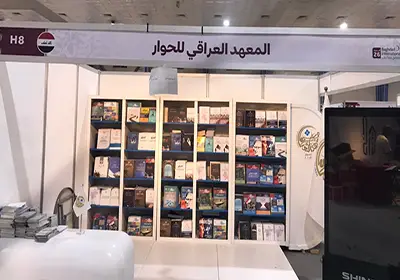
The Iraqi Institute for Dialogue, the logistical sponsor of the Baghdad International Book Fair, opens its own pavilion at the fair
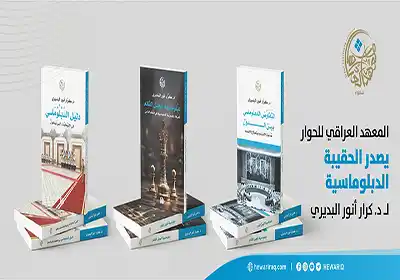
The Iraqi Institute for Dialogue publishes "The Diplomatic Portfolio" by Dr. Karrar Al-Badiri
Official agreement between Iraqi Institute for Dialogue and the Iraqi Media Network to sponsor The Seventh Annual International Conference of “Baghdad Dialogue” 2025
Invitation to the 79th issue of Dialogue of Thought
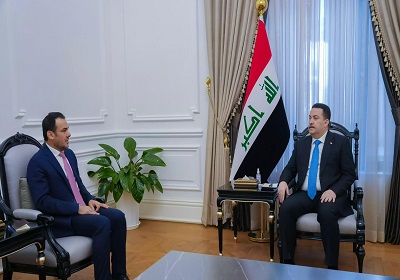
Prime Minister: The path of development will make Iraq a regional political and economic powerhouse
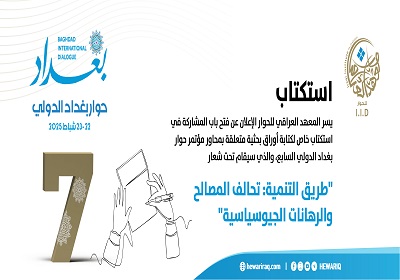
Seventh Baghdad International Dialogue Conference Call for Papers
Praise for the Baghdad International Dialogue: Strengthening Iraq's pivotal role and a meeting point for visions
Comments