


Translation: Iraqi Institute for Dialog
Can Russia maintain its influence in the South Caucasus?
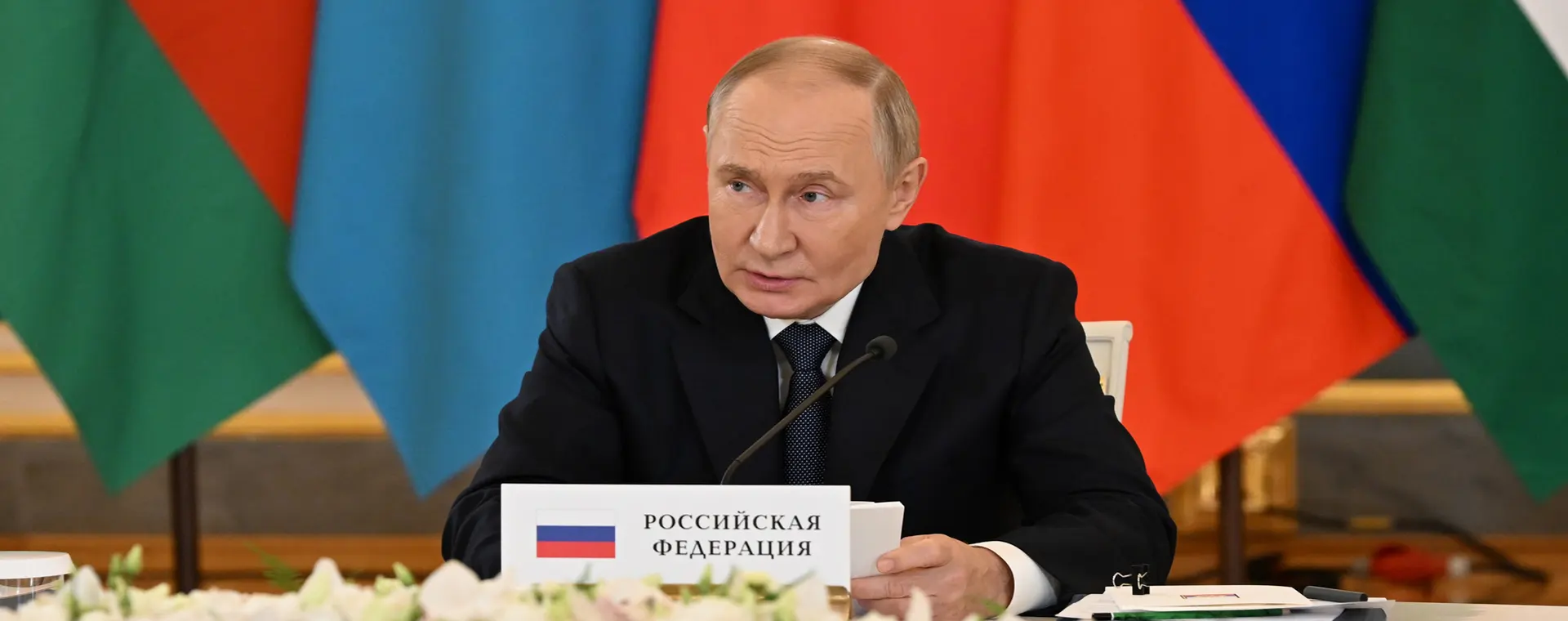
After the signing of a US-brokered peace deal between Armenia and Azerbaijan in Washington, all eyes turned to Russia.
During an official visit to Baku in August 2024, Russian President Vladimir Putin emphasized that Russia's "historical role" in the South Caucasus requires an active presence of his country in regional affairs. However, Moscow now appears to have been marginalized from an arena it has long considered its traditional sphere of influence.
As relations with key allies deteriorate and the war in Ukraine continues, the question arises as to whether Moscow can maintain its influence in the region.
Shifting political alliances
One of the most important instruments of Russian influence in the region has been its role as a mediator in the Armenian-Azerbaijani conflict. After the 2020 ceasefire and the deployment of peacekeepers in Nagorno-Karabakh, Moscow succeeded in establishing itself as a dominant power.
But after the full-scale invasion of Ukraine began in 2022, Russia's focus on the South Caucasus declined, allowing EU and U.S. diplomacy to fill the void.
U.S.-brokered peace agreement
The last meeting between the leaders of Armenia and Azerbaijan was held in Moscow in May 2023. Shortly thereafter, in October 2024, Armenia's Deputy Prime Minister Mehr Grigoryan announced that the work of the trilateral commission to open regional communication routes had practically ceased due to "lack of consensus."
In July 2025, Aliyev and Pashinyan held their first direct, unmediated meeting in Abu Dhabi. Although Moscow officially welcomed the meeting, the signing of a US-brokered peace agreement on August 8 was seen as the end of Russian hegemony in the region, even by pro-Kremlin figures.
One of the most sensitive issues for Russia is the future of the Azerbaijan-Nakhchivan communication route through Armenia, known as the "Trump Road to Peace and Prosperity." According to the 2020 ceasefire agreement, this corridor was to be supervised by the Russian Federal Security Service (FSB), but now it will be managed by a joint Armenian-American consortium. Konstantin Zatulin, a member of the State Duma, has described this as potentially leading to the "demise" of Russian influence.
Russian Foreign Ministry spokeswoman Maria Zakharova stated that the trilateral agreements to open communication routes are still in force, as no party has withdrawn from them. But Moscow's exclusion from the peace process and strained relations with both sides have left Russia with limited means to enforce its role.
Strained relations with allies
Tensions with Azerbaijan have been ongoing since the Azal plane crash in December 2024, and were renewed after Azerbaijani citizens were killed during arrests in Yekaterinburg in June 2025.
Armenia has also taken a path away from Moscow and begun a process of rapprochement with the European Union, raising the Kremlin's skepticism about its future membership in the Eurasian Economic Union.
In January 2025, Armenia signed the Strategic Partnership Pact with the United States, which Russian media saw as another blow to Russia's standing. Tensions escalated following disagreements between Pashinyan and the Armenian Church, and the arrest of Russian-Armenian businessman Samuel Karapetyan, prompting Yerevan to warn Moscow against interfering in its internal affairs.
Trying to regain influence in Georgia
Moscow seems to be hoping to regain influence in Georgia. In 2023, Russia resumed direct flights and abolished the visa regime for Georgian citizens. In April 2025, Russian Deputy Foreign Minister Mikhail Galuzin stated that Moscow was "ready" to resume diplomatic relations with Tbilisi, which had been severed since the 2008 war.
Georgia has also shown signs of improving relations, including a delayed application for EU membership, anti-Western rhetoric from the government, and a refusal to impose sanctions on Russia. However, the resumption of full relations is a long way off, as Moscow insists on the normalization of Georgian relations with Abkhazia and South Ossetia, which Tbilisi rejects.
A faltering military presence
Russia's declining political influence raises doubts about its military capabilities in the region. The Collective Security Treaty Organization (CSTO), a six-member security bloc led by Russia, is a pillar of Moscow's influence, and Armenia is part of it.
But the organization's failure to intervene on Armenia's behalf during the 2020 and 2022 conflicts, and Yerevan's decision to suspend its membership in February 2024, dealt a major blow to Russia's standing.
Tensions also escalated after the withdrawal of Russian peacekeepers in July 2024, after they failed to prevent ceasefire violations, the blockade of the Lachin corridor, or Azerbaijan's final offensive in September 2023.
Since then, Armenia has sought to diversify its defense relations by strengthening cooperation with the European Union, France, the United States, and India.
Economic clout
Despite political tensions, Russia still maintains significant economic influence in the South Caucasus. Armenia is the most dependent on Russia, from which it gets most of its energy needs. In 2024, Russia supplied Armenia with 85 percent of the gas and 100 percent of the oil imported, and trade between the two countries amounted to $12 billion.
Although Azerbaijan is not dependent on Russia for energy, Russia still exports significant amounts of energy to Georgia. Some sectors, such as agriculture, in both countries depend on access to the Russian market.
Experts believe that strong economic ties may ensure Russia's long-term presence in the region, but increasing competition from other players, especially the United States and Turkey, makes this future uncertain.

The Iraqi Institute for Dialogue, the logistical sponsor of the Baghdad International Book Fair, opens its own pavilion at the fair
The Iraqi Institute for Dialogue publishes "The Diplomatic Portfolio" by Dr. Karrar Al-Badiri
Official agreement between Iraqi Institute for Dialogue and the Iraqi Media Network to sponsor The Seventh Annual International Conference of “Baghdad Dialogue” 2025
Invitation to the 79th issue of Dialogue of Thought
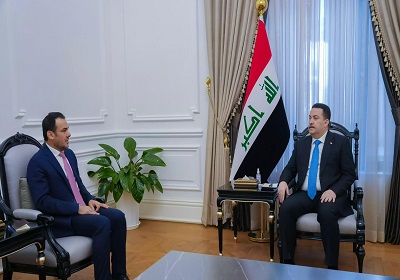
Prime Minister: The path of development will make Iraq a regional political and economic powerhouse
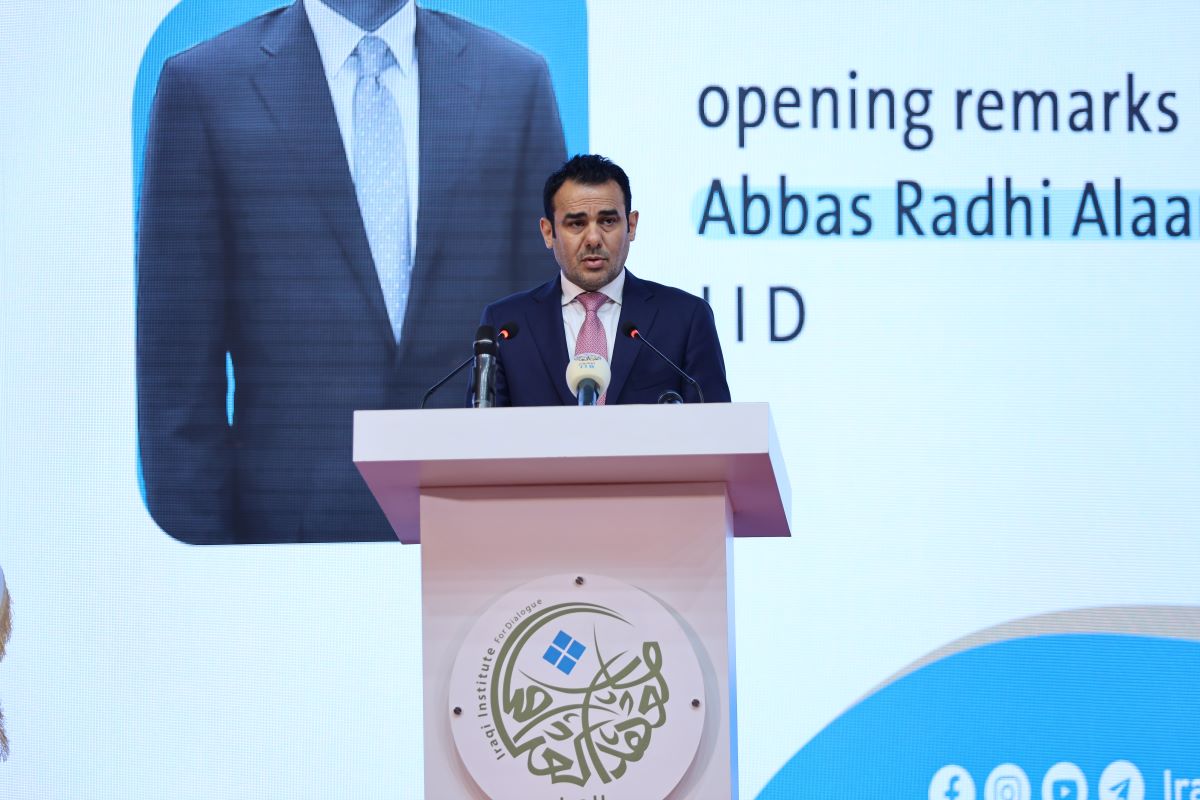
Speech of the Director of the Iraqi Institute for Dialog at the Sixth Baghdad International Dialog Conference
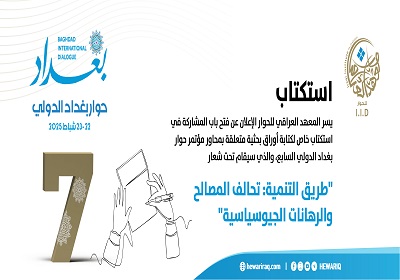
Seventh Baghdad International Dialogue Conference Call for Papers
Comments