



Written by her husband Aziz
Scientific Concerns About Climate Change
Through our own hands, we are all equally responsible for the destruction of our motherland, such as the burning of fossil fuels, which causes a long-term change in the Earth's average weather patterns.
"A nation that destroys its soil destroys itself. Forests are the lungs of our land, purifying the air and giving our people new strength." - Franklin D. Roosevelt
Human activities are causing climate change, and this is undoubtedly a painful truth. Through our actions, we are all responsible for destroying the Earth, such as the burning of fossil fuels, which leads to long-term changes in weather patterns. There are many other factors that lead to dramatic results, including rising sea levels, increased frequency and intensity of extreme weather events, and disruption of ecosystems and the social order of humans.
Scientists have long predicted that human-produced greenhouse gases will cause global temperatures to rise, exacerbating the damage caused by extreme weather. We are already seeing the effects, such as rising sea levels, loss of sea ice, melting glaciers and ice sheets, and more intense heat waves.
Potential future impacts of global climate change include: More powerful winds and rain from tropical cyclones, longer droughts in some regions, and more frequent wildfires. More seriously, some of these changes - such as droughts, wildfires and heavy rains - are occurring faster than scientists had previously estimated.
According to the United Nations' Intergovernmental Panel on Climate Change (IPCC), this generation has never seen such changes in the Earth's climate, and some of these changes are irreversible over hundreds to thousands of years.
"The scientific evidence is overwhelming: Climate change is a threat to human well-being and the health of the planet. Any further delay in coordinated global action will waste the narrow window of opportunity still available to secure a livable future." - Intergovernmental Panel on Climate Change.
Scientists warn that continued climate warming will increase the rainfall associated with hurricanes. In the coming years, droughts and heat waves are expected to become more intense, while cold waves will decrease in intensity and frequency. It is estimated that the Arctic Ocean could be nearly ice-free by late summer due to continued melting of sea ice.
While scientific models are powerful tools for predicting future scenarios, there are factors that make long-term predictions difficult, such as: natural variations in climate, solar activity, and oceanic cycles. These uncertainties emphasize the need for more research to improve the models and their accuracy.
Climate change is threatening biodiversity at an unprecedented rate. Rising temperatures and changing weather patterns are altering habitats and pushing many species toward extinction. The collapse of ecosystems, such as coral reefs and rainforests, can have wide-ranging implications for food chains and human livelihoods.
Despite scientists' warnings, reaching a global consensus on emissions reductions remains difficult, and delaying implementation of policies increases the risk of locking the planet into higher levels of warming, making adaptation more expensive and less effective in the future.
"Climate change does not respect borders; it does not respect who you are - rich or poor, small or large. It is therefore a global challenge that requires global solidarity." - Ban Ki-moon
To prevent our planet from warming and to save it, we all have to act in a spirit of solidarity, as Ban Ki-moon said. We must switch to renewable energy such as solar, wind and hydro instead of fossil fuels. It is important to protect forests to preserve biodiversity and carbon sinks, and to restore wetlands and mangroves because they store large amounts of carbon and protect coastlines. Climate-smart farming methods such as crop rotation and organic farming should be adopted, reducing reliance on single-use plastics and promoting recycling, and building energy-efficient buildings with proper insulation and green roofs.
Geoengineering technologies such as solar radiation management can be considered, but with extreme caution. Green hydrogen is a better option as a clean fuel. International agreements such as the Paris Agreement help set global targets for reducing emissions and support climate research to come up with better solutions and innovations.
Conclusion:
Scientific concerns about climate change go beyond rising temperatures; they include melting ice sheets, loss of biodiversity, extreme weather, and uncertainty in predicting future impacts. While progress has been made in understanding the crisis, mounting evidence emphasizes that immediate, collective, science-based action is essential.
Climate change is not just an environmental issue, it is a global challenge that requires urgent attention from policymakers, scientists, and communities around the world. On an individual level, we can contribute by conserving energy, using energy-efficient appliances such as LED lights and solar panels, and relying on sustainable modes of transportation such as public transport, walking, or bicycles.
You can also participate in community forestry or gardening campaigns, minimize meat and dairy consumption to reduce methane emissions, and most importantly, spread awareness by educating others about climate change and supporting environmentally friendly policies.
Zoha Aziz
Article Writer and Research Analyst - National Defense University, Islamabad

The Iraqi Institute for Dialogue, the logistical sponsor of the Baghdad International Book Fair, opens its own pavilion at the fair

The Iraqi Institute for Dialogue publishes "The Diplomatic Portfolio" by Dr. Karrar Al-Badiri

Official agreement between Iraqi Institute for Dialogue and the Iraqi Media Network to sponsor The Seventh Annual International Conference of “Baghdad Dialogue” 2025

Invitation to the 79th issue of Dialogue of Thought
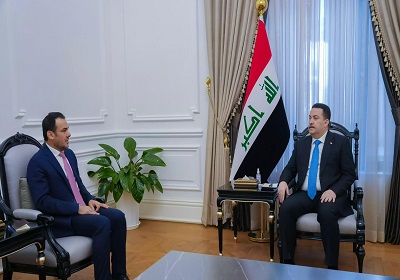
Prime Minister: The path of development will make Iraq a regional political and economic powerhouse

Seventh Baghdad International Dialogue Conference Call for Papers

Praise for the Baghdad International Dialogue: Strengthening Iraq's pivotal role and a meeting point for visions
Comments