

Source: SpecialEurasia – article by researcher Sylvia Bullock – international affairs expert
The Bagram factor: U.S. Positioning and the Future of Iran's Regional Integration
Iran's strategic environment is witnessing a new phase of interlocking pressures, as the potential US military redeployment in Afghanistan intersects with geopolitical corridor projects in the Caucasus, as well as shifts in South and Central Asian alliances. These developments are not merely transitory external variables, but rather a "geopolitical encirclement" that is reshaping Iran's regional integration paths and threatening to restrict its ability to expand northward through the Caucasus and Central Asia.
Iran's Northward Expansion
Historically and geographically, Iran's northward thrust has always been a natural extension of its geopolitical space. The Caucasus and Central Asia, which were part of the old Persian Empire, are seen in Tehran as a vital space and a strategic opportunity.
Armenia has been an important entry point for Iran into the markets of the Eurasian Economic Union, while the Central Asian republics, after decades of diplomatic coldness in the 1990s, have become key partners in the Supreme Leader's "Look East" strategy.
Relations with Afghanistan have been pragmatic despite not recognizing the Taliban government, as Tehran has sought to establish border economic zones to boost bilateral trade. However, this openness remains challenging, whether due to migration pressure, water disputes over the Helmand River, or tensions with the Taliban leadership.
The "Bagram Factor" and U.S. Pressure
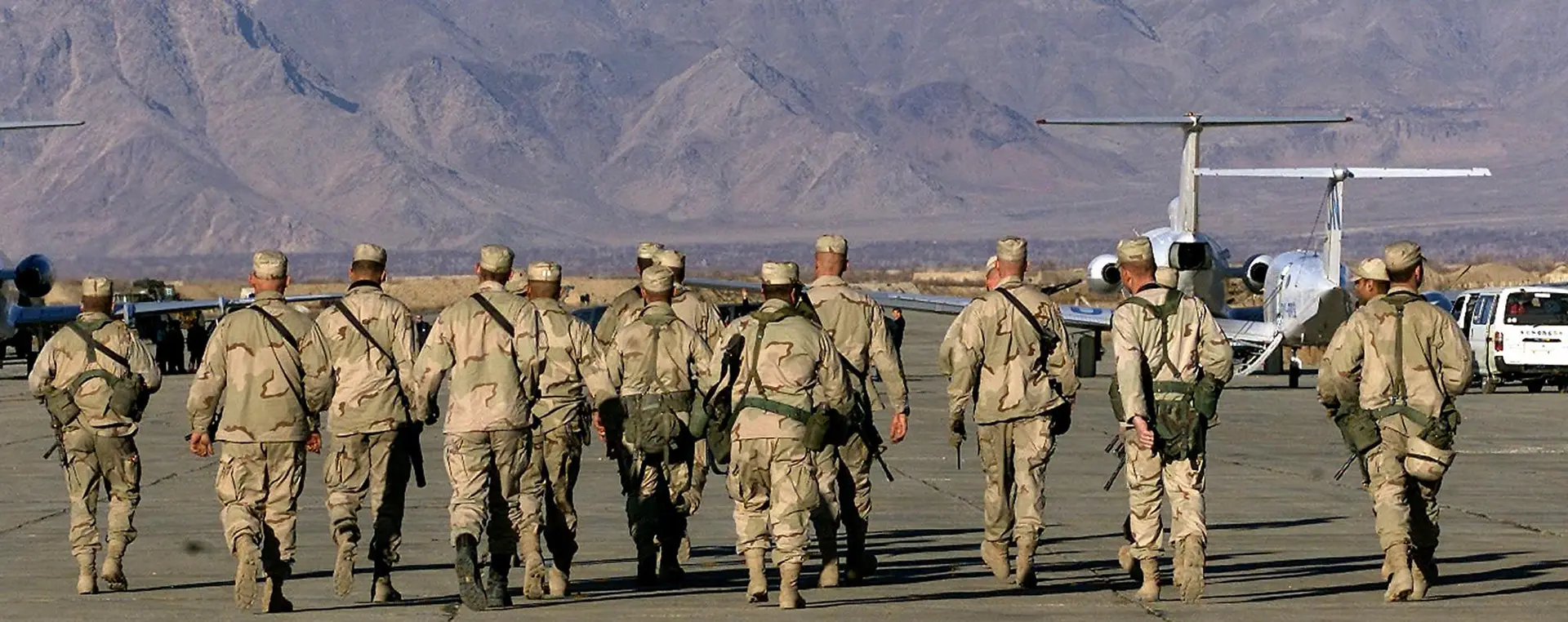
In this context, the so-called "Bagram Factor" is emerging. The US base north of Kabul, from which US forces withdrew in 2021, is now back in the spotlight with increasing talk of Washington's intention to reactivate it.
Such a move would not only represent a reinforcement of the US presence in Afghanistan, but also a fulcrum capable of monitoring and limiting Iranian influence in the east, threatening integration paths with Central Asia, and increasing the vulnerability of China's projects, especially the Belt and Road Initiative (BRI). The proximity to Xinjiang and the Wakhan corridor makes Bagram a potential pressure tool on both Beijing and Tehran.
The Trump Corridor and the Changing Caucasus Equations
In parallel, the "Trumpian Corridor" project, which connects Azerbaijan to the Nakhchivan region via Armenian territory, is emerging. The success of this project would cut off Iran's strategic artery to the Caucasus, deprive it of a vital outlet linking it to the Eurasian space, and potentially exploit it for a long-term US positioning on Iran's borders. The corridor is not just an economic project, but a geopolitical card that adds a new layer of complexity to Tehran's regional calculations.
U.S. Repositioning in South Asia
These developments cannot be understood in isolation from US repositioning in South Asia. Relations between Washington and Islamabad have seen a major boost in recent months, culminating in an official reception for Pakistan's army chief at the White House, a development unprecedented in years.
The Pakistani prime minister is also expected to meet with President Trump on the sidelines of the United Nations General Assembly. These indicators confirm that the United States is reactivating its Pakistani card in the context of its strategy to confront China, with Iran as a secondary factor in the equation, while the relationship with India, which is also facing increasing tensions with Washington, is losing heat.
Western pressures and Iranian domesticity
In addition to these regional developments, Iran is facing mounting pressure from the West, whether through the "snapback" mechanism to reimpose sanctions or through Israeli strikes that targeted nuclear facilities and civilian neighborhoods during the recent war, resulting in hundreds of civilian casualties and sparking widespread anger within Iranian society. These events contributed to deepening popular skepticism about the feasibility of negotiations with the West, especially with accusations that the International Atomic Energy Agency leaked sensitive information to Israeli intelligence services, and with European positions supporting the Israeli operation, such as German Chancellor Merz's praise of it.
At home, the pressures have taken on an additional dimension with renewed talk of a letter from more than seventy members of parliament to the Supreme National Security Council, calling for a review of Iran's nuclear and military doctrine in light of the results of the recent war and sanctions pressures. This trend reveals a growing tendency within the Iranian elite to adopt a more rigid and less flexible security policy, which could deepen regional risks.
Iran at a crossroads
Based on these facts, Iran appears to be at a strategic crossroads: Either it sticks to the diplomatic option despite the growing distrust of the West, or it leans toward a more militarized policy, focused on strengthening security capabilities and changing the rules of the nuclear and regional game.
Both options carry significant consequences. Security hardening may give Tehran greater resilience, but it also threatens regional stability and increases the likelihood of confrontation, while continued openness may seem counterproductive in a hostile and changing environment.
In sum, the Bagram Factor demonstrates that the future of Iran's regional integration no longer depends solely on its own capabilities, but rather on its ability to deal with interlocking pressures: U.S. repositioning in Afghanistan, corridor projects in the Caucasus, the balances of relations between Washington, Islamabad, and New Delhi, and the impact of Israeli sanctions and strikes.
These challenges paint a picture of a tight geopolitical encirclement that may push Tehran towards more rigid and less open options, putting the region in front of a new phase of tension and instability.
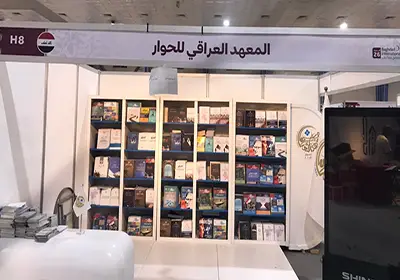
The Iraqi Institute for Dialogue, the logistical sponsor of the Baghdad International Book Fair, opens its own pavilion at the fair
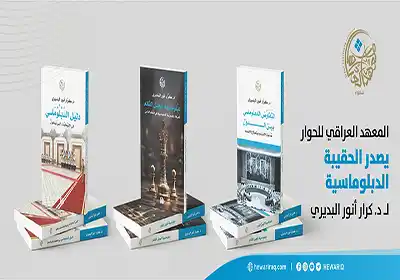
The Iraqi Institute for Dialogue publishes "The Diplomatic Portfolio" by Dr. Karrar Al-Badiri
Official agreement between Iraqi Institute for Dialogue and the Iraqi Media Network to sponsor The Seventh Annual International Conference of “Baghdad Dialogue” 2025
Invitation to the 79th issue of Dialogue of Thought
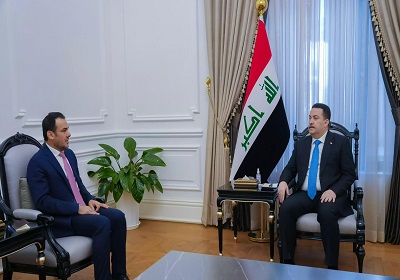
Prime Minister: The path of development will make Iraq a regional political and economic powerhouse
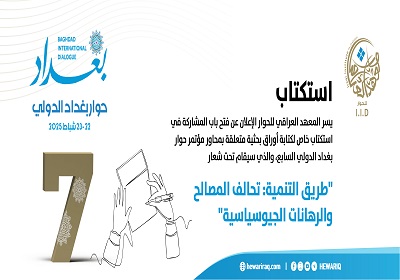
Seventh Baghdad International Dialogue Conference Call for Papers
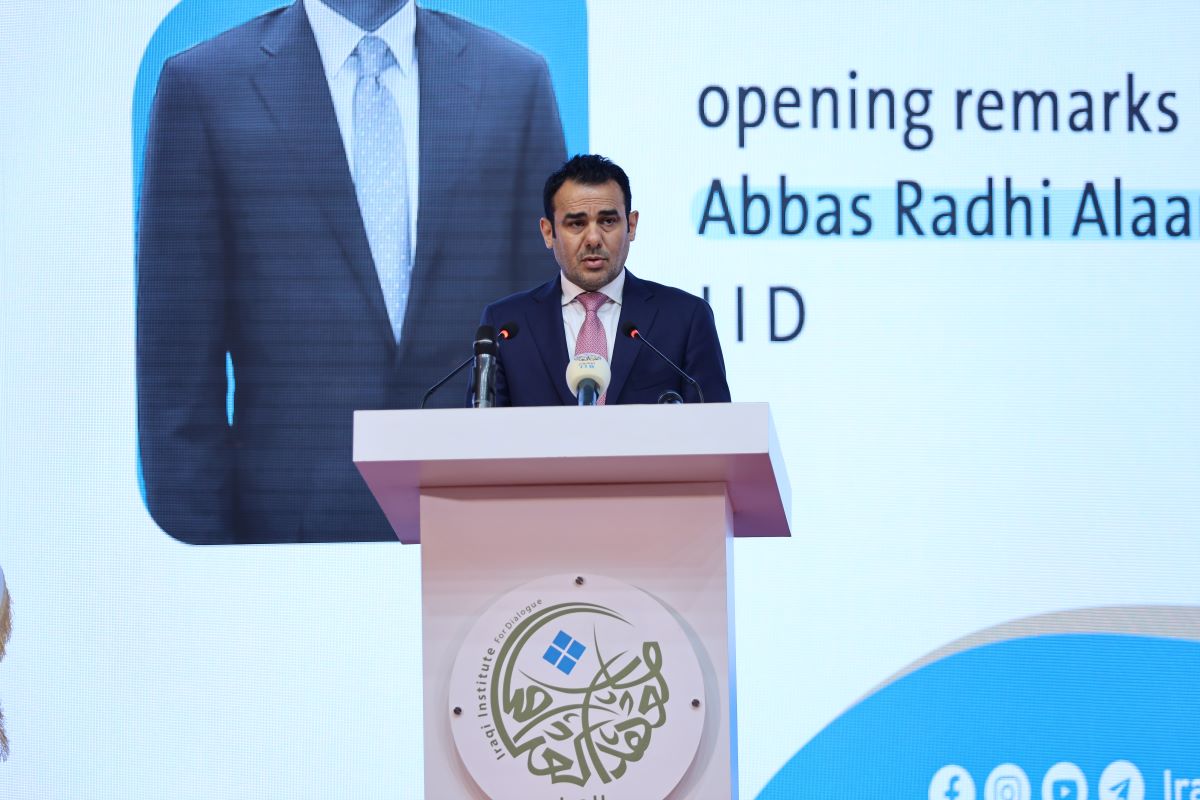
Praise for the Baghdad International Dialogue: Strengthening Iraq's pivotal role and a meeting point for visions
Comments