



By Ahmed Al-Abdi
"Qatar's shock opens the way for a new triangular axis: Iran-Pakistan-Saudi Arabia on the map of the Middle East"
The Gulf region witnessed dramatic shifts after the Israeli strike on Qatar, which is considered a key partner of the United States in the region and is tasked with protecting Qatar's airspace from any external aggression. This operation blatantly revealed the United States' betrayal of Qatar after it left it vulnerable to violating its sovereignty and violating international law without any American intervention to deter Israeli aggression. After the Qatari prime minister said in a television interview that the incident was a betrayal of the United States, the incident showed the fragility of the traditional protection of regional partners despite decades of strategic cooperation and common interests.
In contrast, Saudi Arabia seems to have woken up to this new reality despite its strong relationship with the United States and its strategic partnership in multiple fields, including the visit of former US President Donald Trump a few months ago. This awakening came in the wake of Benjamin Netanyahu's publication of a map of "Greater Israel," which includes large parts of Saudi territory, which may be an indication of Riyadh's realization that Washington may abandon its allies in the region in future crises, as it did with Qatar.
In response to these facts, we witnessed a diplomatic and strategic Saudi move, represented by meetings with Iranian National Security Council Chairman Ali Larijani and the Pakistani Prime Minister, in a possible indication of new regional shifts that may redraw alliances in the Middle East. Despite the American and Israeli influence, it seems that Saudi Arabia has begun to reassess its future role and strategic independence after it allowed American and Israeli intelligence services to penetrate its institutions, which weakened its security and political position as evidenced by the international and regional community's disregard for the publication of the "Greater Israel" map.
These events raise fundamental questions about the future of alliances in the Middle East, the possibility of building new trust between Riyadh, Tehran and Islamabad, and the formation of a regional axis capable of confronting regional challenges without Riyadh's absolute dependence on the United States.
In this context, possible scenarios for regional transformations can be envisioned:
1. Establishing a regional axis that is partially independent of American and Israeli influence: It now includes Saudi Arabia and Pakistan, focusing on joint security and economic and strategic cooperation, especially since all these countries are Islamic, the statement by the Pakistani Defense Minister that the nuclear program is at the disposal of the Kingdom if necessary, in addition to the fact that there is no clause in the agreement that prevents any country from entering the alliance is an indication of the possibility of Iran joining in the near future, especially since Larijani's visit restored confidence between Tehran and Riyadh, according to Iranian newspapers.
2. Strengthening intelligence and security cooperation between the three countries: To secure border skies and vital interests, and to avoid any similar letdown with Qatar.
3. Restoring the balance of power in the Middle East: By adopting multilateral foreign policies that strengthen the position of regional states against external influence and minimize the possibility of imposing unilateral decisions by major powers.
However, the major obstacle remains the power of Israeli and American influence, which can limit the ability of any regional axis to make fully independent decisions, especially in the military and intelligence fields. However, recent Saudi moves indicate a growing strategic awareness that seeks to limit its future vulnerability and prepare the ground for a more stable and flexible regional alliance capable of dealing with sudden regional shifts.
The possibility of sudden shifts in Saudi policy toward regional powers
In light of the recent developments in the region, it is possible that Saudi policy may witness sudden and rapid shifts, especially with regard to its dealings with regional movements and powers, most notably a secret Iranian-Saudi agreement for security cooperation, hidden Saudi support for Hezbollah in Lebanon as it is in the first front line with the Zionist entity, and media support for Hamas. These shifts may initially be secret or limited media, but they aim to strengthen Saudi Arabia's strategic position in the face of major threats from the Zionist entity, whose expansionist and aggressive policy seems a direct pressure factor on Saudi Arabia.
After Sheikh Naim Qassem's call to open a new page with Saudi Arabia for possible support for Hezbollah, we noticed that the reaction of officials was not as strong as before, especially by the former ambassador in Beirut, who said that the support should be through the Lebanese state and may consist of limited cooperation or exchange of intelligence information, and political and military coordination behind the scenes, so that these forces are used as a means of pressure against Israeli expansion, or to ensure the balance of power in the region that protects Saudi interests. This policy is likely to be temporary and cautious, as it could be akin to a US trap for a Saudi-Iranian rapprochement in order to allow it to be abandoned and handed over as an easy target to the Zionist entity, especially after it secured the signing of economic contracts worth more than a trillion dollars with Riyadh. All this data indicates that the change in Saudi policy will be secret and temporary, but it may represent a qualitative shift in Riyadh's traditional approach, which historically relied on direct confrontation or positive neutrality towards these movements.
In the same context, Saudi Arabia may witness a shift in its relations with Sana'a. Previously hostile policies could be transformed into secret understandings or agreements to avoid any further escalation that would put Saudi Arabia in direct confrontation with a greater Israeli threat. This strategy reflects Riyadh's realization that confronting the Zionist entity directly without regional allies could be very costly, and that building a network of unconventional alliances, even if temporary and secretive, represents a less risky and more effective strategic option.
This potential move reflects a growing Saudi awareness of the real regional dangers and indicates the possibility of a more flexible and intelligent foreign policy based on common interests and delicate balances, away from traditional commitments that could put the kingdom in a weak position in the face of Israeli threats. At the same time, this move opens the door to a rapid and unexpected change in the map of regional alliances.
In conclusion, the region seems to be entering a phase of redrawing traditional alliances, as major regional countries such as Saudi Arabia, Iran, and Pakistan move towards building strategic relations based on trust and common interests, away from absolute dependence on the United States. This shift may be the beginning of a new regional alliance capable of facing the security and political challenges in the Middle East, while redefining the role of external powers in the region.

The Iraqi Institute for Dialogue, the logistical sponsor of the Baghdad International Book Fair, opens its own pavilion at the fair
Official agreement between Iraqi Institute for Dialogue and the Iraqi Media Network to sponsor The Seventh Annual International Conference of “Baghdad Dialogue” 2025
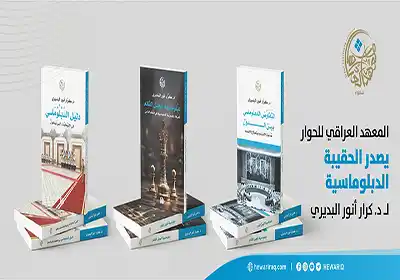
The Iraqi Institute for Dialogue publishes "The Diplomatic Portfolio" by Dr. Karrar Al-Badiri

Invitation to the 79th issue of Dialogue of Thought
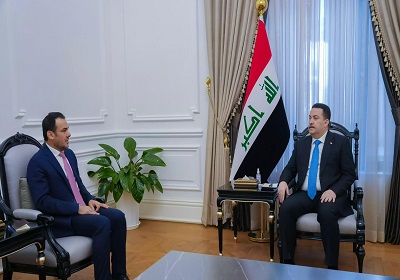
Prime Minister: The path of development will make Iraq a regional political and economic powerhouse
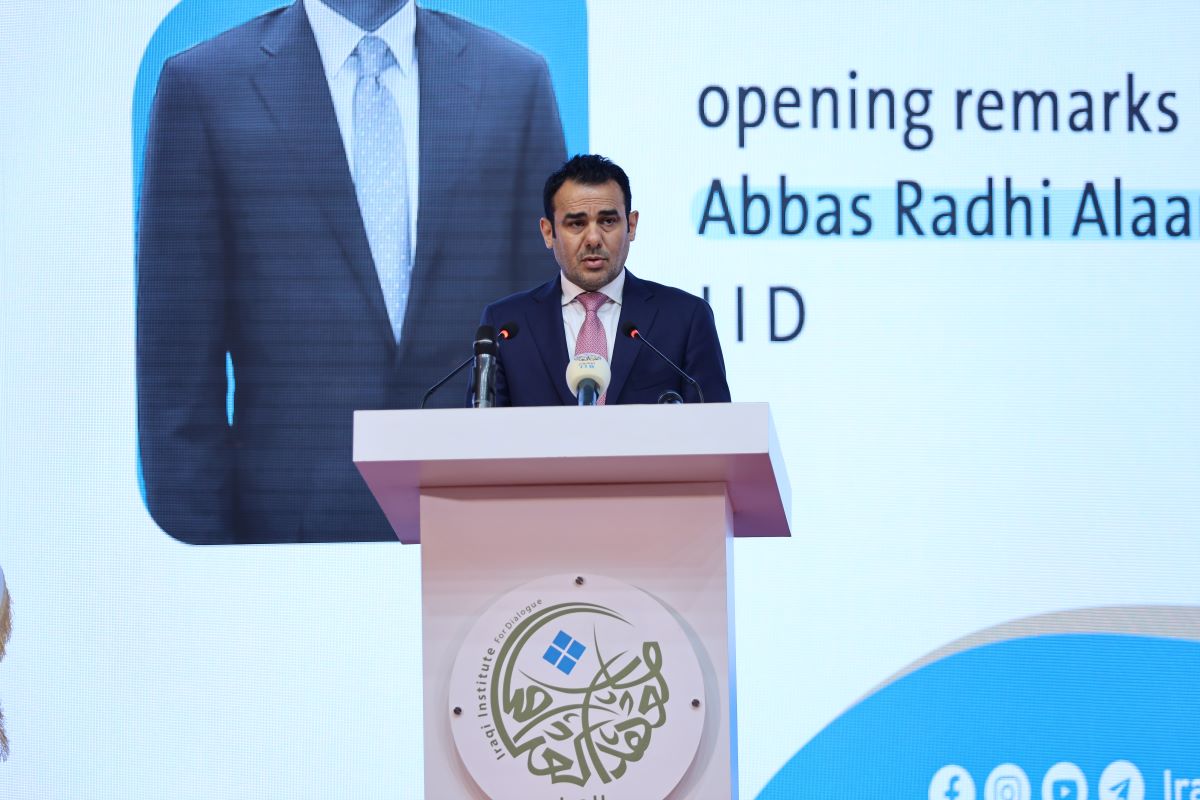
Speech of the Director of the Iraqi Institute for Dialog at the Sixth Baghdad International Dialog Conference
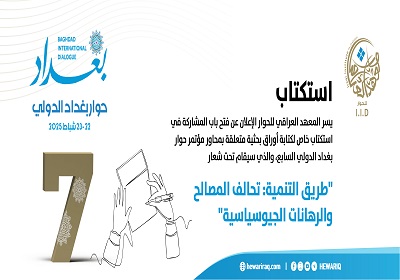
Seventh Baghdad International Dialogue Conference Call for Papers
Comments